

2017 Yangtze River Industry Forum (Autumn) and Conference on Healthcare Big Data & Artificial Intelligence Successfully Concludes

September 16–17, 2017, hosted by the China Association for Promotion of Rehabilitation Technology Transformation and Development, and co-hosted by the Hubei Provincial Yangtze River Economic Belt Industrial Fund,Co-organized by Zhongke Yanqi Lake Innovation (Beijing) Technology Service Co., Ltd., Tianhong Ruzhi (Wuhan) Investment Management Co., Ltd., and VCBeat,Health Intelligence Valley,Optics Valley Smart Health ParkThe 2017 Yangtze River Industry Forum (Autumn) and the Conference on Medical Health Big Data and Artificial Intelligence, co-organized by us, grandly opened at the Wuhan Conference Center.
This conference focused on the industrial development and practical implementation of artificial intelligence and big data, delving into future trends in healthcare big data and AI. The event invitedMs. He Jiesheng, Honorary President of the China Association for the Promotion of Rehabilitation Technology Transformation and Development, and Former Vice Minister of the Ministry of Health,Academician Yu Mengsun, Academician of the Chinese Academy of Engineering and Chairman of the Professional Committee on Graded Diagnosis and Treatment Systems Engineering under the China Association for Promotion of Rehabilitation Technology Transformation and Development, Mr. Song Guodong and Mr. Huang Dianlong, Vice Presidents of the China Association for Promotion of Rehabilitation Technology Translation and Development,Mr. Duan Yindi, Director of the Financial Affairs Office of the People's Government of Hubei Province; Mr. Chen Honghui, Director of the Wuhan Municipal Health and Family Planning Commission; and Mr. Wang Hanbing, Chairman of the Yangtze River Economic Belt Industrial Fund of Hubei Provinceand other distinguished leaders, guests, and industry pioneers, as well as100+ Partners from Top-Tier Investment FirmsHe Jin50 peopleFounders of companies in China's artificial intelligence and medical big data sectors, totaling more than 400 individualsAttended by industry elitesthis conference.
At the opening ceremony,Ms. He Jiesheng, Former Vice Minister of the Ministry of HealthIt stated: “In recent years, with the intensifying aging of China’s population and the rise of the concept of precision medicine, artificial intelligence and robotics have garnered significant industry attention, boasting promising prospects. Surgical systems led by the da Vinci system have long been adopted by numerous major hospitals both in China and abroad.”We project that the global medical robotics market will reach $20.7 billion by 2021.. With the development and integration of global big data and innovative technologies, a brand-new era of smart healthcare is about to begin.”
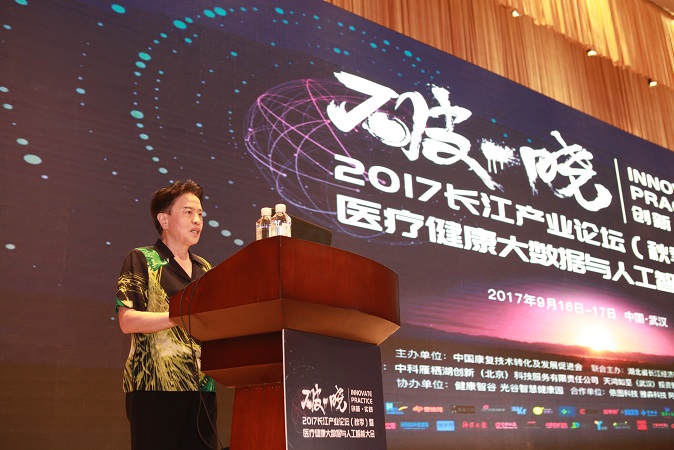 Ms. He Jiesheng, Honorary President of the China Association for Promotion of Rehabilitation Technology Transformation and Development, and Former Vice Minister of the Ministry of Health
As the most high-profile big data and artificial intelligence conference in healthcare in 2017, the event was divided into two major segments:Policy and Development Special Topic, Oncology Big Data + AI Special Topic. The conference provided an in-depth analysis of the medical big data and artificial intelligence industry from multiple dimensions, including technological evolution, investment trends, and practical application, aiming to clarify the underlying industry logic.
At the Policy and Development Thematic Forum on the morning of the 16th, Academician Yu Mengsun《Practicing the Theory and Thought of Healthy China,Promoting the Development of Health Big Data》Delivered an insightful speech on the theme. From a macro perspective, the speech articulated China’s urgent need for the development of big data and artificial intelligence in healthcare at the current stage.
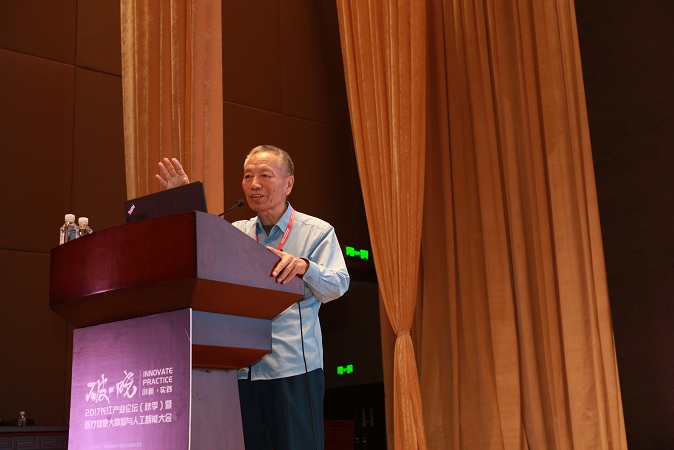 Academician Yu Mengsun, Academician of the Chinese Academy of Engineering and Chairman of the Professional Committee on Graded Diagnosis and Treatment Systems Engineering under the China Association for Promotion of Rehabilitation Technology Transformation and Development
Academician Yu Mengsun stated in his speech, “In the field of health, China possesses the conditions to lead globally. The goals of ‘Healthy China’ will certainly be achieved, and China can also lead people around the world. Under the guidance of the Belt and Road Initiative and the BRICS framework, big data in healthcare and artificial intelligence will inevitably become important components of exchanges among Belt and Road and BRICS countries. Only by integrating with human health engineering can big health data and AI technologies find their true application and value.”
Subsequently, two authoritative experts from top-tier universities—Mr. Ren Qiushi, Deputy Director of the Department of Information and Engineering Sciences at Peking University, and Mr. Han Yishun, Executive Vice Dean of the Tsinghua-Qingdao Data Science Research Institute at Tsinghua University—provided academic perspectives onHow Technological Innovation Drives the Industrialization of Big Data and Artificial Intelligence, andApplication Strategies of Big Health Data and Artificial Intelligence in HealthcarePresented insightful perspectives and analysis.
Professor Ren Qiushi stated, “Multimodal medical imaging can enhance the accuracy of intelligent assisted diagnosis. Therefore, in the near future, we can expect more and better data sources and data platforms. We hope that equipment manufacturers will integrate algorithms into their devices based on healthcare big data and artificial intelligence, thereby creating truly intelligent therapeutic devices and facilitating broader access to disease diagnosis and treatment.”
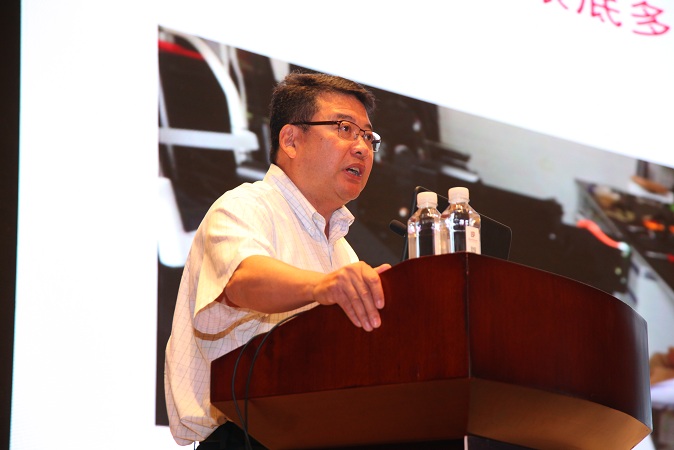 Mr. Ren Qiushi, Deputy Director of the Department of Information and Engineering Sciences at Peking University
Regarding medical data, Professor Han Yishun stated: “Why is the quality of medical data low today? It is related to hospital management. For hospitals to manage data effectively and improve its quality, physicians must possess data-driven decision-making awareness, and patients must participate rationally. Otherwise, it is easy to fall into a cycle where strict control stifles progress, while deregulation leads to chaos.”
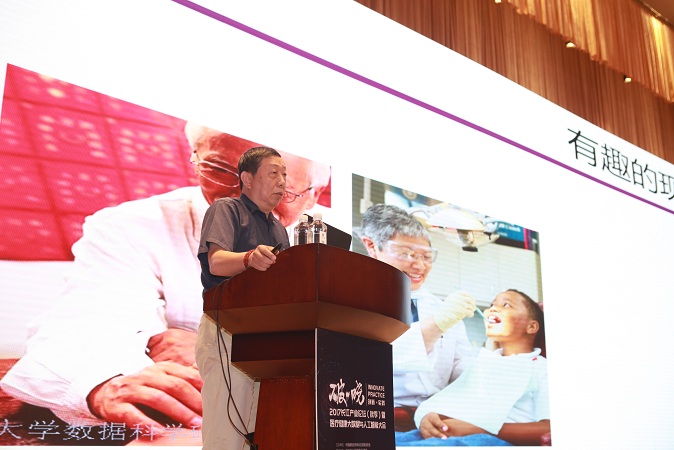 Mr. Han Yishun, Executive Deputy Director of the Tsinghua-Qingdao Institute for Data Science, Tsinghua University
Subsequently, Mr. Li Datao, founder of VCBeat, made a major announcement regarding the first domestic"2017 Medical Big Data and Artificial Intelligence Industry Report". This report focuses on artificial intelligence in healthcareApplication Scenarios、The Role Positioning of Artificial Intelligence and Physicians、The Implementation Landscape of Artificial IntelligenceCondition,Business Models of Artificial Intelligence...and other issues have been thoroughly and comprehensively analyzed.
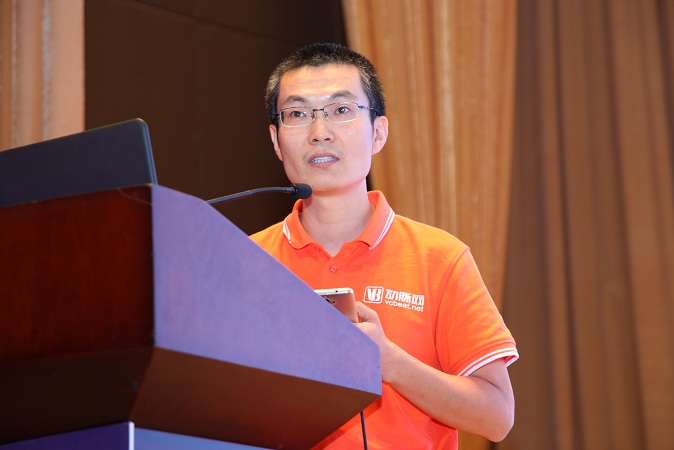 Mr. Li Datao, Founder of VCBeat
This report is poised to become the most comprehensive and detailed industry white paper in the field of AI + Healthcare at this stage.
In addition, the thematic forum on the morning of the 16th featured the selection and awarding of outstanding practice cases in China’s medical big data and artificial intelligence sectors. The winning enterprises were selected by authoritative industry experts and professors, who screened candidates across multiple dimensions, including case value, corporate valuation, and implementation status. These includeBoshi Medical Cloud, SiPai Network, Jindou Data, Shulian Yixin, Life Singularity, Judao Technology, EDDA Technology, Yitu Healthcare, iFlytek Medical, Landin Medicine, Infervision, Yasen Technology, Huiyi Huiying, Jinglun Century, Airdoc, TomoDeepAtDomesticof16 companiesA Leading Domestic Artificial Intelligence and Big Data Company Won the Award for Outstanding Practice Cases in China’s Medical Big Data and Artificial Intelligence in 2017.
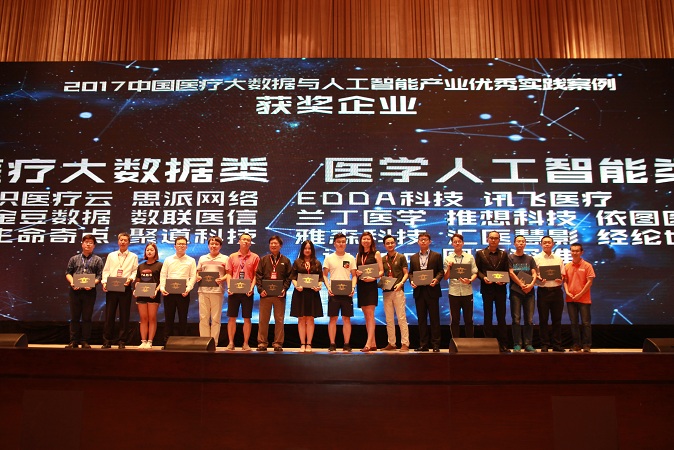
Award Ceremony for the 2017 Outstanding Practice Cases in China’s Medical Big Data and Artificial Intelligence
Oncology Big Data + AI Special Topic
Cancer has long been the leading disease threatening public health in China. According to projections by the World Cancer Association, new cancer cases in China are expected to reach 4 million in 2020, with 3.5 million deaths. Estimates from relevant national authorities indicate that the total annual expenditure on cancer treatment in China has already reached hundreds of billions of RMB and will continue to rise as the number of new cases increases.
Cancer has long been one of the most complex and challenging areas in medicine, relying heavily on scientific research and big data.
At the Oncology Big Data + AI Special Forum on the afternoon of the 16th, VCBeat brought together directors of radiology departments from major Grade-A tertiary hospitals in China, researchers from the Institute of Computing Technology at the Chinese Academy of Sciences, venture capitalists, and entrepreneurs from multiple domestic oncology big data and artificial intelligence companies (such as Yasen Technology and SiPai Network). From the perspectives of physicians, researchers, investors, and entrepreneurs, participants discussed how to truly achieve the clinical implementation of new technologies in oncology.
Among them, Xia Liming, Director of the Department of Radiological Diagnosis at Tongji Hospital Affiliated to Tongji Medical College of Huazhong University of Science and Technology; Xiao Li, Associate Researcher at the Institute of Computing Technology, Chinese Academy of Sciences; Jiang Tianjiao, Director of the Industrial Finance Department and Head of Healthcare Industry Investment and M&A at Founder Securities; and Chen Hui, CEO of Beijing Yasen Technology Development Co., Ltd., delivered speeches on topics including “Deep Learning and Intelligent Identification of Pulmonary Nodules,” “Applications of Artificial Intelligence in Medical Imaging,” “A Secondary Market Perspective on Healthcare AI,” and “AI Implementation and Empowerment of Healthcare by AI.”
Explore, Discover, Implement
Healthcare has a strong latent demand for artificial intelligence. AI will bring disruptive transformation to the healthcare sector, and in the long term, it is expected to help address, from a technological perspective, issues such as the uneven distribution of medical resources in China, weak primary care services, high medical costs, and significant pressure on health insurance cost containment.
Currently, a relatively complete industrial structure for global “AI + Healthcare,” encompassing the foundational, technological, and application layers, has begun to take shape. Large corporations are progressively strengthening their layouts in the foundation and technology layers, which feature high technical barriers, while startups are clustering in the application layer, resulting in a proliferating landscape. However, in terms of practical industry implementation, few enterprises truly address the core essence of healthcare.
The underlying reason lies in the excessive complexity of the healthcare system. For new technologies to truly drive industry transformation, it requires not only coordinated efforts across policy, technology, and talent, but also corporate exploration and the accumulation of time.
The 2017 Yangtze River Industry Forum (Autumn) and Healthcare Big Data & Artificial Intelligence Conference aims to help entrepreneurs and investors in the field of artificial intelligence clarify industry trends, connect with high-quality resources, identify application scenarios, and find the right development direction in the exploration of healthcare big data and artificial intelligence.
Conference Attendees
Honorary President of the China Association for Promotion of Rehabilitation Technology Transformation and Development, Former Vice Minister of the Ministry of HealthHe Jiesheng
Academician of the Chinese Academy of Engineering; Chairman of the Professional Committee on Hierarchical Diagnosis and Treatment System Engineering, China Association for Promotion of Rehabilitation Technology Transformation and DevelopmentYu Mengsun
Vice President, China Association for the Promotion of Rehabilitation Technology Translation and DevelopmentSong Guodong
Vice President, China Association for the Promotion of Rehabilitation Technology Translation and DevelopmentHuang Dianlong
Director of the Financial Affairs Office of the People's Government of Hubei ProvinceDuan Yindi
Director of the Wuhan Municipal Health and Family Planning CommissionChen Honghui
Chairman of Hubei Yangtze River Economic Belt Industrial FundWang Hanbing
Deputy Director, Faculty of Information and Engineering Sciences, Peking UniversityRen Qiushi
Deputy Director of the Biodynamic Optical Imaging Center, Peking UniversityZhang Zemin
Executive Deputy Dean, Tsinghua-Qingdao Institute of Data Science, Tsinghua UniversityHan Yishun
Executive Director of Zhongke Yanqi Lake Innovation Technology Service Co., Ltd.Li Zhihong
Deputy General Manager of Tianhong GroupZhang Jifa
Deputy Secretary-General of the China Association for Promotion of Rehabilitation Technology Translation and DevelopmentSongDust-Free
Founder of VCBeatLi Datao
Director, Department of Radiological Diagnosis, Tongji Hospital Affiliated to Tongji Medical College, Huazhong University of Science and TechnologyXia Liming
Director, Industrial Finance Department, Founder Securities; Head of Healthcare Industry Investment and M&AJiang Tianjiao
CEO of Beijing Yasen Technology Development Co., Ltd.Chen Hui
Vice President, Yitu HealthcareCathy Fang
CMO, Beijing Infervision Technology Co., Ltd.Xia Chen
Founder and President of Jinglun Century Medical Network Technology (Beijing) Co., Ltd.Yu Zhong
Chairman of Demao CapitalZheng Lixin
Chief Artificial Intelligence Officer, SiPai (Beijing) Network Technology Co., Ltd.Tao Ying
Vice Chairman and Chief Strategy Officer of Yidu Cloud (Beijing) Technology Co., Ltd.He Zhi
Senior Engineer, Mitsubishi Research Institute and Google [X] LaboratoryYe Fei