

Dingdang TCM Launches Capital-Efficient 'Shared Clinic' Model Integrating TCM with the Sharing Economy
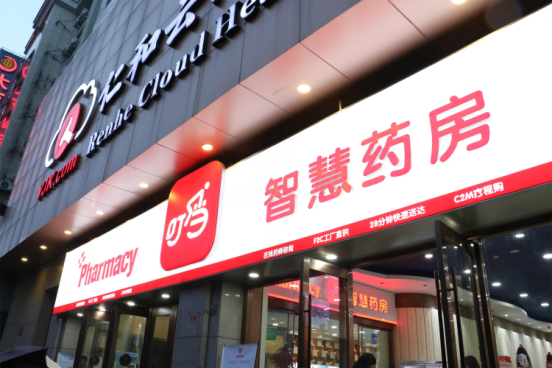
Recently, Dingdang TCM announced that its “shared clinic” model for traditional Chinese medicine (TCM) has officially launched, with initial deployments planned in Beijing and Guangdong Province. At last, the wave of the sharing economy has reached the field of traditional Chinese medicine.
In shared clinics, patients book doctors via the Dingdang TCM app, and doctors then reserve clinic slots to provide consultations during their spare or off-duty hours. They utilize the medical facilities, clinical services, diagnostic equipment, and traditional Chinese medicine pharmacies available at these shared clinics. As a result, doctors earn legitimate third-party income, while patients save time, reduce costs, and gain access to renowned specialists they wish to see.
Dingdang TCM is a “TCM + Internet” platform tailored for traditional Chinese medicine (TCM) practitioners, dedicated to becoming the leading platform for independent TCM practice. Since its launch in December 2016, it has provided users with services such as doctor–patient matching, prescription fulfillment and herbal dispensing, and decoction and delivery through online channels including WeChat and its mobile app.
By launching “Shared Clinics,” Dingdang TCM has completed its online-to-offline, full-chain layout encompassing medical services, pharmaceuticals, and clinics, marking a new endeavor for internet healthcare enterprises to expand into offline clinical practice.
VCBeat spoke with Li Ximu, co-founder of Dingdang TCM, about how to build a “shared clinic” model for TCM practitioners that doesn’t burn cash, amid the cash-burning wars of the sharing economy.
>>>>Capitalizing on Policy, Market, and TCM Advantages
“Shared clinics” are not merely a transient byproduct of the wild growth seen under the shared economy trend; on the contrary, they have emerged in response to the needs of the times.
In recent years, the tie between hospitals and doctors has gradually loosened, thanks to the continuous advancement of reforms such as physicians’ multi-site and independent practice, personnel system reform in public hospitals, and the allowance for in-service physicians to freely establish clinics.
On the other hand, favorable policies for Traditional Chinese Medicine (TCM) have been introduced. The Law on Traditional Chinese Medicine, which officially came into effect on July 1, stipulates that the establishment of TCM clinics has shifted from an “approval-based” system to a “filing-based” system.
In fact, in developed countries and regions such as those in Europe and the United States, and Singapore, “shared healthcare” has long seen several mature models with distinct characteristics. For instance, in certain medical real estate developments, independently practicing physicians borrow or lease space for clinical consultations, while also leveraging third-party laboratory centers, imaging centers, hospital inpatient departments, and surgical centers associated with the facility. Previously, the National Health and Family Planning Commission highly praised Hong Kong’s “clinic building” model for sharing medical technology resources, which was regarded as sending a positive signal to encourage social forces to participate in healthcare provision.
Driven by advancements in the market, policies, and industry development, the relationship between physicians and hospitals is becoming increasingly decoupled, evolving from full-time hospital employment to multi-site practice, and further to independent practice. Industry experts predict that the shared physician model will dominate the specialty care and mid-to-high-end healthcare markets over the next 5–10 years. The market size is preliminarily estimated to reach approximately RMB 2 trillion.
Compared with doctors in other specialties, Li Ximu believes that traditional Chinese medicine (TCM) naturally possesses the advantages of a “shared clinic.” “On one hand, TCM places greater emphasis on practitioners and herbal medicines, offering an asset-light advantage compared to Western medicine; on the other hand, TCM practitioners exhibit higher mobility.”
Providing TCM Practitioners with Insights from Private Clinic Practice
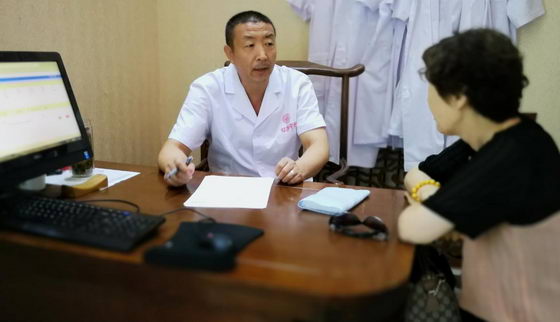
As the first TCM “shared clinic” in China, Dingdang TCM had already established a pilot site in Beijing before officially announcing its nationwide expansion.
In the future, patients will be able to book physicians from a provider pool via the Dingdang TCM App and other online platforms, while physicians can also schedule appointments with patients they were unable to see during regular hours. All parties would convene at a designated time at a “Shared Clinic” for consultations. For physicians practicing at multiple sites, clinic hours can be arranged flexibly.
In the “Shared Clinic,” physician assistants are available around the clock to support consulting physicians, enabling them to fully experience the sensation of operating their own private practice. Comprehensive medical services are provided to facilitate clinical care, and high-quality medications in various dosage forms are supplied to physicians through the “Shared Pharmacy.”
Through “Shared Clinics,” physicians gain access to “their own private consulting rooms” without having to worry about factors such as facility rent, maintenance costs, or medical supply expenses, thereby achieving a “ready-to-practice” model. They earn consultation fees at third-party institutions outside of hospitals, with all doctors practicing under multi-site licensure arrangements.
It is estimated that, in the three months since opening, a pilot clinic has been divided into two daily time slots and rented to two physicians, serving at least 40–50 patients per day. The profitability is significant, and leveraging Dingdang TCM’s online traffic alongside Dingdang Express Pharmacy’s offline network demonstrates strong replicability.
Dingdang TCM’s physician database includes nearly 10,000 licensed Traditional Chinese Medicine (TCM) practitioners. This means that in the future, more than 10,000 TCM practitioners will provide “private clinic” services to patients at “shared clinics” across China.
“Next, the appointment registration feature for ‘Shared Clinics’ will be launched on both the Dingdang Kuaiyao and Dingdang TCM app platforms, allowing users to book appointments online,” introduced Li Ximu. “Moreover, leveraging Dingdang Kuaiyao’s community-based presence, doctors at ‘Shared Clinics’ will also provide private physician services.”
Li Ximu believes that the appeal of Dingdang TCM’s “Shared Clinic” model to physicians stems from its practice environment, comprehensive medical services, shared pharmacy, and transparent income.
From Online to Offline: Fully Integrated Shared Clinics
Dingdang TCM, established in 2015, leverages its WeChat Official Account and mobile app as its primary service platforms. Patients can directly select and schedule appointments with physicians on the platform, or simply take a photo of their prescription with their smartphone to enjoy a comprehensive suite of services, including prescription fulfillment, complimentary decoction, and free home delivery—truly realizing the promise of “snap a prescription, get quality herbs delivered.” Physicians can issue prescriptions online or assist patients in uploading prescription images via the WeChat Official Account or app, greatly facilitating follow-up consultations.
In fact, Dingdang TCM’s prior implementation of online consultation services on its platform, its collaboration with Dingdang Kuaiyao to launch in-clinic TCM practitioner services, and its provision of community-based private TCM physician services in partnership with Dingdang Kuaiyao have laid the groundwork for establishing a “shared clinic” model for TCM practitioners through both online and offline consultations.
From its inception, the company has been committed to addressing two major pain points: the difficulties TCM practitioners face in practicing independently and the challenges patients encounter in obtaining prescribed herbal medicines. To this end, it launched core services such as a cloud-based pharmacy, prescription fulfillment via photo upload, and herbal decoction piece sourcing, while also providing home delivery of medications. The aim is to realize the vision of “enabling practitioners to practice anytime, anywhere, and allowing patients to consult and obtain their prescriptions with confidence.” This mission aligns perfectly with the objectives of the “Shared Clinic” model.
Dingdang TCM’s founding team also provides inherent advantages for the development of its “shared clinics.” According to Li Ximu, the founding team of Dingdang TCM includes not only founders from Dingdang Kuaiyao but also key shareholders with industrial resources from pharmaceutical companies, enabling the “shared clinics” initiative to benefit from greater support and convenience.
In May this year, Dingdang TCM secured tens of millions of RMB in Pre-A financing, led by Jinpin Investment. The company is currently valued at over RMB 100 million. The funds will be primarily used to expand into new markets, build pharmacies, and develop the physician-side mobile app, with a plan to launch 1,000 on-site TCM practice locations for free use by TCM physicians this year.
Offline channels rely on pharmacy establishment and customer acquisition.
Rather than being an independent business segment of Dingdang TCM, the “Shared Clinic” model serves as a crucial link in the future business ecosystem of both Dingdang TCM and Dingdang Kuaiyao. Within this “Shared Clinic” ecosystem, Dingdang TCM leverages Dingdang Kuaiyao’s offline pharmacy network to establish clinics, while the “Shared Clinics” utilize the Dingdang TCM app to attract physician and patient traffic. This synergy facilitates the decentralization of medical resources and completes the offline integration of “medical services, pharmaceuticals, and clinics.”
In the cash-burning sharing economy, Dingdang TCM’s “shared clinics” are not capital-intensive. According to Li Ximu, the rollout of Dingdang TCM’s “shared clinics” will begin by establishing them within Dingdang Kuaiyao’s offline physical stores, followed by collaborations with third-party chain pharmacies. “By initially leveraging Dingdang Kuaiyao’s user base and brick-and-mortar store resources to naturally drive traffic, the ‘shared clinics’ can avoid substantial spending on hardware investments such as site construction and pharmacy setup.”
According to public data, Dingdang Kuaiyao has established more than 200 stores in seven cities, including Beijing, Shanghai, Guangzhou, Shenzhen, Chengdu, and Zhengzhou, with a user base exceeding 10 million. Leveraging its offline store resources, Dingdang TCM will create “shared clinics” by introducing nearly 10,000 TCM practitioners affiliated with Dingdang TCM to provide consultations at its offline pharmacies.
On the other hand, Dingdang TCM has established a central pharmacy as a “shared pharmacy,” which serves not only as an online platform for consultations and medication purchases but also as a “shared pharmacy” where offline physicians can dispense medications to patients at nearby locations following visits to “shared clinics.”
During its internet platform phase, Dingdang TCM ensured the authenticity and geo-authenticity of prescribed medicinal materials through measures such as multi-tier prescription review, centralized procurement of herbal decoction pieces, and standardized dispensing.
“With low costs, abundant resources, and extensive channel distribution, this means our shared clinics will not only be the first to launch but also expand at the fastest pace with the most steady progress,” said Li Ximu when discussing future plans. “Over the next one to two years, we plan to roll out shared clinics in Dingdang Kuaiyao’s affiliated pharmacies and over 10,000 partner drugstores under its service network. In other words, the scale of shared clinics will soon exceed 10,000 locations.”