

Big Pharma Diversifies: From Medicated Cosmetics to Soy Sauce and Pickled Mustard Greens
In recent years, pharmaceutical companies’ cross-industry expansion has become a hot topic in the healthcare sector. Leveraging their brand strength and resource advantages, these companies have made high-profile entries into fields such as health supplements, beverages, and cosmetics, aiming to achieve diversified development. In this process, some have reaped substantial profits, while others have quietly exited by selling off their assets.
So, which pharmaceutical companies are actually venturing into cross-industry development?Why pursue cross-industry expansion? What are the strategic directions, operational pathways, and expected objectives? What lessons have been learned?
VCBeat (WeChat ID: vcbeat) has reviewed the cross-industry expansion of domestic pharmaceutical companies, aiming to partially address the aforementioned questions.
“Cosmeceuticals in the left hand, soy sauce in the right”
It is not new for pharmaceutical companies to diversify into other industries. For instance, Johnson & Johnson, which frequently tops the global pharmaceutical company rankings, operates both a highly specialized innovative drug business and a consumer-facing personal care division. These businesses coexist harmoniously, demonstrating clear synergistic advantages within the group. OtherMajor pharmaceutical and healthcare companies such as Pfizer, Sanofi, GlaxoSmithKline, and Reckitt have also made significant inroads into the fast-moving consumer goods (FMCG) sector, achieving robust growth.. It can be said that cross-sector development is a very common business structure for pharmaceutical companies, enabling them to fully leverage the group’s brand and resource advantages and maximize market returns.
From the perspective of the domestic market, cross-industry diversification is pursued in a more grounded manner. In addition to the consumer goods businesses commonly operated by multinational pharmaceutical companies, Chinese pharmaceutical firms appear open to virtually any opportunity. Their product portfolios span daily chemical products and health beverages, with some companies even extending their operations into agricultural products such as pickled mustard tubers and soy sauce, reflecting a comprehensive diversification strategy.
Preliminary statistics indicate that Chinese traditional medicine (TCM) enterprises are the most active domestic pharmaceutical companies in cross-industry diversification. Large-scale entry into non-pharmaceutical sectors can be traced back to as early as 2005, with preferred areas including oral care (e.g., toothpaste), beverages, daily chemical products, health supplements, and maternal, infant, and women’s products. Distribution channels cover key accounts (KAs) in large supermarkets and hypermarkets, retail outlets, and e-commerce platforms, while pharmacy channels also receive significant attention.
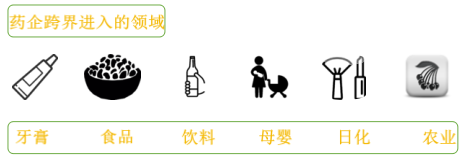
Taking the “2017 Top 100 Pharmaceutical Industry Enterprises” list recently released by the Ministry of Industry and Information Technology as an example, nearly all 39 companies with traditional Chinese medicine as their core business have established a presence in the fast-moving consumer goods (FMCG) sector, whereas among companies specializing in chemical pharmaceuticals, only Northeast Pharmaceutical Group and Harbin Pharmaceutical Group have ventured into health-related peripheral products.
From the perspective of product categories,Toothpaste is the first flagship category for pharmaceutical companies to diversify into.Yunnan Baiyao, Guangzhou Pharmaceutical Group, Pien Tze Huang, and Harbin Pharmaceutical Group’s Sanjing were among the early movers to establish a presence in the toothpaste category. In recent years, companies such as Jiangsu Jichuan Pharmaceutical and Hengkang Medical have entered the functional premium toothpaste segment, intensifying competition among pharmaceutical firms in the toothpaste market to a fever pitch.
The second key category that pharmaceutical companies are competing in through cross-industry expansion is beverages., including mineral water, herbal tea, and functional-like beverages. The most recognizable brand in this sector is undoubtedly Guangzhou Pharmaceutical Holdings’ “Wang Lao Ji.” At the time, the highly publicized trademark dispute over Wang Lao Ji also spurred significant interest in the herbal tea category. Since then, it has become a widespread trend for pharmaceutical companies to enter the beverage market, with many firms such as Tong Ren Tang, Jiangzhong Group, Xiuzheng, and Taiji establishing their presence in this space.
Certainly, in the past two years, the fields that pharmaceutical companies have most loved to cross over into are daily chemicals and cosmetics. Companies such as Yunnan Baiyao, Dong-E-E-Jiao, Guangzhou Pharmaceutical Group, Tongrentang, and Pien Tze Huang have all developed personal care products, acne treatments, facial masks, and more.
If the aforementioned product categories can be considered reasonable, Taiji Group’s expansion into products such as preserved mustard tuber (zhacai) and soy sauce appears somewhat “bizarre.” Business registration records indicate that these products are under Chongqing Guoguang Green Food Co., Ltd., a wholly owned limited liability company established in July 2001 with a registered capital of RMB 30 million. Its sole shareholder is Taiji Group Co., Ltd. According to information on the official website, Guoguang’s product portfolio includes series of preserved mustard tuber, sunflower oil, beef chili sauce, and soy sauce and vinegar. The company projected an annual output value of RMB 100 million and profits and taxes totaling RMB 20 million for 2016.
In addition to the companies mentioned above, Xiuzheng Pharmaceutical, Tasly, and Ma Yinglong Pharmaceutical have also made significant inroads into the broader health industry. Herein, we have compiled partial statistics on cross-industry operations by domestic pharmaceutical enterprises.
Table 1: Cross-Industry Operations of Selected Domestic Pharmaceutical Companies
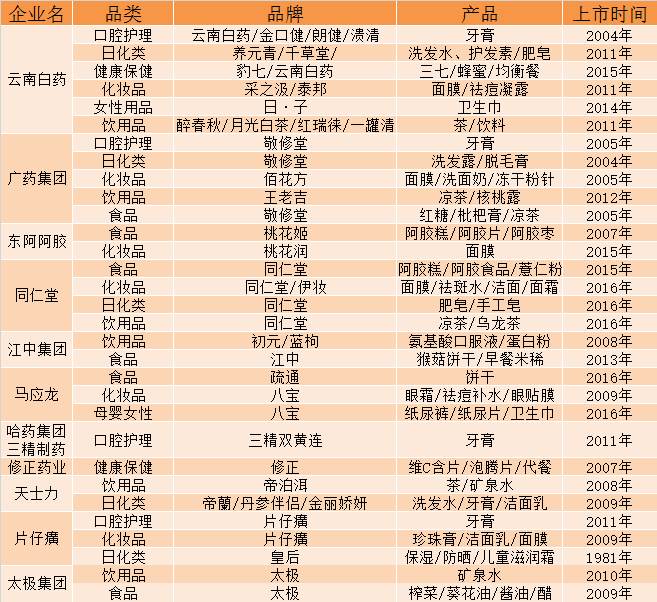
As can be seen, Chinese pharmaceutical companies have diversified into a wide range of categories, spanning multiple sectors from daily chemicals to health and wellness, and further to maternal and infant care. Their product portfolios encompass personal care items, beverages, cosmetics, and food products, among others.
However, not all pharmaceutical companies have succeeded in their cross-industry ventures. The cases mentioned above—such as Jiangzhong Hougu being penalized by the food and drug administration, poor sales performance of Taiji Water, and Tailong Pharmaceutical’s divestment of its stake in a subsidiary focused on big health businesses—demonstrate that such diversification is not as “attractive as it appears.”
So, what is the correct approach for pharmaceutical companies to diversify into other industries? Here, we can examine two successful cases as practical examples. First, Yunnan Baiyao, which has achieved remarkable success in the toothpaste sector, and Guangzhou Pharmaceutical Holdings, which has experienced rapid growth in the cosmetics industry.
Yunnan Baiyao first began preparing to enter the daily chemical products sector in 2004, initially focusing on categories such as toothpaste and personal care products. After a series of feasibility studies, the company ultimately designated toothpaste as its primary strategic direction. In 2005, Yunnan Baiyao Group established the “Health Products Division,” with Qin Wanmin, then Assistant to the President, concurrently serving as General Manager of the division, and Huang Weidong, General Manager of the Group’s Marketing Department, providing full support in overseeing the marketing and promotion of Yunnan Baiyao Toothpaste. From the perspective of resource and manpower investment, Yunnan Baiyao aimed for its toothpaste to serve as a foothold for breaking into the consumer goods market.
After the project was initiated in 2005, Yunnan Baiyao immediately conducted in-depth market research to assess the competitive landscape of the toothpaste market and consumer psychology. At that time, Yunnan Baiyao’s research revealed thatMost adults experience some degree of oral health issues, including mouth ulcers, gingival swelling and pain, and bleeding., consumers have an urgent desire to resolve these minor issues; furthermore, at that time, foreign brands such as Colgate, Crest, and Zhonghua held a very high market share, making it difficult to penetrate the market without conceptual innovation.
Here, Yunnan Baiyao breaks away from traditional competitive dynamics, focusing on “Non-Traditional Toothpaste”, functionally emphasizing its ability to address issues such as “gingival bleeding, gingival swelling and pain, and oral ulcers,” thereby comprehensively catering to consumers with diverse needs; furthermore, by positioning itself as a functional toothpaste, it successfully commanded a premium price, launching at over RMB 20, which was higher than the market average. It can be said that Yunnan Baiyao’s series of strategic moves,It has differentiated itself from existing products in terms of functionality and brand positioning, thereby achieving a successful market entry.
Furthermore, backed by the Yunnan Baiyao brand, Baiyao Toothpaste easily gained consumer trust. Coupled with a dedicated marketing team responsible for channel expansion across supermarkets and hypermarkets nationwide, Baiyao Toothpaste integrated marketing, distribution channels, and branding into a cohesive strategy, rapidly expanding its sales reach.
Subsequently, Yunnan Baiyao successively launched niche brands such as the oral-care toothpaste “Jin Kou Jian” in 2007 and the stain-removing toothpaste for smokers “Lang Jian” in 2011, gradually enriching its toothpaste product portfolio.
Sales data show that the market sales of Yunnan Baiyao Toothpaste reached RMB 300 million in 2006 and surged to RMB 1.16 billion in 2011, demonstrating rapid growth.
According to Nielsen data, Yunnan Baiyao toothpaste captured a 16.5% sales share in China in 2016, ranking second.The 2017 semi-annual report showed that the market share of Yunnan Baiyao toothpaste had increased to 17.8%, and the sales revenue of its holding subsidiary, Baiyao Group Health Products (mainly engaged in oral care products), reached 1.24 billion yuan in the first half of this year., having achieved 63.6% of the full-year sales revenue from last year.
Led by Yunnan Baiyao Toothpaste, Yunnan Baiyao’s Yangyuanqing personal care series, Rizi sanitary napkin series, Caizhiji facial mask series, Bao Sanqi series, functional food series, and Siji wellness series have all demonstrated strong growth momentum. Health and wellness products have become a key business segment for Yunnan Baiyao, which has evolved into a comprehensive health industry platform.

Unlike Yunnan Baiyao, which entered the health sector later in its development, Guangzhou Pharmaceutical Group (GPHL), with deep roots in South China, has possessed a “big health” DNA from the outset. Its controlled subsidiaries, including Wang Lao Ji Pharmaceutical and Jingxiutang Pharmaceutical, have been engaged in big health product businesses such as herbal tea and health supplements since their inception, continuously innovating to keep pace with market trends.
Given the extensive organizational structure of Guangzhou Pharmaceutical Holdings Limited (GPHL), it is essential to first understand its overall corporate framework and identify the specific entities responsible for each industrial sector before analyzing GPHL’s strategic layout in the big health industry.
Guangzhou Pharmaceutical Group, officially known as Guangzhou Pharmaceutical Holdings Limited, is wholly owned by the Guangzhou Municipal People's Government. The group holds direct equity stakes in 10 subsidiaries, including Guangzhou Baiyunshan Pharmaceutical Holdings Co., Ltd., Baiyunshan Xingqun Pharmaceutical, Guangzhou Baiyunshan Pharmaceutical Group Co., Ltd., Baiyunshan Jingxiutang Pharmaceutical, and Baiyunshan Pan Gaoshou Pharmaceutical Co., Ltd. Among these, Guangzhou Baiyunshan Pharmaceutical Group Co., Ltd. is a publicly listed company on both the Shenzhen Stock Exchange (A-shares) and the Hong Kong Stock Exchange (H-shares), trading under the stock name "Baiyunshan."
Previously, in 2011, Guangzhou Pharmaceutical Group underwent an internal restructuring, merging its subsidiaries Guangzhou Pharmaceutical Holdings Limited and Baiyunshan A, which received approval from the China Securities Regulatory Commission (CSRC) in 2012. The restructuring was completed in 2013.The new “Baiyunshan” absorbed the assets of Guangzhou Pharmaceutical and issued shares to acquire certain assets from Guangzhou Pharmaceutical Group Company.
Guangzhou Pharmaceutical Group achieved industrial and commercial sales revenue of RMB 74.8 billion in 2015, ranking 187th on the 2016 Top 500 Chinese Enterprises list, and has topped the “Top 100 Chinese Pharmaceutical Industry Companies” list for consecutive years.Baiyunshan generated annual revenue of RMB 19.125 billion, making it the highest-revenue business unit under Guangzhou Pharmaceutical Holdings Limited (GPHL).
Since Guangzhou Pharmaceutical Holdings Limited (GPHL) has injected most of its core manufacturing assets into the listed company Baiyunshan, and given that the latter’s publicly available data facilitates analysis, we will assess GPHL’s strategic layout in the big health sector by examining Baiyunshan’s presence in this field.
According to Baiyunshan's semi-annual report,Currently, Baiyunshan oversees 26 pharmaceutical manufacturing enterprises and institutions.(3 branch companies, 19 controlled subsidiaries, and 4 joint ventures), including 12 China Time-Honored Brand pharmaceutical enterprises such as Zhongyi Pharmaceutical, Chen Liji Pharmaceutical Factory, Qixing Pharmaceutical, Jingxiutang Pharmaceutical, and Pan Gaoshou Pharmaceutical, as well as Wang Lao Ji Great Health Company and the jointly operated Wang Lao Ji Pharmaceutical Company.
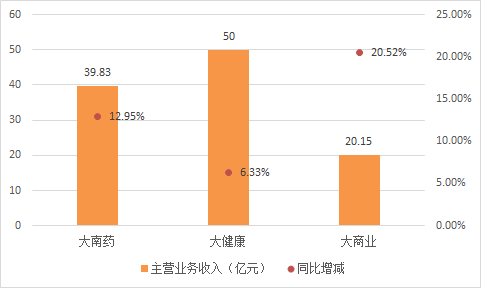
Baiyunshan divides its business into four segments: Great Southern Medicine, Great Health, Great Commerce, and Great Healthcare., the revenues of the first three segments in the first half of 2017 were RMB 3.983 billion, RMB 5 billion, and RMB 2.015 billion, respectively. It is evident that the Big Health sector is Guangzhou Baiyunshan’s most important business segment and source of revenue.
Table 2: Baiyunshan’s Financial Report for the First Half of 2017
So, how exactly is Baiyunshan positioning itself in the big health sector? In its semi-annual report, Baiyunshan stated that,The primary revenue source for the major health sector is Wang Lao Ji herbal tea.. Additionally, according to the authors’ research conducted across various supermarkets, hypermarkets, and e-commerce channels,Baiyunshan and its subsidiaries also have a presence in the fields of oral care, daily chemicals, beauty products, and food.
Baiyunshan Currently Adopts a Three-Tier Sales Model for Wang Lao Ji Herbal TeaSpecifically, Tier-1 distributors are accountable to Wang Lao Ji Health Industry Company and are responsible for regional channel development in accordance with the sales targets assigned by the company. Tier-2 distributors purchase products from Tier-1 distributors and handle product distribution. Wang Lao Ji Health Industry Company directly manages advertising expenditures and participates in terminal expansion, promotional activities, and customer relationship management. Additionally, Baiyunshan’s subsidiary, Wang Lao Ji Pharmaceutical, primarily focuses on green-boxed Wang Lao Ji Herbal Tea, adopting a sales model consistent with that of Wang Lao Ji Health Industry Company.
According to the financial data,Wang Lao Ji Herbal Tea recorded sales revenue of approximately RMB 7.7 billion in 2016, with sales revenue for the first half of this year reaching about RMB 5 billion, representing a slight year-on-year increase.
Beyond herbal teas, Baiyunshan’s footprint in the broader health and wellness sector is carried forward by Jingxiutang. According to information on Jingxiutang’s official website, the brand has established a diversified portfolio spanning multiple product lines, including food products, cosmeceuticals, oral care, the “Baihuafang” series, and the “1970” series. Standout performers in the market include Jingxiutang toothpaste, hair care and shampoo products, and Baihuafang cosmetic facial masks.
According to data from e-commerce sales monitoring tools,Jingxiutang’s Tmall flagship store generates an average monthly sales revenue of approximately RMB 200,000, while Baihuafang’s Tmall flagship store achieves a monthly sales revenue of around RMB 1.2 million.
In its semi-annual report, Baiyunshan stated that it will continue to strengthen the Wanglaoji brand. On the basis of channel development, the company aims to further expand distribution coverage in traditional channels, intensify efforts in developing foodservice channels, deepen its presence in the ready-to-drink (RTD) market, cultivate additional new gift markets, and advance international brand-building initiatives.
As retail and e-commerce are important sales channels for its big health products, Baiyunshan has also made many explorations in retail and e-commerce in the first half of the year. This includes investing 800 million yuan to subscribe to the non-public offering shares of Yixintang, strengthening its own e-commerce platforms such as Guangyao Jianmin Network and Guangyao Baiyunshan Tmall Store, etc.
Comprehensive analysis indicates that Guangzhou Pharmaceutical Holdings, or ratherBaiyunshan’s success in the big health sector can be attributed to three factors, the first being its accumulated expertise from existing operations., namely the early efforts of Wanglaoji Pharmaceutical and Jingxiutang Pharmaceutical in the big health sector;Second, it regained the highly recognized “Wang Lao Ji” brand, thereby directly benefiting to some extent from the market development and consumer habit cultivation efforts undertaken by Hongdao Group.;Third, it was able to capitalize on the rise of e-commerce channels and launched a series of products, such as daily-use cosmetics and facial masks, that are well-suited for online sales., effectively leveraging the brand value of GPC Baiyunshan and gaining popularity among younger consumers.
A Cross-Sector Perspective on Pharmaceutical Companies
The reasons for pharmaceutical companies to cross over into the fast-moving consumer goods (FMCG) sector can be examined from both internal and external perspectives. Internally, pharmaceutical companies engaging in cross-industry operations, particularly those specializing in traditional Chinese medicine (TCM), have long accumulated expertise in big health products. For instance, companies such as Dong-E-E-Jiao and Guangyuyuan, which operate at the intersection of health supplements and pharmaceuticals, find natural expansion opportunities in the health food sector. Meanwhile, corporations like Guangzhou Pharmaceutical Holdings and Taiji Group already have non-pharmaceutical divisions within their corporate structures, making it a logical step to increase their investment in big health products.
Additionally, someThe lack of competitiveness and sluggish growth in the core pharmaceutical business are also key reasons for its expansion into the broader health and fast-moving consumer goods (FMCG) sectors.. For instance, Jiangzhong Pharmaceutical’s revenue from its pharmaceutical manufacturing segment declined for several consecutive years, dropping from nearly RMB 2 billion in 2014 to RMB 1.556 billion in 2016, while its gross profit margin also decreased by nearly 4 percentage points.
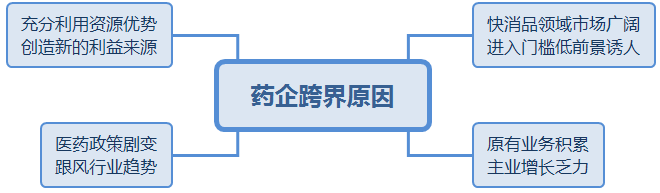
From the external environment perspective, following the "New Healthcare Reform," policies such as restrictions on antibiotic and adjuvant drug use in hospitals, centralized procurement and price negotiation, payment method reforms, the two-invoice system, and distribution sector rectification have been frequently implemented.The Pharmaceutical Business Environment Has Undergone Dramatic Changes, the market for certain non-originator drugs that are not in urgent clinical demand and face intense competition has been gradually shrinking, imposing significant operational pressure on some pharmaceutical companies.
So, why do pharmaceutical companies choose to cross over into the fast-moving consumer goods (FMCG) sector rather than into real estate, steel, or mining? The reason lies in the FMCG sector’s vast market, low barriers to entry, and strong growth momentum.
In terms of the primary sectors entered by pharmaceutical companies, the personal care, home care, and food and beverage markets are large in scale, while the qualification reviews and hardware investments required for market entry are relatively low; additionally,As per capita income rises and consumer mindsets upgrade, the fast-moving consumer goods (FMCG) market will continue to expand rapidly., which has given some pharmaceutical companies the incentive to “give it a try.”
The advantages for pharmaceutical companies entering the fast-moving consumer goods (FMCG) sector lie in two key aspects: first, they can effectively leverage their existing resources, such as capital and brand equity; second, if their quality assurance and quality control systems can be successfully integrated into FMCG production and manufacturing, they can ensure the quality and safety of the products involved, thereby strengthening and enhancing their brand.
However, cross-industry diversification by pharmaceutical companies is not foolproof; previous failures have served as cautionary tales. For instance, Guizhou Bailing’s collagen beverage project, which involved an investment of over RMB 100 million in 2011, was discontinued just two years later. Similarly, Yiling Pharmaceutical’s foray into the health beverage market met with limited success.
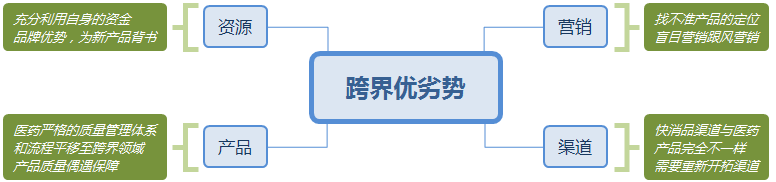
Pharmaceutical companies’ cross-industry ventures often fail due to missteps in marketing and distribution. From a marketing perspective, these companies frequently struggle to accurately position their products, expending resources on pseudo-demands or imagined needs rather than genuine consumer pain points. Cases like Yunnan Baiyao Toothpaste, which nailed its positioning from launch, are rare exceptions. On the distribution front, pharmaceuticals are primarily sold through hospitals and retail pharmacies. When diversifying into other sectors, pharmaceutical firms must build new sales teams and penetrate channels such as supermarkets and convenience stores—channels that operate very differently from traditional pharmaceutical retail. Moreover, with the rise of e-commerce in recent years, traffic and market share have been largely captured by established brands and early movers, leaving limited opportunities for latecomers.
Overall, successful cross-industry ventures in the pharmaceutical sector are predominantly undertaken by well-established brands and large enterprises, whereas most smaller companies tend to play a peripheral role with limited success. Cross-industry expansion requires long-term strategic planning and meticulous, in-depth execution.“Better to go home and weave a net than to stand by the pool and covet the fish.”