

Forum Insights: How Medical AI Achieves Product Implementation, Business Model Validation, and Profitability
On September 16–17, 2017, the 2017 Yangtze River Industry Forum (Autumn) and the Healthcare Big Data and Artificial Intelligence Conference were grandly held at the Wuhan Conference Center. The event was hosted by the China Association for Promotion of Rehabilitation Technology Transformation and Development, co-hosted by the Hubei Provincial Yangtze River Economic Belt Industrial Fund, organized by Zhongke Yanqi Lake Innovation (Beijing) Technology Service Co., Ltd., Tianhong Ruzhi (Wuhan) Investment Management Co., Ltd., and VCBeat, and supported by Health Valley and Optics Valley Smart Health Park.
At the forum on the afternoon of the 16th, Dr. Xia Liming, Director of the Department of Radiological Diagnosis at Tongji Hospital, Tongji Medical College, Huazhong University of Science and Technology, delivered an insightful presentation titled “Deep Learning and Intelligent Identification of Pulmonary Nodules.”
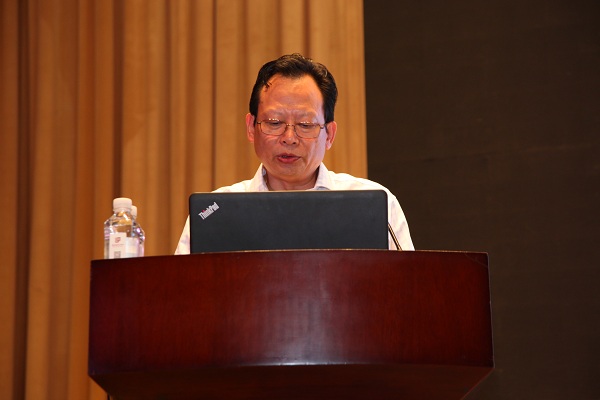
Professor Xia Liming, Director of the Department of Radiological Diagnosis, Tongji Hospital Affiliated to Tongji Medical College, Huazhong University of Science and Technology
Xia Liming stated, “Deep learning is ‘end-to-end’ learning that does not require intervention from human logic or knowledge. It can learn autonomously from experience. For instance, when teaching a child to recognize rabbits, we show them a picture of a rabbit and tell them it is a rabbit. The more rabbits of varying quantities and types we present, the better the child becomes at recognizing them. Deep learning mimics this human ability to independently summarize experiences and learn. In contrast, traditional artificial intelligence relies on explicitly defining specific characteristics of rabbits—such as features one, two, and three—and classifies an animal as a rabbit only if it meets all three criteria.”
Medical Artificial Intelligence from a Secondary Market Perspective
Subsequently, Jiang Tianjiao, Director of the Industrial Finance Department at Founder Securities and Head of Healthcare Industry Investment and M&A, delivered a presentation titled “Healthcare AI from the Perspective of the Secondary Market: The Starry Sky, the Earth, and the Road,” offering his insights and analysis on healthcare artificial intelligence from the standpoint of the secondary market.
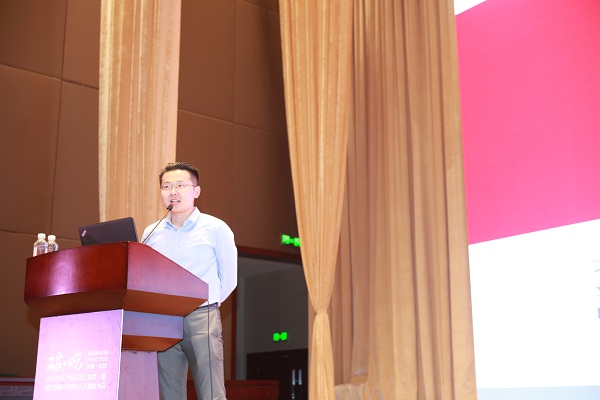
Jiang Tianjiao, Director of the Industrial Finance Department at Founder Securities and Head of Healthcare Industry Investment and M&A
Jiang Tianjiao posed a thought-provoking question in his speech: “Did projects in the internet healthcare era fail because they lacked AI-driven products or technologies? Entrepreneurs must clearly define their company’s positioning, avoid catering to pseudo-demands, and accurately assess users’ willingness to pay.”
He emphasized that for a business to succeed, it must at least transition to the stage of generating test revenue streams or achieving scalable revenue replication before the market window closes; otherwise, the project will fail.
“Currently, AI-powered medical imaging products have seen the most robust development and widespread implementation. But what will be the next key research focus beyond medical imaging? Entrepreneurs need to consider the next priority. At present, no definitive conclusion can be drawn, as we have not yet observed other standout companies in areas such as clinical decision support, apart from Watson.”
“Free or paid? What is the endgame for medical AI? Will it be dominated by a few oligopolies, or will there be niche, specialized players in their respective fields? I believe we can draw insights from the healthcare IT market. Despite severe product homogenization and its long-standing development, the healthcare IT market remains highly fragmented to this day. By extrapolation, I anticipate that medical AI will follow a similar trajectory, with no likelihood of a single player dominating the landscape.”
Addressing the issue of medical AI implementation, which is currently of greatest concern to industry professionals, Jiang Tianjiao stated: “I categorize implementation into three major types:First, the most superficial level of implementation is product implementation; second, business model implementation; and third, profitability implementation.”
Product commercialization requires two parallel conditions. The first is the validation of authenticity: the product must address a genuine need rather than a pseudo-demand, which involves verifying the realism of usage scenarios and the rigidity (inelasticity) of demand from stakeholders. The second is technical feasibility, encompassing the viability of the solution, cost-effectiveness, and endorsement by professionals—factors that are critically important. The key distinction between healthcare and other sectors lies precisely here: recognition and approval from industry experts regarding both the product and its underlying technology are paramount in this field. Additionally, technical robustness, reliability, and scalability are essential considerations.
Only with confirmed requirements and technical implementation can a product be successfully launched.
Next is the implementation of the business model, which involves two aspects: testing revenue streams and scaling up for replicated revenue. Testing revenue streams can only boost investors’ confidence in the business model but does not guarantee the project’s success; the success of the project depends on scalable replication across different regions.
Founder Securities previously observed that a significant number of business models essentially operate by buying high and selling low; while this approach can generate substantial transaction volume, the greater the volume, the heavier the losses.
Next is the realization of profitability, viewed from segmented perspectives such as image interpretation, voice entry, assisted diagnosis and treatment, and pharmaceutical R&D. Currently, voice entry has already achieved product commercialization; some imaging products have entered the stage of very small-scale testing with revenue generation, while assisted diagnosis and treatment has achieved the most successful level of commercialization.
IBM Watson has been deployed in seven countries and collaborates with 22 hospitals in China. A single hospital may utilize the Watson robot dozens of times per month, with each use costing RMB 5,000. Thus, the annual value contributed by one tertiary Grade A hospital is approximately several hundred thousand RMB.
We believe that the most mature products in computer-aided diagnosis and treatment are currently only at the stage of generating test revenue. Pharmaceutical R&D is also at this stage. Companies combining pharmaceutical R&D with AI are not involved in the entire R&D process but focus on pre-clinical screening. Since Phase I, II, and III clinical trials incur substantial costs and require patient recruitment for testing, medical AI has not yet demonstrated significant impact in this area.
How Medical AI Companies Understand and Address Healthcare Challenges
Chen Hui, CEO of Yasen Technology, delivered a presentation titled “Implementation and Application of Artificial Intelligence,” sharing Yasen Technology’s insights and practices in the field of medical artificial intelligence.
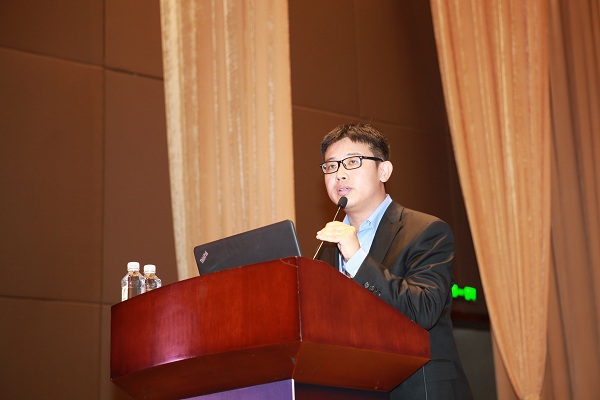
Chen Hui, CEO of Yasen Technology
Chen Hui stated, “Companies operating at the intersection of artificial intelligence and medical imaging all encounter a common dilemma: products developed in the laboratory using hundreds of thousands of data points exhibit significantly reduced accuracy when deployed in third- and fourth-tier cities. How, then, can AI-driven medical products effectively address real-world challenges? Yasen Technology’s approach begins by assisting hospitals in standardizing their underlying data infrastructure, which involves integrating data from diverse sources and of various types. Secondly, rigorous data quality control must be implemented across all hospitals within the medical consortium to ensure that hospital data is suitable for use with the product. Finally, beyond data quality control, companies must also address challenges related to teaching and research as well as equipment diversification. Only after resolving these issues can laboratory-developed products be successfully translated into clinical practice.”
Subsequently, Ms. Cathy Fang, Vice President of Yitu Healthcare, delivered a presentation titled “Artificial Intelligence Transforming Healthcare,” sharing Yitu Healthcare’s achievements and perspectives in medical artificial intelligence.
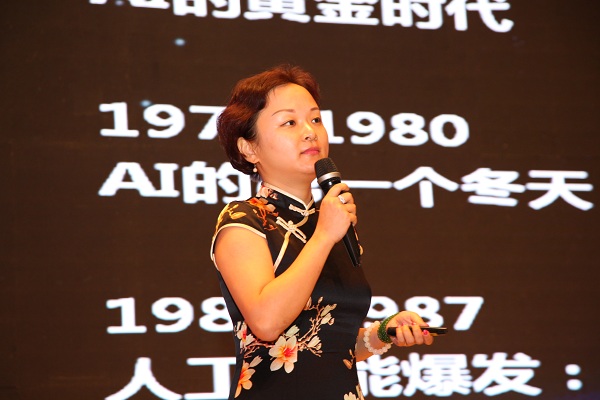
Ms. Cathy Fang, Vice President of Yitu Healthcare
Cathy Fang stated, “AI-powered medical products must be practically implemented and integrated into physicians’ workflows to genuinely address their clinical pain points and resolve real-world operational challenges. Only then will hospitals have a strong willingness to adopt these solutions, which in turn drives purchasing decisions. Yitu Healthcare’s research strategy is very clear: all product lines are designed to address clinical pain points and must be deployed in clinical practice.”
Yitu Healthcare’s intelligent lung CT product is now highly mature, having been trained on a dataset of over one million clinical records. This dataset is not derived from open-source data but consists of multi-center, large-sample clinical data. Since its launch at pilot hospitals in March, the product has analyzed 50,000 clinical cases across China.
Another bone age assessment product from Yitu Healthcare enables pediatricians to establish a bone age analysis atlas based on the Chinese population. The success of this case signifies that artificial intelligence algorithms will be featured in future gold-standard clinical practice guidelines.
Subsequently, Dr. Yu Zhong, Founder and President of Jinglun Century, delivered a presentation titled “Intelligent Medicine in the Age of Artificial Intelligence,” sharing his insights on intelligent healthcare.
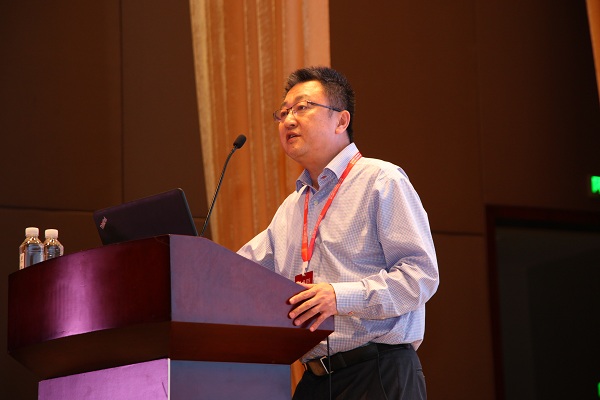
Dr. Yu Zhong, Founder and President of Jinglun Century
Yu Zhong stated, “To implement tiered diagnosis and treatment, the primary task is to cultivate grassroots physicians. Grassroots physicians are general practitioners and family doctors. If we fail to train competent grassroots physicians, China will never be able to resolve the difficulties and high costs associated with accessing medical care. Therefore, this issue must be effectively addressed, and the only way to do so is by empowering grassroots physicians. The diagnostic capabilities, educational backgrounds, and clinical experience of grassroots physicians vary significantly, yet they constitute the cornerstone of the national healthcare system. Enhancing their capabilities through big data and artificial intelligence is not merely a national strategy but also the concrete pathway for implementing such a strategy. This is our understanding, and thus we have devoted substantial efforts to this end.”