

Jinglun Century's Yu Zhong: Leveraging Humans, Robots, Devices, and Cloud Platforms to Enhance Disease Cure Rates
Healthcare has a strong potential demand for artificial intelligence. Currently, a relatively complete industrial structure for “AI + Healthcare,” encompassing “infrastructure, technology, and applications,” has begun to take shape globally. For new technologies to truly drive industry transformation, coordinated efforts across policy, technology, talent, and other areas are essential, alongside corporate exploration and the accumulation of experience over time. To explore the future development and practical implementation of healthcare big data and artificial intelligence, the 2017 Yangtze River Industry Forum (Autumn) and the Healthcare Big Data and Artificial Intelligence Conference were grandly held at the Wuhan Conference Center on September 16–17, 2017.
At the conference, Mr. Yu Zhong, Founder and President of Jinglun Century Medical Network Technology (Beijing) Co., Ltd., delivered a presentation titled “Intelligent Medicine in the Age of Artificial Intelligence.” He discussed the current implementation of next-generation artificial intelligence in assisting physicians to improve disease cure rates and other areas. The following is a summary of his insightful speech compiled by VCBeat:
Guest Introduction
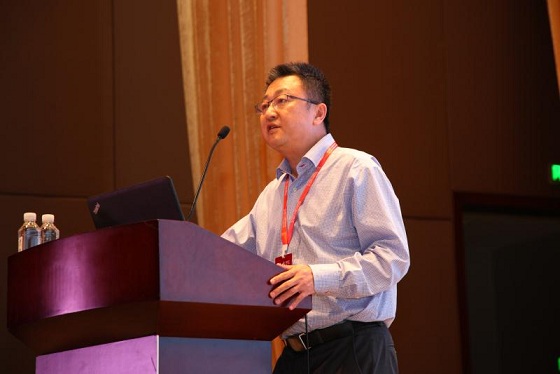
Mr. Yu Zhong, Founder and President of Jinglun Century Medical Network Technology (Beijing) Co., Ltd.
Dr. Yu Zhong has spent over twenty years studying, working, and launching startups in the United States, particularly in Silicon Valley. He previously served as Technical Director and Chief Network Architect at AT&T in the U.S., and founded two high-tech telecommunications companies in Silicon Valley. Dr. Yu earned his Ph.D. in Electrical Engineering from the California Institute of Technology (Caltech) and served as a Researcher at Caltech’s Jet Propulsion Laboratory (JPL).
Dr. Yu Zhong currently also serves as:
Expert, Expert Committee on Evaluation System and Safeguards for the Application Standards of Health and Medical Big Data, National Health and Family Planning Commission
Secretary-General, Medical Internet of Things and Big Data Development Special Fund, China Health Promotion Foundation
China Development Bank - CDB Capital Green Smart City Smart Healthcare Expert
Next-Generation Artificial Intelligence
From the perspective of national strategy, artificial intelligence in the medical field has now become one of the country’s development strategies.
The new generation of artificial intelligence differs significantly from the two previous major waves of AI development. On one hand, AI has permeated various industries, boasting abundant data and application scenarios. In contrast, the prior two waves of AI were confined to specific application domains.
This time, artificial intelligence has not only exploded on a global scale but also entered people's daily lives.
Driven by the proliferation of the internet and big data, the maturation of a suite of innovative technologies, and market demand, artificial intelligence has become closely intertwined with the daily lives of ordinary people—this is the new generation of AI.
The new generation of artificial intelligence can also bring about revolutionary changes in the field of healthcare.
Intelligent medicine comprises two aspects: intelligence and medicine. Intelligence encompasses big data and artificial intelligence, which can coexist or be integrated into a unified whole.
Disease prediction models are validated through big data and used to forecast future outcomes. In contrast, artificial intelligence can leverage a broader array of technologies, including big data, expert systems, the Internet of Things (IoT), and human-robot interaction.
At present, within China’s overarching strategies for healthcare reform, the Healthy China 2030 initiative, the development of a health and medical ecosystem, and industrial growth, intelligent medicine is defined by two key aspects: prevention of major diseases and management of chronic diseases. While these do not encompass the entirety of medical practice, they represent the current focal points of the field.
Big Data and Artificial Intelligence Can Help Physicians Improve Disease Cure Rates
How can big data and artificial intelligence deliver value and be integrated into application scenarios in the processes of prevention and management?
Taking the problem-solving paradigm in medicine as an example, medical imaging assists physicians in detection, diagnosis, and assessment within the hospital system; these tasks can all be defined as medical problems. Based on these medical problems, enterprises carry out data collection, followed by data cleaning and annotation.
Building on this foundation, data is collected from hospitals or clients for big data analysis, a machine learning validation model is established, and the final model is determined to create a closed loop. This represents a highly significant paradigm.
Over the past few years, Jinglun Century has assisted numerous medical experts in data cleaning, standardization, and problem-solving, establishing a consistent and stable collaborative model between the two parties.
Through joint design, data collection, and organization, Jinglun Century leverages machine learning and predictive models to advance the resolution of clinical challenges faced by physicians.
Taking hyperthyroidism as an example, it is a common condition, and iodine-131 radioisotope therapy is a highly effective treatment, with an efficacy rate approaching 100%. However, a key issue arises in this process: what is the appropriate dosage of iodine-131?
If the dosage is incorrect, patients may develop hypothyroidism as a side effect after their hyperthyroidism resolves; once hypothyroidism occurs, lifelong medication is required.
Many experts do not know the precise dosage throughout their careers, as dosing is entirely individualized. The underlying correlations remain unclear to most.
Currently, the most prominent experts in China use radioisotopes to treat hyperthyroidism, achieving a success rate of approximately 70% (defined as cure of hyperthyroidism without progressing to hypothyroidism).
Jinglun Century can collaborate with experts to leverage machine learning in analyzing data from initial screening and diagnosis through to final treatment, potentially increasing cure rates from 70% to 75%, or even 80%.
This paradigm has two requirements: first, there must be data, and specifically, data jointly designed by medical and computer science experts.
Second, paradigm-based services. From the perspective of medical services, data drives services, services drive decision-making, and data drives decision-making; decisions then guide services, which in turn generate new data during the service process, ultimately forming a closed loop.
The Implementation of Artificial Intelligence in Primary Healthcare and Elderly Care
PCIC is a research project jointly conducted by the Ministry of Finance, the National Health and Family Planning Commission, and the Ministry of Human Resources and Social Security, in collaboration with Jinglun Shiji, the World Bank, and the World Health Organization.
This study primarily addresses China’s aging population, as well as issues related to chronic diseases and lifestyle.
PCIC is a people-centered model that establishes a healthcare delivery system transitioning from basic clinical care and public health services at the grassroots level to specialized care at medical centers. China’s vigorous promotion of tiered diagnosis and treatment, two-way referrals, and family doctor contract services are all grounded in the people-centered philosophy of PCIC.
Taking Jinglun Century’s thyroid initiatives as an example, thyroid diseases differ from lung and liver cancers in that they have a high survival rate; with effective follow-up and prognosis management, patient survival rates can be very high. However, the incidence of thyroid disease is extremely high, ranking it among the top ten malignant tumors. Consequently, a significant portion of critical illness insurance coverage offered by insurance companies is focused on thyroid conditions.
From the perspective of insurance companies, they certainly do not wish to classify thyroid conditions as critical illnesses; however, the government has not agreed. Consequently, insurers have had to seek alternative approaches by funding a series of studies focused on thyroid diseases.
Jinglun Century collaborates with the National Health Management Demonstration Base of the China Health Promotion Foundation to conduct thyroid nodule screening and risk assessment, establish standardized data templates, and subsequently carry out data analysis.
Currently, the optimal method for thyroid assessment is thyroid ultrasound. By analyzing ultrasound data and establishing standardized templates, a nationwide thyroid tracking and management service can be implemented.
Currently, the project involves dozens of hospitals, with Jinglun Century partnering with insurance companies and large healthcare enterprises to form an extensive network for thyroid disease screening.
Jinglun Century has also developed an intelligent postoperative management system for thyroid surgery. This system was jointly developed with the Chinese Society of Clinical Oncology (CSCO). It classifies patients according to clinical guidelines based on the various stages and subtypes following thyroid disease surgery, ultimately forming an expert system.
This system can manage patients’ conditions much like a psychiatrist would. After undergoing surgery and examinations at a major hospital, patients can return home, download a mobile app, upload their post-operative monitoring data to the app, and then receive personalized recommendations and assessments from their attending physicians through the Intelligent Post-Thyroidectomy Management System.
This is equivalent to providing specialists with an intelligent assistant capable of delivering comprehensive patient tracking and management.
Additionally, Jinglun Century has also established a service program for diabetic retinopathy.
The awareness rate of diabetes is very low, with many individuals being diagnosed only during screening for diabetic retinopathy. Fundus screening is a highly cost-effective and convenient approach that can significantly improve diabetes awareness on a large scale.
Currently, physicians conduct patient screening, assessment, tracking, and follow-up through various service channels, including health examination centers, primary care hospitals, and inter-departmental collaborations within hospitals. The artificial intelligence products developed by Jinglun Century can play a role in intelligent decision-making within this scenario.
In the future, Jinglun Century will focus its efforts on the following areas.
1. General Practitioner Intelligent Assistant Robot. Jinglun Century has signed a deployment plan for general practitioner intelligent robots with the Anhui Provincial Health and Family Planning Commission.
Second, the application of intelligent assistant robots for general practitioners is driven by Jinglun Century’s big data disease expert systems and models.
Intelligent Assistant Robot for General Practitioners: Serving as an intelligent aide to general practitioners in community health centers, this robot assists primary care physicians in the diagnosis and treatment of common diseases, including the management and follow-up of chronic conditions, family doctor contract enrollment, and the delivery of service packages required by patients post-enrollment.
Through the use of an intelligent assistant robot for general practitioners, it is possible to create an integrated service model that combines family doctor services, tiered diagnosis and treatment, disease prevention, healthcare, and rehabilitation. This enables general practitioners to successfully fulfill their family doctor contract services.
In the area of home-based elderly care, Jinglun Century has already conducted pilots in three nursing homes. The general practitioner intelligent assistant robot is capable of performing vital signs monitoring, health warnings, health consultations, and health analysis and assessment for the elderly.
In the future, Jinglun Century will leverage comprehensive interactive services involving humans, robots, devices, and cloud platforms to ultimately establish a closed-loop healthcare service ecosystem powered by artificial intelligence and big data.