

Integrated Human-Machine Decision System: The Future Trend of Clinical Decision-Making | Forum Speech by Tao Ying of SinoPharm Network
Healthcare has a strong latent demand for artificial intelligence. Currently, a relatively complete industrial structure for “AI + Healthcare,” encompassing “infrastructure, technology, and applications,” has begun to take shape globally. For new technologies to truly drive industry transformation, coordinated efforts across policy, technology, talent, and other domains are essential, alongside corporate exploration and the accumulation of experience over time. To explore future development pathways and practical implementation strategies for health and medical big data and artificial intelligence, the 2017 Yangtze River Industry Forum (Autumn Session) and the Health and Medical Big Data & Artificial Intelligence Conference were grandly held at the Wuhan Conference Center on September 16–17, 2017.
At this conference, Mr. Tao Ying, Chief Artificial Intelligence Officer of Sipe (Beijing) Network Technology Co., Ltd.,《Big Data in Oncology for Clinical Decision Support: On the Role of Artificial Intelligence in Clinical Decision-Making》Titled “,” the presentation elaborated on the current dilemmas faced by clinical decision-making in assisting physicians with diagnosis and treatment, as well as the future development trends of decision support systems. Below is the curated highlight of the speech compiled by VCBeat:
Guest Introduction
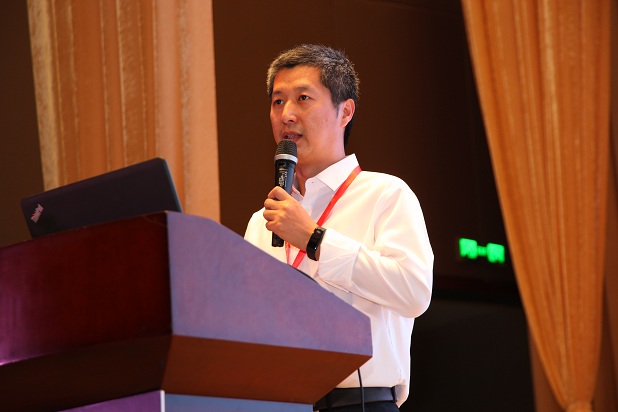
Mr. Tao Ying, Chief Artificial Intelligence Officer of Sipei (Beijing) Network Technology Co., Ltd.
Ph.D. in Biomedical Informatics from Columbia University; Bachelor of Medicine in Clinical Medicine from China Medical University; Gastroenterologist. Research interests span various branches of medical artificial intelligence, including clinical decision support, medical natural language processing, medical ontologies and knowledge bases, and data mining. Previously held positions at the Department of Medicine of the China Astronaut Training Center, IBM Research China, Microsoft Health Solutions Group, Caintech China, and HP China Enterprise Services, along with entrepreneurial experience. Primary work has focused on healthcare big data platforms and the application and value realization of artificial intelligence technologies in medical research, clinical practice, and management. Previously oversaw the value-driven application of the Microsoft Amalga big data platform in China and designed the big data applications for the Guiyang Health Cloud. Led the development of electronic medical record systems, Chinese medical natural language processing systems, and the Chinese Astronaut Health Database. Currently serves as Chief Artificial Intelligence Officer and Head of the Innovative Products Division at Sinopharm Network Technology Co., Ltd.
SiMai Network is a company dedicated to oncology big data. Founded in 2014, it has completed two rounds of financing after three years of development. The companyWe have successively developed a multi-center oncology big data platform, along with commercial and research applications of oncology big data, such as real-world studies.
Currently, Si Pai Network’s physician network covers more than 2,000 doctors, with collaborations spanning over 700 departments and more than 300 hospitals, encompassing 26 types of oncology indications.
Among its various healthcare operations, Sipei Network has consistently leveraged big data and artificial intelligence technologies to directly support frontline physicians’ diagnostic and therapeutic activities, as well as their clinical decision-making.
Clinical decision-making is the core of clinical practice. Through this process, physicians make judgments regarding disease diagnosis and testing, enabling patients to understand how to maximize the benefits of their overall treatment plan, optimize quality of life, and minimize costs under their current circumstances.
Treatment poses a significant challenge in decision-making, constrained by the current state of medical advancement and fraught with numerous uncertainties. Therefore, clinical decision-making requires support from technologies such as big data and artificial intelligence.
Taking SiMai Network’s oncology big data-supported clinical decision support for medication management of chemotherapy adverse reactions as an example.
Typically, chemotherapy can cause various adverse reactions, such as bone marrow suppression, nausea and vomiting, and diarrhea.
For adverse reactions of nausea and vomiting, there are clear international clinical guidelines that classify the risk into four levels—high, moderate, low, and minimal—based on the probability of occurrence. Each risk level corresponds to specific medication guidance. However, it is regrettable that current clinical guidelines do not provide methods for assessing overall risk; they only list the emetic risk associated with individual chemotherapy agents.
Limitations of Clinical Guidelines in Clinical Decision-Making: First, risk probability estimates are insufficiently precise, failing to account for polypharmacy, the use of combination targeted therapies, and non-pharmacological factors. Second, they lack algorithms that integrate multiple factors, suffer from a lack of localized evidence, and exhibit limited practical applicability in clinical settings.
The lack of operability, personalization, and scientific rigor in clinical guidelines presents new opportunities for oncology big data companies at this stage.
To address these issues, SiMai Network aims to establish a risk budget model to predict chemotherapy-induced adverse reactions.
According to a survey by Smarthealth Network, scoring methods are commonly used abroad; for instance, 3 points are deducted if the patient is aged 40–60 years, while 3 points are added for targeted therapy, with the final total score calculated accordingly.
SiPai Network plans to develop its own predictive model for chemotherapy-induced nausea and vomiting (CINV). The company collected data from 12,000 lung cancer patients, covering 23,292 cycles of systemic therapy, across 12 provinces and 19 oncology-related departments.
After conducting predictive analysis, SiMai Network found that the Naive Bayes algorithm was the most suitable.It achieves the highest cross-validated AUC, is the most interpretable algorithm, demonstrates the strongest generalization capability, and provides probability estimates.The positive predictive value of the Naive Bayes algorithm is approximately 0.7–0.8, which has essentially reached the current technological limit.
Clinical data models can rapidly integrate diverse information, enabling more precise decision-making for prophylactic medication in chemotherapy and thereby providing guidance for the majority of cases.
Application of Artificial Intelligence and Big Data Technologies in Clinical Decision-Making: According to observations by Sipei Network, there are currently numerous machine learning and artificial intelligence projects. Regardless of the algorithms employed, how they are optimized, or how much data volume is increased, the accuracy of their outputs always has an upper limit. This limit is far below 100%.
To explain this phenomenon, Si Pai Network has proposed a theory of information completeness. Any decision-making task can be distilled into three components: input, output, and algorithm. It is evident that if the input data are incomplete, the accuracy of the output will have an inherent limit, regardless of how powerful the algorithm may be.
Determinants of decision-making can be categorized into various disciplinary fields. In medicine, it spans three major domains: the arts, natural sciences, and engineering. Due to differing tasks, the required algorithms, computational power, and achievable precision also vary.
For instance, with various medical imaging scans, the performance ceiling approaches 100%, as they constitute data with complete information, ensuring that the information received by physicians and computer systems is nearly identical.
However, there are far too many uncertainties in predicting epidemic risks, so its algorithms are completely different from those used for image interpretation. Consequently, its accuracy is often much lower than expected. The goal of precision medicine is to continuously incorporate more factors to make decision-making more scientific.
The application of artificial intelligence in clinical decision-making can only serve as an auxiliary role. The human-machine integrated decision-making system represents the future direction of development.
Human-machine integrated decision-making systems offer higher accuracy. However, even if machines achieve a higher accuracy rate than physicians, they cannot replace them. During the first two waves of artificial intelligence, many systems surpassed human performance in accuracy, yet ultimately evolved into clinical decision support systems to assist physicians in their decision-making.
The application of artificial intelligence in clinical decision-making should not be viewed with blind optimism, believing that machines can replace physicians and causing unnecessary panic, nor should it be approached with pessimism.
What enterprises need to do is actively explore more technologies to make decisions more precise. By leveraging new artificial intelligence technologies, such as deep learning, AI can be organically integrated with human capabilities, which represents the future development trend.