

Evergrande's Cross-Industry Expansion into Healthcare: Leveraging Football Success to Build a Billion-Dollar Health Empire
On September 17, the 2017 China Health Real Estate Innovation Summit, co-hosted by International Healthcare Group (IHG) and Caixin Health Point in Shanghai, was successfully held. The event attracted more than 30 real estate enterprises and over 400 attendees, including Evergrande, Country Garden, and Taihe.
On the second day after the conference, as China Evergrande’s stock price continued to hit new highs, Xu Jiayin, Chairman of Evergrande, became China’s richest person with a net worth of $39.1 billion, slightly ahead of Ma Huateng in second place and Jack Ma in third.
Subsequently, as the stock price retreated, Xu Jiayin ceded his top spot once again to Ma Huateng and Jack Ma, returning to third place on China’s rich list with a net worth of RMB 38.5 billion.
Even so, major media outlets continue to vie to interpret the story of Xu Jiayin becoming the richest man. As the crossover from real estate to the health sector remains a hot topic, Evergrande, one of the “Big Four” property developers, had already made its move into the healthcare industry as early as 2013.
In just four years, Evergrande Health has completed a back-door listing and turned a profit. According to the 2016 annual results announcement released in Hong Kong, China on March 22, 2017, Evergrande Health Industry Group achieved a turnover of HK$528 million in 2016.
It can be said that this is a strong report card for Evergrande Real Estate’s transition into the healthcare sector. Nevertheless, doubts persist regarding the business model of its cross-industry expansion into health care: How will it integrate with its real estate operations? Where will medical talent come from? And can it replicate the success it achieved by venturing into football?
In response to these questions, Xu Yi, Vice President of Evergrande Health Group, stated, “Drawing an analogy from the success of the Guangzhou Evergrande Football Team, we remain fully confident in our cross-industry expansion into the big health sector.”
In fact, for most real estate companies, cross-industry expansion is a way to achieve a diversified strategic layout and a normal part of corporate development; it is just that Xu Jiayin has heavily bet on the sports industry.
It was precisely this decision that brought Evergrande and Xu Jiayin himself immeasurable returns. Recently, as Evergrande’s stock price surged, Xu Jiayin surpassed Tencent’s Ma Huateng and Alibaba’s Jack Ma to become mainland China’s “richest person for a day.” Consequently, the valuation of the Guangzhou Evergrande football team, which he has managed for many years, also rose sharply, with its market value exceeding NT$11 billion (RMB 2.4 billion).
Guangzhou Evergrande’s meteoric rise took just three years. With the support of Xu Jiayin, the club ascended from its nadir to the pinnacle of Asian football, establishing a formidable influence across China and Asia.
During this period, Xu Jiayin made two correct moves: first, signing a large number of star players; second, forging a successful partnership with Jack Ma’s Alibaba Group. This not only addressed the talent issue but also secured future investment for the team. Meanwhile, the sales of an increasing range of products under Evergrande could clearly hitch a ride on the coattails of this e-commerce giant. All things considered, it was a win-win situation.
Subsequently, on November 6, 2015, Guangzhou Evergrande Taobao Football Club was officially listed on the National Equities Exchange and Quotations (NEEQ), becoming the first publicly traded football club in Asia. The total share capital of Evergrande Taobao amounted to 375 million shares, with Evergrande Real Estate and Alibaba holding 60% and 40% of the shares, respectively. This valuation represented a multiple-fold increase compared to the RMB 100 million Xu Jiayin invested to take over the Guangzhou football team when it was at its lowest point.
For Xu Jiayin, the exposure gained from investing in football has been immense. Whenever there is a football match, the number of reports by international and domestic media, if converted into advertising costs at a certain ratio, would certainly amount to a huge sum.
Sports is an industry with mass participation, delivering far greater impact in terms of exposure and public awareness than traditional advertising alone. For instance, since Evergrande Group entered football investment in 2010, its sales revenue surged from RMB 30.3 billion in 2009 to RMB 50.4 billion, then reached RMB 80.39 billion in 2011. By 2013, total sales had hit RMB 100.4 billion; in 2014, the figure grew to RMB 131.5 billion; in 2015, it exceeded RMB 200 billion; and in 2016, sales soared to a remarkable RMB 373.3 billion, propelling Evergrande to the top position in the industry. In 2017, Evergrande set its sights on achieving RMB 450 billion in sales.
If investing in football brought Evergrande external benefits such as money, fame, and brand recognition, then investing in the health industry not only wins hearts and social reputation but also generates profits, yielding both internal and external returns.
Previous media reports quoted Tan Zhaohui, Chairman of Evergrande Health, as stating: “Evergrande Health will integrate the advantages of its three core services to establish a prevention-oriented, full-lifecycle service system that combines ‘prevention, treatment, and care.’ This initiative aims to achieve complementary strengths and resource sharing with the public healthcare system, jointly enhancing the quality of healthy living for the general public.”
I. Optimizing Medical Services. Evergrande Health has established a “trinity” medical service system featuring high-end international hospitals as the flagship, community-based health management services as the foundation, and integration of resources from Grade 3A hospitals across various regions. This approach channels high-quality medical resources into communities, facilitating information interoperability, tiered diagnosis and treatment, and the integration of medical care with elderly care.
II. Enhance Health Security. Evergrande Health has engaged in deep cooperation with financial institutions such as insurance companies, integrated with the national medical insurance system, and established a comprehensive health security framework covering various types of insurance. It has pioneered a “Kaiser Model” tailored to China’s national conditions, effectively integrating medical services with medical insurance.
III. Develop the Big Health Industry. Evergrande Health has achieved cross-sector integration with multiple industries, including finance, tourism, internet, sports, and leisure, to incubate new industries, new business formats, and new models within the Big Health sector.
Even with such a clear path, one must still overcome three major hurdles in healthcare: where to source physicians, where to acquire patients, and how to achieve profitability.
According to insiders, in terms of talent, Evergrande Real Estate differs from its competitors, particularly in its talent pool for high-end hospitals. It has recruited researchers from both domestic and international sources, boasting over 1,000 principal investigators and investing more than $640 million in research funding. The departments receiving this investment are world leaders in multiple specialized fields, including oncology, cardiology, obstetrics and gynecology, neurology and neurosurgery, orthopedics, and rheumatology.
During the project’s operational phase, Evergrande Real Estate aimed to take a holistic approach to the broader health industry.Leveraging the Role of Medical Incubators,It aims to leverage its accumulated experience in the real estate sector to enhance its understanding of the healthcare industry. By positioning itself as a professional health industry company, it has established comprehensive systems for talent reserves and technology acquisition.
Therefore, for Evergrande Real Estate, venturing into the broader health and wellness industry is not an obstacle; rather, it represents a significant development opportunity and a valuable complement to its core business.
According to incomplete statistics, Evergrande has more than 400 residential communities in over 200 cities across China, serving 3.7 million homeowners and adding 700,000–800,000 new residents annually, making it an industry leader. Leveraging these community-based resources, Evergrande possesses unique advantages in operating internet-enabled community hospitals, which constitutes one of the core businesses of Evergrande Health.
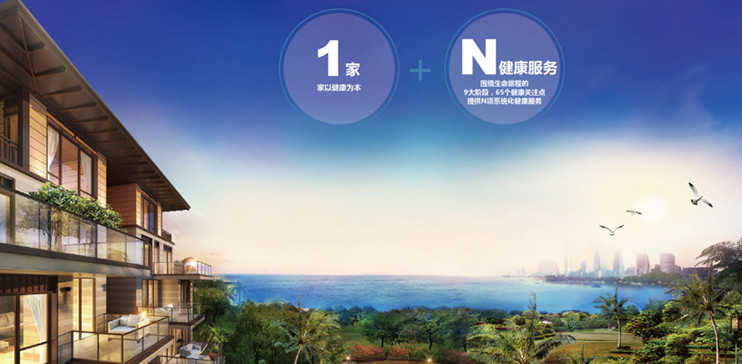
It is evident that Evergrande’s strategy for crossing over into the broader health and wellness sector is clear: it is positioned as a group-wide service initiative, encompassing the entire health and wellness industry chain rather than constituting a single, isolated project. Only by achieving success across this entire health and wellness industry chain can true success be realized.