

Yitu Healthcare's Fang Cong: AI to Leave Its Mark on Future Clinical Guidelines | Forum Speech
The healthcare sector has a strong latent demand for artificial intelligence. Currently, a relatively complete industrial structure for “AI + Healthcare,” encompassing infrastructure, technology, and applications, has begun to take shape globally. For new technologies to truly drive industry transformation, coordinated efforts across policy, technology, talent, and other areas are required, along with corporate exploration and the accumulation of experience over time. To explore the future development and practical implementation of health and medical big data and artificial intelligence, the 2017 Yangtze River Industry Forum (Autumn) and the Health and Medical Big Data & Artificial Intelligence Conference were grandly held at the Wuhan Conference Center on September 16–17, 2017.
At the conference, Fang Cong, Vice President of Yitu Healthcare, delivered a presentation titled “Artificial Intelligence Transforming Healthcare,” in which he elaborated on how AI technology can be better integrated with medical practice. Below is an exclusive summary of his keynote speech compiled by VCBeat:
Guest Introduction
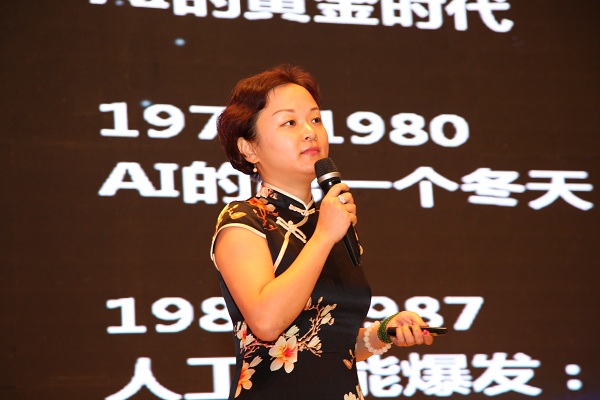
Fang Cong, Vice President of Yitu Healthcare
Healthcare+AI Products Embedded in Physician Workflows Are the Cornerstone of Building Smart Hospitals
“AI is a fleeting trend, and the window of opportunity will close in a few years. Those that survive the shakeout will be AI products that are seamlessly integrated into clinical workflows—tools that physicians find both useful and usable. These products will serve as the cornerstone for building intelligent departments and smart hospitals,” said Fang Cong.
Currently, the earliest practical integration of “AI + Healthcare” into clinical workflows has primarily occurred in the field of medical imaging. Among well-known domestic AI companies, Yitu Technology began investing in “AI + Healthcare” research last year. Leveraging its substantial technical expertise in deep learning for image analysis, Yitu’s auxiliary diagnostic product for chest CT imaging has been deployed in dozens of top-tier Grade A tertiary hospitals across China, including Zhejiang Provincial People’s Hospital, the Second Affiliated Hospital of Zhejiang University School of Medicine, and Fudan University Shanghai Cancer Center. The product has been integrated into clinical workflows, with clinicians adopting over 90% of the reports generated by Yitu’s intelligent imaging auxiliary diagnostic system.
In the Hubei region, Zhongnan Hospital of Wuhan University, which has experienced rapid development in recent years, has introduced Yitu’s AI-assisted diagnostic system in its Department of Radiology.This system achieves a detection sensitivity of up to 96% for pulmonary nodules, effectively reducing the risk of missing small nodules and automatically generating imaging reports, representing nearly the highest level of artificial intelligence in lung CT diagnosis currently available in China.. In addition, Union Hospital affiliated to Tongji Medical College of Huazhong University of Science and Technology, Wuhan General Hospital of Guangzhou Military Region, Renmin Hospital of Wuhan University, and other institutions have also prepared to launch and use the system.
With so many companies now developing artificial intelligence, are they merely hyping concepts, or are they truly helping physicians address real-world clinical pain points?
The workload in radiology departments is extremely heavy. For instance, at Wuhan General Hospital of the Guangzhou Military Command, each patient’s CT scan comprises 150–200 images, with junior physicians spending 80% of their time on image interpretation. Under traditional methods, the average reading time per case is 5–8 minutes, exceeding 10 minutes for more complex cases. With the application of an AI-assisted diagnostic system, this process takes only a few seconds and can directly generate diagnostic reports.
“Yitu’s system can alert physicians, reduce the burden of tedious data entry, and alleviate the excessive workload of radiologists,” said Professor Xu Haibo, Director of the Medical Imaging Center at Zhongnan Hospital of Wuhan University.
In this regard, Yitu Technology is at the forefront. Beyond AI-assisted diagnosis for chest CT scans, its “AI + Healthcare” full-link medical R&D platform has been integrated into physicians’ workflows and officially launched for clinical trials in hospitals. This marks China’s first AI-powered medical diagnostic product covering the entire spectrum of medical data, with applications spanning chest CT, mammography/ultrasound, and neurological MRI.
Future Clinical Practice Guidelines May Bear the Imprint of Artificial Intelligence
At the conference, Fang Cong also made the debut of Yitu’s intelligent auxiliary diagnosis system for pediatric bone age.
Bone age assessment is used to evaluate whether a child’s growth and development are proceeding normally. During this process, physicians typically obtain an X-ray of the child’s left hand and wrist, assign scores based on the maturation status of individual bones, calculate a total score, and then compare it with standardized atlases to determine the bone age. If the discrepancy between bone age and chronological age is within one year, the child’s development is considered normal; if the difference exceeds one year, clinical intervention is warranted.
Without AI robots, manually calculating this process would take approximately 10–15 minutes; now, it takes only five seconds to determine a child’s bone age. The significance of this product lies not only in improving physicians’ efficiency but, more importantly, in offering a possibility: that future clinical diagnostic standards will be medical diagnosis and treatment guidelines based on artificial intelligence algorithms.
Currently, the Greulich-Pyle (GP) atlas method used clinically by physicians for bone age assessment is based on atlases developed two decades ago from European Caucasian populations, and therefore does not accurately reflect the actual growth and development patterns of Chinese children.
Based on the analysis of big data collected through artificial intelligence, our product can help physicians establish a bone age assessment atlas tailored to the Chinese population. This example demonstrates that,Future gold-standard clinical practice guidelines may bear the imprint of artificial intelligence algorithms.。
Looking globally, Google DeepMind’s AKI prediction, the skin cancer pathology classification featured on the cover of Nature, and our own intelligent diagnostics for bone age and chest CT scans are all essentially based on large datasets to build classification models that predict the disease associated with new medical cases.These diverse models are breaking the boundaries of conventional physician diagnosis, treatment, and cognition, thereby expanding the definition of conventional medicine.。
Taking radiology as an example, image interpretation by radiologists involves making judgments about lesions based on experience within limited data dimensions, such as size, shape, solid or part-solid composition, and density. By drawing on previously reviewed medical cases, physicians make approximate estimates of the underlying condition. Many medical terms are defined in a highly subjective manner. For instance, "tree-in-bud" nodules resemble buds sprouting from a tree, while "ground-glass" nodules appear relatively hazy. However, is there any scientific basis for these descriptors, such as "ground-glass" or "tree-in-bud"? No. They are merely summaries of empirical observations made by the human eye.
However, artificial intelligence algorithms are based on quantitative assessments of high-dimensional features. By providing it with data and continuously supplying concepts of “cat” versus “non-cat,” it establishes a black-box algorithmic model. Within this model, it can extract hundreds or even thousands of features, which have been scientifically and statistically linked to the final qualitative diagnosis of lesions through correlation analysis.
Beyond medical imaging, Yitu Healthcare is a company that covers the full spectrum of medical data.The significance of “comprehensive data” lies in the fact that future diagnostics will certainly not rely on a single type of imaging study or a single category of medical data. Currently, no physician interprets imaging films without reviewing the patient’s past medical history; a diagnosis of lung cancer is never made based solely on a chest radiograph. Instead, clinicians invariably inquire about smoking history and prior pulmonary surgeries, formulating diagnostic and treatment recommendations only after multidisciplinary comprehensive assessment. Accordingly, our definition likewise entails the development of an integrated diagnostic and therapeutic product that achieves all-around coverage with comprehensive, full-spectrum data.。
It is understood that Yitu has recently launched AICARE® Intelligent Auxiliary Diagnosis for Chest CT and AICARE® Intelligent Auxiliary Diagnosis for Common Pediatric Diseases, and will soon roll out additional AICARE® series products, including AICARE® Intelligent Auxiliary Diagnosis for Pediatric Bone Age, AICARE® Intelligent Medical Record Search Engine, and AICARE® Clinical Intelligent Research Platform.
“From departmental tasks to the full-chain diagnosis and treatment system for diseases, and further to smart hospitals, artificial intelligence will play a core role in the healthcare system in the future. AI is not only helping physicians address clinical pain points but also expanding the frontiers of medical knowledge and challenging the limits of traditional medicine,” said Fang Cong. Artificial intelligence is permeating various application areas and dimensions of healthcare, and in the future, it will successfully assist medical personnel in making more efficient diagnoses, thereby driving transformation across the entire healthcare system.