

Chen Hui, CEO of Yaxon Technology: AI Empowerment in Hospitals Requires Attention to Product Universality and Regulatory Compliance
Healthcare has a strong latent demand for artificial intelligence. Currently, a relatively complete industrial structure for “AI + Healthcare,” encompassing “infrastructure + technology + applications,” has begun to take shape globally. For new technologies to truly drive industry transformation, coordinated efforts across policy, technology, talent, and other areas are essential, alongside corporate exploration and the accumulation of experience over time. To explore future development trends and practical implementation strategies for health and medical big data and artificial intelligence, the 2017 Changjiang Industry Forum (Autumn) and the Health and Medical Big Data & Artificial Intelligence Conference were grandly held at the Wuhan Conference Center on September 16–17, 2017.
At the conference, Chen Hui, CEO of Yasen Technology, delivered a presentation titled “Implementation and Application of Artificial Intelligence,” sharing Yasen Technology’s insights and practices in the field of medical AI. Below is the exclusive summary of his keynote speech compiled by VCBeat:
Guest Introduction
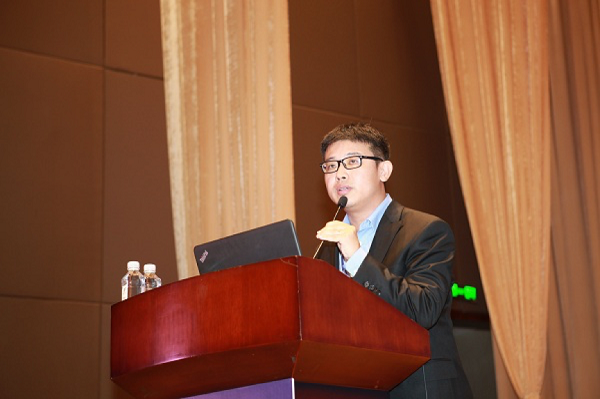
Chen Hui
Yasen Technology is positioned in the AI analytics segment of the medical imaging market. Over the past decade, we have observed the key drivers behind the advancement of medical imaging and artificial intelligence: In the healthcare industry, the rapid development of computer-aided diagnosis has become an inevitable trend; in the equipment market, both the traditional “GPS” giants (GE, Philips, and Siemens) and domestic manufacturers such as United Imaging and Neusoft have experienced rapid growth, with equipment procurement reaching over RMB 230 billion this year.
The growth of imaging equipment has spurred the emergence of two industries: one is third-party independent imaging centers. From Panoram to Ping An, third-party independent imaging centers have developed rapidly under the impetus of capital investment. The other is cloud-based remote image interpretation; thanks to the development of mobile internet, the adoption of cloud-based remote image reading has become highly prevalent.
Behind the rapid development of these two major industries lies a common challenge: while imaging data is growing in an aggregated manner, the training of qualified and competent physicians capable of making diagnoses based on medical images remains exceedingly slow. Against this backdrop, the artificial intelligence industry centered on medical image diagnosis is poised for favorable growth over the next decade.
Three Major Stages in the Development of AI + Medical Imaging: Screening, Diagnosis, and Prediction
Yasen Technology divides the positioning of AI + medical imaging into three stages: the first isScreening.This demand is typically raised by the physical examination centers of primary-care hospitals, and at this stage, startups primarily address efficiency issues.
After the user completes the screening, if suspicious lesions are detected, they will inevitably proceed to the second stage,Diagnosis。To make an accurate diagnosis, relying solely on a single imaging screening is insufficient; we need to incorporate six to seven types of data, including radiological information, clinical information, and past medical history, to reach a final diagnosis.
After completing the diagnosis for individual patients, the startup may advance to its third stage,DiseasePrediction. In China, the majority of an individual’s lifetime medical expenses are incurred during the last 12 months of life. Currently, we lack the capability to make ultra-early predictions for chronic diseases in the elderly, so the question remains whether it is possible to achieve thisA little, which is an important aspect of the integration of artificial intelligence and healthcare.
Data is the fundamental driver behind the rapid development of AI in healthcare.
There are many participants in the AI + healthcare industry, such as AI technology entrepreneurs, physicians, and investors. Among them, who is the driving force behind this wave of artificial intelligence-driven transformation in healthcare? Yasen Technology has reached a conclusion: those who possess high-quality data are the most fundamental drivers of the rapid integration and development of artificial intelligence and healthcare.
Over the past decade, China’s hospital informatization has advanced rapidly, with the level and degree of integration in hospitals across many second-tier cities exceeding expectations. A vast amount of data has been accumulated over this period, including CT scans, PET scans, bioelectrical signals, ultrasound images, and other diverse datasets. However, much of this accumulated data has yet to realize its full value.
Hospitals have accumulated a vast array of data types, which can be comprehensively applied to clinical examination and treatment. Yasen has developed a highly representative multimodal, multi-source data product: an AI-based system for the early diagnosis and prediction of dementia (Alzheimer’s disease).
We utilized three types of data to develop our machine learning model: magnetic resonance imaging (MRI) data, electroencephalogram (EEG) data, and clinical scale assessment data. Based on these three data sources, we constructed a multimodal neural network training model. This product can predict the likelihood of Alzheimer’s disease onset two to three years in advance and determine the stage of disease progression.
AI-Enabled Hospitals
Startups face a dilemma in helping hospitals achieve AI transformation,Products developed in-house using hundreds of thousands of data points in the laboratory demonstrated poor accuracy when deployed in third- and fourth-tier cities.. The underlying reason is that data quality in laboratory settings is relatively high, whereas data collected by local hospitals suffer from high noise levels, suboptimal spatial positioning, and operational issues; consequently, laboratory-developed products may not necessarily address real-world application scenarios.
Yasen Technology’s approach is to first assist hospitals in standardizing their underlying data., herein, data from different sources and of different types are integrated. SecondEnsure rigorous data quality control across all hospitals within the medical consortium, with a minimum requirement of verifying data compatibility for use in AI systems. Following data quality assurance, the company must also address challenges related to teaching and research, as well as equipment diversification. Only after resolving these issues can the laboratory’s products be successfully implemented in clinical practice.。
Another challenge is the AI transformation of hospital systemsLegal and Compliantissues. Many entrepreneurs inevitably rely on online open-source or publicly available datasets for their early-stage products. If founders lack sufficient understanding of the healthcare industry, their products tend to be overly computer-centric, often overlooking safety and regulatory compliance, including whether the company’s testing standards align with China’s clinical guidelines.
In fact, both hospitals and entrepreneurs must pay attention to issues of legal compliance. This includes the legality of companies collecting data from hospitals in advance, whether the data has been de-identified, and whether there is a basis for such actions.
When a product reaches the operational evaluation phase, it is essential to identify clinical issues that need to be addressed and ensure compliance with laws and regulations. Neglecting these fundamental issues can jeopardize successful commercialization.
Based on the above considerations, we have proposed a platform-based product.Yasen Tianji™It comprises three components: first, a data platform; second, a streamlined software platform for data collection, data pooling, preprocessing, loading algorithms, and outputting results; and third, quality control services for hospitals. Together, these three aspects form the core of the Yasen Tianji™ platform.By integrating products to help hospitals implement quality control, the ultimate goal is to provide clinical decision support oriented toward the entire hospital, rather than support limited to individual departments.
The Yasen Tianji™ Intelligent Medical Platform has been officially contracted and implemented with a hospital within a medical consortium. On this platform, we assist the medical consortium in establishing its own clinical AI support system.
We have recently been contemplating what serves as the bridge between resolving technical challenges and achieving commercial deployment. Much like Tesla’s emergence: if we had not built charging stations, even the best-performing Tesla vehicles would have remained mere promotional showcases rather than viable consumer products.
Therefore, after establishing the platform, we aim to foster a virtuous cycle integrating industry, academia, and research. The hospital’s database is updated daily, enabling both the system and physicians to access new knowledge on a daily basis. In the convergence of artificial intelligence and healthcare, hospitals that truly possess data are the driving force behind the entire AI healthcare initiative.