

Infervision Secures RMB 120 Million Series B Funding, Setting a Record for Largest Single Investment in Medical Imaging AI Industry
VCBeat (WeChat ID: vcbeat) learned that on September 21,Infervision, a globally leading AI company in medical imaging, announced the completion of its RMB 120 million Series B financing round. The round was led by Qiming Venture Partners, with co-investment from Genesis Capital and Sequoia China. Taihe Capital served as the exclusive financial advisor. This marks the largest single financing round in the global AI medical imaging industry.. It is understood that this round of financing will be primarily used for the commercial implementation of artificial intelligence technology in the healthcare industry, the expansion of clinical applications, and international market development.
Chen Kuan, CEO of Infervision, stated that since its founding in 2014, Infervision has been fortunate to receive strong support from investors and is deeply grateful for the continued backing of hospitals, experts, and physicians. In the future,Infervision’s product portfolio will continue to expand in breadth, with the successive launch of AI-powered clinical solutions for neurology, as well as AI-assisted screening for fractures, cardiac conditions, breast cancer, and abdominal diseases. Meanwhile, Infervision’s products will deepen their clinical integration by precisely localizing and characterizing lesions, thereby assisting clinical departments in making rapid, personalized intervention decisions. Ultimately, Infervision aims to export China’s leading medical AI technologies globally, benefiting healthcare providers and patients worldwide.。
According to the VCBeat database, Infervision completed its angel round of financing in February 2016, raising RMB 12.5 million from investors including Inno Angel Fund, Zhenyun Ventures, and Kuaidi CEO Lü Chuanwei.
In January 2017, Infervision completed its Series A financing round, raising RMB 50 million. The investors included Sequoia Capital China, GF Fund Management, Inno Angel Fund, and Zhenyun Ventures.
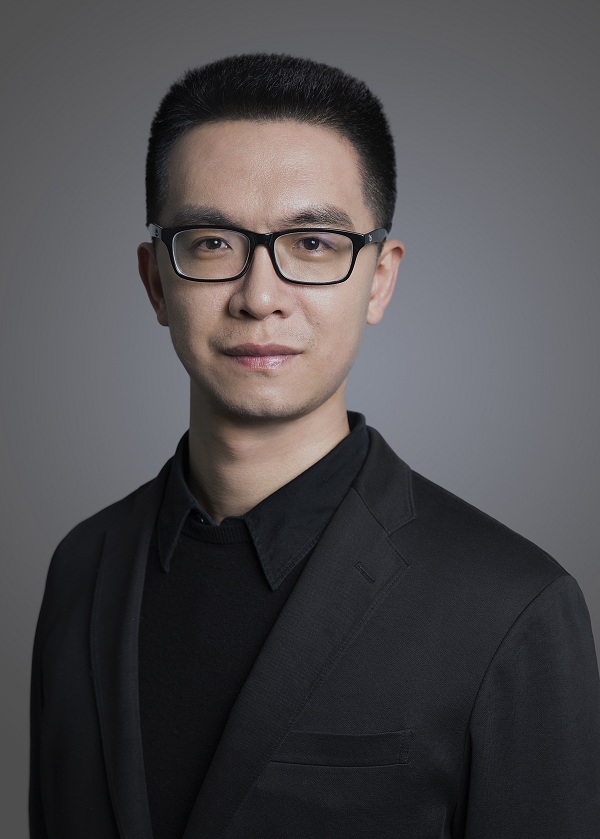
Chen Kuan, CEO of Infervision
Chen Kuan’s Three Major Chaos in Medical AI
Furthermore, Chen Kuan, CEO of Infervision, believes that while capital recognition of medical AI helps promote its development and implementation, he is also concerned about some current irregularities in the medical artificial intelligence industry.
As medical artificial intelligence gains momentum, hospital data has become a fiercely contested resource among AI companies, leading to frequent instances of non-compliant practices. Inadequate data de-identification poses risks of patient privacy breaches. Moreover, numerous overseas teams and foreign companies have transferred health data abroad without hospitals’ knowledge, disregarding policy red lines and creating hidden dangers for national data security.
Nowadays, AI is extremely popular, and many of its application capabilities have been vastly exaggerated. Some AI teams, in an effort to meet customer demands, overpromise and oversell the outcomes that AI can deliver. The complexity of hospital information systems inherently poses significant challenges to the deep integration of artificial intelligence into healthcare pathways. Furthermore, the intricacy of clinical medical scenarios means that AI can only achieve breakthroughs in single or a few specific disease types, remaining far from the comprehensive competence of a general practitioner.
The essence of statistics lies in analyzing the entire population through samples. Even current big data and artificial intelligence technologies cannot escape this statistical nature. Only by ensuring a sufficiently large sample size, and that the statistical characteristics of the sample itself fully reflect the distribution patterns of diseases, can we guarantee that AI trained on such samples will be capable of handling diverse clinical cases.
Nowadays, various artificial intelligence competitions, such as LUNA and Kaggle, have become highly popular. While data science contests are heating up abroad, clinical physicians in China maintain a notably calm and skeptical perspective. “Some competitions suffer from flawed annotation data, meaning the ground truth itself is incorrect,” stated a department director at a large tertiary Grade A hospital. Medicine is an exceptionally complex field; populations undergoing health check-ups, outpatient visits, and hospitalization differ significantly. An AI model trained on merely a few thousand cases, no matter how well it performs on small competition datasets, cannot possibly achieve generalizability across a population of over one billion—such an expectation is sheer fantasy. Only by demonstrating its efficacy in diverse medical scenarios, across different regions and hospitals of varying tiers, can an AI company legitimately claim to possess an AI “product”; otherwise, it remains merely a “model.”
Chen Kuan stated that medicine should not be an industry characterized by unregulated growth. Infervision adheres to “From the Clinic, to the Clinic” product development principles, always maintaining a reverence for healthcare, deeply rooted in hospitals, and collaborating with physicians to develop products with clinical value. We hope that through Infervision’s strategic choices of what to do and what not to do, we can help the entire industry develop in a healthier and more rational manner.
Infervision in the Eyes of Investors
Qiming Partner Ye Guantai saidQiming Venture Partners has been investing and strategically positioning itself in the healthcare industry and artificial intelligence (AI) sector for many years. Although the application of AI technology in healthcare is still in its early stages, we believe the market holds tremendous growth potential. This technology can significantly enhance the diagnostic and treatment efficiency of physicians and hospitals, while empowering doctors to deliver more precise and high-quality care to patients. Infervision’s team, technological expertise, and commercialization capabilities place it firmly in the top tier. We are honored to partner with Infervision and help drive the advancement of this industry.
Peng Zhijian, Managing Partner at Yuansheng Capital, statedImproving efficiency through information technology is a key investment theme for Genesis Capital. As one of the primary diagnostic modalities in healthcare, medical imaging in China faces challenges such as insufficient service supply and uneven distribution of resources. Meanwhile, radiologists are required to interpret a large volume of images daily, and this excessive workload can lead to missed or incorrect diagnoses. We believe that AI applications in medical imaging will mature rapidly and have the potential to create significant value, ultimately freeing up radiologists’ time to focus on higher-value professional diagnostics and enhancing the overall supply capacity of medical imaging services. Genesis Capital highly recognizes Infervision’s strategic vision and execution capabilities, and we are excited about the opportunity to jointly drive efficiency improvements in the field of medical imaging.
Sequoia Capital China Partner Ji Yue stated, As a leading enterprise in China’s medical artificial intelligence industry, Infervision is operating at a time when the generation of massive volumes of medical data and the surge in healthcare demands are making intelligent solutions increasingly vital for enhancing the quality of medical services. Sequoia China is delighted to continue supporting Infervision, a new generation of Chinese AI teams driven by both vision and technological expertise, as it deepens its development across various sectors.