

Bodhi Medical and World Federation of Chinese Physicians Collaborate with Capital Medical University to Build a Global Medical Talent Platform

Baheal Medical
Health Brand Commercialization Platform
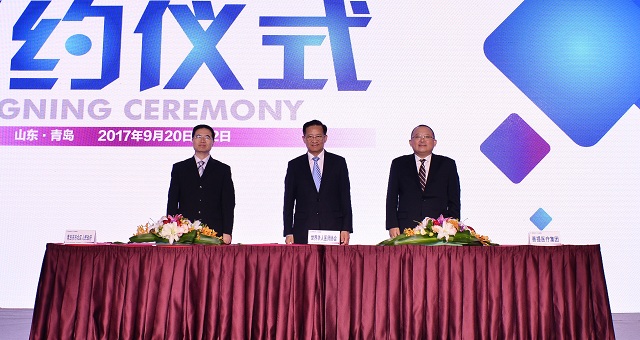
From September 20 to 21, the 2017 Annual Conference of the World Chinese Medical Association and the Summit Forum on the Inheritance and Development of Smart Healthcare was held in Qingdao. Nearly a thousand top hospital presidents, academicians, and senior physicians from various countries and regions, along with medical personnel at all levels across China, gathered to witness the establishment of a global healthcare talent platform. On this global healthcare talent platform,To advance the supply-side reform of medical talent in China, fully unlock the value of physicians at all levels, integrate overseas Chinese physicians into China’s healthcare system, and enable Chinese physicians to engage with the global community.,Bodhi Medical Group and the World Chinese Physicians Association jointly launched the “Hua Yi Zhi Hui Thousand-Talent Plan,” and reached a cooperation agreement with Capital Medical University on medical talent development. In the future, 400,000 top-tier overseas Chinese physicians and millions of healthcare professionals at all levels in China will leverage this platform to connect with the world.。
Building a Catalyst Platform for Supply-Side Reform of China’s Healthcare Talent
Currently, China’s healthcare system faces severe challenges. The contradiction between supply and demand in the medical market is prominent, characterized by scarce and poorly allocated medical resources. A tiered diagnosis and treatment system linking large hospitals with community-level care has yet to take shape. The homogeneous medical services provided by healthcare institutions conflict with the diversified demands of the market, failing to meet the public’s healthcare needs. Academician Zhan Qimin stated that China’s health-focused poverty alleviation mission is arduous. By the end of 2015, households impoverished or driven back into poverty due to illness accounted for as high as 44.1% of all registered poor households, affecting 20 million people. Among the deeply impoverished population, those impoverished due to illness, chronic diseases, serious illnesses, or disability constituted 80%.
China currently has 3.19 million licensed physicians and assistant physicians, among whom only 51% hold a bachelor’s degree or higher. The majority have not undergone standardized residency training, resulting in significant disparities in clinical competence. In terms of workforce structure, general practitioners account for only 6.6% of the total physician population in China, far below the 30–40% observed in developed countries in Europe and America. The shortage of medical professionals is particularly acute today. Healthcare institutions generally lack high-level specialized medical personnel and hospital management experts, as well as a well-structured talent pipeline. This severely constrains the development of healthcare services and the improvement of the medical system.
At a critical juncture when China’s healthcare reform has entered deep waters and the supply-demand imbalance in the medical sector is becoming increasingly prominent, integrating supply-side reforms into the healthcare service sector has provided new development perspectives for advancing healthcare reform. Ma Xiaowei, Deputy Director of the National Health and Family Planning Commission, stated, “The development of China’s health cause cannot be achieved without the support of Chinese physicians.”They brought advanced international concepts and cutting-edge technologies back to China, while also disseminating the essence of Chinese medicine to the rest of the world.。”
“The cultivation of medical professionals is a severe challenge currently facing China’s healthcare system. At present, China lacks third-party institutions specifically dedicated to cultivating and exporting clinical expertise; however, training healthcare personnel is indispensable for a populous nation like China. Furthermore, physicians’ awareness of their self-worth is in its nascent stage and gradually strengthening alongside changes in the healthcare market, yet effective mechanisms and platforms to maximize physicians’ value have not been established domestically,” stated Fu Gang, Chairman of Puti Medical Group. “Talent is the core element in the supply-side reform of healthcare. Every aspect—from talent cultivation and utilization to enhancing productivity and unleashing efficiency—is critically important. The core strategy of Puti Medical Group is the ‘Medical Talent’ strategy.”, we will establish long-term collaborations with high-end medical platforms such as the World Chinese Medical Association and Capital Medical University, pool high-quality resources, introduce outstanding overseas medical talent, and cultivate medical professionals at all levels within China.。”
According to incomplete statistics, there are nearly one million ethnic Chinese professionals working in global healthcare fields such as medicine, pharmacy, nursing, and medical technology. Among them, approximately 400,000 are practicing physicians who have obtained local medical licenses. These ethnic Chinese physicians represent the elite within their community, serve as ambassadors for medical exchanges between China and other countries, constitute a significant force driving the advancement of global medicine, and have made substantial contributions to worldwide health and hygiene endeavors.
“Huayi Zhihui Thousand-Talent Program”: Introducing World-Renowned Physicians to China
On September 20, the “Huayi Zhihui Thousand-Talent Program” was officially launched. Putian Medical Group formally entered into a strategic partnership with the World Chinese Physicians Association (WCPA) to introduce the “Huayi Zhihui Thousand-Talent Program” targeting nearly 400,000 Chinese physicians worldwide. The program aims to establish a talent exchange platform for its thousand-talent initiative, pooling the expertise of Chinese physicians globally to jointly promote the development of China’s healthcare sector. At the signing ceremony, Zhang Yanling, President of the World Chinese Physicians Association, presented letters of appointment as Senior Advisors for the Thousand-Talent Strategic Engineering Program to six academicians: Zhang Boli, Lang Jinghe, He Jie, Fan Daiming, Chen Xiangmei, and Zhan Qimin. Additionally, letters of appointment as Special Experts under the Thousand-Talent Program were awarded to the first cohort of 25 senior overseas Chinese physicians.
To better implement the “Huayi Zhihui Thousand-Talent Plan,”The World Association of Chinese Physicians has established its sole representative office in China at the Baheal Health Industrial Park in Shibei District, Qingdao., joining hands with the People's Government of Shibei District, Qingdao, and Puti Medical Group to jointly promote the development of the medical and health industry.
Zhang Yanling stated, “We will leverage the platform role of the association to enable Chinese physicians to make significant contributions to the nation’s healthcare endeavors.”First, the World Association of Chinese Physicians will serve as a “Rainbow Bridge” to facilitate the participation of overseas Chinese physicians in the Healthy China Initiative, enabling you to become a main force and a vital contingent in the health sector. Second, we will actively coordinate exchange and cooperation projects, introducing advanced technologies, valuable experience, and effective methodologies from Chinese physicians abroad to ensure tangible outcomes. Third, in medical collaboration, we aim to strengthen strengths and address weaknesses. We strive to establish high-quality cooperative projects in specialized areas such as training and education, academic forums, chronic disease prevention and control, oncology treatment, Traditional Chinese Medicine diagnosis and therapy, and laboratory pathology, thereby creating distinctive services that benefit the public. Fourth, leveraging the role of expert think tanks, we encourage more Chinese physicians to serve as strategic advisors and external intellectual resources for national healthcare reform, actively participating in policy formulation, disciplinary academics, education and training, and scientific research and teaching, thus becoming the urgently needed experts and consultants for the nation.。”
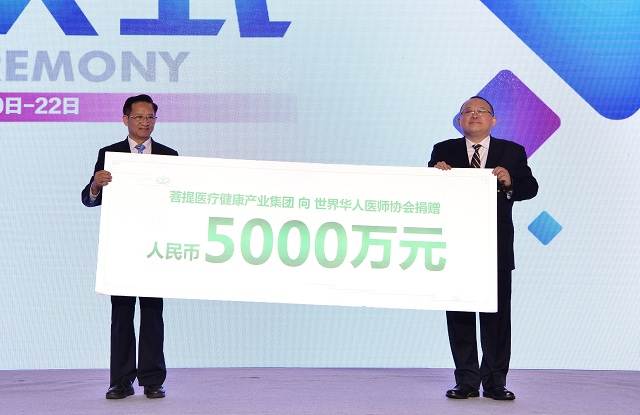
Fu Gang stated, “These overseas physicians and Healthy Chinese constitute a team at the forefront of international medicine. We hope to integrate domestic hospitals, information technology, and other resources through Puti Medical, making it easier for them to return to China for lectures and clinical practice, while also bridging the geographical gap in exchanges between domestic and overseas physicians and creating opportunities for communication.” This initiative aims to advance China’s healthcare cause and help physicians of Chinese descent worldwide contribute more significantly within China.Bodhi Medical Group will donate RMB 5 million annually to the World Association of Chinese Physicians, amounting to a cumulative donation of RMB 50 million over ten years. For experts in specific medical fields, Bodhi Medical will also provide personalized, multi-level services, including consulting and platform matchmaking, to facilitate their return to China for lectures and clinical practice.
Bodhi Medical Partners with Capital Medical University to Enhance the Training System for Healthcare Professionals
To promote the supply-side reform of medical talent in China and enhance the level of post-graduation continuing education for medical professionals,Bodhi Medical Group has also established a strategic partnership with Capital Medical University for the cultivation of medical professionals, jointly building a platform for medical talent education, training, and exchange, and establishing a comprehensive training system for grassroots healthcare workers.
Bodhi Medical Group possesses advanced hospital management concepts, extensive hospital management experience, and a rich pool of physician resources. It enhances hospital operational efficiency and unlocks the value of physicians through hospital trusteeship and physician contracting models. Capital Medical University is a key higher education institution in Beijing, boasting more than 20 clinical medical colleges and affiliated hospitals, with strong capabilities in academic development and scientific research practice.
Capital Medical University will leverage its strengths in medical education and coordinate its clinical medical colleges and teaching hospitalsProvide education and training for the primary care teams contracted by Puti Medical, including standardized residency training, specialized medical technical personnel training, and nursing talent training.。In the future, Puti Medical will leverage its invested and managed physical medical institutions to select outstanding medical personnel who meet the training criteria for participation in the healthcare professional training programs of Capital Medical University. It will also prioritize providing more employment and practice platform options for medical talents and graduates, thereby enabling physicians to realize their self-worth.。
Fu Gang believes that within the entire health industry and medical sector, physicians remain the core driving force, with the most elite doctors representing the future of medicine. As China’s healthcare sector continues to develop, demand for primary care professionals has increased, and public expectations for their competence have risen accordingly. Primary care practitioners are facing unprecedented challenges, necessitating the establishment of a robust system to ensure a high-quality and high-volume pipeline of primary care talent.
Fu Gang also stated, “Over the next 5–10 years, Puti Medical will become a premier private healthcare institution, evolving into a comprehensive healthcare services group equipped with end-to-end hospital planning and construction capabilities, advanced smart hospital management concepts, professional hospital information systems, and a robust framework for the recruitment, training, and deployment of medical talent."We will have a world-class team of experts, a robust hospital management system, and a continuous training pipeline for mid-career and young professionals across all levels."
Bodhi Medical Issues Appointment Letters to Six Top Global Academicians
On the 21st, Puti Medical officially issued appointment letters to six academicians from various disciplines, including Lang Jinghe, Zhang Boli, Zhan Qimin, Chen Xiangmei, Fan Daiming, and He Jie. In the future, these international experts will be deeply integrated into Puti Medical’s healthcare service system.Upload, assist, support, and mentor on the global medical talent platform to help young medical professionals achieve competence as quickly as possible, establish a rational talent hierarchy, and ensure the quality of hospital talent pipeline development and the reserve of backup personnel.。
The inclusion of these academicians will introduce the world’s most advanced medical concepts and healthcare technologies, significantly enhancing the service capabilities of multidisciplinary medical teams across China. Taking Academician Zhan Qimin of the Chinese Academy of Engineering as an example, he will bring cutting-edge scientific perspectives on medical technological innovation to China’s healthcare sector, encompassing areas such as omics technologies, stem cells and regenerative medicine, vaccines and antibodies, biotherapies and personalized diagnostics and treatment, and intelligent medicine.
Academician Zhan Qimin stated that medical practice has demonstrated that the ultimate control of any major infectious disease, as well as breakthroughs in the clinical diagnosis and treatment of chronic non-communicable diseases, rely almost entirely on advancements in pharmaceutical science and technology. Medical technological innovation plays a pivotal role in enhancing human capabilities for disease prevention and control, as well as improving responsiveness to public health emergencies.The application of any new technology, new equipment, or new drug in disease prevention and clinical diagnosis and treatment is the result of advancements in medical science and technology.
Fu Gang believes that the talent pool constitutes the core of a hospital’s medical care, teaching, and research activities. The level of a hospital’s medical technology and overall operational excellence is primarily determined by the caliber and quality of its workforce. Recruiting or cultivating one high-level technical expert can foster a team of key technical personnel, lead an entire department, pioneer new academic and technological frontiers, introduce specialized techniques and novel surgical procedures for specific conditions, and thereby drive the steady advancement of both the hospital and its medical technologies.