

Kalispell Regional Healthcare Files IPO Prospectus Highlighting Innovative Care Model for High-Need Patients
In the U.S. healthcare system, a significant portion of costs is borne by a small fraction of the population, with 50% of healthcare expenditures concentrated among just 5% of individuals.
They suffer from multiple complications, have difficult-to-manage needs, and often present with long-term chronic diseases. These patients are referred to as “super utilizers” due to their frequent interactions with the healthcare system.
Over time, their chronic conditions gradually worsened, making treatment more expensive and riskier.
Kalispell Regional Healthcare has designed and launched a special innovative program targeting “super-utilizers” who heavily consume healthcare resources. This initiative aims to improve the health outcomes of high-need, low-income patients while reducing their unnecessary emergency department visits, thereby preserving community healthcare resources.
In 2016, Kalispell Regional Healthcare was named one of the Top 100 Community Hospitals in the United States by Becker's Hospital Review and Healthgrades. VCBeat (WeChat ID: vcbeat) provides an analysis of this hospital system.
Founding Background
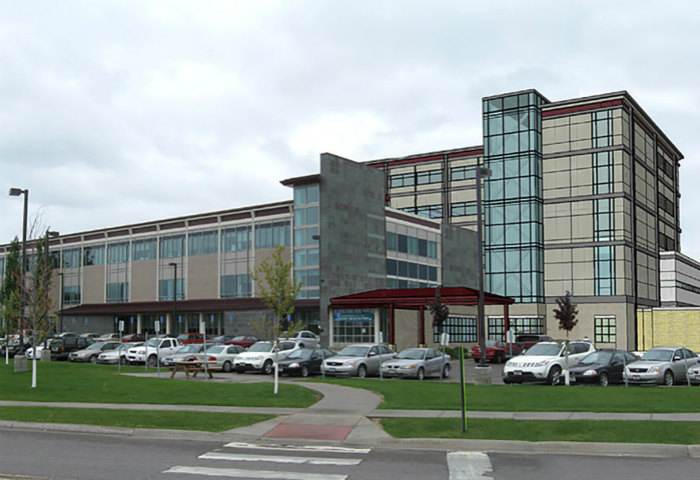
Kalispell Regional Healthcare, founded in 1910 and located in Kalispell, northwestern Montana, operates 343 beds, provides medical services to a population of 190,000 across an area of more than 20,000 square miles, and employs over 4,000 staff members.
This medical system includesKalispell Regional Medical Center and North Valley Hospital, two acute-care hospitals, as well as mental health and substance abuse monitoring equipment。
Core services provided by Kalispell Regional Healthcare includeCancer Care, Cardiovascular Disease Care, Neurological Disorder Care, Spinal Health, Level III Trauma Emergency Care, Neonatal Intensive Care, and Orthopedic Surgical Care Services. In addition, the healthcare system also includes six practices approved by the Patient-Centered Medical Home program of the National Committee for Quality Assurance (NCQA).Primary Healthcare Clinic。
Carispeir Regional Medical Center is a regionalReferral Center, the hospital provides comprehensive medical care services. The hospital employs over 400 physicians, physician assistants, and nurse practitioners, with a total staff of 3,400 across 100 departments. VCBeat has learned that nearly 70 physicians see patients at affiliated outpatient clinics.
North Valley Hospital, located in Whitefish, Montana, is a 25-bedPublic-Interest Non-Profit Organization. The hospital’s core services include 24/7 emergency care, a maternity center, orthopedic surgery, and minimally invasive procedures. North Valley Hospital operates primary and specialty medical clinics in Whitefish, Columbia Falls, Kalispell, and Eureka, Montana, and also provides structured mental health services in Whitefish.
Transitional Care Model
The company partnered with the Quality Health Improvement Organization to introduce an enhanced transitional care model, designed toComprehensive inpatient care plans and home-based follow-up services for hospitalized patients with chronic diseases and high-risk elderly individuals。
In 2014, to apply the transitional care philosophy in Montana, Mountain-Pacific Quality Health applied for and received nearly $2 million in funding from the Centers for Medicare & Medicaid Services (CMS) through a Special Innovations Project, thereby integrating emerging and existing resources and technologies to develop what is known asIntervention Teams of “ReSource Teams”, to serve super patients.
The project not only secured an additional $250,000 grant from the Robert Wood Johnson Foundation but also achieved notable success across the state of Montana.
This care model has three objectives:
1. Improve the physical health of patients who frequently access the healthcare system by identifying high-cost individuals and heavy users of medical resources;
2. Reduce unnecessary utilization of medical care resources—including medical care, housing, transportation, food, and safety system resources—by improving nursing conditions and facilitating the flow of community assets;
3. Test whether tablet technology can help rural patients in remote areas communicate with healthcare providers.
Resource Team
The resource team consists ofComposed of experts trained across multiple disciplines, including primary care physicians, pharmacists, nurses, behavioral health specialists, as well as volunteers and community health workers who connect with a wide range of community resources. Resource teamApplicable to Any Community。
Unlike traditional transitional care models that provide resources to densely populated geographic areas, resource teams willIntegrating Emerging and Existing Community Resources and Technology to Develop Intervention Teams, thereby covering a wider geographic area.
As a result, the team became affiliated with the Extension of Community Healthcare Outcomes (ECHO) project, which aims to provide specialized expertise, knowledge, and support to remote areas lacking adequate medical resources.
Through such a community-based approach, nurses from the resource team serve as care coordinators for patients, assisting them with medical review, assessment of caregiving burden, patient safety evaluation, education for patients and caregivers, and medication reconciliation.
The nurses on the resource team are also responsible for coordinating with physicians,Help Establish Patient Homes. Community healthcare workers have expanded the reach of non-medical care, dismantling many barriers to medical care posed by social determinants of health.
In addition, behavioral health consultants can help teams develop work strategies to address patients with consistent mental health needs. Resource teams can teach patients self-reliance and assist them in managing basic care.
How Does the Resource Team Operate?
The Resource Team is primarilyFocusing on Inpatients, or individuals who repeatedly utilize healthcare resources within six months, such as patients with two or more hospital admissions, those who have undergone two or more episodes of inpatient observation, and those who have made three or more emergency department visits.
Patients eligible for assistance from the Resource Team must meet the following criteria:
1. Able to benefit from more coordinated primary care;
2. Suffering from treatable medical conditions, such as diabetes;
3. Non-terminal patients;
4. Symptoms are not progressively worsening;
5. Suffering from documented or undocumented mental health issues associated with “super patients.”
The resource team initially primarily served three urban areas in Montana: Billings, Helena, and Kalispell. TheyTrack patient care using a customized nursing management software platform. The team’s nurses will visit patients prior to discharge to assess their specific needs and determine their eligibility for the program.
Once a patient is enrolled in the program, the team’s nurses will conduct a home visit within the first week after discharge to collect clinical information. Subsequently, the nurses will share this information with community healthcare providers who address social determinants of health.
During home visits,Members of the resource team use tablets to enable patients to engage in remote video consultations with healthcare providers., and help patients coordinate a range of care issues and social needs.Tablets have become an essential tool for implementing or modifying medical care plans for rural patients with highly complex social and medical conditions.。
Community healthcare providers and nurses from the resource team will conduct a follow-up visit after 30 days to assess the patient’s symptoms, monitor adherence to the care plan, and evaluate the patient’s progress in social reintegration. The nurses will share this information with the resource team.
Subsequently, patients may conclude the program, extend their participation, or transition to their own medical home. If a patient opts for program extension, community healthcare providers and nurses from the resource team will conduct continuous visits over a 90-day period. During this time, they will assess the patient’s self-management capabilities for chronic diseases, ability to navigate healthcare services, and adherence to the care plan. The resource team nurses and community healthcare providers will ultimately summarize and organize this information for the patient’s primary care physician, thereby forming a coordinated care plan.
Ensuring Consistency in Nursing Care
The resource team also provides care coordination software to help different business entities share patient information. With this software, primary care physicians can view the various community resources involved in a patient’s care, such as shuttle bus services and meal delivery, while eliminating redundant work. The software helps the team track whether patients can avoid medical crises after participating in outpatient care programs.
The key to the success of this project lies in the fact that nurses on the resource team serve not only as care coordinators but also as coordinators of community resources.Resource teams must recognize that their challenge extends beyond merely filling healthcare gaps; they must also take a macroscopic view of the holistic landscape of patients’ lives to identify unmet basic needs.
By building trust-based relationships with patients, resource teams will be increasingly empowered to improve adherence and achieve more effective clinical outcomes.
Rural teams often work in isolation; therefore, the monthly case seminars with experts, which focus on de-identified complex cases, are critical for learning, knowledge transfer, and achieving desired outcomes.
To achieve the goal of clearly understanding and effectively responding to patients’ holistic life profiles, a diverse array of community organizations came together in 2012 to formNorthwest Montana Care Transition Alliance(Northwest Montana Care Transitions Coalition). The coalition has become an integral part of special innovation initiatives and continues to provide partners with methods for accumulating outcome data.
Specific Outcomes
Carispeir Regional Healthcare will track inpatient admissions or readmissions, emergency department visits, in-person or video consultations, and patient satisfaction. By the end of the second year, this special innovation project is expected to serve 65 patients and reduce unnecessary emergency department visits by one per patient, resulting in savings of nearly $83,400. This means that Medicare, Medicaid, and the Indian Health Service will save $1 million by reducing the number of readmissions.
Each patient’s situation is unique, and their willingness to utilize healthcare resources varies accordingly. Similarly, healthcare providers differ from one another; therefore, it is imperative that they communicate effectively with each other to meet patient needs and reduce the unnecessary use of healthcare resources. By strengthening care coordination and communication among community-based organizations—including those providing medical care, housing, food, and safety resources—population health outcomes will improve.
Engaging patients to recognize and actively participate in their own healthcare is key to success, while leaders must also empathize with patients and create a supportive environment for them.
Understanding the nature of motivational interviewing, trauma-informed care, and substance use awareness is critically important for nurses on resource teams. Resource teams capable of delivering services across multiple levels of nursing care and social determinants of health are best positioned to achieve program objectives.
Our resource team helps improve the physical health of patients who frequently access the healthcare system, while also safeguarding scarce resources by identifying high-cost, high-frequency users and providing care coordination. Ultimately, this approach enhances the experience for both healthcare providers and recipients, while improving medical outcomes and efficiency.
References:
http://www.pbs.org/newshour/bb/can-helping-high-risk-patients-basic-needs-reduce-costly-care-rural-areas/
http://www.hhnmag.com/articles/8562-kalispell-regional-healthcare-manages-the-needs-of-complex-patients
http://www.chcs.org/media/TCC-Profile-MP_022217.pdf