

What Capabilities Can Alibaba Cloud's ET Medical Brain Bring to the Healthcare Industry? | Forum Speech by Tang Chao
Healthcare has a strong potential demand for artificial intelligence. Currently, a relatively complete industrial structure for “AI + Healthcare,” encompassing “infrastructure, technology, and applications,” has initially taken shape globally. For new technologies to truly drive industry transformation, it requires not only coordinated efforts in policy, technology, talent, and other areas, but also corporate exploration and the accumulation of time over the long term. To explore the future development and practical implementation of health and medical big data and artificial intelligence, the 2017 Yangtze River Industry Forum (Autumn Session) and the Health and Medical Big Data & Artificial Intelligence Conference were grandly held at the Wuhan Conference Center on September 16–17, 2017.
At this conference, Mr. Tang Chao, General Manager of the Healthcare Division of Alibaba Cloud Computing Co., Ltd.,"ET Medical Brain: Practical Implementation of Data Intelligence in Hospitals"“...” as the title, it elaborates on the current dilemmas faced by clinical decision-making in assisting physicians with diagnosis and treatment, as well as the future development trends of decision support systems. Below is the curated highlight of the speech compiled by VCBeat:
Guest Introduction
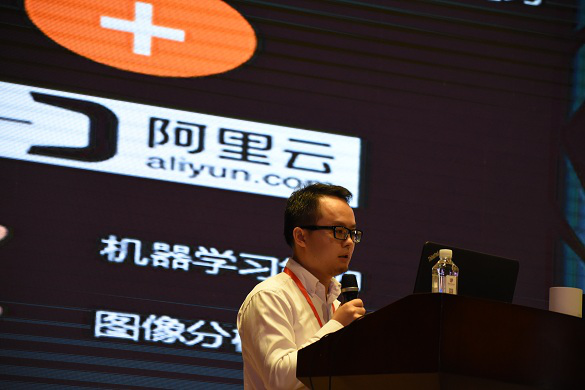
Mr. Tang Chao, General Manager of the Healthcare Division, Alibaba Cloud Computing Co., Ltd.
General Manager, Alibaba Cloud Healthcare Division; formerly General Manager of Alibaba Cloud’s Wuhan Branch; an early practitioner of cloud computing in China.
Alibaba Group’s strategic layout in the healthcare and medical industry is divided into five major segments: AliHealth, Alipay Future Hospital, Alibaba Cloud Healthcare, Alibaba Group iDST, and AI Labs.
Amid nearly every wave of technological advancement and business innovation, many industries in China are particularly prone to herd behavior, with players rushing to chase the latest hotspots. This has been evident in the telecommunications sector with 3G and 4G, in the energy sector with photovoltaics and wind power, and in the healthcare sector with biomedicine and artificial intelligence. While a rush to enter is not alarming, what is most concerning is the subsequent stampede to exit. Often, many technologies have not yet undergone large-scale practical validation before companies eagerly pivot to new technological trends. The ultimate consequence is that despite being early movers in numerous fields of technological innovation, these industries end up missing the market opportunity.
This year, the application of artificial intelligence (AI) in the healthcare industry has become extremely prevalent. We have also observed that AI-assisted diagnosis has gained recognition from many clinical experts in single-disease areas such as thyroid nodules, pulmonary nodules, and diabetic retinopathy. However, we hope that AI experts in the medical field will conduct more in-depth research and develop more sophisticated products in these areas, thereby broadening the coverage of single-disease applications.
Against this backdrop, Alibaba Cloud, as China’s leading and internationally prominent platform-based technology company in cloud computing, big data, and artificial intelligence, offers a “sober reflection” amid the AI fervor sweeping the healthcare industry: greater emphasis must be placed on infrastructure and talent.
Alibaba Cloud’s initial focus was on building infrastructure. During the industry’s explosive growth phase, infrastructure is both the most challenging and the most critical undertaking.
In Alibaba’s view, the current industry competition in big data and artificial intelligence is a contest between Hangzhou and Seattle, and between China and the United States. In terms of AI talent accumulation, China has already surpassed the U.S.; Chinese-authored scientific papers now account for more than 50% of cited publications, although the quality of these papers still needs improvement. Therefore, talent is another key focus for Alibaba Cloud.
In terms of infrastructure, Alibaba Cloud has built the ET Medical Brain Open Platform, working with ecosystem partners to promote the scenario-based implementation of artificial intelligence in the healthcare sector.
At the data and application layers, the ET Medical Brain Open Platform offers capabilities including intelligent imaging diagnosis, intelligent medical record diagnosis, voice-based medical order entry, medical intent recognition, auxiliary management decision-making, and home-based chronic disease management.
On the foundational support and computing platform, in addition to providing basic IaaS services, Alibaba Cloud’s ET Medical Brain Open Platform features algorithmic engines including machine learning, data management, data quality, image analysis, speech analysis, visual analytics engine, and trend analysis.
Alibaba Cloud aims to provide developers and enterprises with comprehensive infrastructure support spanning the entire model lifecycle, from training to deployment. This enables all developers and businesses to rapidly and cost-effectively launch their own models. Furthermore, through its open platform, Alibaba Cloud helps them identify genuine business application scenarios for practical implementation.
Additionally, Alibaba Cloud has implemented solutions in the statistical analysis of scientific research. It is also exploring applications in the Internet of Things (IoT), patient monitoring data, intelligent analytics, and health management data.
Alibaba Cloud Tianchi Competition
In the cultivation of AI and big data talent, Alibaba Cloud’s Tianchi Competition has attracted over 100,000 developers from 73 countries and regions worldwide, covering 2,763 research institutions and universities. Launched in 2017, the Tianchi Medical AI Competition, themed “Big Data-Assisted Medical Decision-Making,” focused on intelligent diagnosis of lung cancer—the most prevalent cancer globally—by bringing together professional teams from the fields of traditional medicine and cognitive computing to explore the feasibility of intelligent diagnosis as an auxiliary model for medical diagnostics.
The competition attracted 2,887 teams and 3,953 participants, with contestants hailing from 20 countries and regions, including mainland China, Hong Kong (China), the United States, Japan, France, the United Kingdom, and Singapore. Among the participating teams, 13% of the members held doctoral degrees, 54% held master’s degrees, 31% held bachelor’s degrees, and 2% fell into other categories.
The Tianchi Medical Competition is built on the Alibaba Cloud computing platform and leverages second-generation Intel Xeon Scalable processor technology, enabling single-node support for hundreds of gigabytes of memory. With this capability, participating teams can rapidly process more than 32 volumetric images of size 128×128 or larger in each iteration, thereby improving the accuracy and performance of nodule detection.
The Alibaba Cloud Tianchi Platform also enables a secure and controllable big data trading model, building a cross-disciplinary collaborative innovation bridge for owners of sensitive data such as images and audio and developers of deep learning technologies. It provides technical support and empirical references for evolving such collaborations into a new commercialized data trading model in the future.
In addition, Alibaba Cloud offers the most cost-effective solutions for small and medium-sized institutions and individuals engaged in medical AI innovation. By leveraging host servers to handle data preprocessing workloads and utilizing Alibaba Cloud’s Machine Learning Platform for AI (PAI) to provide one-stop machine learning services, it delivers robust technical support to address the challenges of medical image data analysis.
The second round of the 2017 Tianchi Medical Competition will conclude on September 26. Currently, the top-ranking teams are from Peking University, Shanghai Jiao Tong University, Fudan University, the University of California, Southern Medical University, the Hong Kong University of Science and Technology, Shanghai Changzheng Hospital, and other institutions.
Beyond infrastructure and talent, what differentiated value can Alibaba offer to the healthcare industry? This is a question we have repeatedly asked ourselves. Moving forward, we will embark on new initiatives in the following areas: users, connectivity, data, security, and business model innovation.
First, the user. In the current healthcare industry, the prevailing perspective is largely B2B, or more specifically, Hospital-to-Business. Alibaba is exploring whether it can enter the market from the user’s perspective, thereby driving the healthcare industry toward improved patient experiences. Examples include consumer-facing (C2C) health management and gene sequencing services. Meanwhile, Alipay’s “Future Hospital” initiative has already played a significant role in addressing the “three longs and one short” issue in hospitals from a payment standpoint.
Second is connectivity. The rapid development of the internet in recent years has matured human-to-human connectivity. However, human-to-machine and machine-to-machine connectivity remain in their early stages. For human-machine interaction, Alibaba aims to provide core, unified connectivity capabilities. Furthermore, facilitating connectivity across the entire industry ecosystem and with partners is a key role for Alibaba Cloud as a technology-enablement platform.
Third, data. Medical information platforms have accumulated vast amounts of historical data, including clinical, laboratory, and health examination records. Alibaba Cloud aims to help hospitals achieve unified “storage, management, and utilization” of data on a single platform, enabling real-time data accessibility and activating local data assets. This will facilitate faster and more intelligent services for patients, physicians, hospitals, and regulatory authorities.
Fourth is security. Security is increasingly becoming the most fundamental and challenging capability. This is because, whether in human-machine connections or machine-to-machine connections, if the foundational layer of security is compromised, the entire scenario will face significant challenges.
Fifth, innovation in business models. Today, technology is continuously expanding the boundaries of commerce, while commerce, in turn, is driving technological advancement. Although the healthcare industry is not entirely a commercialized environment, we have already witnessed significant progress in the widespread application of cloud computing, big data, and artificial intelligence across various fields of healthcare. By leveraging Alibaba Group’s capabilities in commercial infrastructure—such as payment systems, e-commerce, and logistics—and collaborating with our partners, we are contributing to the “Healthy China” initiative.