

AstraZeneca's Health IoT Platform: Building Over 12,900 Standardized Nebulization Rooms and Collaborating with Alibaba and Huawei
“In the past, we cooked in the kitchen, and I didn’t need to see the customers’ faces; it was enough for waiters to serve the dishes. But now things are different—I have to care about whether customers suffer from diarrhea after going home.” Wang Lei, Global Executive Vice President of AstraZeneca and President of International Business and China, remarked half-jokingly when discussing the Health Internet of Things.

Lei Wang, Executive Vice President of AstraZeneca and President of International Business and China
Since entering China in 1993, AstraZeneca has been present in the country for 20 years. In 2016, AstraZeneca’s sales in China exceeded $2.6 billion, making it the second-largest foreign pharmaceutical company in China.
Why Is AstraZeneca Engaged in the Internet of Medical Things (IoMT)? It Is Actually Related to the Company’s “Patient-Centric” Philosophy.
Historically, pharmaceutical marketing and hospitals operated under a B2B model. Targeting hospital clients, the process was relatively straightforward, with physicians prescribing medications to patients.
Pharmaceutical companies develop drugs and then educate physicians on how to optimize their use among patients. However, this critical link is actually missing due to the absence of follow-up care. Patients discontinue medication on their own, leading to relapse, and the cycle repeats itself...
At this stage, China advocates the concept of "patient-centered" whole-course disease management. The formation of this philosophy requires innovative and inclusive cross-sector collaboration. With this broader context in place and addressing existing gaps, AstraZeneca has leveraged its strengths in key therapeutic areas to partner with diagnostic, medical device, internet, and Internet of Things (IoT) companies, thereby creating a service ecosystem for the Health IoT.
“AstraZeneca is a pharmaceutical company; we do not have medical devices or big data capabilities. Professional matters should be handled by professional companies. If we cannot achieve this on our own, we leverage external resources to foster mutual assistance across the industry. That is why we have chosen to collaborate with companies such as Huawei, Alibaba, and Omron,” said Wang Lei.
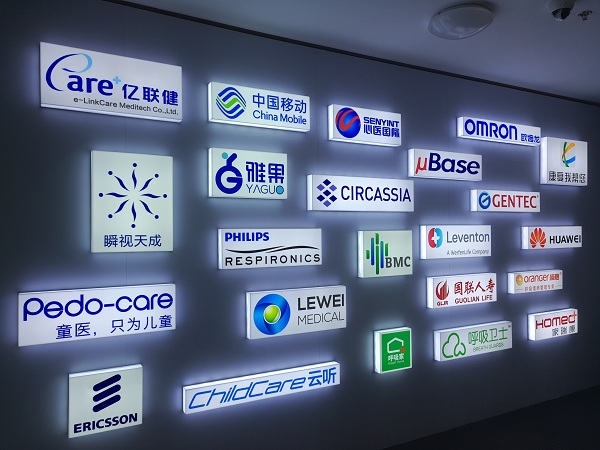
AstraZeneca Health IoT Ecosystem Partners (Partial List)
According to VCBeat, the health IoT ecosystem built by AstraZeneca is not a tightly-knit organization. Each participating member enjoys relative freedom and is not bound by contractual agreements.
Some media outlets have used Tmall and JD.com as analogies for this collaborative model, but Wang Lei rejected these comparisons. He stated, “We are more akin to establishing industry standards under the supervision of the National Health and Family Planning Commission and professional societies, and then promoting models that are beneficial to patients and academically endorsed. The participating members are relatively loosely affiliated, with no mandatory requirements, yet they share common aspirations and strive toward a unified goal. This is the Health Internet of Things Alliance.”
Pediatric Nebulization Room
At the pediatric nebulization room of Wuxi Children’s Hospital, many parents were quietly accompanying their children during nebulizer treatments. Contrary to the noise and commotion the reporter had imagined, there were few cries from children, as they were fully engrossed in animated cartoons playing on the screens of their nebulizers. Nurses occasionally walked around to monitor the area, and everything was operating in an orderly manner.
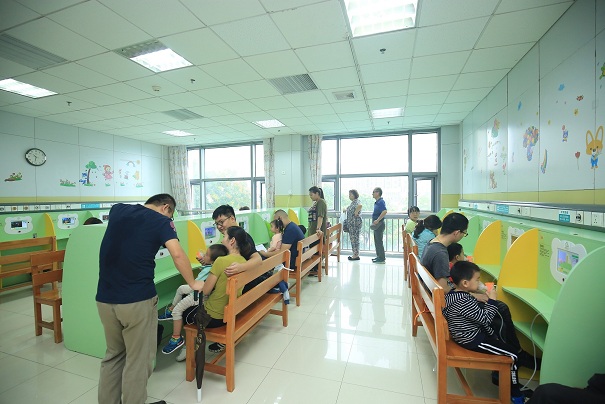
Wuxi Children's Hospital Pediatric Nebulization Room
In 2016, Wuxi Children's Hospital established a novel pediatric nebulization center with the support of AstraZeneca and its partner, Respiratory Guardian. This IoT-based pediatric respiratory therapy solution enables more timely, standardized, and personalized treatment for a greater number of pediatric patients through a one-stop nebulization process and an intelligent nebulization system. It also effectively improves the work efficiency of medical staff, facilitating comprehensive management of pediatric respiratory diseases.
Li Ling, Director of the Department of Respiratory Medicine, told VCBeat: “In the past, although our nebulization room was fully equipped, it was overly dull and far from child-friendly. Despite the nebulization session lasting only 15 minutes, it felt like an eternity to parents. The new smart nebulization room not only displays the remaining time and number of sessions but also plays engaging animated cartoons for children during treatment, helping to alleviate their anxiety.”
MMC Center
Leaving the Pediatric Nebulization Center, walk forward 20 meters to the third floor of Wuxi People's Hospital. There, an eye-catching orange door stands out. This is a key flagship project by AstraZeneca—the China Standardized Metabolic Disease Management Center (MMC).
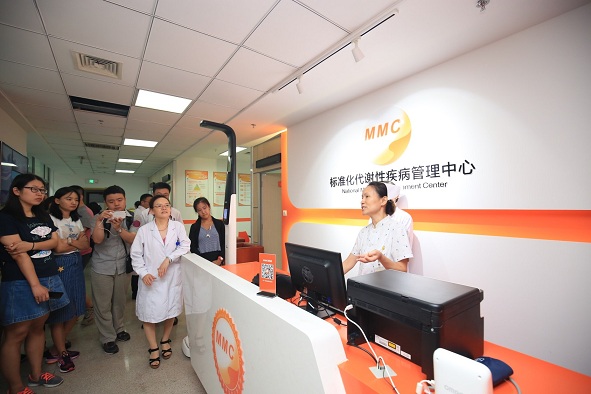
MMC (National Standardized Metabolic Disease Management Center)
In 2016, AstraZeneca, in collaboration with Zhizhong Medical, Omron, and other companies specializing in diagnostic equipment and the health Internet of Things (IoT), jointly launched the Standardized Metabolic Disease Management Center (MMC) project in partnership with the Chinese Medical Doctor Association, the National Clinical Research Center for Metabolic Diseases, and the Shanghai Institute of Endocrinology and Metabolism.
Leveraging advanced diagnostic and therapeutic equipment along with Internet of Things (IoT) technology, this project has developed an integrated online-offline solution for the full-course management of metabolic diseases.
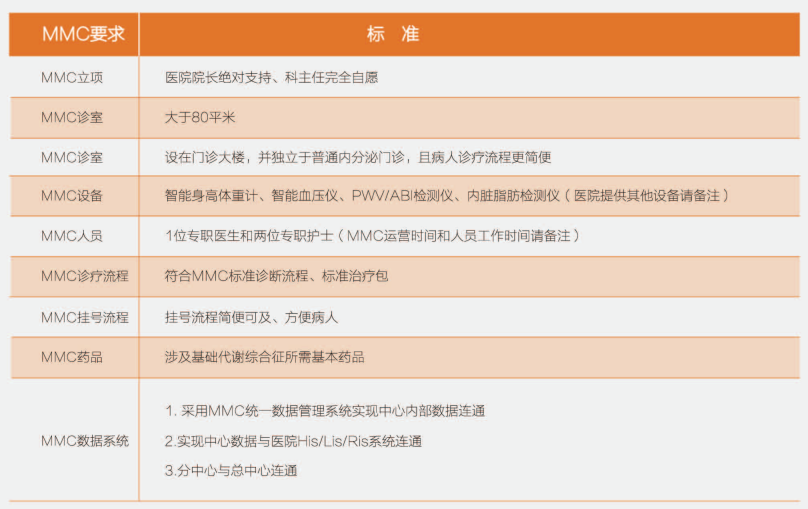
MMC Standard for the Management Center of Standardized Metabolic Diseases
Previously, the inability to accurately diagnose metabolic diseases through a single test required patients to make multiple trips between various examination areas and consulting rooms, which was extremely time-consuming and labor-intensive. In contrast, the MMC features key functional areas, including a service desk, a waiting/health education area, a metabolic function testing area, and a diagnosis and treatment area, enabling patients to easily complete a one-stop diagnostic and therapeutic process for metabolic diseases within the hospital.
The MMC mobile app, custom-developed by AstraZeneca and its partners, provides patients with comprehensive mobile services, including recording various monitoring data and scheduling specialist appointments, thereby ensuring adherence to post-discharge management.
In the future, features such as patient education and personalized lifestyle prompts will also be rolled out successively. Leveraging this disease management software, MMC breaks down barriers between in-hospital and out-of-hospital care, integrates online and offline resources, and establishes a closed-loop, full-course management system covering every stage of metabolic diseases, thereby enabling standardized disease management for patients with metabolic disorders.
As the leader of the MMC project, Academician Ning Guang told VCBeat: “The prevalence of metabolic diseases in China continues to rise. According to national epidemiological survey data from 2010, the prevalence rates of diabetes and prediabetes in China had already reached 11.6% and 50.1%, respectively. The proportion of overweight and obese individuals was as high as 33%, while the prevalence of metabolic syndrome exceeded 30%. Metabolic diseases, characterized by obesity, hyperglycemia, hypertension, and dyslipidemia, have become major chronic conditions that pose a serious threat to the health of the Chinese population.”
To this end, 16 hospitals, including Wuxi People’s Hospital, have joined the National Center for Standardized Metabolic Disease Management. AstraZeneca will use this as a model to complete the establishment of 100 centers across China by the end of this year, aiming to support the prevention, diagnosis, and treatment of metabolic diseases in China.
Not Just MMC
In addition to the Pediatric Nebulization Center and the MMC (China Standardized Metabolic Disease Management Center), AstraZeneca has established the China Commercial Innovation Center in Wuxi, launching multiple specialized centers including the Comprehensive Respiratory Diagnosis and Treatment Room, the Integrated Prostate Cancer Diagnosis and Treatment Center, the Gastrointestinal Tumor Prevention and Treatment Center, and the China Chest Pain Center.
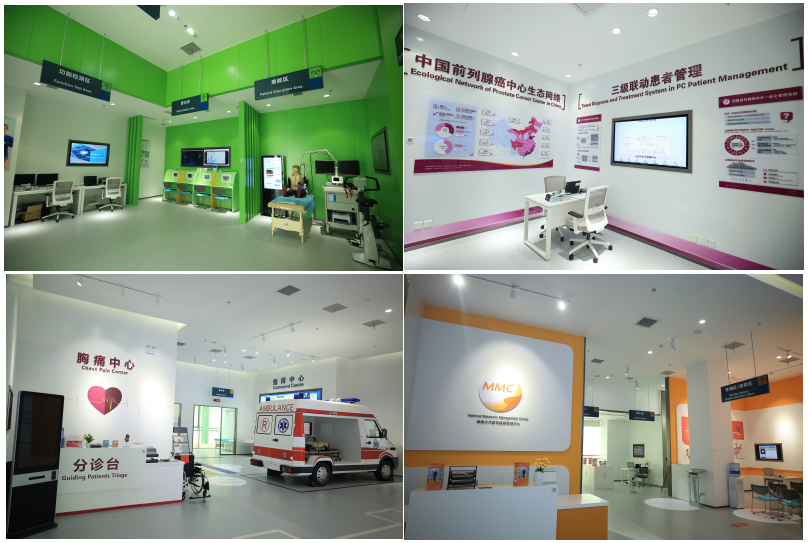
Taking the Integrated Respiratory Care Clinic as an example, to improve the current state of chronic respiratory disease management in China and achieve standardized, full-cycle care for patients with respiratory diseases, AstraZeneca has supported the establishment of Integrated Respiratory Care Clinics nationwide. In collaboration with dozens of partners across the upstream and downstream industry chain, it integrates various aspects such as diagnosis, treatment, and patient education to create a one-stop solution for respiratory diseases based on Internet of Things (IoT) technology. By leveraging advanced diagnostic and therapeutic technologies—including telemedicine, smart nebulization, and a national central database—it helps patients with chronic obstructive pulmonary disease (COPD) and asthma receive early diagnosis and standardized treatment, while also providing support to enhance out-of-hospital patient management.
The Pediatric Nebulization Center at the China Business Innovation Center was established in accordance with the Standard Operating Procedures (SOP) for Nebulization Centers released in 2015. Its spatial design features bright colors and cartoon-themed elements, creating a warm and welcoming treatment environment for pediatric patients. The center comprises a consultation area, a pediatric nebulization zone, a medication preparation room, and an intelligent nebulizer pump rental service area. Dedicated nurses are stationed on-site to prepare medications and guide nebulization procedures, providing children with a one-stop nebulization service.
Similarly, there is the Integrated Prostate Cancer Diagnosis and Treatment Center. This center features a Patient Management Center. AstraZeneca’s partner, Yidu Cloud, will build and integrate a big data platform while safeguarding patient privacy, aggregating all data generated by patients before and after treatment. This initiative aims to facilitate the flow of patient data across hospitals at various levels and establish a comprehensive patient management system. Ultimately, patients, physicians, hospitals, and government entities alike will benefit from standardized, integrated diagnosis and treatment process management.
By the end of 2016, AstraZeneca had launched 11 standardized Metabolic Disease Management Centers (MMC) across China, with the number expanding to 100 by the end of this year. Furthermore, throughout 2016, AstraZeneca established 122 Chest Pain Centers, 100 Integrated Prostate Cancer Diagnosis and Treatment Centers, more than 1,300 Comprehensive Respiratory Diagnosis and Treatment Rooms, and over 12,900 Standardized Nebulization Rooms.
Commenting on these achievements, Wang Lei stated, “The focus of the project is not actually on quantity, but rather on breaking through and validating the business model. As China currently advances the ‘Belt and Road’ Initiative, AstraZeneca’s Innovation Center is poised to become a hub for the Internet of Medical Things (IoMT) in developing countries. On this basis, AstraZeneca is committed to fully supporting the development of China’s healthcare sector and economy.”