

Domee XiaoYi Files IPO: A Pioneer in AI-Powered Patient Service Robots with $60M+ Investment and 300+ Medical Experts
Although medical robots constitute a relatively small niche market within both the robotics and healthcare industries, they have become a focal point of current development as the highest-value category of service robots. According to incomplete statistics, there are nearly 40 medical robot companies on the market, with total financing exceeding RMB 800 million. Media reports suggest that the output value of medical robots will reach USD 17 billion by 2025.
It is well known that the imbalance between the supply and demand of medical services is a major pain point in China's current healthcare landscape. The emergence of medical robots has, to some extent, improved healthcare supply and efficiency. As China enters an aging society, the demand for advanced medical robots will increase significantly.
From the perspective of entrepreneur Yu Guo, medical robotics is a broad concept with many different developmental directions. Currently visible directions include: surgical robots represented by the da Vinci Surgical System, big data-assisted therapeutic decision-making robots represented by IBM Watson, medical imaging recognition robots represented by Arterys, and automated interactive patient service robots represented by Xiao Yi Robot, among others.
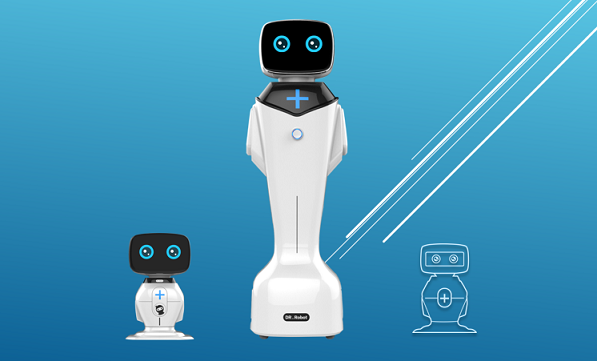
Xiao Yi Robot is the entrepreneurial venture of Yu Guo’s team. She introduced that Xiao Yi has currently developed six different types of patient service robots:
Type A Physical Robot: Can be placed in hospital lobbies to provide pre-consultation triage and guidance for patients, replacing the work of triage nurses.
Type B Physical Robot: Can be deployed in hospital wards to provide inpatient consultations during and after diagnosis, thereby reducing the workload of resident physicians in handling patient inquiries during hospitalization.
Type C Physical Robot: Can be deployed in family physician or rural clinic settings to provide a telemedicine consultation platform that enables family physicians or rural doctors to conduct remote consultations with senior specialists. It also offers diagnostic and treatment support through advisory services.
Type D Physical Robot: Can be placed in patients' homes to provide daily health consultations, treatment reminders, and follow-up tracking services. It also facilitates voice or video interactions among patients, doctors, and family members.
Type E Virtual Robot: Its service targets are hospitals or health service institutions, and it can support hospitals or doctors in the automatic tracking and follow-up of target patient populations.
Hospitals or physicians can develop follow-up plans and intervention protocols;
The robot can conduct automated follow-ups with the target patient population through WeChat or a mobile app, using natural language conversations as directed by physicians.
The robot evaluates and analyzes follow-up results, implements intervention plans for cases that meet the criteria, and submits those that do not to the hospital or physician while notifying them accordingly;
Hospitals or physicians can re-formulate targeted intervention plans and initiate robotic execution.
The automated follow-up robot integrates consultation and follow-up into one, enhancing the practicality and frequency of use of the follow-up interface, enabling collaborative work between consultation and follow-up.
Type F Virtual Robot: Suitable for customer service management in online patient acquisition and medical guidance consultation at hospitals, it offers two modes: robotic staffing with human backup, or human staffing with robotic support. This robot can significantly reduce the number of customer service personnel, lower labor costs, provide 24/7 customer service, and improve the quality and efficiency of customer service.
When examining each of Xiao Yi’s robots individually, they appear to have similar counterparts on the market. For instance, some physical patient-guidance robots have already been deployed in certain hospitals, and some low-interaction cloud-based follow-up systems are also operational in medical institutions. However, Yu Guo believes that Xiao Yi differs significantly from these similar products, with its greatest advantage lying in the software “brain” capabilities of its robots.
As is well known, the development of robotic software is a long-term process characterized by continuous iterative understanding, cumulative knowledge acquisition, and ongoing system upgrades. Through extensive research and development, the Xiao Yi Robot has acquired proactive awareness and cognitive capabilities. It can emulate the perspectives and intentions of hospitals or physicians, guiding patients toward the optimal pathway for resolving their health issues through barrier-free communication.
Yu Gu provided an example: A patient told the robot, “I have hypertension and hyperglycemia. What dietary precautions should I take?” While quickly comprehending the patient’s condition and responding to their query, the robot immediately entered its independent reasoning mode to determine that it needed to ascertain the following information about the patient:
What topics are you interested in?
What personality traits are present?
What psychological activities are present?
What stage of the disease is it in?
What treatments have been administered?
What goal is to be achieved for the patient?
What guidance methods and approaches?
How to Introduce the Topic?
How to Manage Poor Medication Adherence?
…
Following a complex analytical process, the robot formulates a plan: “Initiate conversation by discussing topics of interest to the patient to ascertain disease-related information, select an appropriate specialist for the patient, and schedule an in-person consultation.” The robot then executes this plan, completes the interaction with the patient, and resolves the patient’s concerns. Should new issues or conditions arise during the interaction, the robot immediately enters a new reasoning mode, re-evaluates the patient’s situation, proposes a revised plan, and initiates a new round of interaction with the patient.
As can be seen from the above example, the Xiao Yi robot has evolved to simulate human thinking patterns, proactively analyzing and resolving patients’ issues.
Yu Guo pointed out, “The advantage of Xiaoyi Robot essentially stems from years of continuous technological R&D by a highly capable and stable team.” There is a significant gap between Xiaoyi Robot and other similar domestic robots in terms of software “brain” capabilities; on the surface, the difference amounts to at least 2–3 generations or 3–4 years of development time.
“As is well known, the development of AI products, particularly the formation of a mature industry-specific knowledge base and rule base, requires at least five years of R&D iteration, including periods of trial and error. In the application areas currently explored, certain AI theories—such as natural language processing and deep learning methodologies—have become relatively mature. Leveraging these theoretical approaches merely supports your R&D efforts; it does not mean that an AI knowledge base or rule base can be built overnight simply by adopting a particular theoretical method,” she added.
Based on her long-term observations, most similar robotic products on the market have only begun R&D in the past one to two years. Robot teams established before 2015 are still relatively rare. However, the supply chain market for mainstream hardware robots has become highly mature, even reaching a point where overcapacity is a concern. For a mainstream humanoid robot product, one can obtain a separately designed prototype within two months simply by paying the required fees.
There are few products on the market similar to the Xiaoyi robot. In comparison, the most significant shortcoming of these robots is their brief R&D period, placing them in the early stage of weak-communication robotics. These robots lack proactive awareness or thinking capabilities. Although some have impeccable hardware designs, their software "brains" are underdeveloped, unable to generate professionally coherent and logical language. They essentially rely on third-party speech recognition software combined with a simple keyword-search module and partial decision-tree if-then statements. Their interaction process mainly involves guiding patients to operate buttons on the robot’s built-in computer screen after recognizing keywords. In effect, such robots can be regarded as humanoid mobile laptops.
Regarding the many cloud-based follow-up systems in China, Yu Guo stated that the overall effectiveness of currently launched systems is unsatisfactory. The primary reason is that follow-up is not a high-frequency event, and it also consumes patients’ time and energy. Consequently, patient engagement is generally low, with some even deleting the follow-up client applications from their mobile phones. Furthermore, most follow-up systems on the market have not incorporated chatbots; instead, they rely on pushing questionnaires and scales to patients, resulting in a traditional and rigid approach. When completing these questionnaires or scales, patients often encounter uncertainties and require consultation, but the follow-up clients fail to provide interactive support.
The follow-up client provided to patients by Xiao Yi Robot is a next-generation robotic follow-up platform that integrates consultation and follow-up services, thereby increasing user engagement and fostering greater patient reliance on the system. Xiao Yi Robot conducts follow-ups by simulating human-to-human communication, abandoning traditional scale- or questionnaire-based approaches, and guiding patients step by step through the process. Consultation and Q&A are available during follow-ups, seamlessly blending consultation into follow-up interactions and vice versa.
Yu Guo revealed that the R&D of the software "brain" for the Xiao Yi robot alone took more than eight years, with over 300 medical experts and computer engineers participating in the development process, attracting and investing more than RMB 60 million in R&D expenses.
It is understood that Beijing Duomei Shijie Intelligent Technology Co., Ltd., the company behind the Xiao Yi robot, was established in August 2010. Its dedicated and part-time R&D team consists of approximately 80–100 members. This team includes elites graduated from renowned domestic and international institutions such as the University of Toronto, the University of Waterloo, Peking University, Jilin University, and Tongji University, as well as experts from leading tech companies like Oracle and Google. It comprises senior engineers with extensive experience in artificial intelligence software development, alongside energetic young professionals born in the 1990s who are deeply committed to the company.
During the initial R&D phase, Xiao Yi Robot received substantial financial support from its founding shareholders. Following the influx of external social investment, the company gained greater flexibility and room for growth in both research and development and market expansion.
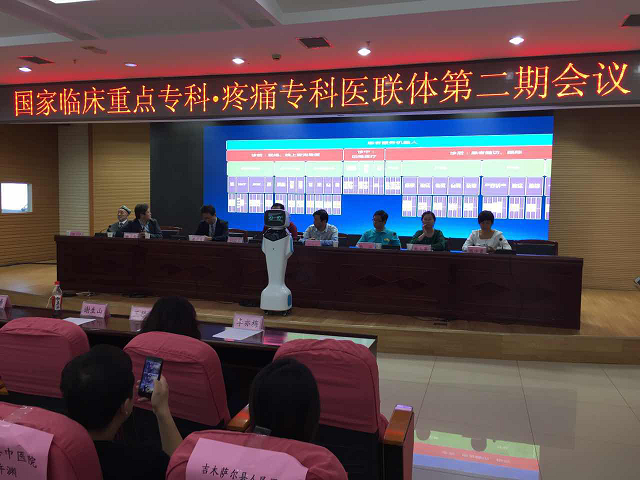 Xiao Yi Robot Participates in the Second Session of the National Clinical Key Specialty · Pain Specialist Medical Consortium
Yu Guo stated that the accuracy rate of Xiao Yi, the patient service robot, in answering patient inquiries exceeds 98%. By participating in numerous professional medical conferences and engaging with many medical experts, it has received widespread acclaim and recognition. “Some experts even joked that only after witnessing the capabilities demonstrated by the Xiao Yi robot did they truly grasp the existence of the ‘doctor crisis’ referred to by Jack Ma.”
Due to variations in application scenarios and requirements, Xiao Yi’s robots incur different costs across R&D (software and hardware), production, and sales. Consequently, the final market price per unit ranges from tens of thousands to hundreds of thousands of RMB.
Xiao Yi Robot has commenced commercial sales and secured an initial cohort of healthcare institution clients. Its primary target market consists of B2B clients, including hospitals at various tiers, diverse medical and healthcare facilities, elderly care institutions, and health service providers.
As for the customer acquisition cost of the Xiaoyi robot, since its promotion is primarily targeted at B-end clients, the main expenses are incurred in educating potential buyers about the product and its features. These efforts include participating in various medical industry conferences, conducting targeted visits to prospective clients, leveraging professional associations for promotional support, and collaborating with companies or individuals that control key industry resources. According to Yu Guo, compared to the cash-burning model typical of C-end products, the customer acquisition cost for the Xiaoyi robot is relatively low.
Although the software brain of the Xiao Yi robot has achieved commendable results, Yu Guo frankly admits that the difficulties and challenges in the next phase of research and development still lie in the software brain.
Looking ahead, the R&D of Xiaoyi Robot will delve deeper into artificial intelligence, with a focus on developing self-learning capabilities such as autonomous knowledge discovery and self-refining rule systems. Meanwhile, as its products mature, the company will optimize and expand its supply chain and sales service network, accelerating market penetration. This expansion, of course, requires substantial financial support. Yu Guo stated that the company has already initiated a new round of financing.