

Hyus Meditec Completes Tens of Millions Yuan Financing, Led by Hetang Investment, to Build Full-chain Ultrasonic Technology Platform

Hyus Meditec
Developer of High-Frequency Medical Ultrasound Technologies and Products
Recently, Hyus Meditec, a leading domestic ultrasound platform enterprise, announced the completion of a new round of financing worth tens of millions of yuan, which was led by Hetang Investment. The completion of this financing marks a key step for Hyus Meditec in the industrialization of full-chain core ultrasound technologies, and also reflects the high recognition of domestic high-end ultrasound innovation by the capital market.
The funds raised in this round will be mainly used to accelerate the market promotion of intracardiac ultrasound (ICE) products, advance the clinical development of 4D-ICE, expand the commercialization of the ultrasonic brain-computer interface product line, promote the mass production of the integrated diagnosis and treatment system of ultra-high resolution ultrasound and photoacoustic imaging, and expand the production capacity of Nasheng's automated ultrasonic pipetting products.
Founded in 2020 and headquartered in Nanshan District, Shenzhen, Hyus Meditec is a national high-tech enterprise incubated by the State Key Laboratory of Medical Imaging Science and Technology System, Shenzhen Institutes of Advanced Technology, Chinese Academy of Sciences. Dr. Qiu Weibao, founder of the company, is an expert in the ultrasound field who has been engaged in the research and development of cutting-edge ultrasound technologies for nearly fifteen years. The core competitiveness of the Hyus Meditec team lies in its in-depth understanding of the underlying architecture of ultrasound technology and full-chain control capabilities.
For a long time, high-end ultrasound transducers, the "heart" of ultrasound equipment, have been heavily reliant on imports, which has become a major bottleneck restricting the development of China's domestic ultrasound industry. Since its founding, Hyus Meditec has focused on core technologies and built four core platforms with independent intellectual property rights covering high-end ultrasound transducers, active interventional catheters, ultrasound imaging algorithms and main ultrasound devices. The company has made a series of breakthroughs in core links including the design, processing and packaging of products such as ultra-high frequency transducers, high-density 4D array transducers and active interventional ultrasound transducers, and successfully established production lines for main equipment of high-frequency ultrasound and interventional endoscopic ultrasound imaging.
More importantly, Hyus Meditec has realized 100% independent R&D and production of key transducers and active interventional catheters, eliminating reliance on externally purchased core components. It has built complete Class 10,000 clean workshops and a full production system, which fully guarantees supply chain security, cost control and stable mass production capacity. Against the backdrop of growing uncertainties in the global supply chain, such independent and controllable capabilities are particularly valuable.
In terms of team composition, Hyus Meditec has gathered interdisciplinary talents with backgrounds in ultrasound engineering, biomedical engineering, clinical medicine, artificial intelligence and other fields. R&D personnel account for more than 50% of its total staff. Most core R&D members boast extensive development experience, building an intellectual property moat covering key areas including ultrasound transducer design, imaging algorithms and system architecture.
A relevant person in charge of Hetang Investment stated: "Ultrasound technology enjoys extremely broad application prospects in the biomedical field. From diagnosis to treatment, clinical practice to scientific research, and in-vivo to in-vitro scenarios, ultrasound is reshaping multiple medical settings. In recent years, leveraging the unique strengths of non-invasive monitoring and integrated diagnosis and treatment, ultrasound diagnosis and treatment technologies have fostered new technological and product platforms in areas such as minimally invasive tumor therapy and brain-computer interfaces. The Hyus Meditec team is a rare domestic team capable of tackling all core technologies of ultrasound products. It has achieved full independent control across the entire industrial chain, ranging from transducers and algorithms to catheters and main devices, which is quite remarkable amid the current competitive landscape. Notably, the company has made forward-looking layouts in the cutting-edge field of brain-computer interfaces. Ultrasound brain functional imaging and neuromodulation technologies are expected to unlock a new brain science market worth hundreds of billions. Meanwhile, its deployments in high-resolution ultrasound imaging and nanoliter ultrasonic pipetting precisely capture the growth opportunities of the global preclinical research and laboratory automation markets. Though niche, these tracks deliver high profit margins and demand profound technological accumulation, and Hyus Meditec's entry reflects its solid technical strength. The company boasts a rich product pipeline covering interventional catheter consumables, main devices and brain-computer interface products, which effectively avoids the limitations brought by relying on a single pipeline. We believe that with the gradual launch of its products, Hyus Meditec will emerge as a new benchmark enterprise in China's high-end ultrasound sector."
Domestic Power Breaking Through in the Multi-Billion-Yuan Market
Intracardiac Echocardiography (ICE) is known as the "golden eye" for cardiac interventional procedures. Featuring no radiation, real-time imaging and flexible operation, it has become an indispensable navigation tool for surgeries including atrial fibrillation ablation, left atrial appendage closure and interventions for structural heart diseases. Compared with traditional transesophageal echocardiography, ICE requires no general anesthesia, delivers better patient tolerance and higher surgical efficiency, and eliminates the risk of esophageal injury, showing an increasingly obvious trend of clinical replacement.
The global ICE market has expanded rapidly in recent years and is expected to hit 1.4 billion US dollars by 2030. The Chinese market presents an even stronger growth momentum. Industry forecasts indicate that China's intracardiac ultrasound catheter market will likely surpass 1 billion yuan by 2027. Over the past decade, however, foreign brands including Johnson & Johnson and Abbott have long dominated the domestic ICE catheter market. Since the launch of the first domestically developed ICE product, a breakthrough campaign led by local enterprises has quietly commenced.
World's First 80-Element Large-Aperture ICE Approved for Market Launch, with Globally Leading Technology
Hyus Meditec's self-developed 80-element large-aperture intracardiac ultrasound imaging technology has obtained the Class III medical device registration certificate issued by NMPA. In terms of product design, the company's ICE features multiple differentiated advantages.
First, the company independently developed the world's first 80-element large-aperture intracardiac echocardiography (ICE) catheter. Compared with traditional 64-element products, the 80-element design enables more precise beam control, higher spatial resolution, and greater imaging depth. When paired with a dedicated high-end ultrasound system, it achieves over a 25% improvement in imaging resolution and contrast compared to conventional products, allowing for clearer visualization of endocardial borders, valvular structures, and small thrombi.
Secondly, the product is available in two specifications, 8F and 10F, which can flexibly adapt to the conditions of different patients and diverse surgical needs. The 8F catheter is suitable for routine electrophysiological procedures, while the 10F catheter delivers superior imaging penetration in interventions for structural heart diseases. In terms of market promotion, Hyus Meditec's ICE products have been gradually put into clinical use in many Grade A tertiary hospitals, covering various procedures such as radiofrequency ablation for atrial fibrillation, left atrial appendage closure, atrial septal defect closure and ventricular premature beat ablation. Clinical feedback shows that Hyus Meditec's ICE catheter boasts excellent imaging clarity, flexible operation and high stability, with its overall performance reaching the level of world-leading products.
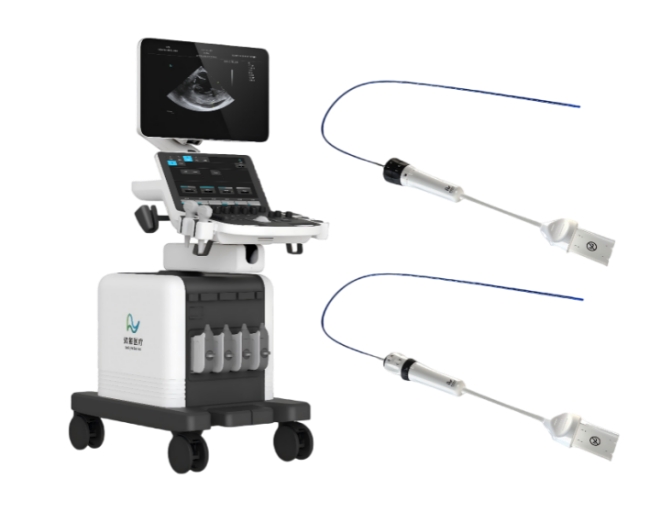
4D-ICE: The Next Battleground for Intracardiac Echocardiography
If 2D-ICE represents the primary battlefield for current domestic substitution, then 4D-ICE signifies the technological high ground in this sector. Building upon 2D technology, 4D-ICE incorporates real-time three-dimensional imaging capabilities, which can significantly enhance visualization during procedures for structural heart disease, thereby lowering the operational threshold and learning curve for physicians.
From the perspective of technological development trends, 4D-ICE is regarded as the ultimate form of intracardiac ultrasound. Hyus Meditec has completed the product development of 4D-ICE and mastered the full set of its core technologies, including high-density imaging probes, multi-directional deflectable catheters, 4D imaging algorithms and imaging main units. Specifically, its 4D-ICE is capable of three-dimensional dynamic imaging to visualize cardiac structures and the spatial relationship of catheters in real time. It enables physicians to observe the three-dimensional positions of instruments and tissues during operations, greatly improving surgical accuracy. With the multi-planar reconstruction function, the system can display the spatial relationship of internal cardiac structures in real time.
In terms of core technical parameters, the transducer of Hyus Meditec's 4D-ICE adopts a high-density array design, realizing electronic focusing and scanning in both azimuth and elevation directions. The supporting high-end 4D imaging main unit applies a massively parallel beamforming architecture to ensure high-frame-rate real-time 3D imaging.
In terms of clinical application prospects, 4D-ICE has broad application value in left atrial appendage closure, mitral valve repair, tricuspid valve repair, transcatheter aortic valve replacement, radiofrequency ablation for atrial fibrillation, pulsed field ablation (PFA), cryoablation and complex congenital heart disease surgeries.
Hyus Meditec takes a leading position nationwide in both 2D-ICE and 4D-ICE technological routes, emerging as one of the most competitive platform enterprises in China's domestic intracardiac ultrasound sector.
The Revolutionary Convergence of Ultrasound and Brain Science
Brain-computer interfaces (BCIs) are deemed the next transformative technological frontier following artificial intelligence, and have been designated as a future industry for forward-looking deployment in China's 15th Five-Year Plan. Among diverse technical approaches to BCIs, ultrasound-based BCIs stand out as a cutting-edge focus of global brain science research. They feature non-invasiveness, effective skull penetration and bidirectional interaction, and have been highlighted by Nature as a promising emerging BCI field for two successive years.
Ultrasound can penetrate the skull to reach the brain for precise positioning and capture reflected signals from brain tissues, inherently enabling a bidirectional closed-loop system for signal reading and neuromodulation. Unlike implantable electrode solutions that require craniotomy, ultrasound technology is completely non-invasive, boasting higher safety and better patient acceptance. Compared with conventional non-invasive methods such as electroencephalography, ultrasound delivers millimeter-level spatial resolution and deep brain penetration, allowing precise targeting of key deep brain nuclei including the thalamus and hippocampus. Such distinctive strengths endow ultrasound-based brain-computer interfaces with immense potential for clinical translation, especially for neuromodulation scenarios requiring long-term application.
Ultrasound Brain Function Readout Imaging: Brain Functional Ultrasound Imaging System Has Achieved Commercialization
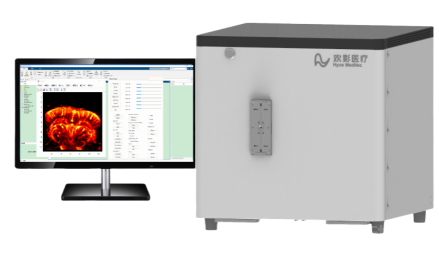
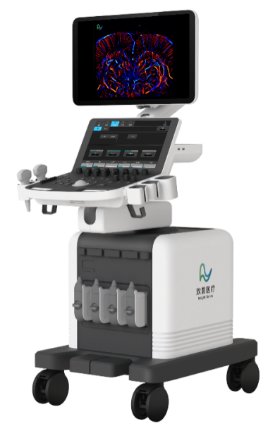
Hyus Meditec has independently developed the functional ultrasound imaging system (Sonorover fUS) for brain activity monitoring, which has been fully commercialized and launched for sale. The company is the first domestic player to realize the commercial application of this technology. Leveraging ultra-sensitive blood flow imaging technology, the system enables dynamic hemodynamic monitoring of the whole-brain microvascular network. It captures transient blood flow changes of microvessels during neurovascular coupling at a spatial resolution of hundreds of micrometers, and can be applied to mapping whole-brain functional connectivity networks and monitoring vascular network activation during epileptic seizures. With millisecond-level temporal resolution, the system supports imaging research in various fields including brain science, brain disorders and brain-computer interfaces.
Technically speaking, Hyus Meditec's functional ultrasound imaging system adopts DeepFocus imaging technology to scan brain tissue at a frame rate of over 10,000 frames per second. Combined with high-sensitivity Doppler processing algorithms, it can detect subtle changes in blood flow velocity in microvessels as small as 20 micrometers in diameter. Given the strong neurovascular coupling between neural activity and local blood flow alterations, monitoring cerebral blood flow changes allows indirect inference of neuronal activity, thereby realizing the "reading" of brain functions.
Ultrasound Neuromodulation: Brain Regulation and Bidirectional Closed-Loop Systems
Hyus Meditec has also made comprehensive layout in ultrasonic neuromodulation, known as ultrasonic writing. The company is advancing ultrasound-based neuromodulation technology, which enables precise intervention in deep brain regions with millimeter-level focusing accuracy. Its team has participated in the development of major national scientific research instruments and completed the research of core technologies for ultrasonic neuromodulation based on large-scale electronic channels.
The global field of ultrasonic neuromodulation is currently undergoing rapid development. In 2025, a U.S. research team published a breakthrough clinical study in Nature on the use of transcranial focused ultrasound to modulate the subthalamic nucleus in Parkinson’s disease patients, verifying the safety and preliminary efficacy of ultrasonic neuromodulation. In the U.S., Merge Labs is dedicated to developing non-invasive ultrasound-based brain-computer interface technology and has secured hundreds of millions of U.S. dollars in financing.
Backed by a full product portfolio covering functional ultrasound brain imaging and ultrasonic neuromodulation, Hyus Meditec is building a closed-loop technical system featuring brain function reading, brain state analysis, precise neuromodulation and modulation efficacy evaluation. This closed-loop architecture underpins genuine brain-computer interaction. To elaborate, it first reads brain states via functional ultrasound imaging, analyzes and interprets neuronal activity patterns with AI algorithms, and develops personalized neuromodulation regimens based on analytical findings. Focused ultrasound is then adopted to deliver targeted neuromodulation commands, followed by imaging-based efficacy reassessment, which ultimately forms a complete feedback loop.
Looking ahead, Hyus Meditec is poised to explore new market opportunities in the diagnosis and treatment of brain disorders, neurological rehabilitation, brain-computer interaction and other fields. In terms of expanded indications, ultrasonic neuromodulation holds potential value for neuropsychiatric conditions such as depression, anxiety disorders, chronic pain, addiction and insomnia, serving a vast patient population. Industry projections show that the global non-invasive neuromodulation market will exceed 20 billion US dollars by 2035.、
The Technological High Ground of the Multi-Billion Preclinical Imaging Market
As part of Hyus Meditec's ultrasound platform ecosystem, the integrated ultra-high resolution ultrasound and photoacoustic imaging system for diagnosis and treatment serves as a core product line with unique positioning and outstanding value. Focused on the global preclinical research market, it offers all-round in vivo imaging solutions for small animals to hospitals, university laboratories and pharmaceutical research and development institutions.
Currently, the global market for small-animal ultrasound imaging is dominated by a handful of international giants including Canada-based VisualSonics. Domestic brands hold an extremely low market share in this field. The core reason lies in the stringent requirements for transducer frequency, system resolution and imaging algorithms, which create formidable technical barriers. Equipped with self-developed ultra-high frequency ultrasound transducers and advanced imaging systems, Hyus Meditec is among the very few domestic enterprises capable of independently developing and manufacturing ultra-high resolution ultrasound imaging systems for small animals.
Ultra-High-Frequency Ultrasound Transducers: Breaking Through the Technological Ceiling
Organs such as the heart and liver of small animals are much smaller than those of humans. Their hearts are merely a few millimeters in size, with a heart rate reaching 400 to 600 beats per minute. To capture clear images of such tiny and rapidly moving structures, imaging frequencies far higher than those for clinical use are required. While clinical ultrasound typically operates at 2–10 MHz, research-grade ultrasound needs frequencies of 30–50 MHz or even higher, posing great challenges to the design and manufacturing of ultrasound transducers.
Hyus Meditec has independently developed ultra-high frequency ultrasound imaging probes and systems, achieving key technological breakthroughs in ultra-high frequency ultrasound transducers, the core component. Its self-developed single-crystal composite ultrasound transducers feature a center frequency ranging from 20 to 50 MHz and deliver an axial resolution of 30 micrometers, representing the world's top standard in research-grade ultrasound imaging. In terms of transducer manufacturing processes, the team has overcome a host of core technical hurdles including the processing of ultra-thin piezoelectric wafers, connection of high-frequency micro-coaxial cables and deposition of precision acoustic matching layers, enabling stable mass production of ultra-high frequency transducers.
Photoacoustic Imaging: Opening a New Dimension in Molecular Imaging
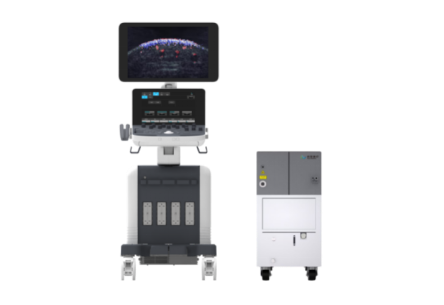
Notably, Hyus Meditec has deeply integrated photoacoustic imaging technology with ultra-high frequency ultrasound imaging to develop the integrated ultrasound and photoacoustic imaging system for diagnosis and treatment, marking a major upgrade to conventional ultrasound imaging.
Photoacoustic imaging is a rapidly emerging biomedical imaging technology in recent years. Its working principle is as follows: pulsed laser irradiates biological tissues, and endogenous or exogenous light absorbers within the tissues absorb light energy to generate transient thermoelastic expansion, which in turn produces ultrasonic waves. Images of tissue optical absorption distribution can be reconstructed by detecting these ultrasonic signals. Combining the high contrast of optical imaging and the deep penetration capability of ultrasound imaging, photoacoustic imaging enables label-free imaging of tissue functional, molecular and metabolic characteristics.
Hyus Meditec's integrated ultrasound and photoacoustic imaging system for diagnosis and treatment can simultaneously acquire anatomical ultrasound images and functional photoacoustic images of the same tissue. The ultrasound mode delivers detailed anatomical information, while the photoacoustic mode captures functional and molecular data including blood oxygen saturation, total hemoglobin concentration, as well as lipid and melanin distribution. The complementary combination of the two imaging modalities equips researchers with unprecedented capabilities for multi-dimensional tissue characterization.
Product Competitive Advantage: Performance on Par with International Standards, Leading in Price and Service
To date, Hyus Meditec's research-grade ultrasound technologies and systems have been deployed at research platforms of dozens of renowned universities, research institutes and Grade A tertiary hospitals at home and abroad. They support research across cutting-edge fields such as oncology, neuroscience, cardiology, developmental biology and pharmaceutical R&D. User feedback indicates that the system matches mainstream international products in imaging clarity, ease of operation and multi-function integration.
Looking ahead, Hyus Meditec plans to further expand its product line for small-animal imaging and treatment, including the launch of ultrasound imaging modules with enhanced functions and multispectral photoacoustic imaging systems. Meanwhile, the company will actively explore overseas markets and bring this domestically developed high-end research equipment with independent intellectual property rights to the global preclinical imaging sector.
Non-Contact Nanoliter Ultrasonic Pipetting: Precise, Efficient, and Contamination-Free
Hyus Meditec's fourth core product line is the non-contact ultrasonic liquid handling system developed based on ultrasound technology. It mainly caters to the demands of high-throughput laboratory automation in fields such as drug screening, synthetic biology and genomics.
Traditional liquid handling technologies rely on physically contacted pipette tips, which are plagued by high risks of cross-contamination, high consumable costs and insufficient liquid handling accuracy. Taking drug screening as an example, a typical compound library may contain millions of compounds. When processing such massive samples, conventional pipetting is extremely time-consuming. Frequent tip replacement also leads to substantial consumable expenses, and the risk of cross-contamination during operation can hardly be fully eliminated. In synthetic biology, strain construction and metabolite analysis involve the transfer and mixing of numerous trace liquids, where traditional methods are increasingly constrained in terms of precision and throughput.
Ultrasonic liquid handling technology leverages focused acoustic radiation force to transfer trace liquids from source plates to target plates in a non-contact manner, featuring zero cross-contamination, no consumables, nanoliter-level precision and high throughput. Hyus Meditec's ultrasonic liquid handling system adopts focused ultrasound and precise acoustic radiation force to manipulate microdroplets, with a minimum transfer volume of 2.5 nanoliters. The entire process requires no pipette tips or nozzles to touch liquids, completely eliminating cross-contamination risks and recurring costs for consumables, and greatly cutting operational expenses.
Hyus Meditec's ultrasonic liquid handling system has been fully commercialized and widely recognized in drug screening, synthetic biology and other application fields. In drug screening, the system greatly improves the throughput and accuracy of compound library screening while reducing the loss of valuable samples. For rare natural products and lead compounds, its nanoliter-level pipetting accuracy enables a large number of screening tests to be conducted with only a tiny amount of precious samples. In synthetic biology, it meets the stringent requirements for trace liquid handling in high-throughput strain construction and metabolite analysis, supporting high-throughput microbial community assembly, DNA assembly, directed enzyme evolution and other applications. Currently, the system has been included in the procurement lists of numerous pharmaceutical enterprises and synthetic biology institutions.
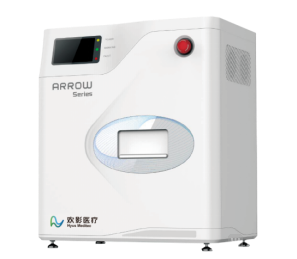
The Multi-Billion Dollar Laboratory Automation Market
The global market for automated laboratory liquid handling systems is expanding rapidly. In China, growing investment in innovative pharmaceutical R&D — which surpassed 200 billion yuan in 2024 — the synthetic biology industry maintaining a growth rate of over 25%, and the accelerating trend of laboratory automation and intelligence have together driven strong demand for high-end ultrasonic liquid handling devices. As a high-end segment of life science lab automation, nanoliter liquid handling systems see rising needs amid the widespread use of high-throughput screening, high-density microplates and micro-volume reaction systems.
Relying on self-developed ultrasonic transducers and control systems, Hyus Meditec delivers performance on par with imported products while enjoying notable cost advantages. The company achieves full independent R&D and production for core components including ultrasonic transducers and precision acoustic field controllers, which greatly cuts system costs. It is scaling up mass production and expanding capacity, aiming for an annual output of over 50 units within three years and striving to become a leading domestic brand in ultrasonic liquid handling equipment.
The core competitiveness of Hyus Meditec ultimately lies in its mastery of full-chain core ultrasound technologies. Ultrasound technology is a highly integrated systematic engineering discipline covering materials science, precision manufacturing, electronic engineering, signal processing and algorithm design. A complete ultrasound system consists of three indispensable core modules: ultrasound probes (transducers), main units for signal transmission and reception, as well as imaging and control algorithms. Only a handful of enterprises worldwide have achieved independent R&D and production across all three modules.
This integrated technological capability covering probes, main units and algorithms makes Hyus Meditec one of the few enterprises in the industry with full command of the core ultrasound technology ecosystem, forming a solid moat for its long-term development. While the global high-end ultrasound market has long been dominated by industry giants, Hyus Meditec's full-stack technology platform marks a historic leap for China's ultrasound sector from following others to keeping pace, and even taking the lead in certain fields.
Looking back at Hyus Meditec's financing journey, the company has maintained a clear and steady growth momentum. In June 2023, it closed a tens-of-millions-yuan Pre-A round financing. The round was led by Shanghai STVC Group, with participation from Keystone Capital. Existing investor GREENRIVER CAPITAL also made additional investments. The funds were primarily allocated to accelerate the R&D and clinical trials of products including ICE intracardiac ultrasound catheters. In May 2025, the company completed a new financing round led by Nanshan Venture Capital, joined by existing shareholder Shanghai Science and Technology Investment. The capital will be used to further expand its product portfolio and market channels.
The lead investment from Hetang Investment marks a new milestone for Hyus Meditec in its capital development. As a renowned institution focusing on early-stage and growth-stage tech enterprises, Hetang Investment boasts profound industry expertise and extensive resource networks across medical devices, biomedicine and hard technology sectors. Its participation will not only provide ample financial support, but also fuel the company's growth by facilitating access to clinical resources, industrial chain collaboration and market expansion.
Ultrasound technology is expanding from traditional imaging diagnosis to diverse scenarios including treatment, intervention, scientific research, neuroscience and laboratory automation. Cutting-edge applications such as focused ultrasound for blood-brain barrier opening, ultrasonic neuromodulation, ultrasound-mediated drug delivery and ultrasonic liquid handling have sparked a global research boom, unlocking a vast blue ocean market far beyond conventional imaging. Estimates show that the combined market size of these emerging ultrasound applications exceeds 100 billion US dollars.
Fueled by the growing number of cardiovascular interventional procedures and the rapid popularization of interventional treatments for structural heart diseases, demand for intracardiac ultrasound is rising rapidly. There are over 10 million atrial fibrillation patients in China, and the number is climbing alongside population aging. Annual new atrial fibrillation ablation surgeries grow at a rate of over 20%. In addition, investment in brain-computer interfaces is increasing worldwide. Major national brain-computer interface projects have been launched in China, unlocking a market worth hundreds of billions of yuan for brain disease diagnosis, treatment and related technologies. In pharmaceutical research and development, global R&D expenditure has exceeded 200 billion US dollars and keeps rising, sustaining robust demand for small-animal imaging systems and laboratory automation equipment.
Looking ahead, Hyus Meditec has a clear and ambitious development roadmap. It aims to build a full-scenario ultrasound solution covering diagnosis, treatment and scientific research, and establish a comprehensive ultrasound product ecosystem spanning cardiology to neuroscience, clinical practice to laboratory applications, as well as in vitro and in vivo scenarios.
In the interventional sector, the company will fully localize ICE products and expand to overseas markets. In neuroscience, it will build a brain-computer interface platform integrating ultrasound brain imaging and neuromodulation to become a standard tool for brain disease diagnosis and treatment. For research applications, based on its integrated multimodal ultrasound diagnosis and treatment systems, it will evolve into a comprehensive solution provider for preclinical imaging. In laboratory automation, it will make ultrasonic liquid handling a standard fixture in high-throughput labs. Rooted in full-spectrum core technologies and backed by a diversified product portfolio, Hyus Meditec strives to grow into a global benchmark in biomedical ultrasound.