

MyoMed Completes Tens of Millions of RMB in Series Angel and Angel+ Financing, World-First Reperfusion Injury Hydrogel Tackles Cardiovascular Challenge
MYOMED
Cardiovascular Device and Consumable R&D Developer
Nuoyu capital
Early-stage venture capital institution
Recently, MyoMed, a company dedicated to the development of innovative medical devices in the cardiovascular field, announced the completion of its Series Angel and Angel+ financing, raising tens of millions of RMB. The round was led by Noyu Capital, an early-stage venture capital fund founded by investors with extensive experience in the healthcare industry. Noyu Capital has long been deeply engaged in the medical device and digital health sectors, with a particular focus on early-stage investment opportunities.
The rapid closure of these two consecutive financing rounds marks that MyoMed has entered a new phase—transitioning from the laboratory to clinical application—in its efforts to address the global challenge of myocardial ischemia-reperfusion injury (MIRI).
The funds from this series of financing will be primarily used for the clinical trial of the company's core pipeline product, a transcatheter injectable hydrogel for the treatment of MIRI, as well as to support preclinical validation, process development, and clinical registration of additional pipeline candidates. This will further strengthen MyoMed's research, development, and translation capabilities in cardiovascular innovative medical devices.
Targeting Unresolved Global Challenges in MIRI, Entering the Myocardial Protection Market Valued at Over RMB 10 Billion
Currently, revascularization therapies for acute myocardial infarction, such as coronary artery stent implantation, are highly advanced. However, after restoring myocardial blood supply, these treatments can induce iron overload in cardiomyocytes, leading to cell death and thereby significantly reducing the benefits of reperfusion. This pathological process is clinically referred to as myocardial ischemia-reperfusion injury (MIRI) (Figure 1).
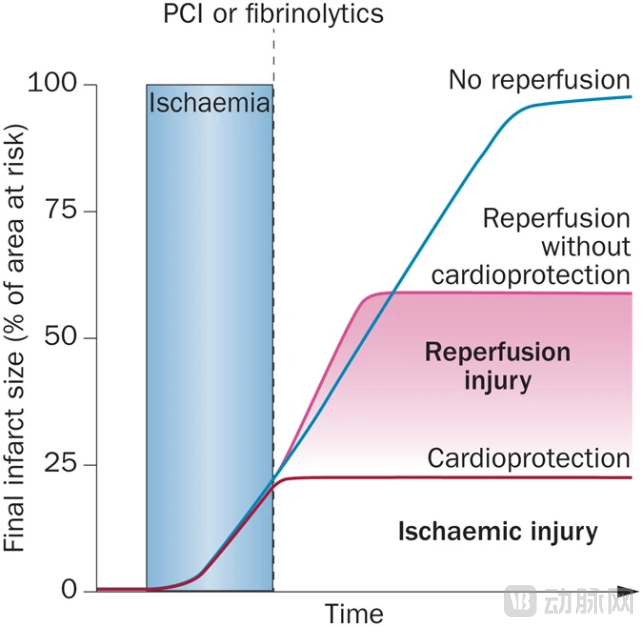
Figure 1: Myocardial Necrosis During Ischemia-Reperfusion
From:Top 10 cardiovascular therapies and interventions for the next decade2014;11:671–683.
doi: 10.1038/nrcardio.2014.137.
Since the incidence of major adverse events—such as malignant arrhythmias, heart failure, and death—in patients with acute myocardial infarction is highly positively correlated with the extent of myocardial necrosis (Figure 2), it is theoretically expected that adequate inhibition of MIRI can significantly reduce myocardial injury and thereby improve patient prognosis.
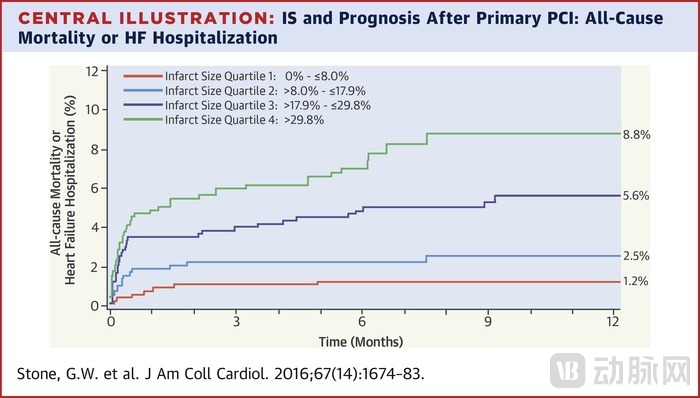
Figure 2: Myocardial Ischemia and Prognosis After Primary PCI: All-Cause Mortality or Hospitalization for Heart Failure
From :Relationship Between Infarct Size and Outcomes Following Primary PCI
doi.org/10.1016/j.jacc.2016.01.069
However, there remains a lack of effective treatment options for MIRI worldwide, and it continues to be one of the top ten unmet clinical needs in the cardiovascular field. Even in China alone, millions of patients with acute myocardial infarction experience uncontrolled MIRI each year.
Of note, the potential market size for therapeutic products targeting myocardial ischemia-reperfusion injury is conservatively estimated to exceed RMB 10 billion. According to the "2025–2030 China Ischemia-Reperfusion Injury Therapy Industry Project Research and Market Prospect Forecast Report," the treatment of myocardial ischemia-reperfusion injury in China is expected to enter a period of rapid development between 2025 and 2030. The market size is projected to grow from RMB 4.5 billion in 2025 to over RMB 12 billion by 2030, with a compound annual growth rate exceeding 21.6%. This growth is driven by population aging, advancements in medical technologies, and supportive healthcare policies.
World's First MIRI Therapeutic Hydrogel System
To address the longstanding and unresolved challenge of MIRI in the cardiovascular field, MyoMed has proposed a much-needed clinical solution. Based on the landmark mechanistic discovery in 2019 that "cardiomyocyte iron overload drives MIRI," the company has innovatively developed a therapeutic strategy that blocks the entry of excess iron ions into cardiomyocytes following MIRI.
After five years of research and development, MyoMed has created the world's first hydrogel device that can be minimally injected via the coronary artery to inhibit MIRI through "iron control." This combination of a "new mechanism, new material, and new device" is expected to fill the therapeutic gap in the MIRI field. In preclinical large-animal studies, the product has demonstrated excellent safety and efficacy, with a significant reduction in myocardial injury.
In addition to the outstanding therapeutic efficacy enabled by mechanistic innovation, the new therapy has been designed with strong consideration for clinical practicality. Leveraging the product's excellent design for precise enrichment in ischemic-reperfused myocardium, its implantation can be seamlessly integrated into existing PCI procedures: it can be administered via intracoronary injection through a microcatheter immediately after revascularization procedures such as coronary stent implantation.
Physicians do not need to change their existing operative habits and can learn the procedure quickly; the therapy can be performed at centers equipped for PCI procedures. This greatly lowers barriers to adoption, facilitates large-scale application, and enables early benefit to a broad patient population.