

How DaoYiXun Solved Indoor Hospital Navigation Where Even Gaode and Baidu Maps Failed: A Medical IoT Breakthrough
Surveys have shown that nearly 70% of the inquiries patients make at hospital reception desks are related to procedures and locations. Navigation systems based on indoor positioning technology can effectively reduce such patient inquiries.
Guangzhou Women and Children’s Medical Center is the fourth hospital in China to achieve HIMSS Stage 7 certification, and the second tertiary Grade A hospital nationwide to attain dual Stage 7 ratings for both its inpatient and outpatient systems. Almost every day, the hospital experiences patient “Labyrinth” situation. Many people, unable to locate their family members, were anxiously making phone calls. In the parking lot, those wandering around in frustration due to the lack of available parking spaces were also everywhere...
Even though hospitals have set up multiple consultation stations, they still cannot meet the huge volume of daily patient inquiries. The frequent requests for help from patients consume a significant amount of medical staff's working time, resulting in substantial resource waste.
Faced with this dilemma, Dao Yixun, a medical IoT company, integrated indoor navigation technology into the hospital’s official app, “Guangzhou Women and Children’s Medical Center.” It provides patients with navigation services aligned with the clinical workflow, self-service query-based navigation, and location sharing. This has effectively reduced the hospital’s investment in patient guidance while enhancing overall service quality and operational efficiency.
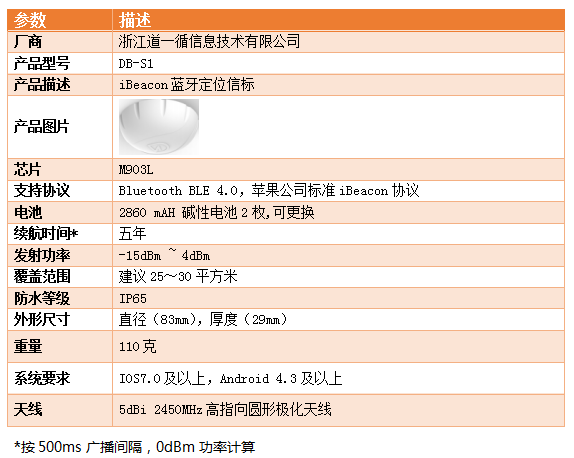
The hospital mounts Dao Yixun’s iBeacon Bluetooth positioning beacons on walls. When a user enables Bluetooth on their smartphone for positioning, precise location tracking is achieved by leveraging signals emitted from these beacons. During this process, apart from the initial loading of offline maps upon first launching the app, there is no need to activate 4G or Wi-Fi connections thereafter, thus consuming no mobile data. In simple terms, this principle is similar to outdoor positioning, where a smartphone connects to Wi-Fi and mobile networks and then uses GPS or BeiDou for location determination.
Before explaining Dao Yi Xun’s positioning technology, let us first understand the principles of traditional mobile phone GPS positioning: GPS positioning relies on satellite signals. Satellites transmit signals that are reflected or received by the object, and the distance is calculated based on the signal travel time. The issue is that knowing a single point and the distance only allows you to draw a circle. Therefore, positioning an object using two satellites results in two circles centered on each satellite. You will find that given two points and their respective distances, the two circles intersect at two points. Thus, three satellites are required to determine the precise location of an object, i.e., its latitude and longitude.
Outdoors, GPS positioning is naturally unbeatable. However, once indoors, GPS loses its original magical “power.” After all, satellites cannot determine which department or floor of a hospital you are heading to.
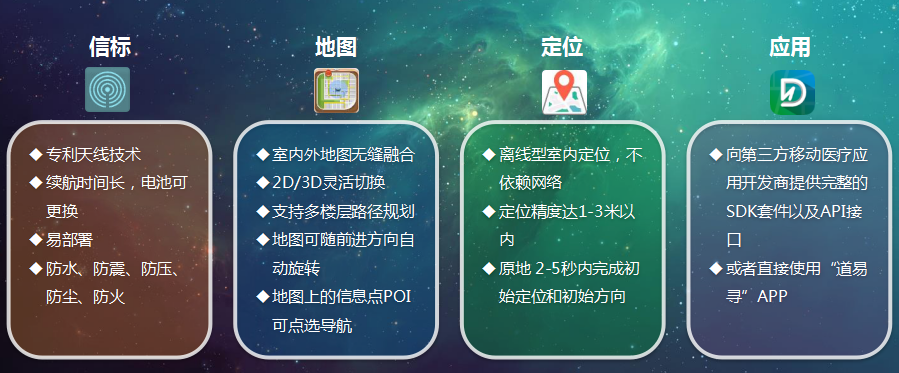
DaoYiXun’s electromagnetic fingerprint matching technology (based on signal strength from Bluetooth beacons) does not rely on network connectivity, thereby delivering navigation stability more than ten times greater than that of traditional technologies. Meanwhile, DaoYiXun is the first company in China to integrate smart antennas into Bluetooth base stations and adopt smartphone inertial navigation technology. In other words, it is the first company in China to achieve real-time, high-precision indoor navigation for smartphones.
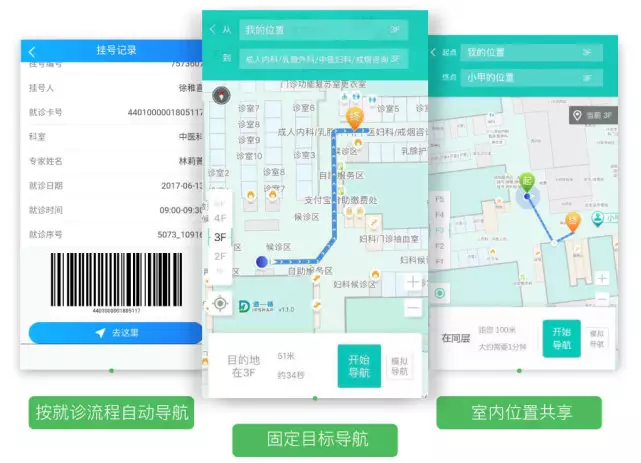
The “Guangzhou Women and Children’s Medical Center” APP, which integrates the Daoyixun positioning system, primarily provides patients with the following services:
1. Provide full-process automated prompts and guidance services, including automatic triage for patients, direction to consultation areas, and specific locations for treatment and medication pickup, akin to having a dedicated guide;
2. Provide comprehensive category search and navigation services to facilitate the location of departments and convenience facilities, enabling one-click access to the nearest restrooms, nursing rooms, mobile phone charging stations, etc.;
3. Indoor location sharing service: Quickly share in-hospital locations with family and friends, eliminating the worry of being unable to find them;
4. Reverse Car-Finding Service: Easily Locate Your Parking Spot in the Parking Lot.
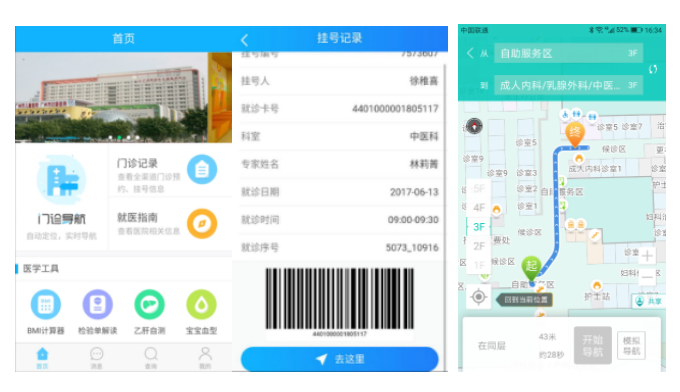
As hospitals gradually phase out on-site registration windows, patients increasingly rely on official WeChat accounts or mobile platforms for appointment scheduling and registration. Daoyixun’s product access points primarily consist of three channels: the hospital’s official app, its official WeChat public account, and its Alipay lifestyle account.
After a period of implementation, Dao Yi Xun has not only integrated Dao Yi Xun into the official app of Guangzhou Women and Children's Medical Center but also embedded it into its WeChat Official Account. This product has established a mobile, self-service, and intelligent in-hospital IoT navigation and triage system for the hospital, delivering a patient-centered, innovative healthcare experience.
In terms of usage effectiveness, the majority of users come from the WeChat official account of Guangzhou Women and Children’s Medical Center. The hospital’s official account has a daily active user (DAU) base of approximately 6,000, with around 2,000 users accessing the DaoYiXun map feature and roughly 200 users utilizing on-site navigation within the hospital. Addressing this issue, Yang Zijiang, CEO of DaoYiXun, stated, “We are excited to see such strong user adoption shortly after the system’s launch. We believe that as the hospital intensifies its large-scale promotion, users will quickly develop the habit of using indoor navigation.”
In February 2017, Dao Yixun was officially established in Hangzhou. Prior to its establishment, Dao Yixun’s technical team had already accumulated eight years of R&D experience in indoor positioning technologies. This expertise encompassed indoor map engine technology, Bluetooth positioning beacons, indoor positioning algorithm engines, pathfinding algorithm engines, and indoor navigation user experiences, enabling the team to master a complete closed-loop technology stack for indoor positioning. In the field of medical IoT applications, Dao Yixun started from a high baseline. As early as 2009, the current management team of Dao Yixun had engaged in deep collaboration with YiHui Technology, integrating Wi-Fi and RFID into a novel medical IoT access point (AP) product that saw widespread adoption in hospitals.
In terms of patents and software copyrights, Dao Yixun holds multiple location-related patents in the United States, China, and other countries.
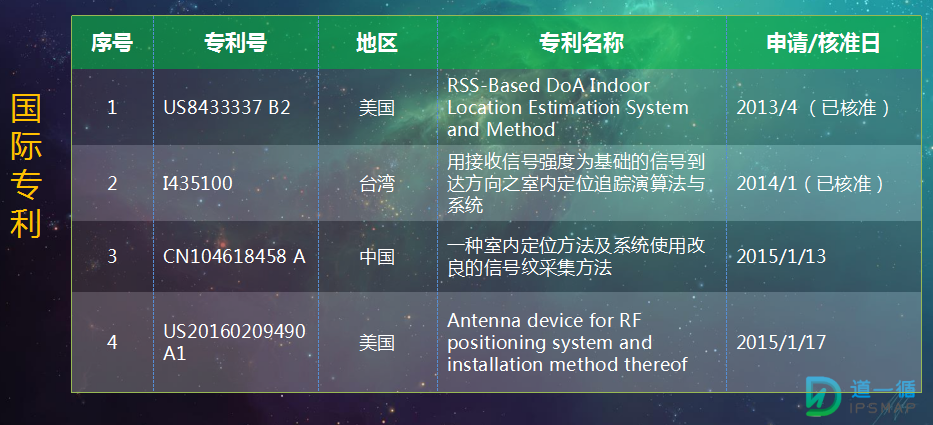
Since its implementation in May 2017, Dao Yi Xun has been deployed and put into use at more than ten Grade A tertiary hospitals. These include renowned domestic Grade A tertiary hospitals such as Guangzhou Women and Children’s Medical Center, Shanghai Ruijin Hospital, and Shanghai Xinhua Hospital.
Regarding the payment model, hospitals implement projects through tendering and bidding processes with Daoyixun. Additionally, Daoyixun gains access to hospitals via the established channels of its distributors.
In Yang Zijiang’s words, “Dao Yi Xun is poised to capture the gateway to indoor positioning services in China’s healthcare sector, addressing the pain points of location-based services between hospitals and users by providing hospital location data output.”
Xinhua Hospital Affiliated to Shanghai Jiao Tong University School of Medicine
In addition to Guangzhou Women and Children’s Medical Center, Xinhua Hospital Affiliated to Shanghai Jiao Tong University School of Medicine is also an excellent case.
Founded in 1958, Xinhua Hospital Affiliated to Shanghai Jiao Tong University School of Medicine comprises 28 buildings with a total floor area of 192,000 square meters. Its annual outpatient and emergency visit volume consistently ranks among the top tier-3A hospitals in Shanghai. The hospital’s extensive infrastructure, departments scattered across different buildings, and high patient density often leave many patients disoriented after registering at the Outpatient Comprehensive Building, causing them to get lost while navigating between departments located in the Outpatient Comprehensive Building, the Medical Technology Building, the Emergency/Pediatric Outpatient and Emergency Building, the Stomatology and Dermatology Building, and the Integrated Medical Healthcare Building.
To this end, the hospital has not only established numerous service desks but also recruited a group of volunteers; nevertheless, it has failed to adequately address these issues.
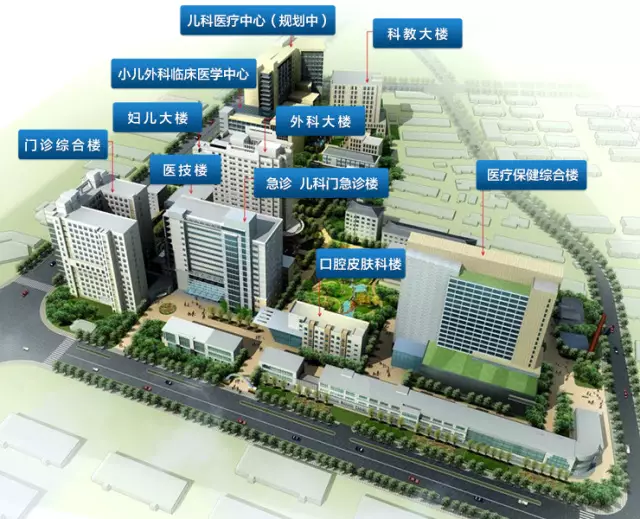
Shanghai Xinhua Hospital Building Layout Map
In response, Dao Yixun collaborated with the APP developer to integrate indoor navigation functionality into the hospital’s “Xinhua E-Hospital” APP. After registering an appointment via the APP, patients can simply open “Appointment Records” under “Information Inquiry,” and tap the “Navigate Here” button in the upper-right corner. The system will then automatically plot a navigation route to guide patients to the relevant department for their consultation.
Additionally, patients can search for relevant destinations (such as restrooms and elevators) for real-time navigation by using the Point of Interest (POI) category search page, voice-searching keywords, or selecting locations on a map.
Dao Yixun’s indoor positioning technology integrates people and objects in the physical world with rich data and information from virtual spaces, enabling offline entities to be searched, located, and connected just like online information, thereby breaking down the boundaries between the real and virtual worlds.
Furthermore, a vast amount of medical location data will be generated and accumulated. Through data mining and analysis, healthcare institutions can enhance their operational efficiency and align with the development of healthcare reform. As one of the foundational technologies of the Internet of Things (IoT), indoor Geographic Information Systems (GIS) boast promising prospects. The emerging market for indoor medical positioning is currently a blue ocean.