

Eli Lilly, Tencent, and DXY Unveil Integrated Digital Solution for Diabetes Management in China
China currently has over 110 million patients with diabetes, accounting for nearly 10% of the total adult population. This figure is projected to increase by 30% over the next 20 years. Among those diagnosed and treated, fewer than one-third of diabetic patients achieve target blood glucose levels.
Li Tiantian, founder of DXY, has long lamented: “The starting point for chronic disease management in China is far too low.” As with many other chronic conditions, diabetes management currently faces three major challenges: service sustainability, information integrity, and payment feasibility. While the last of these is driven by policy, the other two depend on the efforts of companies operating within the sector.
Chronic Disease Management in the Context of Mobile Health
Based on a 365-day year, totaling 8,760 hours, under traditional medical conditions in China, diabetic patients may have only six hours of contact per year with nurses, physicians, dietitians, and other healthcare professionals; for the remaining 8,754 hours, they must rely solely on self-management.
With the advent of the mobile health era, the development of internet technology, and the widespread adoption of mobile applications, the challenges facing diabetes management appear to be readily resolved. The key lies in the effective utilization of mobile health solutions.
The costs of supplies for blood glucose monitoring devices, medications, and other expenses are substantial for patients with diabetes. These patients must continuously perform self-monitoring of blood glucose levels, consuming several test strips daily, while monthly expenditures on medications, insulin, and other items remain considerable.
How to Conduct Effective Patient Education and Chronic Disease Management Has Become a Common Goal from National Top-Level Design to Grassroots Service Institutions.
In 2016, the State Council issued the “Key Tasks for Deepening the Reform of the Medical and Healthcare System in 2016,” accelerating the launch of pilot programs for tiered diagnosis and treatment. In accordance with the requirements of “initial consultation at primary care institutions, two-way referral, separate management of acute and chronic conditions, and coordination between upper- and lower-level medical institutions,” the government accelerated the promotion of tiered diagnosis and treatment, focusing on provinces piloting comprehensive medical reforms and cities piloting comprehensive public hospital reforms, with pilot programs implemented in approximately 70% of prefecture-level cities. In these pilot areas, the rate of standardized diagnosis, treatment, and management for patients with hypertension and diabetes exceeded 30%.
Under the tiered diagnosis and treatment policy, the responsibility for chronic disease management has increasingly fallen on healthcare institutions at all levels. To address this, Eli Lilly and Company, Tencent’s Tang Daifu, and DXY established a tripartite partnership in February this year to jointly launch the “Eli Lilly Diabetes Youxing Care Project.” This initiative aims to help physicians and patients better manage diabetes and achieve treatment goals sooner through intelligent blood glucose monitoring devices, internet technologies, disease education, and supportive care services.
Lilly Youxing is an additional service program jointly launched by Lilly China, DXY, and Tencent’s Tengai Medical for patients using Humalog insulin.
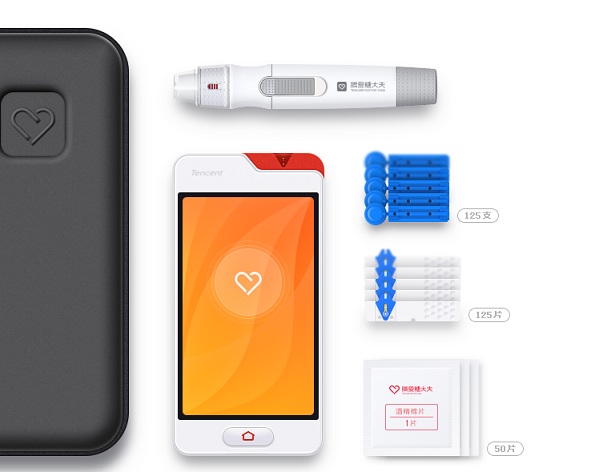
Physicians recommend this program to patients prescribed Humalog insulin. Upon enrollment, patients can scan a dedicated QR code to receive a free Teng Ai Tang Daifu blood glucose meter and 25 test strips for monitoring. Weekly summaries of patients’ blood glucose readings are compiled and provided to physicians for reference. After joining the program, patients can access health education services delivered by DXY’s professional team via telephone, the program’s official WeChat account, and the Tang Daifu blood glucose meter. According to insiders familiar with the program, patients who maintain consistent blood glucose monitoring habits may have the opportunity to continue receiving free test strips.
Currently, the Eli Lilly Youxing Program has officially launched its pilot phase at Huashan Hospital Affiliated to Fudan University and other首批 institutions. According to Wu Xi from the Department of Endocrinology at Huashan Hospital, after enrolling in the Youxing Program, patients began administering Humalog Mix25 insulin twice daily at home as prescribed. With educational support and monitoring provided by the DXY team to help monitor blood glucose levels and improve dietary and exercise habits, patients achieved an average blood glucose level of 6.6 mmol/L within just two weeks. Among more than 150 blood glucose measurements taken during monitoring, only three instances of hypoglycemia were detected, indicating effective glycemic control.
Data + Services: Advancing the Implementation of Continuous Management for Diabetes Patients
In many chronic conditions, the goals of clinical management for patients are well-defined. For instance, patients with diabetes mellitus require hemoglobin A1c testing twice a year, with levels maintained below 9.0%. Their blood pressure also needs frequent monitoring and should be controlled to below 140/90 mmHg. Additionally, annual eye and kidney examinations are necessary to monitor for early organ damage.
Medication injection is an unavoidable aspect for patients with diabetes. However, a significant number of patients with chronic conditions frequently fail to adhere to prescribed medication regimens, posing a particularly serious risk. A study has shown that 22% of patients with diabetes, hypercholesterolemia, and hypertension do not maintain consistent medication adherence. Since hypertension and high cholesterol often present no obvious symptoms, patients may believe they do not need these medications. In contrast, blood glucose monitoring and the proper use of insulin are crucial in glycemic control and disease management.
Patients with chronic diseases have three major needs: information, communication, and interaction, which are inseparable. From patient education at the initial stage, to doctor-patient communication during the intermediate phase, and finally to face-to-face clinical consultations, the process returns to education, intervention, and guidance after treatment is completed, forming a closed-loop workflow that delivers a comprehensive experience. Therefore, chronic disease management is not merely the final step of clinical care, but rather a continuous, real-time, long-term intervention and guidance practice grounded in professional expertise.
In the collaboration among Eli Lilly, Tencent, and DXY, Eli Lilly brings a long-standing history and leading expertise in the field of diabetes treatment. Tencent, one of the platforms with the broadest population coverage in China, has upgraded its blood glucose management tool, Tang Daifu (Glucose Doctor), to its second generation. DXY is a healthcare service platform that integrates online and offline resources, having dedicated itself to the medical sector for 17 years, with 20 million consumer-end users and 4.8 million professional users in the biomedical field.
If Eli Lilly provides the foundational support and Tencent offers the data entry point, then DXY is responsible for platform development as well as patient services and education. Meanwhile, all three parties interpret and analyze the resulting data. The greatest advantage of this tripartite collaboration lies in the synergy of industry leaders, enabling deep integration of services into chronic disease management while centralizing the collection and analysis of baseline data from patients with diabetes.
In this process, the collected patient data consists primarily of direct blood glucose measurements, which are highly valuable for assessing the patient’s condition. By analyzing these data, healthcare providers can gain deeper insights into patients’ behaviors and better understand their needs, thereby delivering more effective chronic disease management recommendations. From this perspective, the three parties aim to establish a data-driven, precision chronic disease management service.
In the Eli Lilly Youxing Project, the three parties fully leveraged their expertise and experience in diabetes treatment, patient education, digital technology, and internet technology to advance the implementation of management services for patients with diabetes.
From Information to Interaction: Patient Education Is Crucial
Apple CEO Tim Cook once posited that “what is free is always the most expensive,” a principle reflected in Apple’s strategy of offering the App Store to iOS users to enhance user stickiness. DXY bears some resemblance to Apple in its focus on “user aggregation,” a core commitment it has upheld since its inception as an internet healthcare platform.
In the ICE theory for chronic disease management proposed by Li Tiantian, Information, Communication, and Engagement operate within a mechanism wherein some patients feel that reviewing information is sufficient, others desire communication, and still others find communication inadequate and thus require face-to-face consultations with physicians, thereby generating the need for communication and engagement.
With the Tang Daifu hardware device, which integrates patient education, health updates, and online consultations, Tencent may be aiming for more than just diabetes management. Over its 16 years of operation, DXY has consistently focused on building its user base, with its research centered on the relational structures among community members, striving to perfect its physician-patient community. Having amassed a substantial user base, DXY has naturally become an ideal partner for Tencent in its role as a connector.
Data is captured through technology, while services are delivered through interaction. In this context, patient education has become a critical component of chronic disease management, encompassing the Communication and Engagement dimensions of the ICE strategy proposed by Li Tiantian. Under the new model of internet-based healthcare for chronic disease management, many experts and scholars have engaged in discussions on models leveraging mobile health to assist in chronic disease management.
Recently, at the 2017 inaugural Lilly Mobile Health Management Seminar and Salon, Professor Liu Chao, Director of the Department of Endocrinology at Jiangsu Province Hospital of Integrated Traditional Chinese and Western Medicine, shared his insights.
He believes that DXY, Tencent, and Eli Lilly and Company jointly address three issues through the Eli Lilly Youxing Program:
First, it has transformed the philosophy underlying the entire ecosystem of diabetes patient management, encompassing government officials, physicians and nurses, as well as family members and individuals with diabetes.
Secondly, this project has transformed the diagnosis, treatment, and management practices for diabetes. As a chronic disease, diabetes cannot be effectively managed through brief expert consultations lasting only a few minutes; therefore, it is essential to change the approaches to its diagnosis, treatment, and management.
Finally, it has changed disease indicators. Currently, the diabetes control rate is relatively low. Through the "Eli Lilly Youxing" program, we hope to change patients' perceptions of the disease, thereby improving disease control rates and ultimately minimizing complications among diabetic patients as a whole.
Professor Guo Xiaohui, Director of the Department of Endocrinology at Peking University First Hospital and Head of the Education and Management Group of the Chinese Diabetes Society, stated that the cross-sector collaboration of the “Lilly Diabetes Care Project” has leveraged Internet-plus technologies to deeply address and resolve the “pain points” in diabetes patient education and management. This tripartite collaboration among three industry leaders enables each party to fully leverage its respective strengths, thereby achieving seamless integration and satisfactory fulfillment of the needs of physicians, patients, and the company.
Beyond Service-Oriented Enterprises: Pharmaceutical Companies Are Also Taking Action to Put Patients at the Center
In the ecosystem of chronic disease management, in addition to physicians, hardware device manufacturers, and insurance companies, pharmaceutical companies are now also participating, with an increasing number of them adopting a "patient-centric" approach.
Experts have pointed out that in recent years, pharmaceutical companies have exhibited three shifting trends: a gradual transition from focusing on physicians to prioritizing patients; a shift from technology-driven to service-driven models; and a move from operating in isolation toward collaborative partnerships.
Among these, the most significant change has occurred in patient education: whereas the previous focus was on educating physicians to facilitate prescribing, the current approach places patients at the center, emphasizing not only physician education but also, more importantly, patient education.
As an integrated diabetes solution, Lilly Youxing will provide one-stop mobile medical services for blood glucose management, injection support, and patient education. By leveraging a shared blood glucose management platform that extends from in-hospital to out-of-hospital settings, it optimizes the efficiency and safety of clinical practice; helps patients establish awareness and habits for self-management of chronic diseases; and improves adherence to insulin therapy.
By joining the Youxing Program and leveraging the orderly connectivity of the WeChat platform and smart devices, seamless collaboration among doctors, patients, and their families can be fully realized. This enables all three parties to manage blood glucose levels in a timely, accurate, and effortless manner, truly achieving efficient coordination between in-hospital and out-of-hospital care with multi-party participation.
In October 2016, the State Council issued the Outline of the “Healthy China 2030” Plan, which serves as the action guide for advancing the Healthy China initiative over the next 15 years and represents the first medium- to long-term strategic plan in the health sector proposed at the national level since the founding of the People’s Republic of China. According to the Outline, by 2030, comprehensive management and intervention coverage for patients with hypertension and diabetes should be basically achieved, thereby realizing chronic disease health management for the entire population across the full life cycle.
Achieving this goal is undoubtedly a daunting task given the current state of chronic disease management in China. It is reported that Eli Lilly’s Youxing initiative plans to launch a large-scale nationwide rollout in November, aiming to facilitate more efficient connections among patients, physicians, and professional caregivers, thereby delivering an improved diabetes management experience.
With the widespread adoption and promotion of new chronic disease management models, such as cross-sector collaboration and internet-based management, their development is inevitably positive. As Li Tiantian stated in a previous media interview, DXY cannot handle all aspects of healthcare alone; the medical industry is an ecosystem, where even simple patient data contain many unknown insights. Only by consistently adhering to the three “cornerstones”—professionalism, precision, and openness—can deep integration at the level of medical services be achieved.