

AI-Powered Disease Screening and Prediction: Oncology and Alzheimer's Emerge as Key Frontiers — Excerpt from the 2017 Healthcare Big Data and Artificial Intelligence Industry Report
2Since 2016, the global consensus has been that the inflection point for artificial intelligence has arrived. From world-class players like Google and IBM to fervent investors and entrepreneurs, all are racing to secure strategic positions, even engaging in an AI arms race. Artificial intelligence is experiencing a boom on a global scale.Faced with this surging wave of artificial intelligence, how should we view it? How should we think about it? As a witness to this wave, VCBeat is compelled to leave its mark.
VCBeat’s 2017 flagship publication—“2017 Industry Report on Medical Big Data and Artificial Intelligence”—was released on September 16 at the Forum on Industrial Practices in Healthcare Big Data and Artificial Intelligence.
Spanning 100,000 words, this comprehensive report was compiled by VCBeat Research over the course of one month, drawing on more than one million words of reference materials and interviews with senior executives at dozens of artificial intelligence (AI) companies. It represents VCBeat’s most systematic review to date of the AI in healthcare sector, providing a detailed account of the underlying technologies of medical big data and AI enterprises, the nine subsectors of medical AI, and the current landscape of medical AI companies, while featuring case studies of more than 60 domestic and international firms.
How to Obtain the Full Report:Scan the QR code below to become an official member of VCBeat and receive the complete electronic version of the "2017 Medical Big Data and Artificial Intelligence Industry Report."

The following is a curated serial excerpt from the report; the full version contains far more comprehensive content.
Medical Big Data and Artificial Intelligence Industry Report III: Disease Screening and Prediction
Modern medicine diagnoses diseases based on various biochemical and imaging test results. However, it often struggles to predict the future progression of diseases.
Advances in medical technology have made it possible to predict the likelihood of certain diseases. Angelina Jolie underwent a preventive double mastectomy to reduce her cancer risk. This procedure was performed due to a genetic defect that placed her at a higher risk of developing breast and ovarian cancers. This represents disease risk prediction from a genetic perspective, whereas artificial intelligence can also predict diseases by analyzing data such as our language, facial expressions, reactions, and medical imaging.
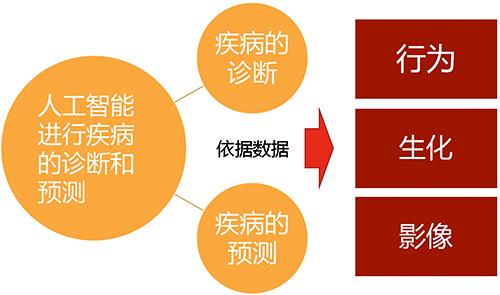
Data Types Required for AI-Based Disease Diagnosis and Prediction
Artificial intelligence can participate in disease screening and prediction by making judgments based on examination results such as behavioral, imaging, and biochemical data. The most heavily relied-upon data are imaging datasets, including MRI, CT, and X-rays. Depending on the screening methods employed, the types of enterprises discussed in this section may also be categorized under other classifications. The AI-plus-imaging sector is the area within disease diagnosis that involves the largest number of companies, offers the richest product portfolio, and covers the widest variety of diseases; therefore, we have dedicated a separate chapter to provide a detailed discussion.
In the process of disease screening and prediction, artificial intelligence not only identifies early signs of disease through biochemical and imaging test results but also leverages speech and text as measurable indicators of mental and physical health. The cognitive system analyzes patterns in language and written expression, generating data that helps clinicians and patients more effectively predict and track early developmental disorders, mental illnesses, and neurodegenerative diseases.
Currently, the vast majority of severe diseases targeted by AI-assisted screening and prediction remain unconquered by humans, a fact underscored by the following data. Among medical research papers related to artificial intelligence, oncology leads significantly with 892 publications, followed by Alzheimer’s disease in second place.
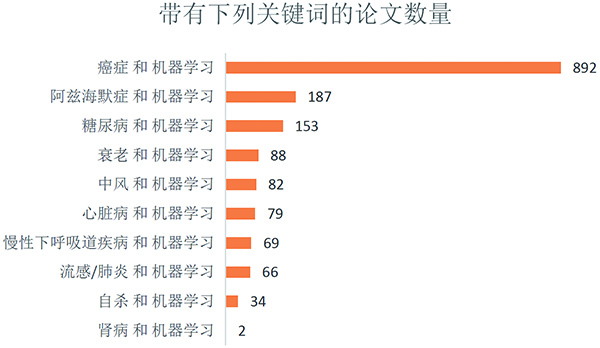
Major Types of Human Diseases Studied by Artificial Intelligence
Today, our medical practice focuses on diagnosing and treating diseases after they occur, which is often too late. In the future, aided by technological advancements, medicine is shifting from disease treatment to disease prevention, enabling interventions to stop diseases from emerging before they develop and progress.
I. Disease Screening
Diagnosis of Mental Disorders: In conventional psychotherapy, physicians must first conduct an initial assessment of the patient’s mental status, relying on intuition developed through several sessions akin to psychological interviews to identify symptoms. They then diagnose the specific type of mental disorder based on clinical experience and formulate a corresponding treatment plan, including the selection of medications and their dosages. However, due to limitations inherent in physicians’ subjective judgments and experience, diagnostic errors may occur, leading to delayed definitive diagnosis or inappropriate determination of medication types and dosages, thereby delaying effective treatment.
Individuals with schizophrenia exhibit highly distinctive speech patterns, often characterized by involuntary vocalizations. Their speech tends to consist of short phrases, disorganized semantics, and a high frequency of vague words such as “this,” “that,” and “one,” resulting in ambiguous meaning across sentences. In 2015, a team of researchers developed an artificial intelligence model based on these linguistic features of schizophrenia. By analyzing conversational records, the model accurately predicted which group of young people was at risk of developing psychosis, a primary symptom of schizophrenia.
For individuals with compromised mental health, such as those suffering from depression and post-traumatic stress disorder (PTSD), mental breakdowns may manifest in a gradual onset, with emotional crises not fully emerging from a single psychotherapy session. In March 2015, the journal *Telemedicine and e-Health* published a paper on using machine learning to predict postpartum depression, aiming to establish a risk stratification model for the onset of postpartum depression to facilitate early intervention. Concurrently, a mobile application was developed, targeting postpartum mothers who wish to monitor their emotional well-being. Artificial intelligence can play a significant role in the diagnosis and treatment of PTSD, as well as in the monitoring of mental disorders.
Autism Screening: The American Academy of Pediatrics recommends that parents have their children undergo early screening for multiple developmental disorders between 9 and 36 months of age, with autism spectrum disorder being the most critical condition to screen for. Early screening can effectively prevent missing the golden window for intervention. Once this opportunity is missed, the impacts of these developmental disorders are likely to persist throughout the patient’s life. However, according to a report by the U.S. Centers for Disease Control and Prevention, approximately 15% of children in the United States have developmental disorders of varying severity, such as autism spectrum disorder, yet fewer than half of these children have undergone early screening.
Cognoa has developed an AI-powered mobile application for the early screening of autism spectrum disorder (ASD) in children, enabling users to conduct intelligent screenings via the software. Typically, children with ASD exhibit no obvious signs before the age of three, while traditional screening methods involve a series of procedures, including scheduling appointments, visiting healthcare facilities, and waiting for physician evaluations. Consequently, many parents do not proactively seek ASD screening for their children in the absence of noticeable abnormalities.
The emergence of AI-powered screening apps has eliminated the need for parents to undertake tedious preparations, enabling them to conduct self-administered autism screenings for their children anytime and anywhere using just a smartphone. After entering the child’s basic information, parents answer 15 to 20 behavior-related questions tailored to the child’s specific circumstances, and the system automatically generates a screening report.
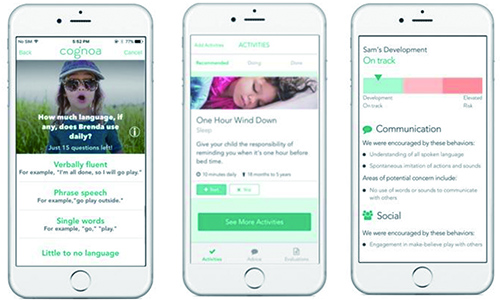
Cognoa's User Interface
The crux of the entire screening protocol lies in the reliability of the online questionnaire design and the accuracy of its results. The theoretical basis for these questions is grounded in over five years of clinical research conducted by Dr. Dennis Wall, founder of Cognoa. During this period, his team tracked the condition of more than 100,000 children with autism at Harvard Medical School and Stanford University School of Medicine.
Information generated in clinical studies is consolidated into a massive database, which is then used to train machine learning models on vast amounts of medical data, thereby developing a proprietary algorithm. When users input children’s behavioral information into the app, the system generates corresponding screening results based on the established algorithm.
Alzheimer's Disease PredictionAvalon AI, a UK-based company, predicts the future risk of Alzheimer’s disease using brain magnetic resonance imaging (MRI) scans. By leveraging deep learning technology to develop computer-aided diagnostic tools for medical imaging, they have achieved an effective prediction accuracy of 75% for Alzheimer’s disease.
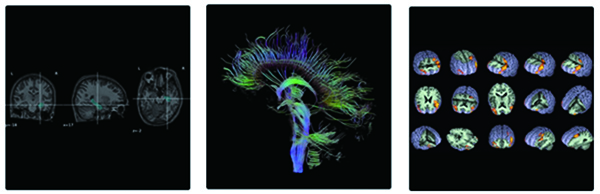
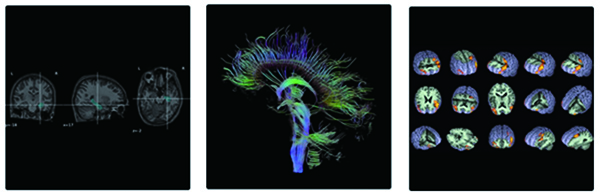
Avalon AI’s Alzheimer’s Disease Diagnostic Tool Developed Using Deep Learning
Currently, there are two primary biomarkers used in the medical community to assess the severity of dementia: one is the size of the hippocampus (analogous to the brain’s memory chip), and the other is the size of the ventricles, as ventricular volume increases with brain tissue atrophy. Researchers at Avalon AI have conducted detailed studies on changes in gray and white matter and cerebrospinal fluid dynamics to observe how these substances change as the brain progresses from mild cognitive impairment to Alzheimer’s disease.
To conduct these studies, it is first necessary to generate a 3D magnetic resonance imaging (MRI) scan of the brain, compare it with other samples, and then employ Convolutional Neural Networks (CNNs) to perform feature analysis on the brain within the image. The principle of CNNs is analogous to that of human skin: each layer of the network extracts simple features from the brain scan, which are then stacked and recombined layer by layer into complex feature sets. This neural network-based analytical approach requires not only horizontal analysis of similar features across brains with comparable levels of dementia but also longitudinal comparison of distinct features across brains with varying degrees of dementia. Through this layered analysis and comparison, it is possible to determine whether brain damage has occurred or to assess the severity of dementia.
II. Disease Prediction
Brain Herniation Prediction: Large-area cerebral infarction is a common and highly severe neurological disorder, accounting for approximately 10% of all cerebral infarction cases, yet it carries an extremely high mortality rate of around 80%. Extensive research has demonstrated that proactive intervention prior to symptom deterioration yields better outcomes than later-stage interventions. Therefore, early and effective prognosis assessment to guide the selection of appropriate treatment regimens is critical to the success or failure of therapy in patients with cerebral infarction.
A paper titled “Predicting Outcomes in Patients with Large-Area Cerebral Infarction Using an Artificial Intelligence System” was published in Chinese Journal of Health Statistics in 2014. The study employed a multilayer perceptron artificial neural network to establish a multifactorial prediction model for prognosticating outcomes in patients with large-area cerebral infarction. In the univariate model, the best predictive performance yielded an area under the receiver operating characteristic curve (AUROC) of 0.87. The study ultimately concluded that an artificial intelligence random forest model can be used as a medical auxiliary diagnostic system to predict the occurrence of brain herniation in patients with large-area cerebral infarction.
Chronic Kidney Disease Staging Prediction: Currently, over 500 million people worldwide suffer from various kidney diseases; however, the public awareness rate for chronic kidney disease (CKD) is less than 10%. Due to the lack of obvious symptoms in the early stages, CKD is easily overlooked, and many patients only seek medical attention when their renal function has deteriorated. Therefore, implementing a tiered warning system for kidney disease is an urgent priority. Researchers from the College of Food Science at South China Agricultural University previously utilized artificial intelligence to predict glomerular filtration rates. By constructing a prediction model using a Back Propagation (BP) neural network, they ultimately developed a highly practical early-warning model for the classification of chronic kidney disease.
Prediction of Mortality in Patients with Heart DiseaseBritish scientists published an article in the journal Radiology, with findings suggesting that artificial intelligence can predict when heart disease patients will die. The MRC London Institute of Medical Sciences, under the UK Medical Research Council, stated that AI software can detect signs of impending heart failure by analyzing blood test results and cardiac scan data.
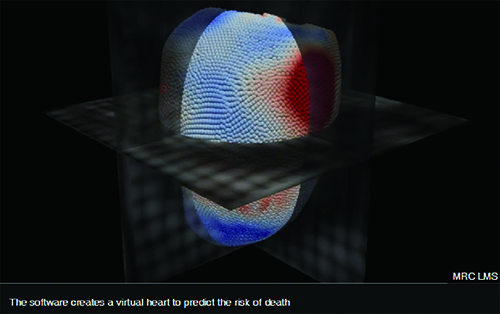
Interface of the Software for Predicting Mortality in Heart Disease Patients
Researchers arrived at these findings through studies of patients with pulmonary hypertension. This technology enables physicians to identify patients who require more intensive intervention, thereby saving more lives.
Elevated pulmonary blood pressure can damage parts of the heart, and approximately one-third of patients die within five years after diagnosis. Current treatment options mainly include direct intravascular drug injection and lung transplantation. However, physicians need to determine the patient’s life expectancy to select the appropriate treatment regimen.
Researchers inputted cardiac magnetic resonance imaging (MRI) scans and blood test results from 256 heart disease patients into artificial intelligence software. The software measured the motion of 30,000 marked points on the cardiac structure during each heartbeat. By combining this data with the patients’ health records over an eight-year period, the AI software was able to predict which abnormalities would lead to patient mortality.
AI software can predict five-year survival outcomes, achieving an accuracy of approximately 80% in predicting a one-year life expectancy for patients, compared to a 60% accuracy rate for physicians.
Osteoarthritis Progression Prediction: Shinjini Kundu, a Ph.D. in Biomedical Engineering from Carnegie Mellon University, presented research on using artificial intelligence to predict the progression of osteoarthritis at a conference. Osteoarthritis is characterized by bone damage resulting from the degeneration of articular cartilage or reactive hyperplasia at the joint margins. Previously, patients could only be diagnosed via MRI after seeking medical attention due to pain, by which time significant cartilage damage had already occurred.
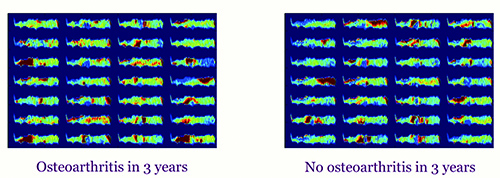
Osteoarthritis Progression Prediction
In Shinjini Kundu’s study, artificial intelligence was employed to identify imaging differences between healthy individuals and patients by analyzing a large dataset of cartilage MRI scans collected from a population over a ten-year period. In healthy individuals, water within the cartilage is evenly distributed, whereas in patients with osteoarthritis, MRI images reveal water accumulation in areas highlighted in red. By learning from extensive image data, the AI system can detect abnormalities in the cartilage of seemingly normal individuals, thereby predicting the probability of developing osteoarthritis within the next three years. Reportedly, the current accuracy of this system has reached 86.2%. If you are aware of your potential risk for future osteoarthritis, you should take preventive measures across various aspects of your lifestyle starting now to mitigate the impact of the disease.
Epidemic Risk Prediction: By collecting and analyzing large-scale medical data, medical artificial intelligence can enhance the efficiency of healthcare systems in multiple aspects. The application of AI in public health can help disease control departments improve their capabilities in disease prevention and control. By combining AI predictive models with the collection of medical big data, epidemic risk predictions at the city or national level can be achieved. Such predictions will significantly improve population health management and help reduce healthcare expenditures.
The joint research team of Ping An Insurance and the Chongqing Center for Disease Control and Prevention (CDC) has achieved phased progress in developing the world’s first influenza prediction model. By leveraging Ping An’s big health and medical data, artificial intelligence technologies, and surveillance data from the Chongqing CDC, the model can predict influenza incidence trends one week in advance, demonstrating accurate predictive performance during validation. This influenza prediction model will assist Chongqing’s public health authorities in timely epidemic monitoring and guide the public in disease prevention. Capable of accurately predicting disease onset risks for both individuals and populations, the model enhances the success rate of proactive prevention and helps government healthcare systems reduce national costs associated with disease control and prevention efforts.
The Chongqing Municipal Center for Disease Control and Prevention and the Ping An Technology team jointly participated in the development of an influenza prediction model. By integrating domain expertise in disease prevention and control with artificial intelligence technologies, the model has further improved the accuracy of influenza forecasting. Validated against three years of historical data, this influenza prediction model is capable of accurately predicting trends in influenza incidence.