

Seven AI-Driven Innovations Transforming Drug Discovery: Cutting Costs and Accelerating Timelines – Excerpt from the 2017 Healthcare Big Data and Artificial Intelligence Industry Report
Since 2016, the global consensus has been that the inflection point for artificial intelligence (AI) has arrived. From world-class players like Google and IBM to fervent investors and entrepreneurs, all are racing to secure strategic positions, even engaging in an AI arms race. Artificial intelligence is experiencing a boom on a global scale. How should we view and interpret this surging wave of AI? As a witness to this trend, VCBeat is compelled to leave its mark on this transformative era.
VCBeat’s 2017 flagship report, “2017 Medical Big Data and Artificial Intelligence Industry Report,” was released on September 16 at the Forum on Industry Practices in Medical Health Big Data and Artificial Intelligence.
Spanning 100,000 words, this report was compiled by VBInsight over the course of one month, drawing on more than a million words of reference materials and interviews with senior executives at dozens of artificial intelligence (AI) companies. It represents VCBeat’s most systematic review to date of the AI in healthcare sector, providing a detailed account of the underlying technologies of medical big data and AI enterprises, the nine subsectors of medical AI, and the current landscape of medical AI companies, while featuring case studies of more than 60 domestic and international enterprises.
How to Access the Full Report: Scan the QR code below to become an official VCBeat member and receive the complete electronic version of the “2017 Medical Big Data and Artificial Intelligence Industry Report.”

Below is a curated serial excerpt from the report; the full content is far more comprehensive.
Medical Big Data and Artificial Intelligence Industry ReportIV: Drug Discovery
In the fields of pharmaceuticals, biotechnology, and pharmacology, drug discovery is the process of identifying new drug candidates. In the early stages, drugs were discovered solely by isolating active ingredients from traditional remedies or through serendipitous findings. Subsequently, synthetic small molecules, natural products, or extracts have been screened in intact cells or whole organisms to identify substances with therapeutic effects.
The new drug development process can be divided into three parts: drug discovery, preclinical development, and clinical development. Modern drug discovery can be technically subdivided into three stages: target identification and validation, lead discovery, and lead optimization.
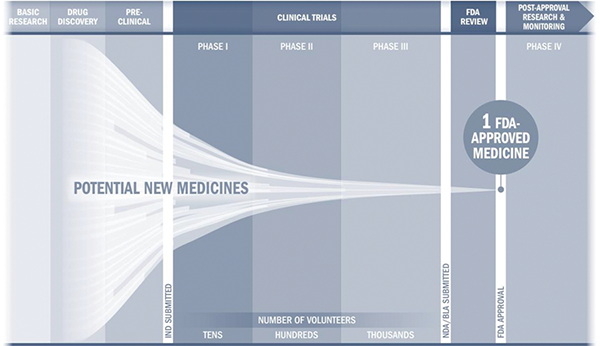
Drug Discovery Process
I. Current Status of Drug Discovery
Drug discovery is a capital-intensive process that requires substantial investment from pharmaceutical companies and governments worldwide. Despite continuous advances in biotechnology, drug discovery remains an expensive, challenging, and inefficient endeavor. The “end product” of drug discovery is a patent on a potential drug candidate. Subsequently, the drug must undergo costly Phase I, Phase II, and Phase III clinical trials, during which the majority of candidates are eliminated.
Regarding innovative drug development, there is a well-known “double 10” rule internationally: 10 years and $1 billion in investment. Generally, pharmaceutical companies need to spend $500 million to $1 billion and take 10 to 15 years to successfully develop a new drug. The high risk, long cycle, and high cost of new drug development constitute one of the biggest pain points for pharmaceutical enterprises.
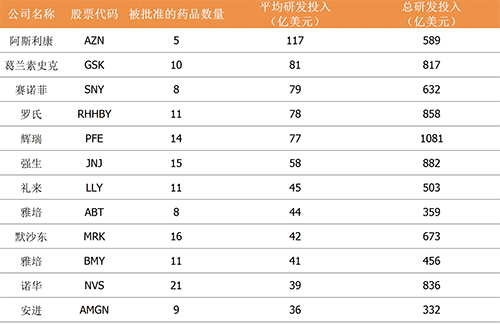
R&D Costs for New Drugs Approved from 1997 to 2011
II. Artificial Intelligence Reshaping New Drug Development
Currently, it is becoming increasingly difficult to achieve breakthroughs in the research and development of new drugs. On one hand, most usable compounds have already been discovered, making the development of new compounds progressively more challenging. On the other hand, the volume of scientific findings is growing rapidly, exceeding the capacity of any individual to fully comprehend this data. Artificial intelligence can extract necessary information, such as molecular structures, from vast amounts of literature, learn autonomously, establish correlations, and provide novel insights and ideas.
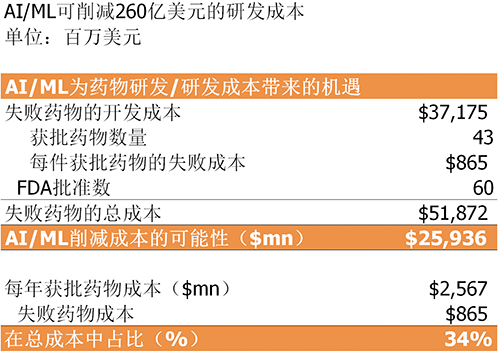
Artificial Intelligence Can Significantly Reduce Drug Development Costs
In 2015, the FDA approved 60 drugs. This means that, when factoring in the R&D costs of failed candidates, the cost per approved drug for that year was approximately $698 million, with nearly $42 billion spent on failed drugs. VCBeat Research Institute believes that artificial intelligence can halve the risks in the new drug development process: by 2025, the global pharmaceutical industry could save approximately $26 billion annually.
The integration of artificial intelligence has begun to reshape the new drug development process, with its applications expanding from target screening to broader areas.
Based on their distribution across the development pipeline, we categorize AI-enabled new drug R&D services into three types: preclinical drug discovery services, independent preclinical drug development, and clinical research services. 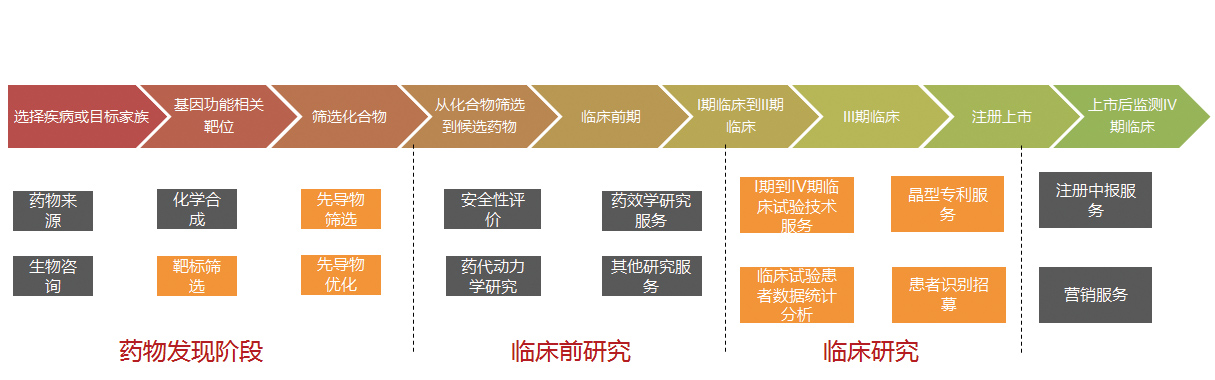
Modes of AI Involvement in Drug Development
III. Pharmaceutical Companies Are Actively Entering the Market
Pharmaceutical companies that had been watching the development of AI from the sidelines are now venturing into the AI field.
Numerate and Takeda Pharmaceutical have officially signed an agreement to collaborate on leveraging Numerate’s artificial intelligence (AI) technology for the discovery of small-molecule drugs in oncology, gastroenterology, and central nervous system disorders.
GlaxoSmithKline (GSK) has entered into a collaboration with Exscientia. The deal is valued at approximately $43 million. Under this partnership, Exscientia will leverage its AI-driven drug discovery platform to develop targets for 10 innovative small-molecule drugs for GSK.
Other pharmaceutical giants, including Merck & Co., Johnson & Johnson, and Sanofi, are also exploring the potential of artificial intelligence to help streamline the drug development process.
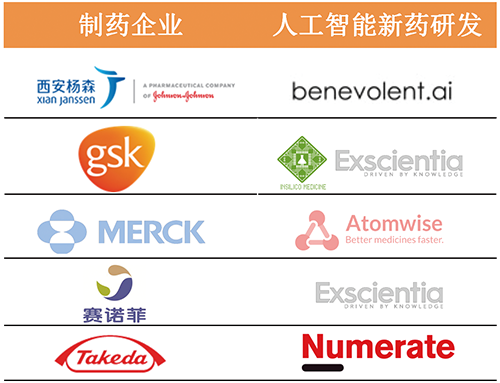
Collaborative Development Between Pharmaceutical Companies and AI-Driven Drug Discovery Firms
IV. Seven Innovative Directions for AI + New Drug R&D
The application of artificial intelligence in new drug development mainly spans two phases: the drug discovery phase and the clinical trial phase, encompassing seven distinct application areas.
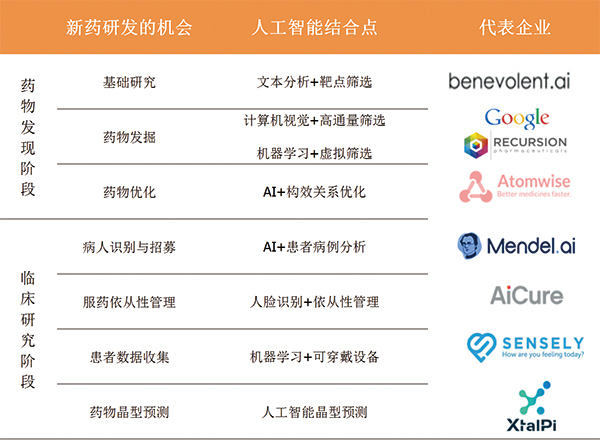
AI-Driven Drug Discovery Companies Across Various Stages of New Drug Development
1. Target Screening
Target discovery, which involves identifying biological pathways and proteins capable of slowing or reversing human diseases, represents the core bottleneck in current new drug discovery. The analysis and processing of cutting-edge research papers to provide predictive data can also be regarded as an application in target screening. Drug repurposing is currently a common approach to drug discovery, achieved by cross-referencing and matching existing marketed drugs with over 10,000 known human targets. While this task was previously conducted through manual experimentation, the integration of artificial intelligence is expected to accelerate experimental speed exponentially. It is estimated that by leveraging algorithmic models and large-scale computational power, the strategy of drug repurposing could reduce drug development costs to $300 million or even lower, while shortening the development cycle to 6.5 years.
In an era of rapid advancement in scientific research, a new life sciences paper is published every 30 seconds. Beyond this, vast amounts of information—including numerous patents and clinical trial results—are disseminated globally. Only a small fraction of these scientific data can be distilled into useful new knowledge. Drug R&D professionals lack the time and resources to monitor all emerging information; yet, these data encompass the research outputs of most scientists worldwide and contain extensive information on new drugs. Identifying subtle clues for novel therapeutics within this information deluge represents a shortcut in drug discovery.
2. Drug Screening
Drug screening, also known as lead compound screening. Pharmaceutical companies have accumulated a vast number of small-molecule compounds that modulate protein function, with large multinational pharmaceutical firms typically maintaining libraries of 5 to 3 million compounds. Lead discovery initially involves combining a limited set of modules to generate diverse proteins, followed by high-throughput screening (HTS) to identify suitable lead compounds. HTS employs robotics to conduct millions of assays simultaneously, resulting in prohibitively high costs. To date, researchers have increasingly advocated for the development of effective and accurate virtual screening methods using AI/ML to replace the expensive and time-consuming HTS process.
Current virtual screening methods are referred to as “high-throughput screening,” which is highly susceptible to the false discovery rate (FDR). Halving the risk associated with Phase III clinical trials could save large pharmaceutical companies billions of dollars in costs.
In the drug screening phase, there are two AI application approaches: one is to leverage deep learning to develop virtual screening techniques as a replacement for high-throughput screening, and the other is to utilize AI-based image recognition technology to optimize the high-throughput screening process.
Researchers from Google and Stanford are working to leverage deep learning to develop virtual screening techniques, aiming to replace or enhance traditional high-throughput screening processes while improving screening speed and success rates. By applying deep learning, researchers can enable information sharing across numerous experiments involving multiple targets. As Bharath Ramsundar et al. stated in a paper on machine learning: “Our experiments show that deep neural networks outperform all other methods… In particular, deep neural networks significantly surpass all existing commercial solutions. On many targets, they achieve near-perfect prediction quality, making them particularly suitable for use as virtual screening tools. In summary, deep learning offers the opportunity to establish virtual screening as a standard step in the drug design pipeline.” (Massively Multitask Networks for Drug Discovery, 2015/2/6)
3. Drug Optimization
Drug optimization, also known as lead optimization, primarily focuses on refining the structure-activity relationships (SAR) of lead compounds. This stage requires comprehensive improvement of the molecular deficiencies of lead compounds. In contemporary drug discovery, there may be 20–30 parameters that need to be optimized simultaneously, and molecular modifications often have widespread effects throughout the molecule. By leveraging artificial intelligence, it is possible to intuitively and qualitatively predict the relationship between the structures of physiologically active substances and their biological activities, thereby inferring the structure of target enzyme active sites and designing novel active compound structures. This approach can further accelerate SAR analysis and enable the rapid selection of compounds with the highest safety profiles.
4. Patient Identification and Recruitment
Recruiting suitable volunteers has long been one of the major challenges facing pharmaceutical companies. In the drug development process, where time is money, the indirect costs resulting from delays are significant and cannot be overlooked, in addition to the direct costs of recruitment. In practice, most clinical trials have to substantially extend their timelines because it is difficult to identify a sufficient number of patients within the originally scheduled period. Such difficulties are not uncommon; according to Bayer’s data, 90% of clinical trials fail to recruit enough patients within the designated timeframe, typically taking about twice as long as planned. By leveraging artificial intelligence to conduct in-depth analysis of disease data, pharmaceutical companies can more precisely identify target patients and accelerate patient recruitment.
In 2016, Biogen conducted a study using Fitbit to track the activity of patients with multiple sclerosis. As a result, 248 patients were successfully recruited within 24 hours, and 77% of them completed the follow-up study. This experiment demonstrated that a small subset of wearable device users are highly willing to engage in self-quantification and share their physiological data. Recruiting large numbers of volunteers for clinical trials using digital health devices (including medical-grade wearables) is becoming a trend.
5. Medication Adherence Management
Adherence refers to the extent of a patient’s objective response in following medical instructions. In new drug clinical trials, adherence can be defined as the degree to which subjects take the investigational medicinal product according to the prescribed dosage and treatment regimen. Traditionally, medication adherence has been managed primarily through manual follow-ups; however, when dealing with large volumes of data, reliance on patients’ self-discipline becomes inevitable. At this stage, we leverage mobile technology and facial recognition to determine whether patients take their medication on schedule. Automated algorithms are employed to identify medications and monitor ingestion, while reminders are sent to ensure timely dosing, thereby enabling precise management of patient medication adherence.
6. Patient Data Collection
In the traditional new drug development process, patients' health status and physiological data can only be assessed during clinical trials. Patients are required to undergo regular examinations, but data collected at specific times and locations may not fully represent their overall health conditions, leading to potential data bias. At this stage, wearable devices and machine learning analytics can be applied to enhance patient engagement, data quality, and operational efficiency in clinical trials.
Medidata, a cloud solutions provider in the field of life sciences clinical research, announced a strategic partnership with Garmin to enhance patient engagement, data quality, and operational efficiency in clinical trials by integrating Garmin’s health bands with Medidata Clinical Cloud. Additionally, companies such as VitalConnect have received FDA approval to use their biosensors for monitoring various patient biometrics. These life sciences companies are ushering us into a new era, connecting us to a range of novel behavioral data that was previously inaccessible. The aforementioned cases enable us to improve patient interaction in clinical trials, ultimately yielding more abundant and practical data, which is crucial for achieving breakthroughs in drug development.
7. Crystal Form Prediction for Small-Molecule Drugs
Drug polymorphs are of paramount importance to pharmaceutical companies, as they not only determine the clinical efficacy of small-molecule drugs but also hold substantial patent value. Polymorph patents represent the most critical type of patent following compound patents for drug substances. They serve as a key strategic asset for originator companies to block or delay generic manufacturers from launching generic versions after the expiration of the underlying compound patents. Polymorph patents can extend drug patent protection by 2 to 6 years, which translates into billions of dollars in market value for blockbuster drugs.
By leveraging artificial intelligence to efficiently and dynamically configure drug polymorphs, it is possible to predict all potential polymorphic forms of a small-molecule drug. Compared with traditional drug polymorph development, pharmaceutical companies no longer need to worry about missing critical polymorphs due to the limited search space of experimental methods, enabling them to respond more effectively to polymorph patent challenges from generic drug manufacturers. Furthermore, polymorph prediction technology significantly shortens the polymorph development cycle, facilitates more effective selection of suitable drug polymorphs, accelerates R&D timelines, and reduces costs.