

How Grassroots Doctors Can Build Their Personal Brands
By Che Feilun, General Manager of Shenzhen Kehengli Computer Software Co., Ltd.
Yu Mingyang, a renowned branding expert in China, defines a brand as: “A brand is an intangible asset that can generate premium pricing and value appreciation for its owner. Its carriers are names, terms, symbols, signs, designs, or combinations thereof that distinguish it from competitors’ products or services. The source of this value appreciation lies in the impressions formed in consumers’ minds regarding these carriers.”
As primary care physicians, we all aspire to earn our patients’ trust and praise, as well as societal recognition. We all strive for professional success and personal happiness. An increasing number of primary care physicians recognize that to enhance their competitiveness and achieve success, they must build and maintain a strong personal brand.
How to Build Your Own Brand? This is a discipline that requires certain skills. With sufficient dedication and mastery of these techniques, every primary care physician has the opportunity to become a renowned doctor: by providing patients with optimal diagnostic and treatment plans, and establishing public trust and credibility within the community.
Why Do Doctors Need a Brand?
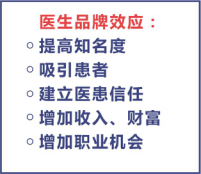
“Even the smallest individual has their own brand.” Only by building and owning a strong brand can you avoid being perceived as second-rate, become a trusted physician in the eyes of patients, and thereby attract more patients. Without a strong brand, primary care physicians cannot blame patients for queuing for days at large outpatient clinics and major hospitals. If you are not well-known, can you really blame the patients?
Primary Care Physician Branding: Hone a Specialized Skill and Position Yourself in a Niche Specialty
Renowned physicians typically do not gain fame by being generalists who know a little about everything; rather, they become well-known for their “unique expertise,” that is, their specialization in a particular field and their exceptional ability to treat one or a specific category of diseases. There are numerous examples of this. Today, nearly all renowned physicians are specialists who excel in a specific discipline. A look at primary care clinics and community health stations reveals that the most popular doctors are those who specialize in specific diseases and fields. Therefore, the first step for primary care physicians to build their reputation is to accurately define their professional positioning. With clear positioning comes a defined goal and a clear direction for advancement.
It has been said that medical specialties dealing with less life-threatening conditions, located farther from the body’s internal organs, and involving relatively straightforward pathophysiology—such as plastic and cosmetic surgery, dentistry, ophthalmology, orthopedics, acupuncture, and dermatology—are more conducive to building personal brands or establishing private clinic brands.
Primary care physicians should establish specialized services on the foundation of general practice development in their medical operations. It is advisable to choose specialties with high safety profiles for chronic disease management, or those with substantial market demand that also align with the physician’s strengths, such as orthopedics and traumatology, dentistry, otolaryngology, gastroenterology, and dermatology. In summary, it is essential to define clear objectives from the outset by identifying a distinctive specialty that differentiates one from other practitioners in the same area. This approach will help attract patients, build a strong brand, and ultimately achieve the goal of becoming the go-to specialist for specific conditions.
Specialized clinics can become your personal brand label because we have found that, among outpatient departments and community health stations, physicians with specific expertise are more popular with patients than general practitioners. As the saying goes, “Master one skill, and you can thrive anywhere.” A department cannot establish itself without distinctive specialties, and a hospital cannot prosper without unique strengths. You must demonstrate sufficient professionalism and depth of expertise so that patients remember you first and assign you a clear position in their minds. This helps build a differentiated brand image for your specialized clinic. Once your distinctive features and advantages are recognized by patients and generate a brand effect, they will become loyal customers and powerful advocates for your practice.
Diagnosis and treatment are medical practices that must constantly withstand the scrutiny of clinical application. Without sound diagnostic and therapeutic skills, even renowned physicians will quickly tarnish their reputations due to poor technical performance. Primary care physicians seeking to master specialized techniques have long searched for mentors; learning from such experts can lead to rapid success. While self-directed exploration may eventually yield results, it is excessively time-consuming. A more efficient approach is to directly adopt and apply proven technical expertise and successful experiences from others. For instance, one can participate in expert-led training programs, introduce and promote appropriate traditional Chinese medicine (TCM) techniques, or work pro bono under highly skilled practitioners. Additionally, studying resources such as Secrets to Success in Primary Care and Specialized Therapeutic Techniques with Proven Efficacy, and utilizing tools like the Intelligent Clinical Diagnosis and Treatment System and Kehengli Prescription and Medical Record Software: Becoming a Doctor with Ease, can be highly beneficial. If patients derive substantial benefits from a physician’s clinical practice—such as cure or alleviation of their condition, and improved psychological well-being—then that physician qualifies as a “great” doctor.
Mastering Outpatient Marketing Strategies: Customizing Your Products, Technologies, and Services
Primary healthcare institutions suffer from a severe shortage of talent, technical expertise, equipment, and outpatient marketing experience, resulting in weak service capabilities. Consequently, many primary care facilities are nearly deserted, while large hospitals remain overcrowded. Compounding this issue is the intensifying competition among primary healthcare providers; they can no longer rest on their laurels and passively wait for patients to seek their services. There is an urgent need for new operational strategies, specialized clinical technologies, and marketing techniques to brand, promote, and enhance their capabilities, thereby attracting more patients.
Most primary care physicians have long complained that patients do not choose them despite their comparable technical skills. The fundamental reason is the lack of a personal brand, making it difficult for patients to remember them. Therefore, for any physician who achieves genuine fame, the underlying drivers invariably lie in two aspects: unique medical expertise and effective marketing strategies. No matter how strong a doctor’s clinical skills may be, without marketing, promotion, and appropriate personal branding to fully leverage their soft power, it is difficult to effectively direct patients to primary care settings and convert consultations into successful outcomes. In such cases, societal recognition is unlikely, let alone widespread fame.
Relying on technical expertise and marketing is not contradictory; when closely integrated, they enable primary care physicians to gain recognition more easily. The Outpatient Marketing System shares with you the most practical, effective, and high-yield medical marketing insights, simplifying outpatient operations through streamlined, standardized, and replicable processes. It addresses a range of challenges, including low patient volume, difficulty in converting patients, low income, limited doctor-patient trust, and poor reputation.
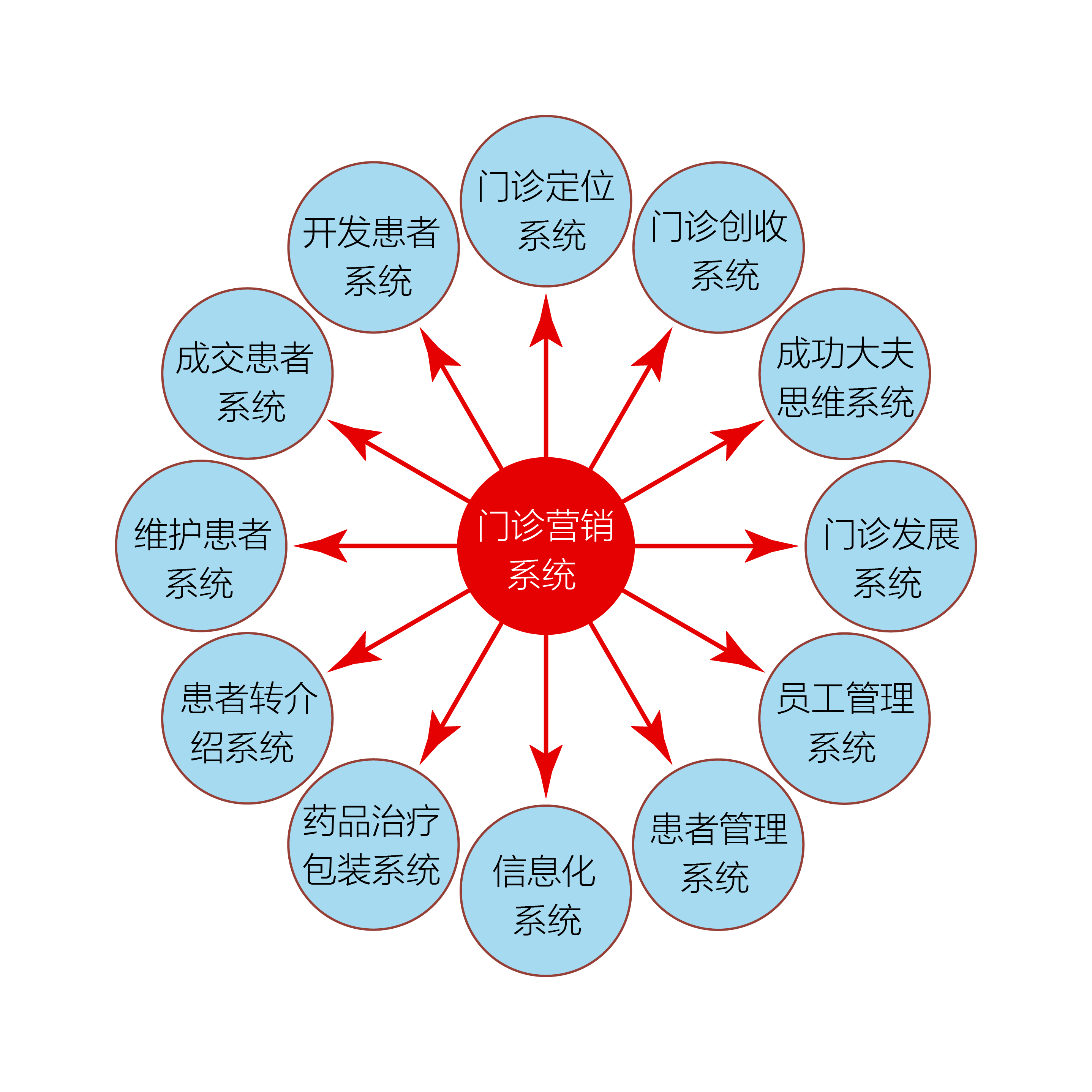
Dissemination and Execution: Brand Marketing Is an Eternal Battle for Hearts and Minds
Once you have defined the positioning for your products, technologies, services, and brand, all future communications and advertising efforts must revolve around this positioning. This is essential to embed the concept in patients’ minds and imprint it on their subconscious. At this stage, do not hesitate to invest, as this brand will generate greater economic benefits for individuals or institutions in the long run.
Cultivate the Awareness of “Letting the Aroma of Liquor Spread Farther”
As the old saying goes, “Good wine needs no bush,” meaning that if the wine is well-brewed, its aroma will attract connoisseurs to seek it out and savor it, even if it is tucked away in a deep alley. However, times are changing. In today’s era of information explosion, we cannot passively wait for an occasional passerby to discover our fine wine and then rely on the slow process of word-of-mouth promotion. What we must do is bring our fine wine within the effective olfactory range of our target audience.
Once primary care physicians become aware of the need to “extend their reach,” the next challenge they face is selecting the appropriate communication channels. Should they opt for traditional media advertising, digital media, or word-of-mouth promotion?
Traditional media channels primarily include newspaper interviews, television coverage, and magazine features. Although these methods entail exceptionally high costs, they deliver outstanding results, enabling you to become the focus of public attention in a short period and rapidly accelerate business operations.
A certain physician appeared on Beijing Television’s health program “Yangshengtang.” After his segment aired, his department’s phone lines were flooded with calls. This incident demonstrates that building a brand within the patient community may require distinctive promotional strategies or sustained, continuous effort.
Those who do not share will never become top experts! Only by continuously sharing your knowledge with others can you deliver value, earn their respect, and gain their trust. If you always keep your expertise hidden, how can you establish authority or stand out among your peers? In the era of mobile internet, doctors have access to numerous tools and ample opportunities to promote themselves and build their personal brands. Which internet tools should they leverage effectively in this mobile internet age?
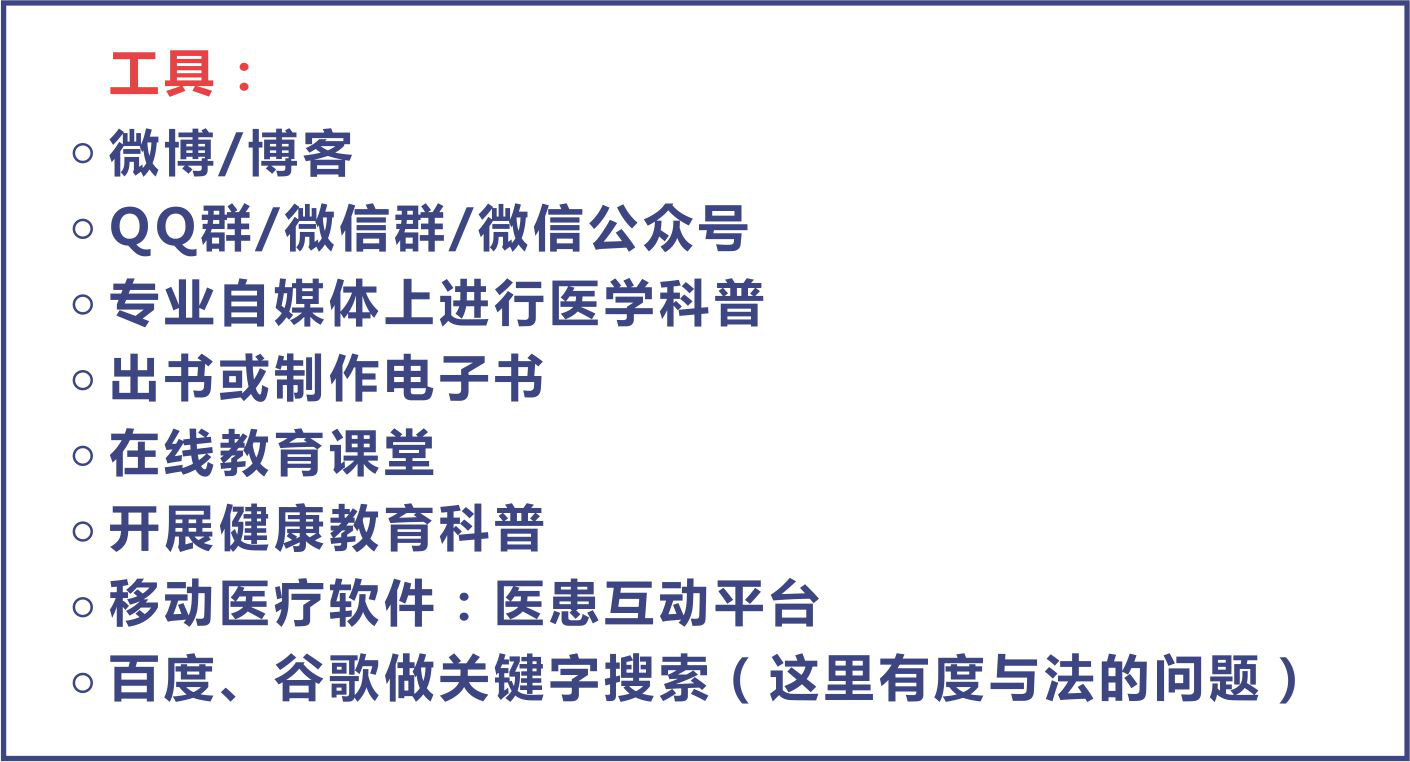
Another important method of free dissemination is to let your friends, relatives, users, and patients who truly care about you personally experience the treatment, achieve good therapeutic outcomes and service quality, gain trust and positive word-of-mouth, and thus spread the message through personal recommendations.
Building trust between primary care physicians and the public requires considerable additional effort, including compassion and patience. Dr. Wang Yue from the Institute of Medical Humanities at Peking University Health Science Center stated, “Trust is the cornerstone of the doctor–patient relationship, and respect is the foundation of trust. The purpose of medical practice is not merely to cure diseases, but to strive utmost to help patients. The greatest enemy of healthcare professionals is not disease, but indifference of the heart.”
You Can't Fight Alone
Believe in the power of the collective; individual efforts are feeble and rarely yield desirable outcomes. Therefore, it is essential to build your own team and harness synergistic strength, which serves as a shortcut to success. The positioning and advantages of specialized medical consortia lie in professionalism, technical expertise, and trust. The specialized medical consortium described in the next chapter represents a physician framework built upon collective strength. With such a framework in place, it would be difficult for physicians not to gain recognition.
Establishing channels for technical exchange and patient referrals (mutual referral) among primary healthcare institutions represents one of the most significant models for their future development, as well as the future organizational structure of specialized medical consortia.
A strong brand is also reliable and well-endorsed! Regardless of the specific purpose of the endorsement, any form of support can be leveraged. Companies may value a third party’s popularity and reputation, its authority, or its role as a trendsetter, among other factors. As long as it does not violate laws or regulations, any available resource can be utilized. Such endorsements can be either explicitly stated or subtly implied; the former is referred to as “hard-endorsed brands,” while the latter is known as “soft-endorsed brands.”
Building the brand of grassroots physicians is a monumental undertaking. In addition to various other factors, the most critical supplement is unwavering effort and patience; fame is absolutely unattainable without dedication. A brand is built incrementally. As everyone knows from the fable of “The Foolish Old Man Who Moved the Mountains,” as long as one perseveres, endures solitude, and works diligently, the dawn of success will eventually rise.
Stay tuned for the next article: Specialty Medical Alliances within the Primary Healthcare System