

Ex-Goldman Sachs Executive Builds Profitable Health Management Firm in China Without Funding or Marketing
In the field of health management, Yu Jiankang has been established for over seven years. It has evolved from initially establishing green channels for medical consultations to later focusing on preventive care (“treating potential diseases before they occur”), thereby forming an integrated service system that encompasses disease prevention, health management, medical consultation, and convenient access to medical care.
Yu Jiankang is operated by Beijing Huihuang Zhongtou Health Management Co., Ltd. Over the past seven years, according to Yang Sichong, CEO of Yu Jiankang, “We have secured no financing and engaged in no promotional campaigns; relying solely on word-of-mouth, we have assembled a professional medical team comprising more than 600 experts at the level of associate chief physician or above. Our team spans various disciplines and specialties, covers all Grade A tertiary hospitals in Beijing, has served tens of thousands of patients, and generates annual revenue in the tens of millions.”
Health management first emerged in the United States and entered China in 2003, eliciting mixed reviews. Some have hailed it as “excellent,” while others have dismissed it as “terrible.” So, what is the story behind the development of health management?
To outsiders, joining Yu Jiankang and entering the health management industry seemed purely accidental; but for Yang Sichong, it was exactly what she had in mind.
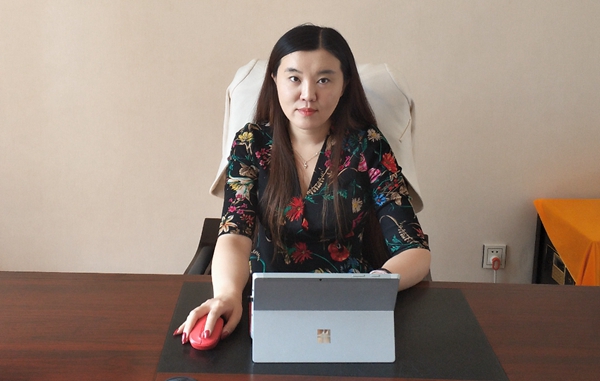
Yang Sichong, CEO of Yu Jiankang
Based on her personal background, she grew up in doctors’ offices, as both of her parents were physicians and she frequently visited their clinics during childhood. In her teens, she studied abroad in the United Kingdom. She previously worked at Goldman Sachs, specializing in high-frequency trading and algorithmic trading, where she was a colleague of Jean Liu (Liu Qing), President of Didi Chuxing.
During her studies in the UK, whenever Yang Sichong fell ill, she would habitually consult a private doctor. In the UK, everyone has their own General Practitioner (GP). When people get sick, they typically see their GP first. GPs operate on a scale similar to small clinics in China and are widely distributed throughout cities and towns across the country.
Although small clinics in China have a poor reputation, all General Practitioners (GPs) in the UK are affiliated with the National Health Service (NHS), so there is no need to worry about their medical qualifications. For this reason, every Chinese national newly arrived in the UK is advised to register with a GP, often referred to as a “private” doctor, to ensure convenient and timely access to medical care when needed.
Data indicate that health management participants incurred an average of $200 less in annual per capita expenditures compared to non-participants, suggesting a total annual savings of $4.4 million in medical costs for health management participants.
Since returning to China in 2015, she has often recalled her healthcare experiences in the UK whenever she saw overcrowded hospital outpatient departments. Individuals registered with private physicians tend to fall ill less frequently, or even remain disease-free, and enjoy convenient access to medical care.
Having experienced the private physician services in the UK, she aspired to introduce the British health management philosophy to China, thereby benefiting a broader population. Upon her return, numerous prominent fund companies approached her to resume her career in the financial sector or to lead the development of comprehensive trading platforms. However, she remained unwavering, staying true to her original intention of returning to China by dedicating herself to the healthcare industry.
While the health management industry abroad is booming, the domestic health management industry in China has just begun to take off, having entered the country in 2003.
As a “new entity” introduced into China, it faces numerous challenges, including administrative management issues, talent shortages, and academic concerns. Among these, the most prominent challenge lies in administrative management. There is no corresponding governmental department overseeing this sector, nor are there relevant laws or regulations to provide standardization. This has led to unclear administrative positioning and fragmented, overlapping oversight, causing market-oriented “health management” to resemble a headless fly—buzzing noisily and darting about indiscriminately.
In terms of talent, health management training institutions are proliferating, and health manager qualification certificates are being issued indiscriminately. These credentials are ubiquitous, yet the actual competency of certificate holders is largely superficial; the vast majority have become mere sales agents for beauty and health supplement companies.
Currently, enterprises that rely on health management for survival and development exhibit few distinctive features, are rife with deceptive practices, and employ diverse operational models. For instance, some health management education and training institutions operate under the guise of providing health management training, generating profits primarily by issuing certificates upon course completion. Similarly, certain health management consulting firms leverage the pretext of offering consulting services to sell Health Manager qualification certificates for a fee, while also acting as distributors for a limited range of health supplements or wellness products.
Furthermore, businesses formerly engaged in beauty services, catering, food processing, bathhouses, and “specialty” massage parlors, as well as certain real estate companies, have closely followed the “big health” trend. Under the guise of health management, wellness, traditional Chinese medicine (TCM), or general health preservation, they have employed deceptive marketing tactics to aggressively promote so-called wellness and health products.
In the face of a health management industry rife with chaos, how did Yang Sichong lead Yu Jiankang to forge a path for health management tailored to the Chinese people?
To differentiate itself from other health management companies, Yang Sichong first categorized the stakeholders involved in health management into two groups: those who provide health management services and those who choose to purchase them.
In her view, health management is inextricably linked to healthcare administration, and only physician-provided health management can scientifically assist individuals in managing their health.
Meanwhile, on January 12, 2015, the National Health and Family Planning Commission released the "Several Opinions on Promoting and Regulating Physicians' Multi-Site Practice," which explicitly set forth the following mandatory conditions for physicians engaging in multi-site practice: Clinical, stomatological, and traditional Chinese medicine (TCM) physicians are permitted to practice at multiple sites. Physicians practicing at multiple sites must hold a professional technical title at the intermediate level or above, have engaged in the same specialty for at least five years, be in good health and capable of performing the duties associated with multi-site practice, and have no record of unsatisfactory performance in their most recent two consecutive cycles of regular physician assessments.
Unlike previous regulations, the new policy has changed the requirement from “obtaining written consent from the primary practice location” to “obtaining consent from the medical institution at the primary practice location.” This means physicians need only fulfill notification and filing procedures with their primary practice institution, allowing them to engage in multi-site practice without requiring approval from their employing hospital. Additionally, the cap on the number of medical institutions where physicians can practice simultaneously has been removed.
Benefiting from favorable policy reforms, Yu Jiankang has, to date, assembled a robust medical team comprising over 600 renowned experts, with the goal of expanding this expert roster to 3,000 within the next two years.
When it comes to product packages, Yang Sichong has put in considerable effort. Since each user’s physical condition varies, every health management plan is personalized. These plans must integrate the insights of the medical team while also meeting the users’ needs.
Even for identical twins, health management plans are tailored differently based on variations in their living environments, lifestyle habits, and work conditions, let alone for other individuals.
As a result, the services offered by Yu Jiankang hold distinct advantages over other health management solutions. These benefits include reducing the likelihood of disease and enhancing individual immune resilience; enabling early detection of potential risks with timely intervention to prevent more severe health consequences; leveraging multidisciplinary experts to analyze members’ baseline health data, jointly initiate preventive measures, and provide comprehensive, integrated care plans; and ensuring continuous monitoring and dynamic adjustments to offer members the most robust protection for their well-being.
All Yu Jiankang members are entitled to private physician home visits and consultation services, as well as disease prevention and management services for the entire family. Each member can establish a personalized health record via the app, with an exclusive prevention and management plan jointly developed by a private physician team comprising over 20 specialists from various disciplines, providing round-the-clock online consultation and guidance.
For example, if a member experiences a sudden emergency of vomiting and diarrhea while on a business trip in another city, they can consult a doctor about medication via the app at any time.
In addition, Yu Health has specially designed health services tailored for families. This means that if one family member purchases the service, the entire household can enjoy premium disease prevention and health management services. A team of experts will create personalized prevention and health management plans for each individual and establish comprehensive health records. The primary services offered include expert consultation (via the Yu Health APP), pre-visit medical consultations, facilitated medical care services, and medical accompaniment services.
“We serve thousands of individual users and have signed contracts with over 10,000 households. Our partner institutions include Life Hui, China Minsheng Bank, PICC, Huatai Insurance, and many others. The enterprises we have served include large corporations such as Bank of China, Industrial and Commercial Bank of China, Agricultural Bank of China, Hebei Bank, Baoshang Bank, and China State Construction Engineering Corporation. Membership fees range from several thousand to tens of thousands of yuan,” said Yang Sichong.
"If Yu Jiankang’s integration of physician resources benefited from early-stage accumulation, why has user acquisition also been so effortless?"
“Since founding the company, I have never considered burning through venture capital to acquire users, nor have I relied on promotional campaigns for user acquisition. Our growth has been driven solely by word-of-mouth. With monthly costs amounting to several million yuan—most of which goes to physicians, and a smaller portion covering platform operations—we have now reached break-even,” Yang Sicheng stated candidly.
Among these users, the majority were referred by friends or had previously purchased individual memberships before upgrading to family plans.
On the other hand, Yu Jiankang has launched a free agency franchise model. Entrepreneurs aspiring to enter the general health industry, teams with more than ten members, and individuals with access to mid-to-high-end consumer segments are all eligible to apply. Authorization will be granted upon approval by the headquarters.
The primary role of distributors is to expand the market and sell health products. They are not required to develop local medical resources, as all provided health management services are delivered by expert teams. However, distributors must align with Yu Jiankang’s health philosophy.
During the product sales process, all training shall be conducted by the Beijing headquarters. Revenue sharing shall be based on the sales commission ratio. Product prices must not be altered arbitrarily, and the efficacy of health management services must not be exaggerated.
After seven years of development, Yu Jiankang has established agents in 13 provinces and municipalities across China, including Beijing, Shanghai, the three northeastern provinces, and Shaanxi Province. The company employs over 1,000 people. Its operations in Beijing and Shanghai are directly managed by the company, while agents in other regions operate through cooperation and franchising.
From the perspective of the industries in which affiliated partner agents operate, they span a wide range of sectors, including traditional Chinese medicine, health and wellness, real estate, early childhood education, and real estate brokerage.
Yang Sichong believes that the influx of professionals from an increasing number of industries into health management can most rapidly enhance users’ awareness of health management, while also facilitating the transformation of certain low-profit sectors.
“We focus on integrating expert resources from first-tier cities, as specialists in these cities encounter a high volume of complex and refractory cases annually, thereby accumulating extensive clinical experience,” said Yang Sichong.
The only drawback is suboptimal management, as some cross-industry agents lack a thorough understanding of health management concepts. Therefore, Yu Health needs to cultivate its own dedicated training instructors to continuously promote the philosophy of health management.
Compounded by regional factors, there is a significant disparity in health management awareness between northern and southern China, a pervasive issue across the entire industry. For instance, when introducing health management products to users in both regions simultaneously, northerners still tend to seek medical attention only after falling ill, with some even questioning the role of a private physician. In contrast, southerners view private physicians favorably and express a willingness to purchase such services.
Regarding future plans, Yang Sichong aims to establish a nationwide private physician system centered on Beijing, Shanghai, and Guangzhou, with 3,000 experts and 150,000 member families. As health management is a concept introduced from abroad, public awareness of health needs to be raised. While health management services come with a price tag, every individual’s health is priceless.
In China, the demand for health management has been increasing year by year. The government vigorously advocates comprehensive preventive care for the entire population, and public awareness of prevention is gradually strengthening. In the future, the overall health management market will experience an explosive surge.