

Top 5 Most Popular Healthcare IoT Implementation Scenarios Among Hospitals
By Hao Xueyang, Huang Bangyu
In the minds of most people, the Internet of Things (IoT) might look like this:

Like this:
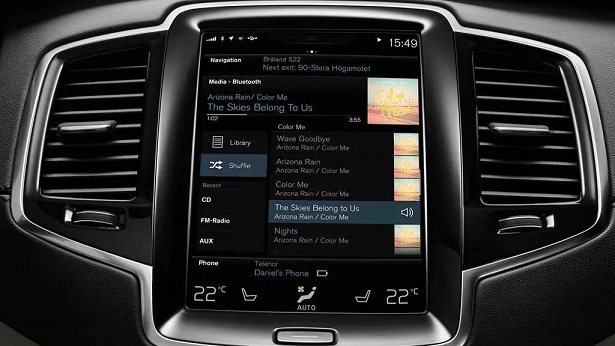
As follows:
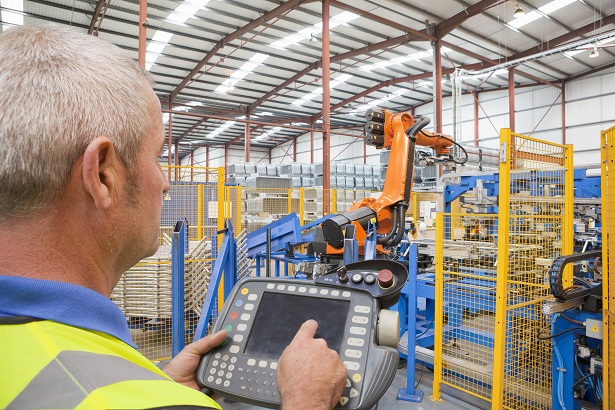
Or perhaps this:
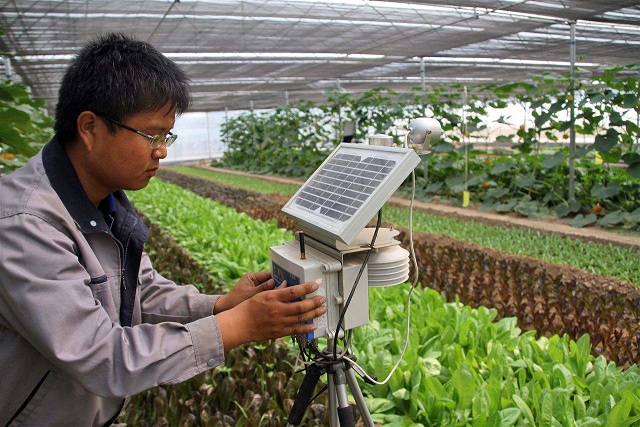
Have you ever wondered what the Internet of Things (IoT) would look like in the healthcare industry?
China's IoT, with a compound annual growth rate exceeding 25%
In June 2016, the technology research firm International Data Corporation (IDC) stated that the global Internet of Things (IoT) market would reach $1.7 trillion by 2020, rising rapidly from $655.8 billion in 2014 at a compound annual growth rate (CAGR) of 16.9%. The overall landscape of the IoT market is continuously evolving, with new players, business models, and a wide variety of products and solutions emerging.
Barcelona’s smart parking system, ApparkB, alerts drivers to available parking spaces, reduces vehicle emissions, and generates an additional €50 million in annual municipal parking revenue for the Spanish government.
In the United States, approximately 65 million smart meters have already been installed in households, accounting for half of all U.S. homes. It is projected that the number of smart meters in the U.S. will reach 90 million by 2020, and these systems can significantly reduce per capita energy costs.
Chicago has installed sensors at hundreds of intersections across the city to monitor temperature, air pollution, traffic congestion, and noise levels. Through the city’s health tracker, residents can adjust their travel routes in response to traffic congestion.
The Internet of Things is blossoming worldwide, and China is no exception.
On September 13, 2017, the “Annual Report on the Development of China’s Internet of Things (IoT) 2016–2017,” released by the China Economic Information Service in Wuxi, indicated that China has established a relatively complete IoT industry chain encompassing chips and components, devices, software, system integration, telecommunications operations, and IoT services. The number of deployed machine-to-machine (M2M) terminals has exceeded 100 million. The scale of China’s IoT industry has surged from RMB 170 billion in 2009 to over RMB 930 billion in 2016, with a compound annual growth rate exceeding 25%.
Of course, this is merely a microcosm of the entire domestic IoT market. As the mobile internet era gradually transitions into the Internet of Everything (IoE) era, the Internet of Things (IoT) is emerging as an epoch-making, revolutionary technology across industries including industry, agriculture, and manufacturing.
Healthcare: The Critical Battleground for the Internet of Things
Healthcare, an industry closely tied to human survival, also has compelling reasons to achieve interoperability.
The continuous advancement of healthcare reform has elevated the importance of internal development and operational management within medical institutions. In this context, to further improve medical quality, reduce service costs, and enhance the quality of medical services, hospitals should establish their brand through proven therapeutic efficacy and meticulous care, leveraging brand enhancement to drive comprehensive institutional development, maintain a positive image, and prevent doctor-patient conflicts. By implementing refined operational management to reduce service costs, hospitals can achieve sustainable long-term growth.
Therefore, the management of personnel, finances, and resources must inevitably become more refined.Provide the highest quality services at the lowest cost.
The emergence of Internet of Things (IoT) technology enables hospitals to achieve intelligent perception and processing of medical entities (such as physicians, nurses, patients, equipment, supplies, and medications), supporting the digital acquisition, processing, storage, and transmission of internal medical information, equipment data, pharmaceutical information, personnel records, and management data within hospitals. It assists hospitalsAddress issues such as weak support for medical platforms, generally low levels of medical service, hidden risks in medical safety production, and high medical management costs.
In short, the Internet of Things (IoT) not only enhances the quality of medical services but also helps hospitals increase revenue and reduce costs.
Accenture in 22017The released "2017 Internet of Things in Healthcare Survey" pointed out that by 2020, the market value of the Internet of Things in the healthcare sector would reach $163 billion, with a compound annual growth rate of 38.1% from 2015 to 2020.
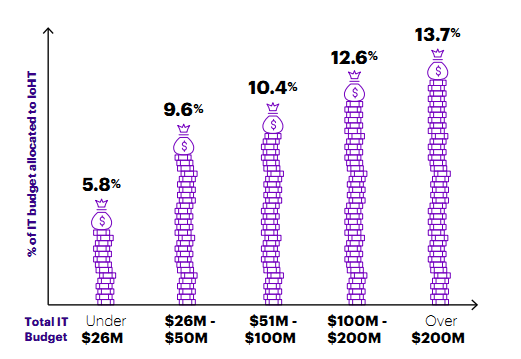
The report indicates that healthcare institutions’ investment in IoHT solutions is increasing in proportion to the overall size of their IT budgets. Healthcare organizations with total IT budgets under $26 million allocate 5.8% of their budget to IoT investments; those with budgets between $26 million and $50 million allocate 9.6%; those with budgets between $51 million and $100 million allocate 10.4%; those with budgets between $100 million and $200 million allocate 12.6%; and those with budgets exceeding $200 million allocate 13.7%.
Construction of the National Smart Healthcare Evaluation Index System and IoT Application Scenarios
In August 2016, Chinese Hospitals published a research article titled “Construction of a National Evaluation Indicator System for Smart Healthcare.” Commissioned by the Department of Planning and Information of the National Health and Family Planning Commission, the research team employed the Delphi method to establish a scientifically rigorous national evaluation indicator system for smart healthcare. This system is designed to comprehensively assess the level of smart applications and management in hospitals, thereby guiding and promoting the adoption and development of smart healthcare solutions in medical institutions.
The experts participating in the consultation were primarily administrators from tertiary medical institutions with advanced informatization, who have long been engaged in hospital management and health information management. These experts demonstrated a high level of authority. After two rounds of consultation, consensus was largely reached on the composition and weight coefficients of the evaluation index system. Currently, this evaluation index system has begun internal assessments in multiple provinces, including Beijing, Shanghai, Guangdong, Zhejiang, Jiangxi, Inner Mongolia, Hebei, and Heilongjiang.

The highlighted sections represent potential entry scenarios for medical IoT enterprises.
In the smart healthcare evaluation system, the secondary indicators related to medical Internet of Things (IoT) application scenarios are mainly infrastructure (0.764),Smart Patient Services (0.237), Smart Management (including administrative and operational aspects) (0.130), Smart Nursing (0.085), Smart Logistics (0.036), and Smart Support (0.142). Based on this information, we can determine that IoT enterprises should focus their efforts on two main areas: first, nursing, logistics, and infrastructure centered around patient services; second, support services and administrative business management centered around hospital personnel, finances, and materials.
Is this really the case?
Wuxi, China's Launchpad for the Internet of Things
To understand the current implementation scenarios of the Internet of Medical Things (IoMT), VCBeat has compiled and analyzed 24 well-known domestic medical IoT companies.
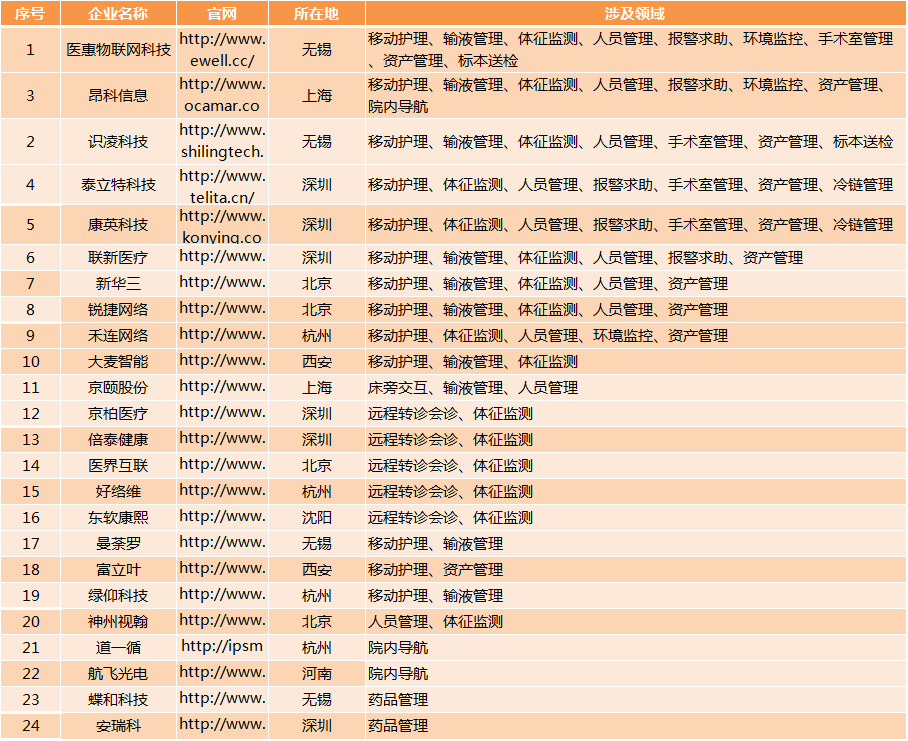
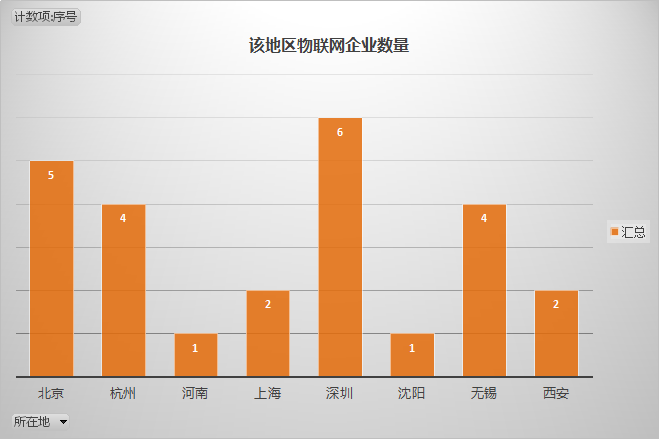
According to data from VCBeat, the Chinese cities with the highest concentration of IoT enterprises are currently Beijing, Hangzhou, Shenzhen, and Wuxi. It is not surprising that Beijing, Shenzhen, and Hangzhou—home to the densest clusters of internet companies in China—rank among the top. Notably, Wuxi, known as the “Birthplace of China’s IoT Industry,” also stands out.
Since Premier Wen Jiabao proposed the establishment of a “Sensing China” center in Wuxi in August 2009, the Internet of Things (IoT) has taken deep root in the city. Driving through Wuxi, one frequently encounters the terms “Internet of Things” and “sensing” on building signs and lightbox advertisements along the way. The World IoT Expo, held annually since 2016, has become a renowned hallmark of the city. Even an ordinary local resident approached on the street can readily share insights on the topic of the “Internet of Things.”
Since the 1970s, Wuxi has been introducing the semiconductor industry. In the 1990s, Wuxi implemented the national “908” Project. To date, Wuxi has established a complete industrial chain encompassing IC design, manufacturing, and packaging & testing, making it the second-largest city in China in terms of IC industry output value, after Shanghai.
Precisely because the IC industry is an indispensable link in the IoT supply chain, a large number of Wuxi-based IC design firms have shifted their R&D focus to sensing and RFID technologies in recent years. Nearly all design enterprises are aligned with IoT-related support services, and Wuxi’s robust IC industrial foundation has made it a natural incubator for the IoT industry.
Among these 24 companies, VCBeat has identified 14 application scenarios for the Medical Internet of Things (MIoT). These include vital signs monitoring (ECG, blood glucose, sleep quality, etc.), mobile nursing (mobile ward rounds), personnel management (nurse positioning, infant anti-theft, elderly positioning, etc.), infusion management, asset management (blood management, equipment management, high-value consumables management, etc.), remote referral and consultation, alarm and emergency assistance, operating room management, environmental monitoring (PM2.5, temperature, humidity, lighting, etc.), in-hospital navigation, specimen delivery, medication management, cold chain management, and bedside interaction.
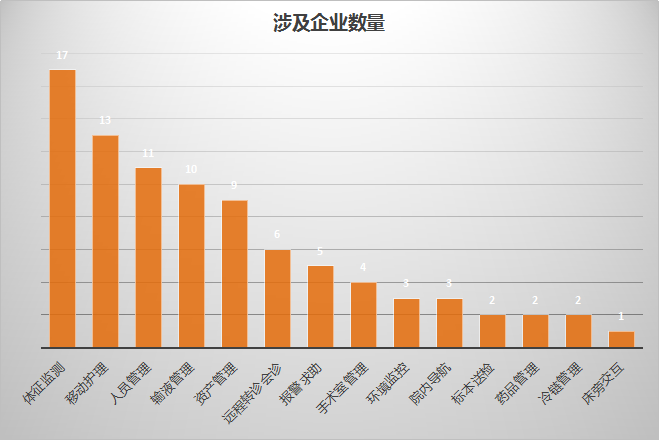
Based on the distinct characteristics of different application scenarios, VCBeat categorizes these 14 scenarios into two major attributes, namelyDemand for Medical ServicesandCost Control Requirements。As we had previously anticipated,Patient-centered care, logistics, and infrastructure, as well as hospital-centered resource (personnel, financial, and material) support and administrative management, are the key focus areas for IoT enterprises implementing solutions in the healthcare sector. The following diagram illustrates the distribution of these two types of needs (for reference only):
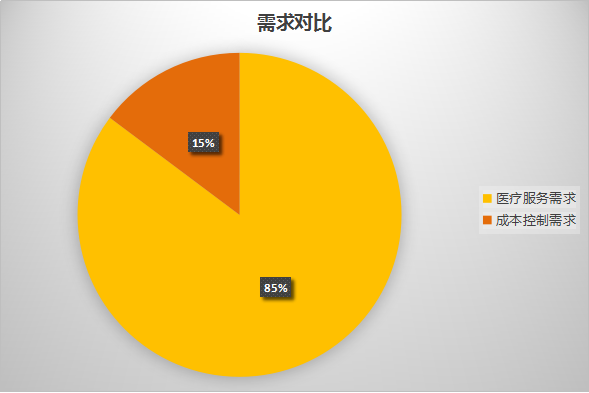
As shown in the figure, hospitals’ current demand for the Internet of Things (IoT) is primarily focused on improving the quality of medical services. In contrast, applications related to cost control, such as equipment management and consumables management, remain relatively limited.
VCBeat’s analysis suggests that, since equipment and consumables management does not provide hospitals with a highly visible reflection of cost-control effectiveness, coupled with the zero-markup policy for pharmaceuticals and reforms in healthcare payment methods, hospitals are reluctant to increase investment in areas such as medical devices. This has resulted in limited enthusiasm among hospitals for IoT applications in this domain. However, in the long run, asset management via IoT is an inevitable trend for hospitals, although it will still require a certain period for acceptance.
Focusing on five key areas—vital signs monitoring, mobile nursing, personnel management, infusion therapy management, and asset management—VCBeat uses specific case studies to detail their real-world implementation.
5 Major Application Scenarios: Implementation Cases
With the increasing number of critically ill, infectious, and febrile patients in hospitals, nursing staff are required to frequently measure vital signs such as body temperature and pulse. Traditional methods for measuring these vital signs and recording data are not only time-consuming and inefficient but also labor-intensive.
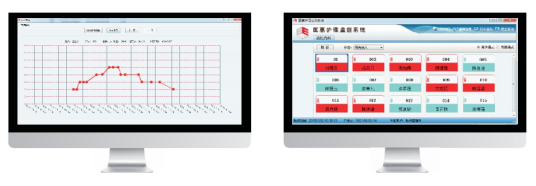
Yihui Technology’s IoT temperature tags leverage Internet of Things technology to enable real-time, continuous, and automatic collection of patient body temperature, transforming traditional temperature measurement into comprehensive temperature monitoring and providing hospitals with a streamlined, intelligent temperature monitoring solution.
1. Enables continuous data acquisition, transforming body temperature measurement into temperature monitoring to promptly detect critical turning points in the patient's condition
2. 24-hour real-time display, providing a visual interface for body temperature information.
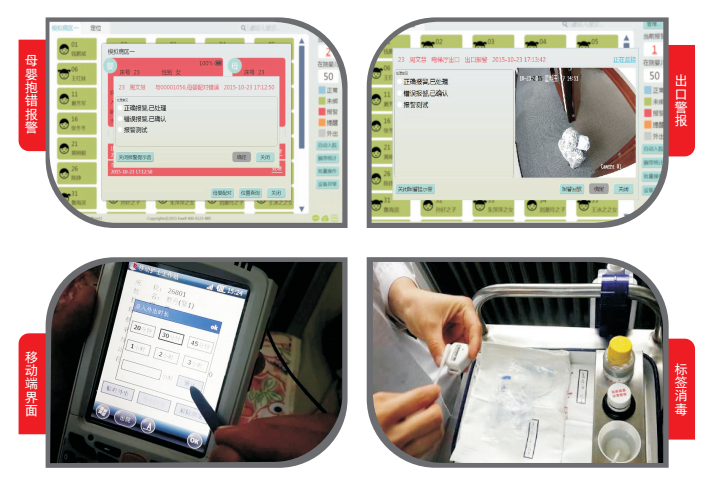
Shiling Technology’s RFID-based Smart Nursing System for Hospitals uses hospital wards as its operational framework and aligns with the IoT-enabled RFID application needs of healthcare facilities. It marks the first domestic implementation of ultra-high frequency (UHF) wireless RFID technology in hospital nursing care, enabling comprehensive, contactless patient identification, real-time acquisition of nursing operation data, procedural verification, and automated documentation.
In July 2013, the Hepatobiliary and Pancreatic Center of Wuxi No. 3 People's Hospital officially launched Shiling Technology’s RFID-based Intelligent Nursing System for Hospitals.
The intelligent nursing system ensures that nurses adhere to the “Three Checks and Seven Verifications” protocol, thereby reducing nursing errors. Upon admission, each patient is issued an RFID wristband that serves as a “temporary ID” during their hospital stay. This wristband contains basic patient information—such as name, gender, age, department, bed number, and blood type—as well as data related to medical order processing, laboratory tests, infusion therapy, and injections.
Previously, nurses spent considerable time at the nursing station manually entering paper-based data into computers, a process that was both mentally and physically demanding. Now, with Shiling Technology’s SDA solution, nurses can perform direct scanning at the patient’s bedside, eliminating the need to return to the nursing station for secondary data entry.
Compared with the traditional workflow of “handwriting vital signs on paper and then entering them into a computer at the nurses’ station,” SDA enables real-time data entry and upload, greatly simplifying operational procedures and improving work efficiency.
According to hospital feedback, after implementing Shiling Technology’s RFID-based Smart Nursing System, healthcare staff reduced query time by 90%, saving an average of 58 minutes per day, while daily walking distance decreased from 10 kilometers to 7.5 kilometers; patient satisfaction rose from 96.3% to 99.3%. Currently, Wuxi No. 3 People’s Hospital has rolled out the system across all wards hospital-wide.
An IoT-based personnel positioning management system is the application of Wi-Fi and RFID technologies in the healthcare industry.Typical Applications. By strengthening the monitoring of the location and movements of special-needs patients, it is possible to truly achieve "patient-centric management."centered on”.
Yihui Technology’s system enables refined and intelligent management of diverse hospital populations. With precise room-level and bed-level positioning services, a customizable event mechanism, and diversified alert methods, the system aligns more closely with real-world hospital scenarios. The perceptual data generated by the Internet of Things (IoT) not only enriches medical information datasets but also brings significant convenience to the daily work of healthcare professionals.
Commonly tracked individuals include physicians, nurses, patients, neonates, couriers, and other healthcare workers.
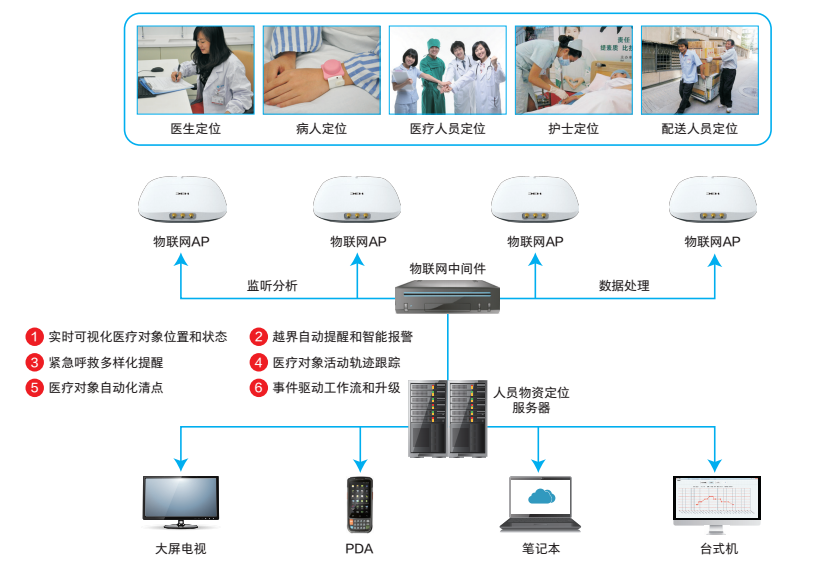
Furthermore, tertiary hospitals typically have a high volume of newborns. Without effective identification measures, issues such as accidental baby swaps and infant abduction often occur, leading to catastrophic consequences for both the hospital and the infants' families.
The Yihui Infant Anti-Theft System achieves mother-infant pairing by equipping both mothers and infants with active long-range RFID tags. The mother’s tag contains the functionality for managing mother-infant identity matching. Once an infant tag is secured around the infant’s ankle, any unauthorized removal will automatically trigger an alarm. Meanwhile, the system can deploy IoT access points (APs) within the infant’s activity area to collect infant-related data. By installing exit monitors at the entrances and exits of hospital wards, the system enables comprehensive, 24/7 monitoring of infants.
As a research-oriented affiliated hospital of a national key university, Zhongshan Hospital handles over 2.8 million outpatient and emergency visits annually and admits 60,000 inpatients. This enormous patient volume places significant service pressure on the hospital’s medical and nursing staff. In response, the hospital sought to leverage Internet of Things (IoT) technology to help nurses reduce their workload. During the bidding process, Ruijie Networks stood out among numerous competitors thanks to the excellent compatibility of its products.
Personnel from the Information Technology Department of Zhongshan Hospital aim to establish an IoT platform that is easy to deploy and vendor-agnostic, providing an IoT solution that can stably support business systems while seamlessly integrating with the existing wireless network.
To address Zhongshan Hospital’s primary needs, Ruijie Medical has pioneered the deployment of its fully closed-loop infusion management system. By integrating smart infusion monitors, indoor IoT base stations, and an IoT platform, the system achieves end-to-end closed-loop management of the hospital’s infusion processes.
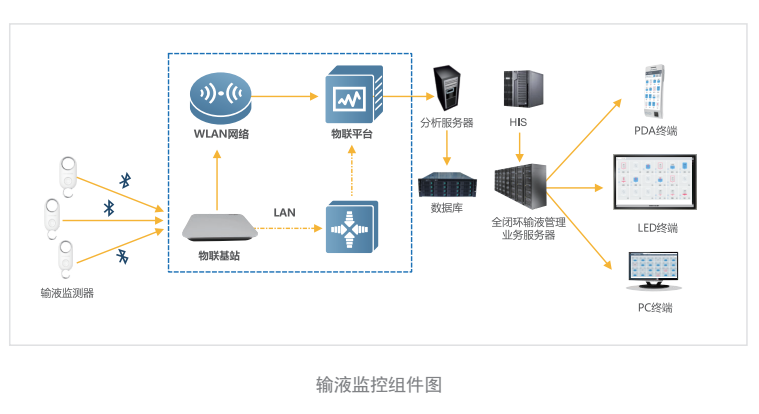
As this system can monitor the remaining infusion volume in real time, medical staff can prepare medications and replace infusion bags in advance based on the displayed volume. In the event of an excessively rapid infusion rate for any patient, the system will automatically trigger an alarm, enabling healthcare providers to monitor the drip rate in real time and ensure infusion safety.
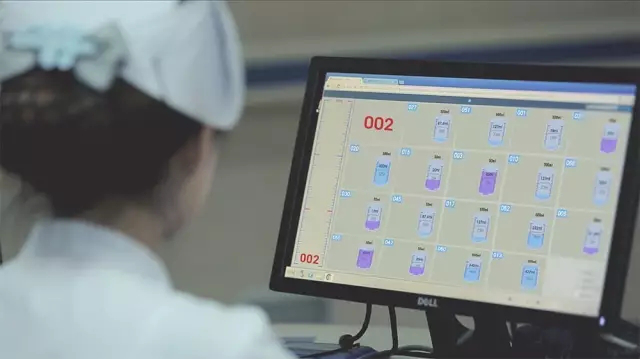
The Director of the Nursing Department at Zhongshan Hospital stated, “In the past, we had been seeking effective methods to enhance nursing quality and safety. The implementation of Ruijie Networks’ fully closed-loop infusion management system has not only reduced the time nurses spend on infusion tasks but also significantly mitigated medical risks, thereby effectively improving patient satisfaction. Today, our workload is much lighter, call bells ring far less frequently, the wards are quiet, patients are more satisfied, and everything has become well-ordered.”
In the past, when high-value medical consumables were distributed by the Equipment Department to clinical departments, hospitals had no visibility into which specific patients received them, or whether they were actually used or simply lost. However, with the introduction of IoT technology, a closed-loop management system covering the entire process can be established. For instance, hospitals can clearly track which department requested the consumables, which supplier provided them, the procurement price, which department retrieved them from inventory, and ultimately which patient received them. All this information is systematically recorded, ensuring complete transparency.
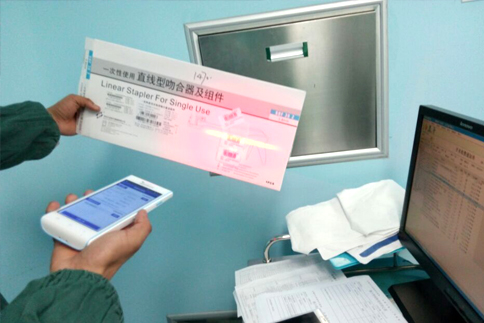
In terms of medical equipment, tertiary hospitals currently hold substantial fixed assets, yet few possess accurate data. Significant discrepancies between financial reports and equipment department records are considered commonplace within the industry.
The president of a Grade 3A hospital stated, “With the barcode management system we previously used, annual inventory checks took at least two months. Some barcodes were damaged or unreadable, and the limited data capacity of barcodes could not ensure data accuracy. By adopting RFID electronic tags, we can achieve comprehensive information capture and full-process traceability, enabling us to complete the entire inventory in approximately one week.”
In the past, hospitals tended to purchase additional equipment when their overall financial performance was strong. However, with the implementation of refined management, hospital equipment departments now first analyze the cost-effectiveness of each device. If a particular device is found to have low utilization, it indicates that the hospital does not need to acquire new equipment; rather, it should focus on improving the utilization rate of the existing device.
Often, repairing a set of medical equipment in hospitals costs more than buying new ones due to the lack of reference data. Now, through the IoT platform, managers can have a clear understanding of the entire product utilization curve, including the cost of purchasing equipment, revenue generated by the equipment, and maintenance expenses.