

Over 4,000 Maternity Centers in China: A Seemingly Lucrative Industry with Few Profitable Players, Urgently Needing Breakthrough and Upgrade
From an external perspective, the postpartum care center industry exhibits a “three lows and one high” phenomenon, with a positive outlook.
The specific perception is that the entry barriers are low, with no stringent pre-approval standards; the technical threshold is low, with confinement nannies or nurses attending to postpartum women; and the capital requirement is low, as facilities can be established with an investment of RMB 30–50 million, or even as little as RMB 300,000–500,000. Fees range from RMB 30,000, 50,000, and 100,000 to several hundred thousand yuan, yielding high, indeed exorbitant, profits.
Not so. With costs rising across all operational segments of postpartum care centers, profitability is difficult to achieve without meticulous cost management and comprehensive operational capabilities.
Xu Ning, founder of Xi Zhijia and one of the twelve members of the National Working Group on Standards for Maternal and Infant Health Care Services, remarked four years ago, during the period of most rapid growth in the postpartum care center industry: “Although most of the twelve postpartum care centers across China participating in the development of the national standards are strong regional brands, only one has achieved profitability. This shows that the industry still has a long way to go.”
At that time, the Standardization Administration of China was commissioning the National Technical Committee on Health Service Standardization to draft national standards for postpartum care centers, as the sector began its initial shift toward a more standardized and segmented market.
Two postpartum care centers established in Beijing during the 1990s remain operational today. In Shanghai, four to five new centers open each month, with a similar number closing down monthly. Meanwhile, several branded postpartum care facilities in Nanjing and Shanghai have changed ownership multiple times.
Postpartum care centers are most densely distributed in Beijing, Shanghai, Guangzhou, and Shenzhen; however, each of these cities has no more than 10 brands that have achieved significant brand recognition. In other second- and third-tier cities, the number of branded postpartum care centers ranges from a maximum of five to a minimum of two or three. The industry overall is characterized by low market concentration, difficulties in cross-regional franchising, the dominance of regional brands, and a lack of regulatory mechanisms.
The Postpartum Care Center Market: Half Fire, Half Water. The current low market penetration rate has led investors to anticipate significant growth potential. However, the uneven quality of services, management, and profitability introduces a degree of uncertainty to future development.
In the early 1990s, New Mom, Beijing’s first postpartum care center, was established. Its founder, Pan Xin, graduated with a degree in Clinical Medicine from Harbin Medical University. While working at the National Population and Family Planning Commission, she serendipitously came into contact with postpartum care centers, which were then a key project supported by the state.
After establishing the country’s first postpartum care center, she went on to found Beijing’s first “infant swimming” training base, filling multiple gaps in China’s postpartum maternal and infant care industry.
In the early days of the venture, the postpartum care market was far less booming than it is today, plagued by a shortage of professional caregivers, limited funding, difficulties in customer acquisition, and undeveloped consumer habits.
The market is currently experiencing intense competition. High-caliber operational professionals have entered the sector, introducing care models from Taiwan, the birthplace of postpartum care centers. This has attracted qualified medical and nursing staff, driven the evolution of business models, and drawn in investment institutions of all sizes along with speculative capital.
As consumer spending upgrades, how can the seemingly bustling postpartum care center industry develop in a standardized manner? Which brands and investment firms stand out? Is this sector genuinely hot or merely overheated? VCBeat (WeChat: vcbeat) provides a brief overview and analysis of the industry, offering insights into the following:
1. Why is the overall profitability of the postpartum care center industry, characterized by “three lows and one high,” not favorable?
2. What are the operational models of postpartum care centers in Taiwan, their place of origin, and in South Korea?
3. Postpartum care centers have not yet reached the stage of mass-market consumption; why is hot money still flooding into the postpartum care industry?
4. From the perspectives of property management and operational models, into which categories can postpartum care centers be classified?
5. Who are the key players in the postpartum care center industry, and what are the respective advantages and disadvantages of the direct-operated and franchise models?
6. Are Postpartum Care Centers a Sunrise Industry or Just a False Boom?
As mentioned above, postpartum care centers in mainland China emerged over a decade ago, entered a period of rapid growth starting in 2011, and remain in their early stages of development, primarily concentrated in large and medium-sized cities.
According to statistics, the total number exceeds 4,000. An insider in the postpartum care center industry revealed to reporters: “Postpartum care centers are growing at an annual rate of over 40%, and have now even penetrated prefecture-level and county-level cities.”
“However, at this stage, customers are still primarily concentrated among mid-to-high-end users with stronger purchasing power. The coverage of postpartum women in cities like Beijing and Shanghai does not exceed 8%, and it is even lower in provincial capitals and prefecture-level cities, far from reaching the stage of mass consumption,” said an investor.
“Postpartum confinement” is a traditional Chinese childbirth custom, but the concept and business model of “postpartum care centers” originated in Taiwan, China.
Since the 1980s, Taiwan’s economy has experienced rapid development, leading to significant improvements in living standards and consumer purchasing power, along with a corresponding rise in the growth rate of the service sector. During this period, postpartum care centers emerged in succession, providing scientifically grounded and rational support for postpartum recovery (“zuoyuezi”), gradually earning social recognition and trust.
“Currently, the total number of postpartum care centers in Taiwan is approaching 400, with Taipei as their main hub. Purely medical care, meticulously prepared postpartum meals, and standardized operational and management systems are typical features of Taiwanese postpartum care centers,” said Lin Senyi, General Manager of Dunan Zhenai, a representative postpartum care center in Taiwan, noting that the brand operates four locations across the island.
Postpartum care centers in Taiwan are subject to direct regulatory oversight; consequently, they not only adhere to medical-grade standards for care requirements but have also established unified industry standards for facility design, operational models, and staffing. Care is primarily provided by nurses, with no involvement of traditional confinement nannies (yuesao).
After being introduced to mainland China, postpartum care centers have rapidly taken root, driven by rising consumer spending power and, to varying degrees, the influence of celebrities. Some high-end facilities attract clients by employing experienced teams from Taiwan and directly adopting certain services, such as postpartum care programs.
Institutions also adapt to local conditions by making adjustments based on the characteristics of consumers in mainland China. For instance, while most postpartum care centers in Taiwan adopt a collective care model, mainland China offers various one-on-one or multi-to-one nursing models. This approach has helped them gain initial recognition in cities such as Beijing, Shanghai, and Guangzhou.
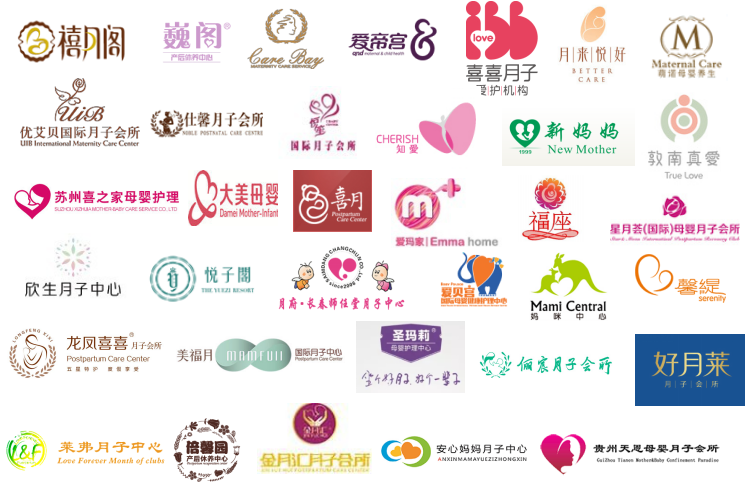
Some Postpartum Care Centers in the Market That Have Established Brand Recognition
Even purely Taiwanese-style postpartum meals may face “acclimatization issues.” For instance, since consumers in northern China prioritize wheat-based foods while those in the northwest prefer salty and spicy flavors, adjustments are made to cater to local palates and better align with regional dietary habits.
Nor can we rule out the possibility that some postpartum care centers are leveraging the concept of “Taiwan-style postpartum care,” yet there remain significant differences in actual management practices, as fully adopting the Taiwanese model—including the direct hiring of managerial talent from Taiwan—entails substantial costs.
Shenzhen represents a special case, as its postpartum care centers initially emerged to serve women traveling there to give birth in Hong Kong, positioning themselves in the high-end segment. Due to policy changes, these centers began focusing on the local market after 2014, with customer acceptance gradually increasing.
Currently, regions such as Irvine in the United States are also dotted with postpartum care centers catering to Chinese clients. There is little difference between these facilities and their domestic counterparts in terms of service models and pricing; clients primarily seek U.S. citizenship for their newborns. Additionally, South Korea is another region where the postpartum care center industry has seen significant development.
What is the current market size of postpartum care centers? According to the "Research and Investment Prospect Analysis Report on China's Postpartum Care Center Industry (2016-2022)" released by China Industry Information Network, the market size of postpartum care centers in China was approximately RMB 1.02 billion in 2010 and around RMB 4.2 billion in 2014, with a compound annual growth rate (CAGR) of 42.45%.
A report from GF Securities estimates that the market size will reach approximately RMB 15 billion by 2019. Compared with mature consumer healthcare sectors such as maternal and infant e-commerce, dentistry, and medical aesthetics, this remains a relatively small market.
Since its introduction to mainland China, postpartum care centers have been labeled as high-end from the outset, characterized by lavish decor, high operating costs, and premium pricing—a scenario that differs from that in Taiwan.
In Taiwan, hospitals are unable to provide postpartum nursing and care, yet new mothers genuinely require such support for their recovery—a true essential need, akin to the role of confinement nannies (yuesao) in mainland China.
Having taken root in Taipei, the industry underwent a brief period of extensive growth before the government introduced regulatory and price-control policies, which served to propel its development.
Taiwan generally adopts a collective care model rather than high-end consumer services. Due to the high labor costs in Taiwan, only about 15 nurses are staffed for 30 rooms, reflecting stringent cost control measures.
“Mainland China’s trending services—such as body shaping, figure contouring, and aesthetic dermatology, or even programs aimed at improving marital and mother-in-law/daughter-in-law relationships—are not available in Taiwan. But that is not the key point. The postpartum care center market in Taiwan has already stabilized, with average prices equivalent to RMB 50,000–60,000 on the mainland,” said a postpartum care industry professional who conducted an on-site visit to Taiwan.
According to the aforementioned practitioners, 50%–60% of postpartum women in Taiwan stay at confinement centers, also known as postpartum care homes. While data may vary slightly among different institutions, over 70% of these women opt for confinement meal services, indicating that Taiwan’s confinement meal industry is well-developed.
“Taiwanese consumers also have a different understanding of the industry. They are comfortable with the practice of having no family visits during the postpartum confinement period, whereas this concept is only gradually taking hold in mainland China. They clearly understand what is important during the confinement period and where to allocate their spending, demonstrating greater rationality—a sign of a mature market,” said Yue Zhao, founder of Xi Yue Ge, in an interview with VCBeat.
In South Korea, postpartum care centers are also an affordable option for the general public, with nearly 60% of new mothers choosing to stay at these facilities, also known as postpartum adjustment institutes. The most basic community-based model costs approximately RMB 20,000 for a 14-day stay. These centers enjoy high occupancy rates and rapid bed turnover. “However, meals are served buffet-style Korean cuisine, and some maternal education classes are offered. If clients require postpartum recovery services or other specialized treatments, external partners are brought in under a revenue-sharing cooperation model,” revealed the head of a postpartum meal service company to reporters.
Some maternity hospitals and plastic surgery clinics in South Korea also offer postpartum care services similar to those provided by confinement centers, with costs typically ranging from 30,000 to 40,000 yuan. However, these institutions primarily generate profits through obstetrics, intimate plastic surgery, and medical aesthetics, with postpartum care serving merely as one link in their upstream and downstream industry chain.
As for high-end standalone villa-style postpartum care centers, the cost generally exceeds RMB 60,000, with some even surpassing RMB 100,000; however, they account for a relatively small proportion of the market, approximately 10%.
The two aforementioned models remain the most dominant, with the community-based model accounting for approximately 50% and mid-tier obstetrics, gynecology, and plastic surgery hospitals comprising around 40%. This distribution differs significantly from that of postpartum care centers in mainland China.
Of course, the situation is gradually changing. A few years ago, staying at a postpartum care center was considered a luxury experience; today, Chinese mothers no longer view it as an unaffordable expense. Overall, the postpartum care center industry is shifting from the high-end luxury segment toward the mid- and low-end markets.
A realistic dilemma is that for ordinary young couples in China, a monthly price of 50,000 to 60,000 yuan is by no means low. When making consumption decisions, they naturally compare this cost with that of hiring a confinement nanny (yuesao) and a domestic helper.
“However, for a normally operating postpartum care center, ‘this pricing is the bare minimum; otherwise, profitability would be impossible,’” an investor from Shuanghu Capital told reporters. “Many companies are even eyeing the concept of ‘bringing postpartum care home,’ with some already making practical explorations in this area.”
Postpartum care centers appear to be thriving, but in reality, operations and profitability are challenging; the era of exorbitant profits is over. When only a minority within an industry are profitable, transformation becomes inevitable.
It is undeniable that, from the perspective of necessity, postpartum care services for mothers and infants during the confinement period are essential products for improving the quality of life for new mothers in the process of national economic transformation and upgrading. Benefiting from the “universal two-child” policy, according to data from the National Bureau of Statistics, the number of births in 2016 reached 17.86 million, a year-on-year increase of 7.9%, with a significant rise in the birth rate, presenting a favorable opportunity for the maternal and infant health sector.
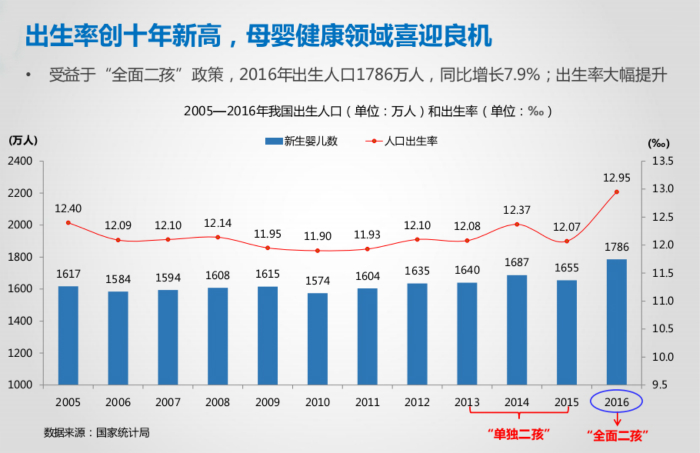
Image from Zhongkang Research Institute
With the continuous rise in urbanization, the permanent resident urbanization rate surpassed 50% in 2011 and has currently reached 57.35%, according to data from the China Statistical Yearbook 2016. Health consumption is placing greater emphasis on quality and service.
Over the next fifteen years, substantial incremental capital is expected to flow into the sector from national fiscal support, social investment, and household health expenditures, making it a prominent new choice for postpartum care among the middle class.
Against the backdrop of consumption upgrading, the maternal and infant care service industry is one of the few sectors characterized by high growth and strong demand. Meanwhile, the level of asset securitization in this industry remains nearly zero, with only four companies listed on the National Equities Exchange and Quotations (NEEQ) nationwide: XiXi Maternal & Infant Care, XiZhiJia, FuZuo Maternal & Infant Care, and DaMei Maternal & Infant Care. Based solely on their published profitability figures, there is significant room for improvement.
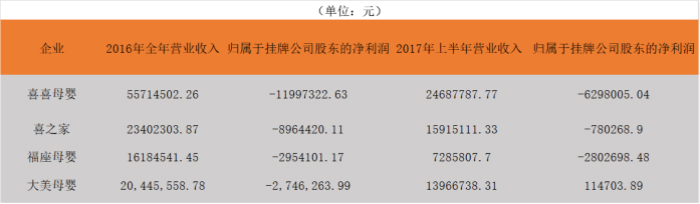
Data from the 2016 Annual Reports and the First Half of 2017 Semi-Annual Reports of Four NEEQ-listed Companies
In terms of market capacity, the relaxation of the two-child policy, the rise in per capita disposable income of urban residents, the upgrading of consumption concepts for postpartum care, and the improvement of industry standards and regulatory policies have created a substantial theoretical market space for confinement centers, given the current low penetration rate, with the competitive landscape still unsettled.
Following a period of unchecked growth, the sector has seen a proliferation of diverse service models, investment scales, and property formats. As market forces take hold, a major phase of consolidation and reshuffling is poised to begin.
From the perspective of the maternal and infant industry chain, postpartum care centers occupy the upstream position in the sector’s value chain, demonstrating strong capabilities for chain extension, high scalability, and robust integration potential.
Liao Jianqin, founder of Chengdu Xingyuehui Maternal and Infant Postpartum Care Center, stated in an interview with the industry insider publication “Yunfu Postpartum Care” that, given the unique nature of its clientele, customers of postpartum care centers exhibit far greater trust and reliance on brands than those in other industries. Established brands with clear first-mover advantages can rapidly capture market share and win over consumer mindshare.
From a policy perspective, favorable measures—such as the relaxation of the two-child policy, incentives for upgrading the service industry, job creation through the placement of postpartum care specialists (yuesao), and the issuance of the national standard General Requirements for Maternal and Infant Health Care Service Facilities (GB/T 33855-2017)—have provided supportive policy safeguards for the development of the postpartum care center industry to a certain extent.
Although postpartum care centers currently do not require approval for opening and can operate simply by renting hotel space, the severe shortage of industry talent—including medical staff and operational personnel—combined with the fragmented needs of clients, imposes extremely high demands on management costs and capabilities.
For the majority of postpartum care centers, which are small in scale and fragmented, industry consolidation and expansion into lower-tier cities will become the main themes of development. The premium effect associated with leading brands is significant; amidst intense competition to secure a position among the top players, speculative capital currently on the sidelines will enter the postpartum care center industry.
Postpartum care services cater to vulnerable populations, namely pregnant women and newborns. Based on the specific needs of each client, we provide professional services including prenatal guidance, postpartum confinement care for mothers, postpartum rehabilitation guidance, newborn care, early childhood education for infants, and infant care instruction.
Products and services for postpartum women include, but are not limited to, postpartum check-ups, daily life care, professional nursing care, nutritious confinement meals, psychological counseling, and beauty and wellness treatments. Different postpartum care centers offer distinct specialty programs, such as various maternal education classes and leisure social activities.
In addition to providing basic care such as helping new mothers adapt more quickly to their new roles, services also include assisting with personal hygiene, wound care, aesthetic wellness, and postpartum rehabilitation to help restore body shape. Personalized nutritional meals for the confinement period are tailored for each mother, and psychological counseling is provided to help alleviate postpartum depression.
For infants, the first 28 days after birth constitute a critical period. New parents typically lack experience and are prone to becoming flustered, particularly when their baby experiences various discomforts (such as spitting up or choking on milk) or symptoms (such as jaundice or eczema).
Infant services primarily include professional nursing, growth monitoring, room-round health assessments, and infant facilities. Different postpartum care centers may equip their premises with nurseries, infant swimming pools, early education classrooms, and sunrooms, depending on their specific service offerings.
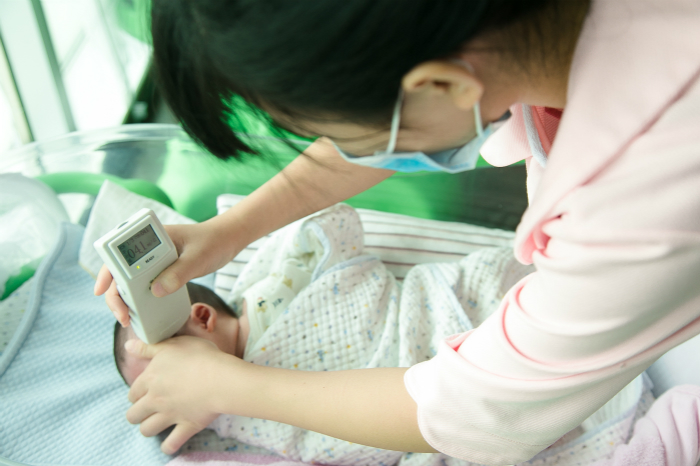
Neonatal Jaundice Monitoring
Because postpartum care centers are not classified as medical institutions, they are prohibited from providing therapeutic services. The use of large-scale medical equipment is strictly forbidden, including in the area of medical-grade postpartum rehabilitation. Postpartum recovery follows a natural cycle, and pure medical rehabilitation services cannot be offered without proper medical qualifications.
Creating distinctive features for each segment requires considerable effort. Postpartum care centers involve a wide range of service offerings, and assembling professionals from diverse fields and specialties to maximize their respective professional contributions poses a significant challenge for managers.
Take postpartum confinement meals as an example: the goal is not achieved simply by consuming expensive ingredients, but rather by ensuring that mothers have sufficient breast milk without gaining weight, thereby supporting postpartum recovery and lactation. This requires strict adherence to nutritional balance and caloric requirements, with cooking principles based on low oil, low salt, high protein, and high fiber standards.
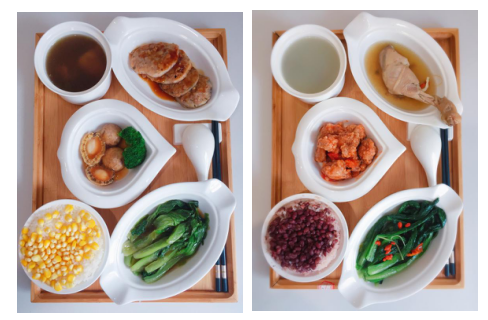
Dun Nan Zhen Ai's Standard Taiwanese-Style Confinement Meals
In terms of profitability, postpartum care centers typically undergo a period of self-exploration and adaptation during their initial 1–3 years of operation, regardless of whether they are independently established brands or franchise affiliates. During this phase, profits are primarily generated by providing personalized services and products, thereby validating pre-launch business plans. Following the accumulation of sufficient capital, these centers can then proceed with brand expansion and capital operations.
After reaching a relatively mature stage, with a stable team and established operations, the postpartum care center begins to effectively develop its products, service innovations, and related markets. It further strengthens the construction of its maternal and infant industry chain and, upon completing standardization, implements rapid regional replication.
Some well-established postpartum care centers also form strategic alliances with stakeholder organizations, such as those specializing in pediatric health care, yoga, photography, parent-child activities, and overseas assisted reproductive technology. Wei Ge has partnered with multiple collaborators to maximize mutual benefits.
Overall, the advantages of the rough, mass-market postpartum meal and centralized care model are diminishing. The one-on-one or multi-to-one care model, delivered by professional medical staff, holds a stronger advantage in both service reputation and marketing.
Li Jun, founder of Longfeng Xixi, stated in an interview with VCBeat: “In fact, the profitability and customer acquisition models of postpartum care centers are quite similar; however, there is a significant disparity in the quality of specific services and brand image design. As a result, while some postpartum care centers are profitable, others operate at a loss.”
Roughly categorized by operational model, postpartum care centers can be divided into company-operated and franchise models. In the long run, the asset-heavy model entails lower average costs but requires substantial upfront capital, whereas the hotel franchise model is the opposite. However, each approach has its own advantages and disadvantages in actual operation.
Directly operated facilities are typically self-built, standalone villa-style hospitals, requiring startup capital in the tens of millions of yuan. While a medical background can be an advantage, there is still a gap between purely hospital-based hardware conditions and service offerings compared to societal expectations, and service awareness needs to be strengthened.
A hotel franchise can be launched with an initial investment of RMB 1 million to 3 million, but it faces challenges such as difficulty in building brand equity and a lack of home-like ambiance. Moreover, if novice franchisees manage their properties poorly, they fail to leverage the advantages of the franchisor; conversely, successful operations may easily lead to decoupling from the headquarters and going independent.
Relatively speaking, direct operations by major brands in other regions hold a competitive advantage; however, they remain constrained by the challenges of replicating talent across locations. Consequently, geographic expansion often fails to deliver a fatal blow to local brands.
In a nutshell, whether operating under a direct-management or franchise model, postpartum care centers can achieve profitability or secure an invincible market position by efficiently integrating management, maternal and infant care, and postpartum meals, while leveraging advantages in environment, hardware, reputation, professionalism, and cost efficiency.
Before discussing how to position within niche segments of the industry, let us first explore effective classification methods for postpartum care centers. While the aforementioned section addressed classifications based on operational models, postpartum care centers can be primarily categorized into the following four types based on their property formats.
The first type is the community-based model, akin to a family-run guesthouse. Such postpartum care centers emerged during the nascent stage of the industry. With only 3–5 rooms, they offered limited privacy and featured less professional facilities and equipment. This model now faces significant challenges in sustaining operations.
The second model is the hotel-style approach. Its advantages include a relatively asset-light structure, leasing floor space from hotels rather than engaging in joint ventures, requiring lower upfront investment and shorter preparation time. During operations, tasks such as cleaning, housekeeping, and food preparation management can be outsourced to the hotel. The disadvantages include a heterogeneous mix of hotel guests and staff, and renovations that may not fully meet the professional home-like standards expected by mothers, particularly concerning issues such as carpet cleanliness, ventilation and natural lighting, disinfection and hygiene, and isolation measures.
The third model is the hospital-affiliated type. Its advantages include the ability to design and renovate the facility in accordance with the club’s own brand positioning, proximity to the obstetrics and gynecology outpatient department, and the potential for sharing medical staff. In case of any emergencies, obstetricians, gynecologists, or pediatricians can be accessed immediately; this is particularly critical for infants, whose conditions can deteriorate rapidly and require prompt intervention. The disadvantages include substantial upfront renovation costs, a prolonged payback period, and high investment risk.
The fourth type is the detached villa-style model. Its advantages include ease of building brand recognition, convenient staff management, and enhanced privacy and comfort for postpartum mothers and newborns ensured by the exclusive-use property. The disadvantages involve substantial upfront investment; if there is no innovation in the business model and the operating profit margin of the confinement care center is low, the payback period will be excessively long, requiring preparation for a prolonged operational commitment.
Matching the aforementioned categories, reporters have found that the founders of postpartum care centers primarily come from the following backgrounds: healthcare and pharmaceuticals, hotel management, service industries such as domestic housekeeping and catering, and real estate. The founders of Aidigong and New Mom both have medical backgrounds, while Xu Ning, the founder of Xi Zhijia, has a pharmaceutical background.
Postpartum care models are primarily categorized into the following three types based on their theoretical origins. The first is the traditional model, where confinement nannies (Yuesao) serve as the primary caregivers; this is largely an upgraded version of standard Yuesao services, though it now includes some Traditional Chinese Medicine (TCM)-based conditioning options, such as those offered by Xiyue Postpartum Care Center. The second is the Taiwanese/South Korean model, which replaces Yuesao with registered nurses as caregivers, employing centralized care or shift-based nursing systems, as exemplified by Dunnan True Love. The third is the British/American model, which adheres to international standards of attachment parenting and professional puerperal healthcare, as seen in Xingyuehui.
Reporters have learned that hotel-style postpartum care centers continue to dominate the market, mostly adopting a pre-sale model with relatively flexible mechanisms, where occupancy rates directly determine profitability.
“An idealized 70% occupancy rate, 30% net profit margin, stable cash flow, and high average transaction value—actual operations are truly challenging, with persistently high operational and marketing costs and highly homogenized marketing strategies,” revealed a former marketing head of a postpartum care center to the reporter.
Each type of postpartum care center is aligned with corresponding resources and operational models. For instance, Xiyue Ge adopts an asset-heavy, directly operated model, with each facility averaging over 60 rooms. The investment for a single site spanning 10,000 square meters exceeds RMB 70 million. It is staffed with dedicated neonatologists, pediatricians, and obstetricians. Currently, few institutions in the market can match this standard, giving it distinct advantages in nursing quality, infection control, hospital channel partnerships, and brand building.
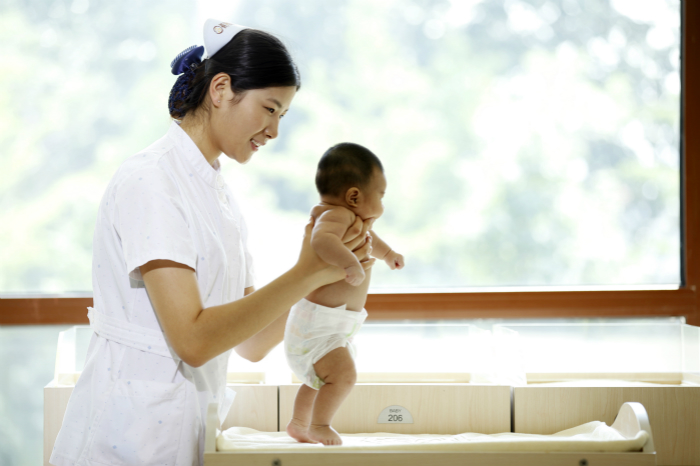
Xiyue Pavilion’s dedicated nurses provide newborn care.
Xixi Maternal and Infant Care adopts a hotel property management model, with its first store located in a hotel apartment in Lujiazui, Shanghai. For the first eight years of its operation, Xixi Maternal and Infant Care operated exclusively under a direct-management model, accumulating standardized operational experience. Currently, it offers various franchise models, including brand franchising, entrusted management, and technical franchising, to meet the diverse needs of different franchisees.
“When our brand expands into new regions, we must devote significant effort to developing local property and industrial resources that cover the upstream and downstream of the maternal and infant industry chain. As a result, we are at a disadvantage compared to local players who intend to enter the maternal and infant sector. However, their weakness lies in the lack of operational experience and brand recognition, as well as uncertainty about how to manage effectively, making them ideal candidates for franchising,” said Xu Yun, Founder and CEO of Xixi Maternal & Infant.
“Those adopting the medical model need to strengthen their service orientation. Although the hotel model demonstrates strong cost management and service awareness, it lacks experience in professional nursing care. Some hastily established postpartum care centers suffer from severe understaffing, with a single caregiver often shouldering multiple responsibilities, resulting in professionalism that fails to meet required standards. The founder’s background and original intent determine the enterprise’s DNA,” said the aforementioned head of marketing.
To achieve profitability, every postpartum care center must address the challenges of high rent, high labor costs, high marketing expenses, and renovation cost control.
High rent necessitates high average transaction values and sales volumes. However, profitability becomes challenging in oversaturated markets, making the timing of entry into regional markets critical. When determining pricing and location strategies, it is essential to consider not only service offerings and costs but also market competition and local saturation levels.
In terms of customer acquisition, although many postpartum care centers leverage platforms such as Dianping, Baidu, new media, and other maternal and infant communities, hospital referrals and word-of-mouth remain the primary channels.
Currently, it is the small yet exquisite postpartum care centers that are faring relatively better. These facilities feature high-end renovations and distinctive characteristics, maintain occupancy rates of 60%–70%, charge an average price of around RMB 50,000, and boast medical and nursing expertise along with standardized management. Consequently, new players are entering the market; for instance, Xingxiangyuan, a physician co-creation platform, opened a postpartum care center in Hangzhou this year based on the concept of “horticultural wellness.”
Some practitioners are exploring new innovative models by segmenting functional areas and leveraging internet-based tools to reconfigure them and enhance operational efficiency. After acquiring customers, they focus on maximizing customer value through specialized division of labor and collaboration, with considerable attention devoted to this aspect.
As predicted by Liao Jianqin, founder of Chengdu Xingyuehui Maternal and Infant Postpartum Care Center, the most promising niche segments include high-quality resources that feature advanced maternal and infant care concepts, superior property assets, founders with industry insight and a genetic predisposition for future expansion, comprehensive service systems, and a certain level of local influence or market share.
What is the status of national policies and standards for postpartum care centers? On May 31, the General Administration of Quality Supervision, Inspection and Quarantine and the Standardization Administration of China approved and released the General Requirements for Maternal and Infant Health Care Service Venues (GB/T 33855-2017), which officially came into effect on September 1.
This standard sets forth requirements for the maternal and infant healthcare service industry, including postpartum care centers, in four aspects: safety, hygiene, professionalism, and comfort. However, this is a recommended standard, meaning that “the state encourages enterprises to adopt it voluntarily.”
Fang Dengxing, Chairman of Guangzhou Shixin Postpartum Care Center Co., Ltd., stated in an interview with the Southern Metropolis Daily that the national standard for postpartum care centers is “a very basic recommended document,” and that entry barriers for practitioners may be raised.
Reporters learned from multiple interviewees that the standards will, to some extent, accelerate market consolidation and speed up the elimination of non-compliant postpartum care centers. However, as the national standard represents the minimum entry requirement for the industry, companies must adhere to higher enterprise-level standards to ensure customer satisfaction, build a strong reputation, and remain competitive.
Despite the state’s vigorous introduction of regulatory standards and the industry’s rapid growth, major capital players remain conspicuously absent from the postpartum care sector, which is widely viewed as promising. What accounts for this discrepancy?
There is no shortage of investment firms paying attention to the maternal and child services sector. Examples include Zhang Lan from CDH Ventures, Guo Qing, a partner at Beijing Zhongyu Capital, Chen Tianqiao (formerly), Hejun Enterprise (Hezi You'er) currently, and GF Yongxu. However, so far, most of them have largely remained on the sidelines.
Even for those investments made, the equity stakes and capital contributions were relatively small. For instance, Shanghai Dongyuan Tianlin Investment Center (Limited Partnership), Shanghai Guotai Junan Venture Capital Longxu Investment Management Center (Limited Partnership), and Ningbo Youxile Investment Partnership (Limited Partnership), which invested in Xixi Maternal and Infant Care, each held an equity stake of no more than 5%.
“Large capital firms are more focused on targets with complete prenatal and postnatal business chains, aiming to establish a comprehensive maternal, obstetric, and pediatric industry layout that spans from healthcare services to medical services—such as obstetrics and gynecology hospitals along with their supporting postpartum recovery and wellness programs. Postpartum care centers are merely one component of this ecosystem, exemplifying the investment strategy of firms like Warburg Pincus,” a maternal and infant industry expert told reporters. The expert noted that virtually every operator of a postpartum care center maintains some degree of affiliation with hospitals, and many such centers are directly operated by hospitals themselves.
According to Li Jinhui, a board partner at Beijing Aibeigong Postpartum Care Center, the limited market capacity and small scale are the primary reasons deterring large capital from entering the sector, while profit margins and industry complexity are secondary factors. In recent years, investment in postpartum care centers has become a feast for small and medium-sized investors, with most large capital remaining merely on the sidelines.
The current situation is that the market for postpartum care centers is generally on the rise, coinciding with the national policy shift to allow two children. Meanwhile, traditional industries, low- and mid-end manufacturing, including real estate, have all seen their growth slow down, with many even going out of business.
The entire landscape of commercial competition is being reshaped; sectors such as high technology, bioengineering, high-end manufacturing, and the internet are not suitable for small and medium-sized investors.
Postpartum care centers represent a high-growth industry that meets an essential need for postpartum women, making them a promising sector with strong appreciation potential and attracting increasing interest from small and medium-sized investors.
Paradoxically, many postpartum care centers in the market operate at or below a cost threshold of RMB 40,000. The pressure from costs and investments drives these enterprises to seek quick profits, plunging them into a vicious cycle of reducing costs and compromising quality.
The postpartum care center industry, characterized by low frequency and niche demand, represents a market with substantial theoretical scale. However, when investment supply far exceeds actual consumer demand—leading to a vicious cycle of price wars, marketing gimmicks, and an overreliance on real estate—it becomes imperative for practitioners and managers to redefine their positioning and break through the deadlock.
References:
GF Securities - Special Report Series on the Maternal and Infant Industry: The Postpartum Care Center Sector – Reinventing Postpartum Confinement, Unveiling New Business Opportunities in Maternal and Infant Care
Yunfu Postpartum Care Industry Insider