

673 Rural U.S. Hospitals on Brink of Closure: Causes, Consequences, and Potential Solutions

Closed Lower Oconee Community Hospital in Georgia, USA
To bring a rural community to its knees, one need only destroy its hospital. This scenario is unfolding across the United States with increasing severity, and such closures are a clear symptom of the economic crisis facing small American towns.
As the U.S. Congress debates and deliberates on repealing and replacing the Affordable Care Act, rural hospitals are facing severe survival challenges, while the Medicaid program and private health insurance—critical lifelines for these institutions—remain uncertain about their future.
Data from the North Carolina Rural Health Research and Policy Analysis Center show that,Since 2010, at least 82 rural hospitals in the United States have closed their doors.。
Despite the growing number of rural hospital closures, the lack of definitive healthcare policies makes it difficult for hospitals and insurers to forecast their revenues, thereby exacerbating the problem.
A study sponsored by the National Rural Health Association in the United States shows that,Currently, 673 rural hospitals are on the verge of closure, with 210 of them facing an extremely severe risk of shutting down.So, what exactly is happening to rural hospitals in the United States? VCBeat (WeChat ID: vcbeat) has compiled reports from media outlets such as The Huffington Post.
According to data from a report by the Kaiser Family Foundation, one in five adults in the southern United States is in poor health, and 15% of non-elderly residents lack health insurance—a rate that is 5 percentage points higher than the combined total for other regions of the country.
Alan Morgan, CEO of the National Rural Health Association, stated, “Rural hospital closures have hit the U.S. South the hardest, where rates of obesity, diabetes, and hypertension are higher.”
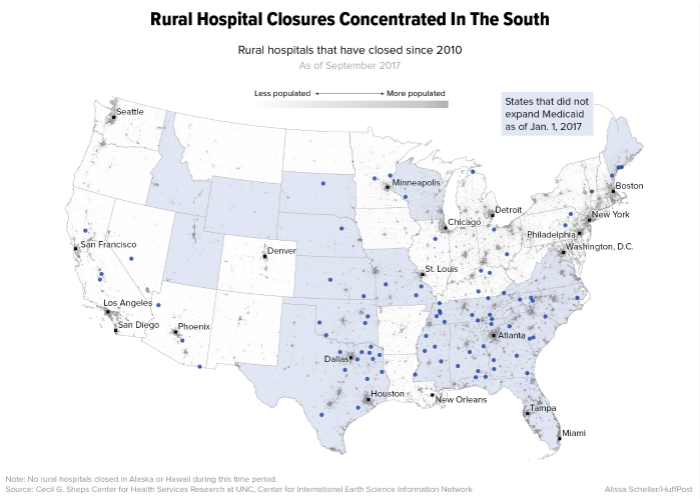
Closed Rural Hospitals Are Concentrated in the South-Central States
The U.S. South has the highest number of states that have not expanded Medicaid under the Affordable Care Act, meaning that those with the greatest need for medical services have the fewest healthcare options available, while rural hospitals continue to decline. This situation is particularly concentrated in the following states: Alabama, Florida, Georgia, Mississippi, North Carolina, Oklahoma, South Carolina, Tennessee, Texas, and Virginia.
Georgia has been the most significantly affected, with six rural hospitals closing in early 2013 alone. Two of these were later converted into medical clinics but no longer provide comprehensive medical services. According to data from iVantage Health Analytics, more than half of rural hospitals across China are at risk of closure.
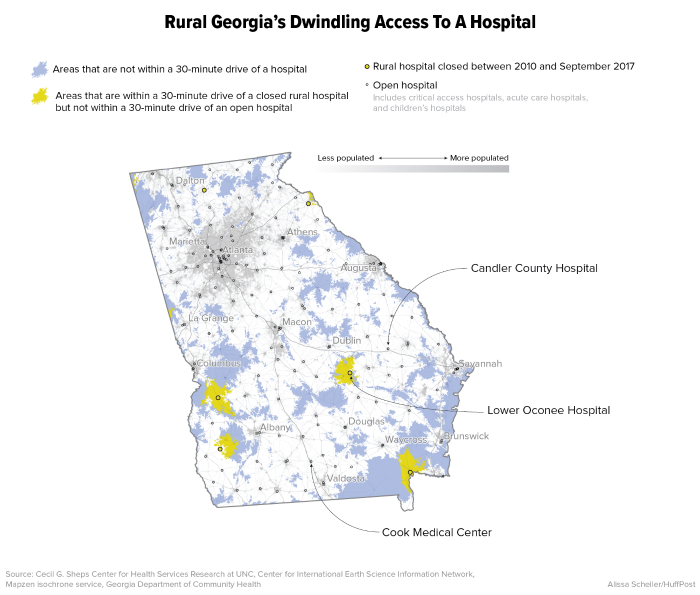
Georgia Is a Hotspot for Rural Hospital Closures
Hospitals are critically important to rural communities, often serving as the largest employer in the area. The closure of a rural hospital frequently means that a large number of people will lose their jobs. Along with the hospital’s shutdown, medical practices, pharmaceutical services, and other healthcare offerings depart from the community, as do restaurants, shops, and other businesses supported by hospital staff.
According to a 2016 report by Chartis Center for Rural Health, if all 673 hospitals were to close, 99,000 people would lose their healthcare jobs and 137,000 people would lose other community-based jobs. This would place immense strain on residents in rural areas, particularly those in regions with significant aging populations.
Beyond its impact on unemployment rates, the closure of rural hospitals is closely tied to the health of residents in rural communities. A recent study by the University of Minnesota shows that more than half of rural areas in the United States no longer offer hospital-based obstetric services, with 9% of these discontinuations occurring between 2004 and 2014.
Katy Kozhimannil, an associate professor at the University of Minnesota who led the study, believes that hospitals have no choice but to make these decisions by weighing only community needs against their own operational capabilities. More than half of all births in rural hospitals are funded by Medicaid, yet the reimbursement rates provided by the program are only half those of commercial insurance.
Low fertility rates in rural areas exacerbate the severity of this issue, as the nurses, technicians, hospitals, and equipment required to maintain these services entail fixed costs that represent a significant financial burden.
A 2011 Canadian study involving more than 49,000 pregnant women found that those who had to travel for over an hour before delivery were more likely to have their newborns admitted to the neonatal intensive care unit (NICU). As coverage by rural hospitals declines, expectant mothers are forced to travel longer distances prior to childbirth, thereby increasing the risks associated with delivery.
Financial data is one thing; saving a life is another. Even when striving to survive, rural hospitals with suboptimal operating revenues often find themselves unable to cope. This situation stems not only from economic shifts but also from the evolving healthcare delivery system, which can be summarized into the following key factors.
1. Policy Changes
Diane Calmus, Manager of Government Affairs and Policy at the non-profit National Rural Health Association, believes that any cuts to the federal Medicaid program would harm rural hospitals.
Within the nonprofit Mission Health system, which operates Blue Ridge, Angel, and four other hospitals, 75% of patients are either uninsured, covered only by Medicare, or enrolled in Medicaid.
In 2013, the Republican-led North Carolina State Legislature refused to expand the federal Medicaid program, delivering a heavy blow to hospitals at that time. Eighteen other states made the same decision, and the consequences were stark: over the past seven years, more than 70% of rural hospitals that closed were located in 16 of those states.
Since 2013, four hospitals have closed in North Carolina alone, and Blue Ridge has been operating at a loss since 2013.
Under the Emergency Medical Treatment and Labor Act (EMTALA) enacted in the United States in 1986, hospitals are required to examine and treat emergency patients until their condition stabilizes, regardless of whether they have health insurance or the ability to pay.
In this way,A large number of uninsured patients have begun to rely on emergency care, while hospitals often have to bear the cost of treating these patients themselves, so-called "bad debts"。
In recent years, federal financial assistance to these rural hospitals has declined. Due to sequestration mandates, healthcare costs have been reduced. To expand insurance coverage, the Affordable Care Act eliminated a program designed to compensate hospitals for bad debt. The Disproportionate Share Hospital (DSH) program, which provides additional funding to hospitals serving a large number of low-income patients, will also face cuts.
Since the implementation of Obamacare, “charity care” provided by rural hospitals has increased by more than 50%. Some experts believe that the adoption or non-adoption of the Medicaid expansion is not the sole culprit behind this crisis.Low Medicaid reimbursement rates, patients struggling to afford deductibles, consolidation of hospital ownership, and Southern hospitals’ difficulty in maintaining financial balance...long-term trends, among others, are inextricably linked.
2. Difficulty in Upgrading Existing Medical Services
Most rural hospitals were built decades ago, with medical equipment and various healthcare services lagging far behind the advancements of modern medicine. Coupled with long-standing difficulties in achieving a balance between revenue and expenditures, there has been an urgent need to develop new sources of income.
These new sources are not actually difficult to identify; however, rural community hospitals often lack the analytical techniques and resources needed to assess profit margins, and they struggle to afford the costs of system updates and upgrades. As a result, they have been forced to lose a significant number of patients with commercial insurance.
In addition to lagging medical hardware infrastructure, the shortage of physicians in rural areas is also widespread. Without sustained financial incentives, rural hospitals struggle to attract new doctors.
3. The Ripple Effects of “Emerging” Solutions
Previously, emerging insurance programs implemented to write off billions of dollars in bad debt were widely embraced, but the reality has fallen short of expectations. While some hospitals have indeed benefited from these initiatives, the vast majority of small rural community hospitals have struggled to restructure their business models in the short term, failing to keep pace with policy changes.
Patients’ ongoing service fees were not waived, and many out-of-pocket expenses remained unaffordable, leading to a new wave of bad debts.
Regardless of a hospital’s stage of development, the successive waves of change and reform have imposed significant pressure, ultimately compelling hospitals to take action. Traditional approaches to revenue growth are time-consuming, costly, and carry high risks.
Emerging approaches can rapidly boost revenue with low risk, but they are not universally applicable. As a result, some small community hospitals have chosen to relinquish their autonomy, gradually being acquired and managed by larger urban healthcare entities.
These hospitals may achieve short-term gains, but patient volumes are likely to continue declining over time. Hospitals that choose to comply with the reforms face only two options: increasing revenue or cutting costs. Either choice carries significant risks, and even pursuing both simultaneously is not foolproof. Given the compressed timeframe and substantial cost burdens, hospitals have very little room for error.
1. Reduce Marginal Costs
Reducing marginal costs may be the fastest and easiest approach, and sometimes the only one. Many small community hospitals rely solely on this strategy; however, sustained cost reductions can also lead to decreased revenue, potentially plunging hospitals into a vicious cycle with more severe consequences in the future.
2. External Financing
If a hospital’s financial position has become unsustainable, securing external financing will be extremely difficult. This approach is time-consuming and fails to address the fundamental issue of survival, likely serving only to briefly prolong the hospital’s existence.
However, enhancing existing services, adding new ones, and recruiting new physicians typically incur higher costs and require more time. This traditional approach, rooted in conventional business models, may necessitate one to two years of investment and maintenance before the final outcomes become apparent.
Although this may already be the hospital’s last-ditch effort, its financial position is likely too weak to offer any truly compelling bargaining chips.
3. Develop Existing Business
Hospitals that take the initiative to expand their existing business capabilities are limited only by the time and capital they have at their disposal. Regardless of a hospital’s current operational performance, this approach yields revenue potential far exceeding expectations, with results becoming evident within three to six months and requiring minimal net cost.
4. Increase Revenue from Inpatient Services
Profits from inpatient admissions constitute the largest source of hospital revenue. A decline in inpatient revenue concurrently leads to reductions in ancillary diagnostic services and emergency medical services within outpatient care. Currently, inpatient revenue is experiencing an "outward migration," characterized by a decrease in both direct admissions and admissions through the emergency department.
When patients are deemed by physicians in the emergency department (ED) as “requiring hospitalization” but are not admitted, the ED admission rate declines. These patients fall into a “gray zone”: while their condition is not life-threatening if they remain unadmitted, it does not meet the criteria for urgent care.
Data from the Centers for Disease Control (CDC) show that the annual total emergency department visit rate is 13% of the population in each service area, meaning a region with 25,000 residents should have approximately 3,250 emergency visits per year. Of these, 70% of potential hospital admissions are patients aged 60 and older, which aligns with the demographic characteristics and scope of the community where the community hospital is located.
Thus, the difference between these 3,250 patient visits and the hospital’s actual inpatient admissions represents its growth potential. Most small community hospitals theoretically have a 50% to 70% growth potential.
The vast majority of patients are admitted through the emergency department. The emergency admission rate at most small community hospitals is only 2% to 5%, compared with a national average of 13% and a rate of 20% to 30% at large urban hospitals. Therefore, an 8% admission rate is a highly reasonable target for small community hospitals.
If a hospital sees 8,000 emergency department (ED) patients annually, it should have 640 ED admissions. If the hospital’s actual admission rate is 5%, there is room for improvement by 240 admissions. Based on an average cost of $50,000 per ED admission, the hospital should generate an additional net revenue of $1.2 million.
5. Increase Revenue from Emergency Services
Another major source of hospital revenue is emergency patients. A service area with a population of 25,000 should generate 10,000 patient visits. If your hospital actually records only 8,000 visits, there is still room to increase the number of emergency patient visits by 2,000.
Based on average emergency department medical costs of $250 to $350, these additional 2,000 visits will generate $500,000 to $700,000 in revenue. Furthermore, with an 8% hospitalization rate among these 2,000 patients, there will be an additional $800,000 in revenue.
The future of rural healthcare lies in independent emergency rooms, perhaps with a few beds on standby for follow-up care.Diverting less urgent cases to convenient care clinics instead of relying on costly emergency departments, thereby reducing costs.
Additionally,Telemedicine can also meet certain needs, thereby comprehensively reducing the number of hospital beds.. Some community hospitals can survive by investing in new facilities and equipment to better attract patients and reduce maintenance costs. On the other hand, many rural hospitals must also reduce the scale and scope of their care services to alleviate operational pressures.
Certainly, there are still some exemplary cases of well-operated rural hospitals in the United States. Each year, Becker’s Hospital Review selects outstanding community hospitals based on their clinical care quality, operational performance, and economic impact on surrounding areas. These honorees include both independent community hospitals and medical facilities affiliated with large healthcare systems.
Some of these hospitals serve remote rural areas, while others cater to small communities outside major cities. The ranking draws on awards and recognitions from organizations such as the National Rural Health Association, iVantage Health Analytics, Truven Health Analytics, Healthgrades, CareChex, the American Nurses Credentialing Center, and The Leapfrog Group. Below are the top 50 community hospitals for this year.
1、Advocate Good Samaritan Hospital
Advocate Good Samaritan Hospital, located in Downers Grove, Illinois, is the only Level I trauma center in DuPage County. It also features a certified Level III neonatal intensive care unit and has earned Magnet Recognition. Established in 1976, the hospital received the Malcolm Baldrige National Quality Award in 2010 and is part of Advocate Health Care.
2、Alhambra Hospital Medical Center
Located in Alhambra, Hospital Medical Center is the only hospital in Southern California wholly owned by Chinese investors. This 144-bed general acute care hospital was founded in 1924 and relocated to its current site in 1974. The hospital employs 600 staff members and consistently maintains a medical staff of over 300 physicians across 32 specialties. In 2016, it was ranked among the Top 100 Hospitals in the United States by Chuwen Health Analytics.
3、Asante Rogue Regional Medical Center
Asante Rogue Regional Medical Center, located in Medford, Oregon, is the flagship hospital of the Asante health system and employs more than 5,600 staff members. With a total of 378 beds, the facility serves as a regional referral center and trauma center.
The hospital’s management team consists of local volunteers and physicians, with all decisions made by individuals who actually live in the community. Earlier this year, the hospital was ranked sixth in Oregon by U.S. News & World Report for its outstanding performance, marking its fifth appearance on the list.
4、Ascension
Ascension, headquartered in St. Louis, Missouri, is the largest Catholic health system and the largest nonprofit health system in the United States, with approximately 2,500 care sites and 141 hospitals. In fiscal year 2016, Ascension provided more than $1.8 billion in funding for underserved communities and other community benefit programs.
5、Aspires Riverview Hospital
Aspires Riverview Hospital, located in Wisconsin Rapids, Wisconsin, is part of the nonprofit, community-oriented Aspires Health System. The hospital was established in 1912 by a group of community leaders from Wisconsin Rapids.
In 2016, the hospital received the Outstanding Patient Experience Award from Healthgrades. Aspires employs more than 7,000 staff members and operates four hospitals and 50 clinics across Michigan and Wisconsin, providing home health and hospice care, pharmacy services, intensive care units, helicopter transport, medical supplies, skilled nursing facilities, and a high-quality network of affiliated physicians.
6、Augusta Health
Augusta Health, located in Fishersville, Virginia, began admitting patients in 1994. Today, the hospital has 255 beds and more than 2,100 employees, including 200 active physicians. From 2015 to 2017, Augusta Health was named among the top 50 hospitals in the United States by Healthgrades each year. This year, Augusta Health also received distinguished awards from Healthgrades for joint replacement surgery, orthopedic surgery, and pulmonary care.
7、Aurora BayCare Medical Center
Aurora BayCare Medical Center, located in Green Bay, Wisconsin, is a joint-venture hospital between Aurora Health Care of Milwaukee and BayCare Clinic of Green Bay, with a total of 167 beds. Established in 2001, the hospital primarily serves the Green Bay area, as well as communities in northeastern Wisconsin and Michigan’s Upper Peninsula, and ranked seventh in this year’s U.S. News & World Report rankings of hospitals in Wisconsin.
8、Avery Queen of Peace Hospital
Avera Queen of Peace Hospital, located in Mitchell, South Dakota, was established in 1906 and is a member of the Avera health system. Avera operates 33 hospitals, 208 primary and specialty care clinics, and 40 senior living facilities, while also providing home care and hospice services, sports and fitness equipment, and home medical equipment. The hospital features a verified Level III Trauma Center, emergency air medical transport, and advanced imaging, diagnostic, and therapeutic technologies.
9、Bear River Valley Hospital
Bear River Valley Hospital, located in Tremonton, Utah, is a non-profit hospital specializing in women’s health services, emergency care, surgery, and physical therapy. The hospital primarily serves the Tremonton community, while also catering to several communities in northern Utah.
10、Blanchard Valley Hospital
Blanchard Valley Hospital, located in Findlay, Ohio, is a 150-bed facility that has been dedicated to serving patients in northwestern Ohio for more than 125 years. As the flagship hospital of Blanchard Valley Health System and one of the region’s largest employers, it has been named to Truven Health Analytics’ list of the 100 Top Hospitals nationwide for five consecutive years.
11、Bozeman Health Deaconess Hospital
Bozeman Health Deaconess Hospital, located in Montana, serves as the flagship facility of Bozeman Health, primarily catering to patients in southwestern Montana. The hospital features 86 beds and a certified Level III Trauma Center, and employs 200 renowned physicians and health experts across 35 specialties. It is the first hospital in Montana to receive the American College of Healthcare Executives’ ACHE Gold Standard Award for Excellence in Healthcare Management (often referred to as the "Medical Home" quality accreditation in this context).
12、Brookings Health System
Located in South Dakota, Brookings Health System comprises a 49-bed hospital with three operating rooms, a 79-bed skilled nursing facility, an assisted living facility, and several clinics. This non-profit healthcare system primarily provides inpatient, outpatient, surgical, home care, and other extended care services to the community of Brookings and its surrounding areas.
13、Cape Cod Hospital
Cape Cod Hospital, located in Hyannis, Massachusetts, operates the largest emergency department in the state, treating an average of more than 85,000 patients annually. The 38-acre campus features a 20-bed mental health center, 14 operating rooms, a medical office building, and provides clinical services for infectious diseases. In 2016, the hospital received all “A” grades in The Leapfrog Group’s annual Hospital Safety Grade evaluation.
14、Castleview Hospital
Castleview Hospital, located in Prince, Ohio, is a facility under LifePoint Health, which is headquartered in Brentwood, Tennessee. The hospital has a total of 49 beds, including an emergency department with 8 beds staffed by physicians around the clock. This year, the hospital was ranked among the top 20 rural community hospitals in the United States by the National Rural Health Association.
15、Cedar City Hospital
Cedar City Hospital in Utah was originally established in 1963, with its current facility built in 2003. The hospital has 48 beds and covers an area of 170,000 square feet, primarily providing cancer care, pain management, and women’s and newborn care. This year, the National Rural Health Association ranked it among the top 20 rural community hospitals in the United States.
16、Centinela Hospital Medical Center
Centinela Hospital Medical Center, founded in 1924 and located in Inglewood, California, is a 369-bed facility that was acquired by Prime Healthcare of Ontario in 2007. The hospital provides comprehensive, high-quality secondary emergency care, orthopedic surgical care, advanced cardiac care, diagnosis and treatment of peripheral artery disease, and gynecological care services to community patients. It has received full accreditation from The Joint Commission, a leading U.S. healthcare accrediting organization.
17、Central Vermont Medical Center
Central Vermont Medical Center, an affiliate hospital of the University of Vermont Health Network based in Burlington, was founded in 1963. With a total of 122 beds, the hospital was ranked among the top 20 rural community hospitals in the United States by the National Rural Health Association this year, and its exceptional pulmonary care services have been recognized by Healthgrades for two consecutive years.
18、Childress Regional Medical Center
Childress Regional Medical Center, established in 1970 and located in Southeast Texas, is a 39-bed facility. Between 1991 and 2006, the hospital underwent significant renovation and restructuring. Childress Regional Medical Center provides inpatient care, emergency services, obstetrics, surgery, rehabilitation, home health care, and pharmacy services. It is also designated as a Level IV Trauma Center by the Texas Department of State Health Services.
19、Chino Valley Medical Center
Chino Valley Medical Center, established in California in 1972 with 112 beds, is part of Prime Healthcare, a hospital management company based in Ontario, California. The hospital’s emergency department treats approximately 3,700 patients annually. Chino Valley Medical Center has been named one of the Top 100 Hospitals in the United States by S&P Global Market Intelligence for six consecutive years.
20、Christus Mother Frances Hospital
Located in Tyler, Texas, Christus Mother Frances Hospital was founded in 1937 as a faith-based, non-profit hospital. The facility currently has 402 licensed beds and offers a comprehensive range of medical services, including neonatal intensive care unit (NICU) services. This year, Christus Mother Frances Hospital was named to the Top 100 Hospitals in the United States by Truven Health Analytics for the seventh time.
21、Dickinson County Healthcare System
Dickinson County Healthcare System, located in Iron Mountain, Michigan, has been providing medical services to the region for 65 years. Healthgrades awarded the hospital its Patient Safety Excellence Award for three consecutive years from 2015 to 2017. The hospital’s primary services include cancer treatment, pediatric care, emergency room care, maternity care, diabetes care, and cardiac care.
22、Edward Hospital
Edward Hospital, located in Naperville, Illinois, is part of the Elmhurst Memorial Healthcare system, which was formed in 2013 through the merger of Edward Hospital and Elmhurst Memorial Hospital in Illinois. In 1991, Edward Hospital became the first hospital in Illinois to offer private rooms. Today, the hospital features 352 private rooms and has held Magnet recognition for nursing excellence since 2005.
23、EvergreenHealth Kirkland
EvergreenHealth Kirkland, located in Washington State, is the flagship hospital of the EvergreenHealth medical system and was founded in 1972. The facility comprises a 318-bed medical center and four medical buildings. EvergreenHealth Kirkland employs nearly 3,000 staff members, 950 physicians, and 1,100 community volunteers. Offering up to 70 specialized care services ranging from primary care to specialty care, the hospital serves patients in the community. In 2017, it was named one of the Top 100 Hospitals in the United States by Healthgrades.
24、Fairview Northland Medical Center
Fairview Northland Medical Center, established in 1993 and located in Princeton, Minnesota, is part of the Fairview Health Services system based in Minneapolis. As a non-profit institution, it is dedicated to providing comprehensive medical care services to patients in the community. Fairview Northland Medical Center employs 32,000 staff members and includes 2,400 healthcare providers. In 2017, the hospital was named among the Top 100 Hospitals in the United States by Truven Health Analytics for the fourth time.
25、FirstHealth Moore Regional Hospital
As the flagship hospital of FirstHealth in North and South Carolina, FirstHealth Moore Regional Hospital, located in Pinehurst, North Carolina, has 402 beds and serves a community spanning 15 counties. Founded in 1929 with only 33 beds and 27 employees, the hospital now employs 2,700 staff members and 249 physicians. In 2017, it was named one of the Top 100 Hospitals in the United States by Truven Health Analytics for the fifth time.
26、Florida Hospital Memorial Medical Center
Florida Hospital Memorial Medical Center, located in Daytona Beach, Florida, comprises a 293-bed hospital in Daytona Beach and an 80-bed hospital in Ormond Beach. Established in 1967, the medical center continues to innovate and expand, having opened a Neonatal Intensive Care Unit (NICU) in 2016. With over 1,700 employees, the center was named one of the Top 100 Hospitals in the United States by Truven Health Analytics for the third time this year.
27、Fort Madison Community Hospital
Founded in 1912, Fort Madison Community Hospital is located in Iowa and offers a surgical center, labor and delivery rooms, and a 23,500-square-foot outpatient rehabilitation services center. The hospital employs more than 450 medical professionals and has successfully implemented several educational initiatives, including the FMCH Healthcare Careers College Program, which provides high school students with hands-on exposure to various healthcare career paths.
28、Franklin Woods Community Hospital
Franklin Woods Community Hospital, located in Johnson City, Tennessee, was established in 1998 as a non-profit hospital with a total of 80 beds. The hospital covers a total area of 240,000 square feet and features therapeutic gardens designed to help patients restore physical function. In 2016, it was ranked among the 20 Most Beautiful Hospitals in America by Soliant Health.
29、French Hospital Medical Center
French Hospital Medical Center, located in San Luis Obispo, California, is the only non-profit hospital in the region. For nearly 70 years, it has been providing comprehensive medical services to the community. In 2004, the hospital was acquired by Dignity Health, based in San Francisco. French Hospital Medical Center has been named among the Top 100 Hospitals in the United States three times by Truven Health Analytics. Currently, the hospital is undertaking a series of modernization and expansion projects aimed at enhancing the quality and safety facilities of its patient wards.
30、Gordon Hospital
Located in Calhoun, Georgia, Gordon Hospital is a 69-bed facility and a member of Adventist Health System, the world’s largest nonprofit Protestant healthcare system. It is also the only hospital in northwest Georgia to receive a five-star rating from the Association of Missionary Hospitals. In 2015, the hospital contributed $24.6 million in direct community benefits, primarily providing medical care services to residents of Calhoun, Gordon County, and surrounding areas.
31、Hawkins County Memorial Hospital
Founded in 1961, Hawkins County Memorial Hospital is located in Rogersville, Tennessee, and employs a total of 80 physicians along with more than 190 nurses, technicians, and support staff. The hospital provides physical therapy, occupational therapy, respiratory therapy, emergency care, orthopedic surgery, and other surgical services to residents of Rogersville. Hawkins County Memorial Hospital has 50 beds, including an emergency room with 11 beds that offers 24/7 physician support.
32、Henry Community Health
Henry Community Health Hospital, located in New Castle, Indiana, is part of Henry Community Health. The hospital provides inpatient, outpatient, and health services, with 90 beds, including a birthing center, emergency center, imaging center, intensive care unit, joint replacement center, and skilled nursing facility. iVantage ranked the hospital among the Top 100 Rural and Community Hospitals in the nation this year.
33、Hill Country Memorial Hospital
Hill Country Memorial Hospital, established in 1971 and located in Fredericksburg, Texas, has a total of 86 beds. It currently employs 140 medical staff members and 650 other employees, supported by 200 volunteers. The hospital features the HCM Fitness Center, which offers comprehensive fitness equipment, group exercise classes, an indoor heated pool, and a warm-water therapy pool to help patients regain physical strength during post-treatment recovery. Hill Country Memorial Hospital also implements a star-rating and review system, enabling patients and their families to provide real-time feedback to the hospital.
34、Holland Hospital
Holland Hospital, located in western Michigan, is an independent, non-profit hospital. Established in 1917, it currently has 189 beds, 375 physicians, and 2,000 employees. The hospital averages 42,400 emergency department visits and 421,500 outpatient visits annually. In 2013, the hospital invested $10 million to expand and upgrade its orthopedic and neurosurgery clinics. In 2017, Truven Health Analytics named the hospital one of the Top 100 Hospitals in the United States for the twelfth time.
35、Holy Family Memorial
Holy Family Memorial, located in Manitowoc, Wisconsin, began providing medical services in 1899 and currently employs 1,100 healthcare professionals. The health network comprises more than 15 clinics, retail pharmacies, fitness centers, and a rehabilitation center. In 2016, the hospital donated approximately $1 million to community benefit programs to assist patients who were impoverished, uninsured, or underinsured. In 2017, iVantage Health Analytics ranked the hospital among the Top 100 Rural and Community Hospitals in the United States.
36、HonorHealth John C. Lincoln Medical Center
Located in Phoenix, Arizona, HonorHealth John C. Lincoln Medical Center features 266 beds, a Level I Trauma Center, a Primary Stroke Center, and an accredited Chest Pain Center. The hospital also offers a range of vascular disease and cardiac care services, including a 3D cardiac mapping system. It achieved Magnet recognition in 2015.
37、Houston Methodist Sugar Land Hospital
Houston Methodist Sugar Land Hospital, located in Texas, employs more than 850 staff members and features a certified Chest Pain Center and a Primary Stroke Center. The hospital provides comprehensive medical services to the local community, including women’s health, cancer care, neurology and neurosurgery, orthopedics and sports medicine, trauma care, and cardiac care. U.S. News & World Report ranks it as the ninth-best hospital in Houston.
38、Howard Young Medical Center
Howard Young Medical Center, located in Woodruff, Wisconsin, was founded in 1977 and is a member of Ascension based in St. Louis. This acute care hospital has 99 beds and began Phase I of its renovation project this April, aiming to construct and upgrade its outpatient treatment services, cardiac rehabilitation, trauma care, and emergency department.
39、HSHS St. Joseph's Hospital Breese
HSHS St. Joseph's Hospital Breese, an affiliate of Hospital Sisters Health System, was founded over 100 years ago and is located in Illinois. In 2015, Truven Health Analytics named it one of the Top 100 Hospitals in the United States. In 2017, Practice Greenhealth awarded the hospital the Partner for Change Award.
40、INova Fair Oaks Hospital
INova Fair Oaks Hospital, located in Fairfax County, Virginia, is a 182-bed facility primarily offering services in spine care, bariatric surgery, joint replacement, and minimally invasive procedures. In 2014, the hospital received Gold Seal Awards from The Joint Commission for its stroke care, spine surgery, and hip and knee replacement programs. In 2017, it was named among the Top 100 Hospitals in the United States by Truven Health Analytics for the fourth time.
41、Kalispell Regional Medical Center
Located in Montana, Kalispell Regional Medical Center, founded in 1910, currently employs 400 physicians and 3,400 staff members. The hospital provides patients with a comprehensive range of services, including an American College of Surgeons Commission on Cancer-accredited cancer care program, orthopedic surgeries, neurology and spine care, gynecological surgeries, cardiovascular care, and a neonatal intensive care unit (NICU). In 2017, it was ranked among the top 20 rural community hospitals by the National Rural Health Association.
42、Lake Region Healthcare
Lake Region Healthcare, located in Fergus Falls, Minnesota, was established in 1951 through the merger of St. Luke's Hospital and Wright Memorial Hospital. The hospital provides community residents with services including allergy care, skilled nursing facility care, otolaryngology (ENT) care, orthopedics and joint replacement surgery, diabetes education, diagnostic imaging, home health care, medical treatment management, neurology care, and occupational health services. The institution currently employs 80 medical practitioners and a total staff of 900.
43、Lakeview Hospital
Lakeview Hospital, a 128-bed facility located in Bountiful, Utah, currently employs 226 physicians and 597 staff members. Founded in 1976, the hospital offers services spanning more than 25 medical specialties. For five consecutive years, it has been ranked among the top 100 hospitals nationwide by Healthgrades for its outstanding quality in joint replacement and orthopedic surgery.
44、Lakeview Medical Center
Lakeview Medical Center is a non-profit hospital located in Rice Lake, Wisconsin, with 40 beds, primarily serving communities in northwestern Wisconsin. Founded in 1978, the hospital currently has 67 physicians and provides 24/7 emergency department services. In 2017, Shuwen Health Analytics ranked the hospital among the Top 100 Hospitals in the United States for the second time.
45、Lawrence Memorial Hospital
Lawrence Memorial Hospital, a non-profit hospital located in Kansas, was founded in 1921. It has 174 beds and is accredited by The Joint Commission. The hospital offers a wide range of inpatient and outpatient care services, with a focus on cardiac care, surgery, oncology, and pulmonary care. In 2015, The Joint Commission recognized the hospital as a top performer for its excellence in cardiac, heart failure, pneumonia, stroke, and surgical care services.
46、LeConte Medical Center
Established in 2010, LeConte Medical Center in Sevierville, Tennessee, has a total of 79 beds. The hospital provides comprehensive 24/7 emergency services, features four operating rooms and two endoscopy suites, and is home to the only hospital-based sleep disorder care center in Sevierville.
47、Logan Regional Hospital
Logan Regional Hospital in Utah is a facility under Intermountain Healthcare, founded in 1980. The hospital operates a lecture venue that frequently offers community residents a variety of talks on medical innovations and personal health. Accredited by The Joint Commission, the hospital adheres to the nation’s highest standards to deliver high-quality patient care.
48、Memorial Hermann Memorial City Medical Center
Memorial Hermann Memorial City Medical Center, founded in 1971 and located in Houston, is part of the Memorial Hermann Health System. The hospital currently has more than 1,100 credentialed physicians and 1,800 employees, with a total of 444 beds. In 2013, the U.S. financial website listed this hospital as the most affordable hospital in Texas.
49、Memorial Hospital and Health Care Center
Memorial Hospital and Health Care Center, located in Jasper, Indiana, provides healthcare services to eight counties in southwestern Indiana. The hospital currently employs 1,700 staff members and has 143 beds. It was ranked among the top 5% of hospitals nationwide by Healthgrades for seven consecutive years based on patient experience scores. In 2017, the National Rural Health Association listed it as one of the top 20 rural community hospitals in the United States.
50、Mercer County Community Hospital
Mercer County Community Hospital, located in Coldwater, Ohio, is a key affiliate of Mercer Health. The hospital employs 75 physicians and operates eight medical sites in Coldwater. It holds multiple accreditations from The Joint Commission and the Ohio Department of Medicaid. In February 2016, the hospital announced the commencement of an expansion project for its west wing, which is expected to add 54,000 square feet of new space, including operating rooms, private inpatient rooms, and outpatient service departments.
References:
http://www.huffingtonpost.com/entry/rural-hospitals-closure-georgia_us_59c02bf4e4b087fdf5075e38
https://www.beckershospitalreview.com/finance/insights-for-small-community-hospitals-financial-viability-is-closer-than-you-think.html
https://www.ruralhealthresearch.org/assets/540-1584/9212017-financial-distress-closures-of-rural-hospitals-ppt.pdf
http://www.politico.com/magazine/story/2017/10/03/meadows-medicaid-rural-hospitals-pregnant-women-dying-215671