

Chinese Startup Shunzhi Tech Aims to Disrupt Insulin Pump Market with Ultra-Low-Cost 'Lab-on-Chip' Technology
Insulin pumps, hailed as the most advanced glucose control devices currently available for their ability to reduce needle sticks, maintain stable blood sugar levels, and lower the risk of complications, have yet to achieve widespread adoption due to their high cost. With prices ranging from 20,000–30,000 yuan to as much as 80,000–90,000 yuan per unit, many individuals with diabetes are simply priced out of the market.
VCBeat has learned that a company named Instant Knowledge is attempting to break this ecosystem, with the ambition of creating the most affordable insulin pump. Xu Yibo, founder and CEO of Instant Knowledge, told reporters: “"We aim to price our insulin pump at the level of a smartphone—initially comparable to an iPhone, but ultimately targeting the price point of a budget phone costing around 1,000 yuan."“I believe that as prices come down, insulin pumps will become widely accessible, thereby improving the quality of life for hundreds of millions of people with diabetes.”
The “Black Tech” Behind the Most Affordable Insulin Pump in History
What enables them to make such bold claims? This is primarily attributable to a cutting-edge technology—Microfluidic Chip。
Microfluidic Chips, Also Known as Lab-on-a-Chip (LOC). This technology integrates basic operational units such as sample preparation, reaction, separation, and detection from traditional biological, chemical, and medical laboratories onto a single micron-scale chip, enabling rapid, miniaturized, and low-cost liquid handling and reactions.
“To put it in simpler terms, a microfluidic chip essentially miniaturizes the various bottles and containers found in a traditional biochemistry laboratory and integrates them onto a single chip. This chip not only enables accurate, rapid, and high-throughput testing but also requires only minimal liquid volumes,” explained Xu Yibo.
Currently, microfluidic chips are primarily applied in the field of biochemical detection, including point-of-care testing (POCT), genetic testing, and protein analysis. Instant Knowledge has applied this technology to a cutting-edge field—the artificial pancreas. The first step toward realizing an artificial pancreas is the insulin pump.
From Science to Industry: The Entrepreneurial Journey Is Full of Challenges
As for why a microfluidic chip-based insulin pump was developed, this is primarily linked to Xu Yibo’s personal background. According to the reporter, Xu Yibo previously served as a Senior Staff Product Manager at Marvell, one of the world’s top five chip design companies, and has many years of experience in chip verification and platform R&D.
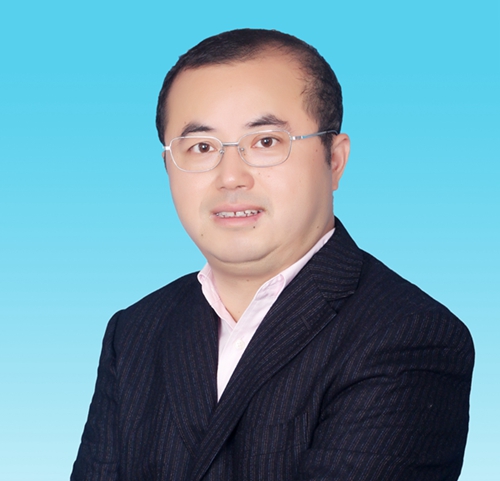
Xu Yibo, Co-Founder and CEO of Instant Knowledge Technology
In 2015, Xu Yibo joined DynoSense, a U.S.-based manufacturer of digital medical devices, as General Manager for the China region, thereby entering the healthcare industry. DynoSense primarily develops an integrated digital personal health scanning device capable of capturing more than 33 health indicators—including electrocardiogram (ECG), blood oxygen saturation, blood pressure, respiration, exhaled gases, and body temperature—within 60 seconds. Through this experience, Xu Yibo learned thatMicrofluidic chips are, in fact, the core components enabling the miniaturization and personalization of traditional medical devices., there is also significant demand in the personal medical device industry. Therefore, he reached out to his former university classmate, Professor Cheng Xin, who was conducting research on microfluidic chips, to discuss launching a startup together.

Professor Cheng Xin, Chief Founder of Instant Knowledge Technology
Professor Cheng Xin, the principal founder of Instant Knowledge Technology, serves as the Chair of the Department of Materials Science and Engineering at Southern University of Science and Technology. He has long been dedicated to research in cutting-edge fields such as digital biochips, flexible intelligent skin, medical sensors, and micro/nano fabrication.Professor Cheng Xin’s institution, Southern University of Science and Technology, boasts one of the best micro- and nanofabrication platforms in China.This chip manufacturing and processing base, funded by the Shenzhen Municipal Government with an investment of 60 million yuan and completed after two years of construction, has undoubtedly become a vital resource for Instant Knowledge.
Xu Yibo and Cheng Xin quickly reached a consensus, but the specific direction still required careful consideration. “Although Professor Cheng and I were college classmates, we pursued vastly different career paths after graduation. He has primarily focused on academic research within the university setting, while I have concentrated on product development in the industry. How to effectively integrate these two approaches is crucial.”
As they were discussing which product to develop, Xu Yibo proposed starting with insulin pumps—medical devices for treating diabetes—then expanding into diabetes monitoring products, and ultimately developing an artificial pancreas, thereby creating a comprehensive closed-loop diabetes management system.
Xu Yibo proposed this idea because his mother suffers from diabetes. Since entering the medical industry, he has been dedicated to researching monitoring and therapeutic devices related to diabetes. Currently, the most advanced international approach for diabetes treatment is the artificial pancreas, with microfluidic chips serving as the core key technology enabling its function. Coincidentally, microfluidic chips are an area of expertise for both Xu Yibo and Professor Cheng Xin.
With the direction clearly defined, it was time to take action. Under the leadership of Xu Yibo and Cheng Xin, the team was quickly assembled. Instant Knowledge Technology currently has a team of approximately nine members, including the Beijing-Shanghai team led by Xu Yibo, which is primarily responsible for system R&D and microfluidic chip system verification (based in Shanghai, directly under Xu Yibo), as well as core supply chain management and market expansion (led by Li Xin); and the Shenzhen team led by Professor Cheng Xin, which is primarily responsible for the R&D and manufacturing processes of microfluidic chips.
Ideals are often full-bodied, but reality can be stark; commercializing academic research outcomes is not as easy as one might imagine. Microfluidic chips represent a very new field, and their industrialization remains immature both domestically and internationally. In China, in particular, few have developed similar products, leaving no established methods to reference. Therefore, Xu Yibo’s team had to explore every step on their own.
It took them two years, with many detours along the way, to finally develop the product. Xu Yibo said earnestly, “"Translating a novel innovation from scientific research into industrial application is inherently challenging, particularly as we are entering an industry with exceptionally high barriers to entry."Medical“In the scientific community, a single success out of ten experiments is sufficient for publishing a paper. In general industries, a 90% success rate creates opportunities for mass production. However, in the development of medical products, we must achieve a 100% success rate to proceed to the next stage, which poses a significant challenge for us.”
Microfluidic Chips Replace DC Motors, With No Compromise in Precision
As a medical device, insulin pumps demand exceptionally high precision. Traditional insulin pumps utilize a motor combined with mechanical transmission. This system requires an extremely small and precise motor to convert electrical signals into mechanical motion. It also relies on micro-precision gearboxes and mechanical linkages to drive the piston for insulin delivery, achieving a minimum infusion accuracy of 0.05 U/h (1 U = 0.01 mL). However, during meals, individuals typically require an insulin bolus of 5–10 U to manage blood glucose levels. The range from 0.05 U to 10 U represents a several-hundred-fold difference between the minimum and maximum values. Achieving such a high variable speed ratio necessitates the coordinated operation of numerous precision micro-gears.
It is reported that,Designing a traditional insulin pump is akin to crafting a Swiss watch.Currently, all high-precision insulin pumps in China utilize imported motors and mechanical components from Switzerland. Therefore, it is not surprising that insulin pumps are so expensive.
The HP100 insulin pump, launched by Instant Knowledge Technology, replaces the traditional precision electromechanical architecture with a microfluidic chip architecture, significantly reducing production costs. More importantly, its therapeutic efficacy is identical to that of conventional insulin pumps. According to Xu Yibo,Currently, the engineering prototype of Instant Knowledge's insulin pump has achieved a minimum infusion precision of 0.05 U/h.
Therefore, Xu Yibo expressed full confidence in obtaining CFDA certification. “Leveraging Professor Cheng Xin’s technology at Southern University of Science and Technology, combined with our industrialization experience in chip and medical device companies, we are confident that this product will meet the highest certification standards for medical devices.”
Benchmarking against US-based Insulet, it adopts a disposable patch-style design.
In fact, in addition to price, operational complexity is also a significant factor affecting the widespread adoption of insulin pumps. Since insulin dosage requirements vary among individuals, newly diagnosed patients typically need to be hospitalized for observation. During this period, physicians configure the infusion parameters of the insulin pump based on the patient’s blood glucose monitoring data, after which the patient can return home and use the device independently. The combination of high costs and complex operation has resulted in very few hospitals in China offering insulin pump therapy. According to statistics, only 3,000 hospitals in China currently provide this treatment. Consequently, many patients are unable to experience the benefits of insulin pump therapy.
Therefore, to make insulin pumps more convenient to use and more widely adopted, Instant Knowledge has followed the product philosophy of US-based Insulet, adoptingDisposable adhesive design。

Medtronic 712 Insulin Pump
Traditional insulin pumps, such as the Medtronic 712, are integrated semi-disposable devices. They function essentially as all-in-one delivery systems that combine control and injection capabilities. Although they have a service life of up to four years, users must disassemble and replace the infusion set and reservoir every three to seven days, which is highly inconvenient.
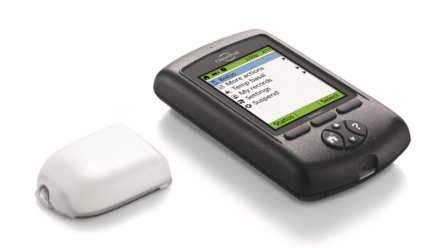
Insulet’s OmniPod: the POD on the left and the PDM on the right
OmniPod, developed by the US company Insulet, is a patch-based wireless insulin pump that separates control from delivery. The control unit is called the PDM (Personal Diabetes Manager), while the delivery unit is called the POD. The POD can be directly discarded after two to three days of use. Compared with Medtronic’s products, its patch-based design is tubeless, and the fully disposable delivery unit makes replacement easier, thereby offering a better user experience. The HP100 developed by Instant Knowledge (Shanghai) Health Technology Co., Ltd. is essentially a similar disposable insulin pump to OmniPod. This approach simplifies operation and enhances user experience.With its low entry-level device price, this new product, which differs from traditional insulin pumps, is easier to promote.
Regarding promotion and profitability, Xu Yibo stated: “Existing insulin pumps are predominantly sold through hospitals due to their operational complexity. Although we have leveraged ‘cutting-edge technology’ to develop a low-cost insulin pump, it is impossible to transform the entire ecosystem from the outset. Unlike other consumer hardware products that patients may purchase directly based on preference, medical devices involve intermediaries such as hospitals and physicians. Therefore, we must first convince hospitals and doctors of the product’s reliability before targeting end-user patients.”
Therefore, in terms of its business model, Instant Knowledge will continue to adhere to the traditional sales ecosystem for insulin pumps, identifying suitable channels and partners, offering margin incentives to these channels, and leveraging them for promotion.
Building an IoT Platform for Diabetes Management, with the Ultimate Goal of Developing an Artificial Pancreas
Regarding future planning, Xu Yibo stated that Instant Knowledge Technology will next build an IoT technology platform for closed-loop personal diabetes health management based on microfluidic chips. They aim to develop not just a medical device, but also physician-facing and user-facing mobile apps, as well as a cloud-based control platform and data acquisition system. This approach will, on one hand, facilitate remote patient monitoring by physicians and provide backend support for patients’ self-management of diabetes; on the other hand, historical patient data will serve as a crucial reference for the future upgrading and iteration of the company’s products.
“The current practice involves patients being hospitalized for eight to ten days, during which physicians adjust the parameters of their insulin pumps before the patients take the devices home for use. However, once at home, patients essentially rely on their own subjective feelings to make minor adjustments. If we were to connect these devices to the internet, physicians could monitor patients’ usage data via a backend system and provide real-time guidance on insulin administration, while patients could consult with their doctors through a mobile app whenever questions arise.”
Furthermore, Xu Yibo stated that their ultimate goal is to develop an artificial pancreas. Therefore, Instant Knowledge will subsequently develop a continuous glucose monitor (CGM); the combination of an insulin pump and a CGM will form a complete closed-loop system for diabetes management. The core algorithm of the artificial pancreas simulates the human pancreas by dynamically adjusting insulin infusion based on data from continuous glucose monitoring. Through training deep learning algorithms with large-scale datasets, the system achieves artificial intelligence capabilities, ultimately enabling the artificial pancreas to more closely mimic the function of the human pancreas.
“Although the insulin pumps we currently manufacture are still classified merely as medical devices, they will undoubtedly become part of the Internet of Things (IoT) and artificial intelligence landscape in the future,” said Xu Yibo. “In reality, whether it is an insulin pump or an artificial pancreas, our focus lies in miniaturizing and intelligentizing traditional medical devices to enable home-based use. For home applications, users are most concerned about price and size, and Instant Knowledge has successfully addressed these concerns.”
The RMB 60 Billion Insulin Pump Market: Benefits for Early Movers
Diabetes is classified into type 1 and type 2. For patients with type 1 diabetes, insulin injections are essential due to the inability to secrete insulin. According to incomplete statistics, the number of people with type 1 diabetes in China reached 10 million in 2015. Theoretically, these 10 million individuals require long-term insulin therapy; however, due to the high cost of insulin pumps, only 40,000 of them receive long-term treatment with insulin pumps annually.
This indicates that the market still has substantial room for growth, and Instant Knowledge Technology aims to activate this existing market base. Assuming a price of RMB 6,000 per mobile phone, a user base of 10 million would represent a market size of RMB 60 billion.
In fact, in addition to patients with type 1 diabetes, those with severe type 2 diabetes also have a substantial demand for insulin. If the market for type 2 diabetes patients is also activated, the market potential would be considerable.
It is understood that there are currently no similar disposable patch-style smart insulin pump products available in China. Clearly, Instant Knowledge has become the first company to venture into this uncharted territory. In this regard, Xu Yibo stated, “Although we are latecomers to the industry, we should be considered pioneers in this field within China.”
VCBeat has learned that Instant Knowledge (Shanghai) Health Technology Co., Ltd. is currently in discussions with multiple publicly listed companies and professional investment firms regarding its angel financing round. The stage is being set; let us wait and see how the future unfolds.