

Jianke Constructs an Integrated Smart Healthcare Service Ecosystem Through Hospitals, Pharmacies, and Digital Platforms
Deepening supply chain layout, acquiring physical hospitals, expanding retail pharmacy networks, and optimizing mobile healthcareAPP: Jianke, a Pharmaceutical E-commerce Platform, Makes Moves This YearFrequently, continuously bringing fresh insights and perspectives to the industry.
VCBeat (WeChat ID: vcbeat) conducted an exclusive interview with Xie Fangmin, founder of Jianke. He explained why Jianke has undertaken multiple initiatives this year in supply chain, internet healthcare, and physical hospitals, and how the company is leveraging these business units to build an “online-offline integrated smart healthcare service platform.”

Xie Fangmin, CEO of Jianke
Jianke’s strategy is to integrate online and offline channels, addressing information asymmetry and resource imbalances in medical services and pharmaceutical supply, thereby enabling patients and users to more conveniently access readily available healthcare and pharmaceutical services.
Dual Drivers: Policy Push and Organic Growth
A review of Jianke’s news this year clearly reveals its strategic layout for offline services. From strengthening its supply chain through partnerships with Zhizhi Pharmaceutical and Abbott, to expanding into physical healthcare by acquiring Guangzhou Jingtai Hospital and Wuhan Xiongchu Hospital, and further establishing new general hospitals in Chongqing and Hainan, Jianke has been steadily and systematically advancing its offline presence.
Xie Fangmin, CEO of Jianke, attributes the company’s “explosive growth” to three factors: First, the policy environment has improved, creating a favorable window of opportunity for pharmaceutical e-commerce and brick-and-mortar healthcare, which Jianke recognized and seized. Second, with its core pharmaceutical e-commerce model having reached maturity, Jianke needed to deepen its industrial layout. Third, Jianke secured capital support in the past year and this year, providing sufficient funding to sustain its expansion.
Breaking it down, from the State Council’s issuance of a document at the beginning of the year to abolish the B and C licenses for pharmaceutical e-commerce, to the continuous advancement of public hospital reforms, policies such as tiered diagnosis and treatment, separation of prescribing from dispensing, and the outflow of prescriptions have been gradually implemented. The dense release of these signals has brought numerous policy dividends to the industry.
“Through our engagements with regulatory authorities in regions such as Chongqing and Hainan, we have found them to be highly supportive of innovative medical services and industrial innovation, thereby providing a fertile ground for the implementation of hospital construction projects across various locations.”
Xie Fangmin revealed that Jianke will establish six physical hospitals across China this year, with locations including Beijing, Guangdong, Hubei, and Hainan. This means that Jianke will become the company with the deepest integration into physical healthcare and the largest number of hospitals in the pharmaceutical e-commerce industry.
“We began laying the groundwork for our offline presence early on, and it has now reached maturity this year. As we roll out these initiatives sequentially, the external perception is one of explosive growth.”
As one of the earliest pharmaceutical e-commerce platforms to emerge in China, Jianke began its strategic push in 2010. After years of development, its online operations have reached a relatively mature stage, providing a solid foundation for exploring diversified business layouts. Last year, Jianke achieved RMB 1.5 billion in sales revenue, representing a 50% year-on-year increase. Xie Fangmin has set a “modest goal” for Jianke to reach RMB 2.5 billion in revenue this year.
With stable cash flow, Jianke completed a $100 million Series A financing round in January last year and secured an additional $50 million in its Series A+ round this May. The ample funding has laid the foundation for Jianke’s offline expansion.
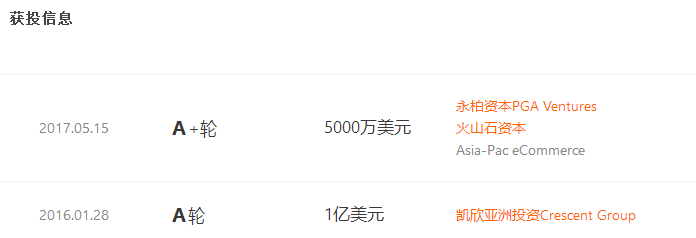
Jianke Financing Information
In fact, in addition to Jianke, other pharmaceutical e-commerce platforms such as 1 Drug Network (1YaoWang), Qilekang, and Ali Health are also actively expanding their offline presence. Xie Fangmin stated that Jianke’s differentiation lies in its approach: its foray into offline operations is designed to create synergy with its existing business, rather than merely establishing a standalone presence in a specific service or business segment.
“Our core philosophy centers on ‘people.’ Individuals require different services in different scenarios. For aspects that cannot be completed online, we aim to transition them to offline channels while ensuring seamless integration with our online services. This is the key focus of our offline strategy.”
Strengthen Online Presence, Capture Top-Tier Traffic
In addition to its offline investments, Jianke, with its core business, is continuously upgrading and adjusting its online operations. Regarding the online business, Xie Fangmin shared his insights on “traffic.”
He stated that, in fact, over the past one to two years, a shared consensus across all internet sectors—including e-commerce and pharmaceutical e-commerce—has been that the traffic dividend is disappearing, while the cost of acquiring traffic continues to rise.
“The reasons behind this are, on one hand, that the internet industry has undergone rapid development, with traffic growth essentially reaching its peak. At the same time, traffic is becoming increasingly concentrated among top players, making it progressively more difficult for vertical products and services to acquire users.”
Early signs of pharmaceutical e-commerce players’ strategic thinking on traffic emerged in 2014. At that time, the sector was just reaching its first major development milestone, with Tmall Pharmacy, 800 Fang, and Yihaodian—the three platforms granted pilot qualifications for third-party pharmaceutical retail—controlling the majority of user traffic.
During the same period, which also marked a phase of rapid development for mobile healthcare, various mobile healthcare companies secured financing and attracted substantial user traffic by subsidizing both physicians and general users. Observing this trend, pharmaceutical e-commerce players began to focus on building their own official website channels and discreetly launched their proprietary mobile applications.

Jianke Doctor App Officially Launched
Over the following two years, pharmaceutical e-commerce closely followed the explosive growth of mobile healthcare. Not only did the number of market entrants increase, but capital markets also paid significant attention to the sector. Companies such as Jianke, 111.com (Yiyaowang), and Qilekang secured substantial financing during that period, laying the foundation for subsequent traffic acquisition and brand building.
As a veteran of the internet industry, Xie Fangmin has deep expertise in traffic acquisition. In the early days, when online traffic costs were low, Jianke secured substantial traffic from video websites, which not only facilitated brand promotion but also helped accumulate a loyal user base.
Xie Fangmin told VCBeat that Jianke’s online traffic strategy has been constantly evolving. During the era of search engines, Jianke primarily focused on content SEO, publishing extensive educational content on pharmaceutical knowledge and disease treatment on its main website to attract significant traffic. With the rise of platforms such as Weibo and WeChat, Jianke shifted to marketing approaches based on specific target audiences and big data analytics.
“User behavior is shifting, and user engagement time is evolving. Centralization and fragmentation coexist, giving rise to a long tail of traffic. High-quality content remains highly valuable; only the distribution channels have changed. Producing premium content is itself a highly effective strategy for attracting traffic.”
In Xie Fangmin’s view, online dissemination must also address the issue of information asymmetry in healthcare. For instance, basic medication knowledge and drug usage information are highly valuable yet scarce for users. Jianke aims to leverage internet technology and service capabilities to break down this information asymmetry.
“Whether it’s creating content or developing the Jianke Doctor app and the Health Management app, the goal is to turn high-quality resources into intellectual property (IP) so that they can reach a broader audience. Customer acquisition will always be a central theme, and in this process, we must also create value for the entire healthcare system.”
Additionally, Jianke launched its brand-building initiative this year, rolling out outdoor and elevator advertisements in first-tier cities as it fully ramps up its brand marketing efforts.
"Smart Healthcare Closed Loop" Integrating Online and Offline Services
Certainly, whether it involves laying out offline hospitals and pharmacies or engaging in online content marketing and channel distribution, Jianke’s ultimate goal has always been to build a “smart healthcare service loop integrating online and offline services.” In this interview, Xie Fangmin also outlined the basic blueprint of this service loop for VCBeat.
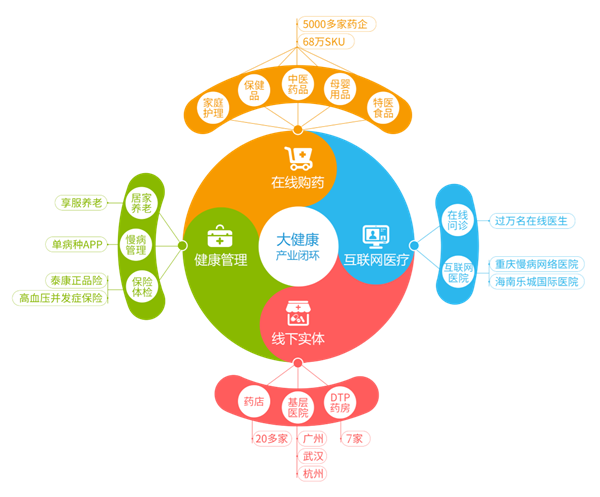
Jianke's Business Closed-Loop Landscape
He stated that a single online service cannot meet all user needs, nor can internet healthcare resolve all user issues; healthcare itself should integrate both online and offline approaches.
“From the perspective of the patient journey, users may undergo examinations and receive treatment at offline hospitals, while follow-up consultations or prescription refills can be conducted online. By integrating online and offline services, all of a user’s healthcare needs can be fulfilled within Jianke’s closed-loop business ecosystem.”
Within the ecosystem of a closed-loop health service system, hospitals and pharmacies are two critical components; Xie Fangmin also provided a detailed explanation of their respective functions.
Hospitals can provide medical resources and e-prescription qualifications. For instance, some physicians from Guangzhou Jingtai Hospital and Wuhan Xiongchu Hospital have already been offering online consultations via the “Jianke Doctor” app. The Jianke Doctor platform effectively leverages underutilized physician resources from offline hospitals where patient volume is insufficient. Furthermore, hospitals’ prescription-issuing credentials lay a solid foundation for Jianke to capitalize on the trend of prescriptions flowing out of hospitals.
For pharmacies, they can become a branded offline store of Jianke Medicine’s retail operations, allowing users to experience services at Jianke Pharmacies and creating an “entry point” for O2O services.
Meanwhile, to address the current issue of insufficient SKUs in pharmacies, Jianke can share its supply chain resources with them, optimize their SKU offerings, and integrate medical services, thereby differentiating them from other traditional pharmacies.
Jianke currently operates more than 20 offline pharmacies, including seven DTP (Direct-to-Patient) pharmacies: two in Guangzhou, one in Wuhan, and four in Dongguan. It may establish a nationwide offline pharmacy network in the future.
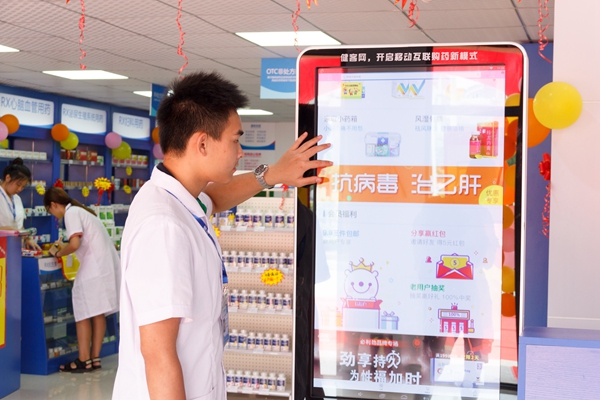
Jianke Offline Pharmacy
In terms of development planning, Xie Fangmin has set the direction for Jianke Pharmacy to establish more than 100 pharmacies across China in the future. The expansion methods will include self-built stores, acquisitions, and partnerships, reflecting a very “open” mindset. Meanwhile, Jianke may leverage its internet and information technology capabilities to develop SaaS (Software as a Service) products for pharmacies, thereby enhancing their digitalization capabilities.
Furthermore, Jianke’s subsidiary obtained the Class A License for Online Drug Transaction Services this June, making Jianke one of the few companies to hold all three licenses (A, B, and C) required for pharmaceutical e-commerce. This development signifies substantial growth potential for Jianke in To-B pharmaceutical supply chain services (B2B pharmaceutical e-commerce) and supply chain finance, while also fostering strong synergies with its To-C services.
“Jianke has already established a presence in pharmaceutical e-commerce, mobile healthcare, physical hospitals, and retail pharmacies. Its integrated online-offline business framework has taken shape. In the coming period, Jianke will continue to deepen its strategic layout, enhance service quality, and improve the closed-loop smart healthcare ecosystem,” said Xie Fangmin in conclusion.