

Stealth BioTherapeutics Files S-1 for IPO: Pioneering Mitochondrial Medicine with Elamipretide
Mentioning mitochondrial diseases may sound unfamiliar to you. However, when it comes to atherosclerosis, diabetes, Alzheimer's disease, and Parkinson's disease, these conditions are likely very familiar to most people.
Mitochondrial defects are a significant contributing factor to the onset of certain chronic and rare diseases. The spectrum of mitochondrial-related disorders is astonishingly broad, encompassing dozens of common and rare conditions such as sarcopenia, muscular dystrophy, heart failure, atherosclerosis, diabetes, Alzheimer’s disease, Parkinson’s disease, chronic kidney disease, Barth syndrome, and Huntington’s disease.
Mitochondria are hailed as the powerhouses of the cell, generating 90% of the energy required for daily human activities. With advancing age, mitochondrial structure undergoes changes and function gradually declines, triggering cellular inflammation, fibrosis, and other issues that contribute to the development of many age-related diseases.

A U.S. company’s ongoing cutting-edge research and its achievements are expected to improve the health outcomes of patients with mitochondrial diseases in the near future.
What kind of company is Stealth?
Stealth BioTherapeutics (hereinafter referred to as “Stealth”), founded in 2006 and headquartered in Boston, a life sciences hub in the United States, is one of the leading companies in the field of mitochondrial medicine.

Currently, the mechanism of action for most mitochondrial drugs under development is to scavenge free radicals generated by mitochondrial dysfunction. The efficacy of this class of products is akin to obtaining antioxidant benefits from consuming blueberries and drinking red wine. In simple terms, this approach is superficial and fails to address the root cause. Furthermore, excessive dosing can lead to toxic side effects.
Stealth is the world’s first pharmaceutical company to develop drugs that target mitochondria and stabilize their structure and function. The root cause of mitochondrial diseases lies in mitochondrial dysfunction. Unlike the mechanisms of action employed by other companies’ related products, Stealth directly addresses the functional impairments caused by structural deficiencies in mitochondria, restoring normal mitochondrial function by repairing mitochondrial structure.
What Is the Key to Unlocking Treatments for Mitochondrial Diseases?
Stealth’s secret weapon is a remarkable compound called Elamipretide. This compound is a small peptide composed of four amino acids that binds to cardiolipin in the inner mitochondrial membrane, thereby repairing defects in the inner mitochondrial membrane.
This compound was accidentally discovered by Cornell University scholar Hazel Szeto during an experiment. In the experiment, Dr. Szeto asked her students to use fluorescent markers to track the compound’s entry into cells. She subsequently found that the compound migrated to the inner side of the cell membrane and accumulated near the mitochondrial membrane—a highly sought-after yet difficult-to-label effective target.
As a professional healthcare investment firm with a particularly keen nose for biotechnology, Morningside Venture Capital identified Elamipretide as a highly promising compound for targeting mitochondrial-related diseases after multiple rounds of discussions with Dr. Szeto. With the support of Morningside Venture Capital, Stealth was subsequently established with the mission of advancing research on this compound.
How is Stealth’s mitochondrial repair therapy progressing?
For more than a decade since Stealth’s founding, the mechanism of action of elamipretide on mitochondria has been clearly validated. The compound has demonstrated promising efficacy across a range of indications, including primary mitochondrial myopathy, heart failure, dry age-related macular degeneration, Barth syndrome, Huntington’s disease, acute kidney injury, heterochromic iridocyclitis, and Leber hereditary optic neuropathy. Related findings have been published in nearly 100 peer-reviewed journal articles, and the U.S. FDA has granted approval for multiple indications to enter clinical trials.
Among numerous clinical trials, Elamipretide for primary mitochondrial myopathy (a rare genetic disorder) is at the forefront. The FDA has granted Elamipretide Fast Track designation and Orphan Drug designation for this indication, and it will soon enter Phase III clinical trials.
The symptoms of primary mitochondrial myopathy resemble “accelerated aging,” with a global incidence of 1 in 4,300 and approximately 40,000 patients in the United States alone. However, there are currently no effective pharmacological treatments for this condition. Upon approval, Stealth’s product will become the sole therapy available, offering significant hope to patients worldwide.
Another human health issue targeted by Stealth is heart failure. With the aging population, the number of heart failure patients is increasing year by year, and more than 20 million people worldwide are affected by this disease.
Unlike current standard therapies, Stealth’s elamipretide does not reduce the workload on the damaged heart by lowering heart rate and blood pressure; instead, it enhances cardiac function by boosting energy supply without affecting heart rate or blood pressure. The company has currently initiated three Phase II clinical trials targeting different types of heart failure, with relevant data expected to be released in early 2018.
Another unmet medical need that Stealth focuses on is dry age-related macular degeneration. This disease is the leading cause of vision loss in the elderly, with approximately 82 million patients in Asia alone.
The primary cause of dry age-related macular degeneration (AMD) is mitochondrial dysfunction induced by environmental toxins, which was previously considered irreversible by the academic community. However, a Duke University study in mice found that continuous administration of Elamipretide for one month led to significant regression of macular lesions and improved vision in mice with AMD. The study is currently being conducted in 40 patients with moderate AMD and is in Phase I clinical trials.
What other related indications are under clinical investigation for Stealth?
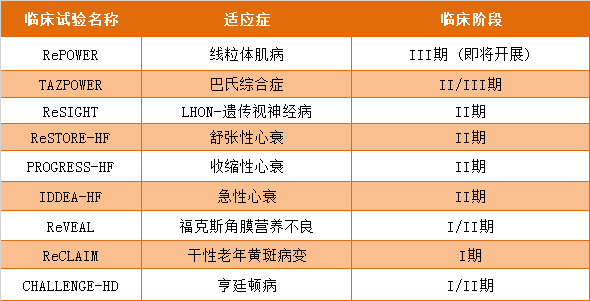
In addition to the aforementioned items, Stealth has initiated clinical-stage studies in multiple mitochondrial-related indications (as shown in the table below). Meanwhile, Stealth possesses a robust R&D platform that enables the effective identification of novel mitochondrially active compounds.
Reenie McCarthy, CEO of Stealth, previously served as an executive at Morningside Venture Capital and is an investment expert in the life sciences sector. During her tenure at Morningside Venture Capital, Ms. McCarthy paid close attention to the Chinese market, developing a profound understanding and insight into it.
She believes that China’s strong commitment to advancing its national scientific and technological capabilities and improving public health has significantly driven the rapid growth of Chinese biotechnology companies in recent years. Regulatory authorities have also introduced a series of policies to provide Chinese innovative drug companies with a regulatory environment aligned with international standards.
According to relevant executives at Stealth, the company is highly optimistic about the Chinese market. As the efficacy of Stealth’s therapies for mitochondrial genetic disorders (such as mitochondrial diseases and Barth syndrome) and age-related conditions (such as heart failure and dry age-related macular degeneration) continues to be robustly validated, related clinical trials have advanced into late-stage phases. Stealth has further strengthened its commitment to collaborating with Chinese enterprises on product development and conducting clinical trials in China.