

Kan Zhongyi (Qiji Health) Leverages Big Data to Simplify TCM Diagnosis and Treatment: From Online-Offline Integration to Smart Clinics
Over the course of five years, Luo Feng’s views on convenient TCM diagnosis and treatment have changed three times.
Over the past two years, he iterated the product four times to maximize the frequency of standardized medical care delivery.
Just as Alibaba, which leads China’s online shopping and online services, is also venturing into offline unmanned retail stores, Luo Feng is shifting his focus to the offline sector.
Leveraging the internet and advanced technologies such as big data and artificial intelligence to upgrade and transform the TCM diagnosis and treatment process, while deeply integrating online services with offline experiences to create an ultimate user experience in TCM care, is the current focus of Luo Feng’s team at Qiji Health.
How can TCM diagnosis and treatment be made intelligent and standardized, and how can user experience be optimized to the utmost? VCBeat conducted an exclusive interview with Luo Feng, founder of Qiji Health (“Kan Zhongyi”), to discuss his step-by-step exploration of convenient TCM diagnosis and treatment in recent years.
The "Uber" of Traditional Chinese Medicine
Hailing from a family of traditional Chinese medicine practitioners and holding a second degree from Beijing University of Chinese Medicine, Luo Feng’s interests lie in informatization and big data. His professional career spans gaming companies, investment firms, media outlets, and even government agencies.
“Providing people with affordable products rather than illusory concepts” is the principle Luo Feng has consistently upheld throughout his entrepreneurial journey.
From the perspective of Luo Feng, who has several internet startup experiences and comes from a family with a long tradition in Traditional Chinese Medicine (TCM), TCM has always operated under a model combining clinic-based consultations and home visits. On July 22, 2015, Luo Feng launched the “Kan Zhongyi” WeChat official account, a TCM home-visit service platform that provides services including renowned TCM practitioners making house calls for consultation, treatment, prescription, and herbal medicine dispensing, helping users improve their sub-health conditions. At that time, “Kan Zhongyi” was an authentic “Internet + TCM” product.
During the “Kan Zhongyi” period, the operational model was “online appointment + home consultation.” Users made appointments via Kan Zhongyi’s WeChat official account and mobile app, completed a questionnaire to receive a constitution report, and then selected from five therapeutic services: tuina (Chinese therapeutic massage), cupping, acupuncture, gua sha (scraping therapy), and moxibustion. Based on location-based services (LBS) and availability, users scheduled appointments with suitable TCM practitioners. Upon receiving the patient’s constitution report, the practitioner assessed the symptoms and decided whether to accept the appointment. During home visits, the practitioner provided traditional TCM diagnostic methods (inspection, auscultation/olfaction, inquiry, and palpation), physical conditioning therapies, and prescribed tailored herbal formulas based on the diagnosis.
During this process, physicians also document consultation notes, push them to the client-side platform, and engage in discussions with other practitioners. Unlike other “Internet + Traditional Chinese Medicine (TCM)” initiatives, Qiji Health operates its own offline TCM outpatient clinics and holds the qualifications to provide TCM medical services. Accordingly, it prescribes and prepares herbal medicines offline based on patients’ conditions and delivers them directly to patients, thereby achieving an integrated model of medical care and pharmaceutical provision.
In Luo Feng’s initial vision, Kan Zhongyi was positioned as a platform to connect doctors with patients, where physicians provided medical services and retained 90% of the fee for each consultation. This model was highly attractive to the large number of TCM practitioners who lacked a patient base and urgently needed to increase their income. Meanwhile, patients naturally benefited from the waiver of registration fees.
Digitalization of Traditional Chinese Medicine
Luo Feng, whose career has long been focused on informatization and big data, has been contemplating how to leverage intelligent technologies to standardize traditional Chinese medicine (TCM) services—such as tuina (therapeutic massage), acupuncture, and gua sha (scraping therapy)—thereby enabling TCM practitioners to serve a larger patient base from a fixed location.
“Health big data will be a future direction for traditional Chinese medicine,” judged Luo Feng. Consequently, he recruited Wang Qinghua, who had previously worked at Nokia and Microsoft, to serve as the Chief Technology Officer (CTO) of Qiji Health, focusing on the digital research and development of traditional Chinese medicine.
Over the two years of operating the “See a TCM Doctor” service, Qiji Health has sought to link user experience with in-store visit rates and repurchase rates. By adopting a cashback model based on the principle of “building trust through effective information and converting trust into services,” and by empowering users to manage their health online, Qiji Health encourages them to choose its offline medical services, thereby achieving the goal of personal health management.
In addition to highlighting medical attributes as the core logic of his entrepreneurial venture, Luo Feng also believes that new-generation TCM services will not be limited to diagnosis and treatment alone; they must also include conveying accurate health status information and providing lifestyle-based health advice to users. “TCM has always emphasized ‘preventive treatment,’ and new-generation TCM services are even better suited for personal health management,” Luo Feng stated.
By remotely extracting and analyzing accumulated user health data and leveraging mobile internet push notifications, Qiji Health has established three key touchpoints within its “information-service” closed loop: pre-visit, in-store service delivery, and post-visit. These touchpoints are quantified through data, rendering the entire service loop recordable, monitorable, traceable, and analyzable, thereby enhancing the efficiency of service scenarios.
Digitizing Traditional Chinese Medicine (TCM): Data-Driven Insights Across Pre-Consultation, Diagnosis, External and Internal Treatments, and Post-Consultation Management to Enhance User Trust in TCM Services with Maximum Efficiency and Minimum Cost. Luo Feng believes this approach offers a way out of the “trust dilemma” facing TCM.
The current online appointment rate of over 50% at stores under Qiji Health validates his judgment.
Luo Feng’s team has developed a unique SaaS system that enables users to input their requirements and assess their physical condition, allows HR departments to manage employee health levels, and helps Qiji Health establish comprehensive user health records.
Rapid Diagnosis: Online Data + Offline Services
In the course of further exploring TCM diagnosis and treatment, Luo Feng believes that traditional home-visit services provided by TCM practitioners are not the optimal service scenario for either patients or physicians.
Qiji Health is currently seeking the "Quick Clinic" service model.
The so-called "Quick Clinic" refers to offline TCM therapy capsule stores that primarily target white-collar workers in office buildings, providing services such as pulse diagnosis, tuina massage, and gua sha to regulate their sub-health conditions.
Leveraging new retail trends, Qiji Health has established quick clinics in core commercial districts near office buildings, enabling white-collar workers to access services during fragmented breaks at work, thereby expanding its service radius.
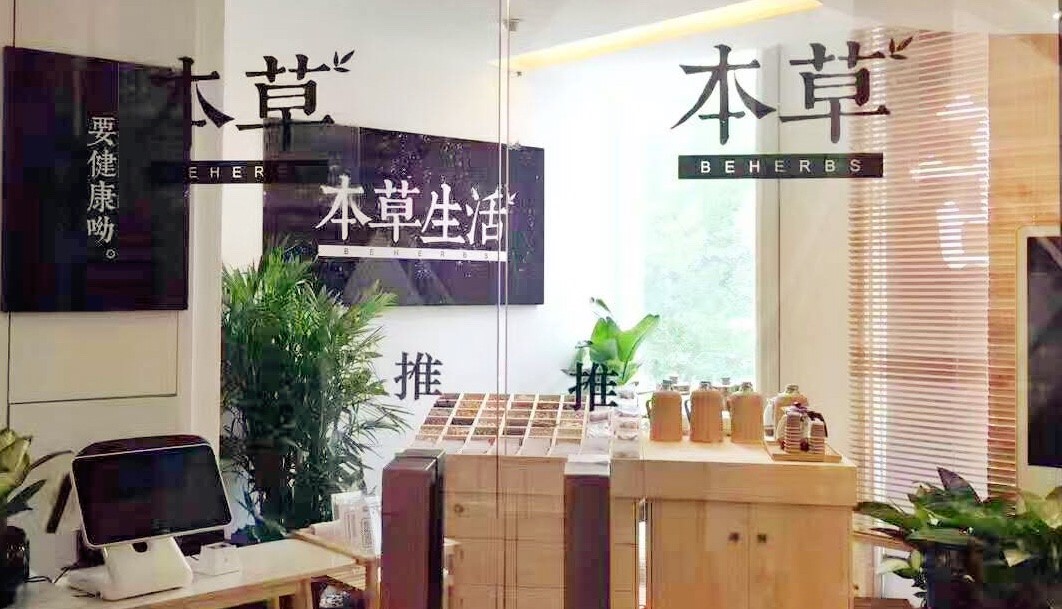
It is reported that Qiji Health has opened four quick clinics named “Bencao Life” in Beijing. Building on its core traditional Chinese medicine (TCM) medical services, the company leverages smart devices and big data to deeply integrate offline health management with offline medical services, thereby enhancing user experience.
Each clinic is equipped with a SaaS system that manages user appointments, physician scheduling, patient medical records, and medication purchase data. It also provides stores with efficient, customized operational strategies to enhance operational management efficiency and reduce management costs for chain stores.
Complementing offline services is online data. Through a systematic Q&A, users can gain insights into their physical condition and identify their physiological thresholds, thereby enabling better control over their daily diet and activities.
On the other hand, through its intelligent systems, Qiji Health will also record user data including pre-consultation self-assessments, prescription records, and follow-up management, thereby establishing a comprehensive big data platform for Traditional Chinese Medicine.
In the digitalization of traditional Chinese medicine (TCM) services, each Kuai Zhen clinic is essentially equipped with relevant intelligent diagnostic and therapeutic devices to digitize clinical practices.
Next, Qiji Health will also roll out intelligent pulse diagnosis devices in its affiliated stores and users’ home settings, turning these scenarios into entry points for users’ health data.
Moving forward, the digitization, accessibility, and standardization of Traditional Chinese Medicine (TCM) remain the key focus areas for Qiji Health.