

Dr. Zhang Qiang's First Offline Clinic in China's Pioneering Medical Mall: A Shared, High-Quality Surgical Platform
In the entertainment industry, Lu Han’s announcement of his relationship attracted over 800 million viewers, causing Weibo to crash; in the healthcare sector, the Zhejiang Provincial Health and Family Planning Commission approved the country’s first Medical Mall for comprehensive medical services,Hangzhou 501 Tower attracts a steady stream of visitors every day.
With the growing popularity of end-to-end healthcare services, clinics listed on this platform have attracted significant visitor traffic. Whether dental, traditional Chinese medicine (TCM), maternal and child health, or medical aesthetics—whether already operational or still under renovation—these clinics have been unable to stem public curiosity about these emerging healthcare models.
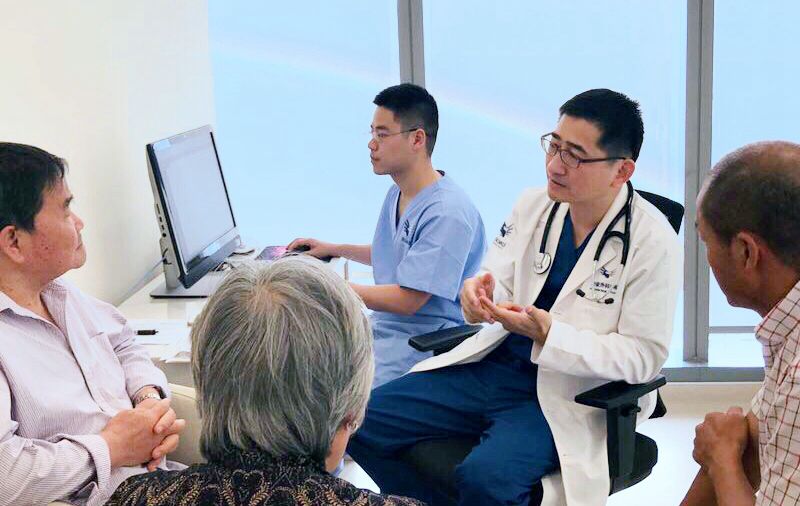
The busiest among them is the surgical clinic of Dr. Zhang Qiang Medical Group. This is his first offline surgical clinic established in China, named Hangzhou Sijun Surgical Clinic, which has a total of 12 consultation rooms and covers an area of approximately 1,000 square meters.
Updates on Dr. Zhang Qiang have consistently drawn significant attention. Three years ago, he left the public healthcare system to establish a physician group. Last year, he proposed the concept of shared specialty care, and this year has seen its tangible implementation through the offline Hangzhou Sijun Surgical Clinic.
How does Dr. Zhang Qiang implement his shared specialty medical care model within the Whole-Course Medical Care sharing platform?
From the window of Hangzhou Sijun Surgical Clinic, located on the 15th floor of Quancheng Medical Center, VCBeat looks out onto a bustling street below. Across the street, a park capable of accommodating ten thousand visitors for leisure and entertainment is under construction. Upstairs lies a day surgery center shared by clinics (currently undergoing renovation), while Weienuo Pediatric Clinic is situated adjacent to the surgical clinic on the same floor.
According to Zhang Qiang, the building where Quancheng Medical is located happens to be the same place where he lived during his first job at Sir Run Run Shaw Hospital. At that time, this area was vast farmland, but now it is filled with towering high-rises. Therefore,“This is where my dreams began. Twenty-five years ago, I started my first job here, pursuing my dream of becoming a physician; twenty-five years later, I opened my first brick-and-mortar clinic here, fulfilling my entrepreneurial dream,” said Zhang Qiang.
His collaboration with Quancheng Medical was a match made in heaven.“Last year, a representative from Quancheng Medical shared some information with me, which I didn’t pay much attention to at the time. Later, while scouting locations for our offline clinic, I happened to pass by Quancheng Medical and stopped in for a chat. They were looking to introduce high-quality specialty services and felt that we would be a good fit, so they”Signed a ten-year cooperation agreement.”
Establishing a new clinic involves multiple stages, including market research, licensing approval, site selection, renovation, team building, and grand opening.After Zhang Qiang joined Quancheng Medical, he was able to bypass the market research and site selection phases. Quancheng Medical also assisted with license approval and provided input on renovation design, allowing him to focus primarily on conceptualizing the interior fit-out, building his team, and managing the opening process.
After signing the contract, Dr. Zhang Qiang’s Doctor Group spent more than half a year renovating the clinic, frequently revising the layout whenever new ideas emerged.Although he put considerable effort into the renovation phase, the time to opening was significantly shorter compared to other clinics. Take site selection, for example: some physician entrepreneurs may spend a long time choosing a location, weighing both rental costs and foot traffic. As a result, those who successfully secure a site often remark, “It all comes down to fate.”
Regarding rent, Zhang Qiang candidly stated, “The rent here is slightly higher than that of office buildings,Although the entities on board are all clinics, it remainsFor commercial land use, the cost of opening a clinic in a Medical Mall typically ranges from RMB 5 million to RMB 10 million.Its leasing strategy is also based on different medical specialties, with shared resources to enrich the business mix.” This is similar to the overseas “Medical Mall” model. For mall owners, urgent care clinics are ideal tenants. Compared with traditional retail stores, clinics typically feature higher rents (approximately $25 per square foot), stronger creditworthiness, and longer lease terms.
What sets Quancheng Medical apart is that its relationship with clinic founders goes beyond a mere landlord-tenant arrangement; it also involves business collaboration. Resources such as clinical laboratory services, medical imaging, ambulatory surgery centers, and pharmacies are all shared.Therefore, Zhang Qiang’s surgical clinic has no pharmacy, no large-scale diagnostic equipment, and no laminar flow operating rooms—apart from the consultation rooms. This approach can also save clinic entrepreneurs a significant amount of costs.
To date, in addition to hosting Sir Run Run Shaw Hospital and the Quancheng Medical Health Center, the Quancheng Medical Platform has also onboarded 11 renowned specialized clinics from Beijing, Shanghai, Taiwan, and other regions, including iDing Fertility & Reproductive Care, Weirnuo Pediatrics, and Taixue Ophthalmology. These medical institutions possess cutting-edge medical technologies aligned with international standards and provide access to top-tier overseas specialized medical resources, enabling patients to more conveniently benefit from advanced global medical innovations.
Because Zhang Qiang had established a physician group and accumulated a large patient base with an excellent reputation before opening his clinic, he had no concerns whatsoever about patient acquisition.Even though Quancheng Medical is located within a commercial district, very few shoppers actually proceed to the surgical clinic for procedures after finishing their shopping; furthermore, it is not integrated with the national medical insurance system.
He believes that the key to patient acquisition lies in whether you can provide excellent service to your first patient.Based on his more than two decades of clinical practice, if you provide exceptional service to the first patient—even exceeding their expectations—that patient will inevitably refer three to five new patients to you, creating a snowball effect.Moreover, in today’s internet era, information spreads even faster. Some patients seeking treatment hold prominent social statuses, and their positive experiences have bolstered the clinic’s reputation. As a result, many of them voluntarily become advocates for the Zhang Qiang Doctor Group, further amplifying its visibility. This has emerged as a key opportunity driving the clinic’s rapid growth.
“Therefore, there is no marketing department in my clinic.” Our patient acquisition strategy does not conflict with public hospitals; it is strictly prohibited to solicit patient referrals from public hospitals or physicians.The vast majority are patients who have high expectations for medical quality and do not endorse the practices or services of public hospitals. Of course, public hospitals serve the majority of patients covered by basic medical insurance; therefore, the two are not in conflict but rather share a complementary relationship.
The initial challenges faced by physician groups included: first, how to earn patient trust in a team of physicians not affiliated with a hospital; second, the lack of integration with the national medical insurance system; and third, misunderstandings among many peers within the public healthcare system, which, due to institutional barriers, led to opposition and even defamatory remarks against physician groups.
“Now that I have opened a brick-and-mortar clinic, the challenges are much less daunting,” said Zhang Qiang. First, he operates a physical facility; the clinic does not perform major surgeries, which are instead referred to partner hospitals (Hangzhou Meihua Hospital and Greentown Hospital).Second, he still does not participate in the national medical insurance system, nor does he intend to join it. He believes that the reimbursement rates set by medical insurance are unreasonable for physicians’ services. Enrolling in the system might perpetuate the outdated model of “sustaining healthcare through drug sales,” which is neither his desire nor the goal he sought when leaving the public sector. Instead, he aims to establish a new value system in which the economic value of physicians’ labor is properly recognized and protected. Pursuing this approach naturally leads to a focus on advanced technical capabilities; however, what he provides is not necessarily high-end medical care, but rather high-quality medical care. Thirdly, with the liberalization of multi-site practice policies, an increasing number of physicians are unwilling to remain within the traditional public healthcare system and are becoming more receptive to new models such as physician groups, multi-site practice, and entrepreneurial ventures.
Regarding whether to join the national medical insurance system, Zhang Qiang has not given it much consideration for now, focusing primarily on collaborations with commercial insurance providers. In his view, national medical insurance is a double-edged sword: while it can attract patients, it also requires adherence to the government-regulated pricing structure.Due to its low labor costs and the significant differences in services and technology compared to public hospitals, there are no plans to integrate with national medical insurance. Although commercial insurance partnerships currently operate through collaborations with hospitals, the clinic has not yet initiated direct negotiations with commercial insurers; this is not a major concern. “We have already served many customers who hold commercial insurance policies. Any patient insured by our partner institutions can settle their bills directly at our clinic.”
Through his entrepreneurial journey with physician groups over the years, Zhang Qiang has discovered that there is a robust demand for high-quality medical care among the general public.If costs are blindly reduced to provide cheap healthcare, high-quality medical care may devolve into substandard or excessive treatment. In contrast, particularly in Europe and the United States, what is considered high-quality healthcare is essentially their standard care; so-called premium healthcare is not significantly superior.
As processes become standardized, clinic costs will inevitably decrease, enabling the general public to access high-quality medical care.Perhaps this is what ordinary medical care will look like in ten years. Once you experience this process, you’ll feel that this is how healthcare should be delivered—it is, in fact, the most basic requirement.Patients should be able to secure appointments with specialists, receive clear guidance at every step of the process, and experience a seamless journey. With post-discharge customer support and 24/7 access to their medical team, patients would feel truly reassured. In reality, this is merely what basic healthcare should look like.
Meanwhile, with the support and coordination of third-party surgical centers, imaging facilities, laboratories, and pharmacies, Hangzhou Sijun Surgical Clinic is able to provide specialized medical services in vascular surgery, proctology, hernia surgery, breast surgery, and thyroid surgery. Surgical pricing varies by condition, generally adhering to a principle of minimal medication use. The clinic is gradually evolving into an open practice platform for elite surgical teams. The Dr. Smile Vein Center, part of the Zhang Qiang Doctor Group, will be the first to establish its presence there. In addition, through collaboration with medical institutions contracted by the Zhang Qiang Doctor Group, it aims to deliver higher-quality, multi-tiered specialized medical services to patients.
In Zhang Qiang’s vision, the Hangzhou Sijun Surgical Clinic is just one component of the Doctor Zhang Group’s nationwide chain of medical institutions. Additional surgical clinics are planned for Beijing and Kunming in the future. Each clinic’s examination room design and patient flow processes will place greater emphasis on a “patient-centered” approach. All outpatient services will operate strictly by appointment to enhance efficiency, and patient privacy will be safeguarded to the greatest extent possible.
This collaboration with Quancheng Medical marks the first step in Zhang Qiang’s establishment of an offline clinic, with his ultimate goal being to develop a chain of clinics. Should Quancheng Medical demonstrate robust operational management capabilities and proceed to launch similar Medical Malls in other regions across China, Zhang Qiang would also consider expanding alongside Quancheng Medical into those markets.
In terms of talent, Zhang Qiang is not concerned. After three years of development and expansion, the physician group now has more than 100 doctors who have joined, including both full-time and multi-site practitioners.If Medical Mall is a hybrid model combining high-quality specialty outpatient services with commercial offerings, serving as a platform that connects premium medical resources, then Hangzhou Sijun Surgical Clinic is a platform facilitating physicians’ multi-site practice.“We will reserve six consultation rooms for physicians within the medical group and open another six to other physician platforms or outstanding medical teams.”
Medical professionals joining the Zhang Qiang Doctor Group will receive training that is more open in nature, with a duration of three months or longer. Dr. Zhang aims to cultivate physicians into multidisciplinary talents, focusing primarily on management capabilities, service competencies, and training in new technologies. Acceptance levels vary among physicians, depending on their respective specialties.
Regarding the newly joined multi-site practice platform, Zhang Qiang hopes it will function as a physician team that complements his original team and possesses high-quality medical expertise, preferably featuring branded projects. In the future, he aims to develop it into a premier domestic shared platform for surgeons.
As a result, Hangzhou Sijun Surgical Clinic has also become a shared clinic, operating under the clinic-sharing model within a larger sharing platform.For physicians who aspire to start their own practices but perceive high risks and lack operational capabilities, Zhang Qiang is willing to share a portion of his clinic resources with them. For instance, some physician groups are reluctant to make heavy asset investments; they can directly utilize this platform, thereby reducing operational costs.
He aims to help physicians build their ideal clinic or professional practice through the following three steps.
First, the clinic’s name is chosen as a homophone of the English word “surgeon,” conveying broader meaning and aiming to build a brand.
Second, build a brand for training and health education within the physician group.
Third, in collaboration with hospitals, we have established a model anchored by the Hangzhou Sijun Surgical Clinic and partnered with five vein centers across Zhejiang Province—located in western, northern, eastern, and southern Zhejiang—to create a “5+1” service network.
Amid the surge of the sharing economy, the emergence of MALL has been interpreted as a “shared hospital.” Zhang Qiang believes that this full-course medical service, approved by the Zhejiang Provincial Health and Family Planning Commission, breaks through certain previous regulations and represents a typical case of shared healthcare.Strictly speaking, it is not a “hospital” as defined by the National Health and Family Planning Commission, but rather an aggregation of various outpatient clinics.For it, there is no need to specialize in a specific medical field; scaling up its operations suffices, as it merely provides space and manages services.
From a formal perspective, full-cycle medical care is very similar to the overseas Medical Mall model.The similarity lies in the target tenants being clinics, establishing a leasing partnership; the difference is that abroad, private clinics are more prevalent, whereas in China, physician mobility is low, resulting in fewer individual physician-owned clinics. Therefore, full-cycle healthcare services aim to introduce larger-scale and well-branded medical institutions.
According to Zhang Qiang, the emergence of shared healthcare may drive reforms in medical insurance, eliminating practices such as hospitalization for minor illnesses and overtreatment. One reason is that, under a freelance physician model, the mobility of doctors leads to changes in insurance payment mechanisms, tying coverage to individual physicians and aligning with international trends.
Second, the medical insurance billing system is being reformed, meaning that cost calculations are itemized, with a separate price assigned to each individual service—such as operating room usage fees and physician fees. This will lead to more rational cost control for surgical procedures in the future.
Moreover, the pricing structure built on a sharing model is easy to calculate and promotes transparency in medical procedures. Once physicians establish their own pricing, it will encourage a large number of them to practice independently. At the same time, this approach reduces start-up costs for entrepreneurial physicians, including operational expenses such as management, renovation, and site selection. Consequently, physicians are less likely to engage in overtreatment or insurance fraud to offset financial losses.
Zhang Qiang firmly believes, “This is the future trend. Developed countries internationally have already widely adopted this model, and there are clinic buildings in Hong Kong and Taiwan of China.” Because shared healthcare systems offer higher operational efficiency and lower costs, they will naturally attract more patients. Therefore, once these advantages become prominent, others will replicate the model, eventually achieving a certain scale and compelling public hospitals to undergo reform.