

Comprehensive Summary and Policy Insights: China's Healthcare, Pharmaceutical, and Medical Insurance Policies in 2017 – Year-End Review
According to incomplete statistics, by mid-October of this year, national and local competent authorities had successively issued more than 2,000 policies and administrative orders related to the healthcare and pharmaceutical industries. Among these, national-level authorities issued over 400 items, while local authorities issued more than 1,600. In terms of issuing bodies, the State Council, the Ministry of Human Resources and Social Security, the National Health and Family Planning Commission, and the China Food and Drug Administration were the primary publishers, with other entities such as the State Administration of Traditional Chinese Medicine and the Ministry of Industry and Information Technology also participating in the formulation of certain policies.
From the perspectives involved, high-frequency topics include the comprehensive reform of public hospitals, rectification of pharmaceutical distribution, and the inheritance and development of traditional Chinese medicine, as well as payment method reforms. Coverage also extends to new technologies and trends such as Internet Plus, big data, and artificial intelligence.

Given the sheer volume of documentation, it is impractical to examine each item in detail. VCBeat (WeChat ID: vcbeat) has compiled industry policies issued through mid-October, categorized into three sectors: healthcare services, pharmaceuticals, and health insurance. This compilation highlights policies with significant impact and high levels of industry discussion, providing readers with an overview of the trends and directions in industry regulation this year.
Pharmaceutical Regulatory Logic: Eliminating the Superfluous to Preserve the Essential, Encouraging Innovation
A review of policies issued by the pharmaceutical industry in recent years reveals three primary focal areas: pharmaceutical R&D, manufacturing, and distribution and usage. The strategic direction emphasizes promoting innovation through market competition, enhancing drug quality via consistency evaluations, and rectifying distribution channels. The policies released this year have continued to follow this overarching framework.
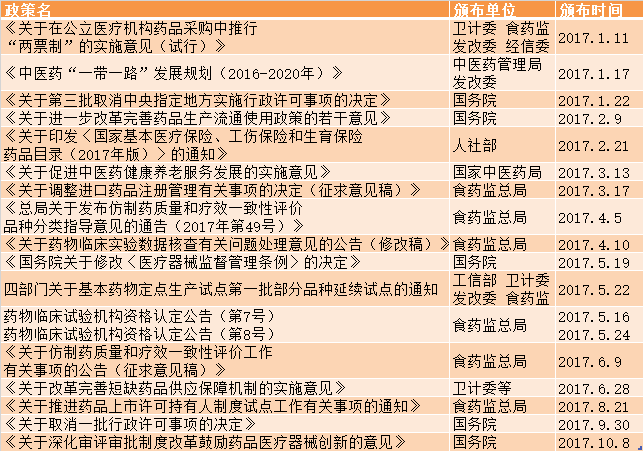
First, let us examine the policies regarding drug and medical device R&D. The first to be mentioned are the four related policies issued by the CFDA on May 11 to encourage innovation in drugs and medical devices.
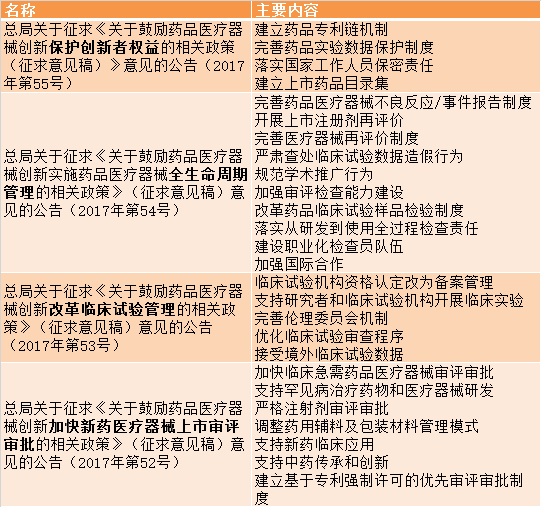
The comprehensive policy package to encourage innovation in pharmaceuticals and medical devices, which focuses on new drug R&D, clinical trials, equity rights of holders, and market approval, has profoundly influenced the industry by fostering innovation and guiding the establishment of a complete R&D-to-market pathway.
In fact, encouraging the research and development of new drugs has always been the main theme of the industry. Looking back to August 2015, when the State Council issued Document No. 44, it clarified 12 tasks for the reform of drug and medical device review and approval processes, including addressing registration backlogs, promoting consistency evaluations, piloting the Marketing Authorization Holder (MAH) system, and accelerating the approval of clinically urgent drugs.
Let’s first examine the approval reforms. According to the “2016 Annual Drug Evaluation Report” released by the Center for Drug Evaluation (CDE) of the China Food and Drug Administration (CFDA), the CDE continuously improved evaluation efficiency and quality by strengthening project management, refining evaluation workflows, enhancing timeline management, and establishing special task forces. In 2016, a total of 12,068 registration applications completed evaluation and were submitted to the CFDA for approval, representing a 26% increase compared with 2015.The number of registration applications awaiting review has decreased from nearly 22,000 at the peak in September 2015 to 8,200, basically eliminating the backlog.
Next are the policies regarding the introduction of new drugs. In March this year, the China Food and Drug Administration (CFDA) released the “Decision on Adjusting Certain Matters Concerning the Registration and Administration of Imported Drugs (Draft for Comments),” with the aim of “encouraging the simultaneous conduct of clinical trials domestically and abroad for new drugs not yet marketed overseas after approval, shortening the time lag between domestic and foreign market launches, and meeting the public’s clinical demand for new drugs.”
From a practical regulatory perspective, new drugs not yet marketed abroad can undergo international multi-center clinical trials in China, and upon completion of the trials, marketing authorization applications can be submitted directly. For imported new chemical drugs and innovative therapeutic biological products, the requirement to obtain marketing approval from the country or region where the overseas manufacturer is located has been abolished. These policies undoubtedly create a “fast track” for the market entry of overseas new drugs in China.
By October 8, the General Office of the Communist Party of China Central Committee and the General Office of the State Council had further issued the “Opinions on Deepening the Reform of the Review and Approval System to Encourage Innovation in Drugs and Medical Devices,” hailed as a “milestone” reform for industrial innovation and development.
The series of measures encompasses reforms in six key areas: 1) Reforming clinical trial management to ensure that clinical trials are scientific, standardized, and authentic; 2) Accelerating the regulatory review and approval of clinically urgent drugs and medical devices to address public medication needs; 3) Encouraging innovation to promote the healthy development of China’s pharmaceutical industry; 4) Fully implementing the Marketing Authorization Holder (MAH) system to strengthen lifecycle management of drugs and medical devices; 5) Enhancing technical support capabilities to fully serve innovation; 6) Strengthening organizational leadership to ensure the effective implementation of reforms through rule-of-law thinking and approaches.
The National Medical Products Administration stated that there are currently many favorable conditions for encouraging innovation in pharmaceuticals and medical devices.First, pharmaceutical innovation in China is surging.In recent years, the number of new drug applications and innovative medical device submissions by pharmaceutical companies in China has increased year by year. Fifteen Class 1 innovative drugs, including Icotinib, Apatinib, Chidamide, and Conbercept, have been approved for production, and 29 innovative medical devices have been granted market approval.Second, the reform of the review and approval system has progressed smoothly.The reform of the drug and medical device review and approval system, launched in 2015, improved the quality and standards of reviews, curbed the misconduct of research fraud, and enhanced the transparency of the review and approval process. The backlog of drug applications was resolved as scheduled;Third, the consistency evaluation of quality and efficacy for generic drugs has been successfully launched.In February 2016, the State Council issued a dedicated document to clarify relevant policies, and some local governments also introduced supporting measures. Enterprises have shown strong enthusiasm for participating in the consistency evaluation, with a batch of generic drugs expected to be among the first to gain approval in the near future. Fourth, the pilot program for the Marketing Authorization Holder (MAH) system across ten provinces and municipalities has progressed smoothly, stimulating the innovative zeal of scientific researchers.
At a policy briefing, Wu Zhen, Deputy Director of the China Food and Drug Administration, stated that the aforementioned measures would promote “supply-side reform in the pharmaceutical sector,” strengthen and expand China’s pharmaceutical industry, enhance its competitiveness, and alter the country’s long-standing reliance on imported new drugs.
Regarding the consistency evaluation of quality and efficacy for generic drugs, detailed regulations and supporting policies have been successively promulgated, including guidelines for waiving human bioequivalence studies, technical guidelines for the evaluation of strength-changed drugs (oral solid dosage forms), and guidelines for on-site inspections, along with the determination of reference listed drugs and the expansion of qualified clinical trial institutions. These two policy measures have bolstered companies’ confidence in advancing consistency evaluations, enhancing both the certainty and operability of implementation.
In addition to the two major priority areas mentioned above, ensuring the supply of shortage medicines and promoting their rational use are also key regulatory focuses.
In addition, several major policies have been introduced in the pharmaceutical distribution sector, including the “Two-Invoice System,” the State Council’s “Document No. 13,” and the removal of qualification requirements for pharmaceutical e-commerce.
“The Two-Invoice System” requires public medical institutions to gradually implement the system in drug procurement, while encouraging other medical institutions to adopt it. Public medical institutions in provinces piloting comprehensive healthcare reforms and cities piloting public hospital reforms are to take the lead in implementing the “Two-Invoice System,” with other regions encouraged to follow suit, aiming for nationwide rollout by 2018. According to statistics from VCBeat,As of mid-October, 29 out of China’s 34 provincial-level administrative regions had issued or implemented policies related to the “Two-Invoice System.”
“Document No. 13” points out that the order of drug circulation should be rectified, and the reform of the drug circulation system should be promoted; promote the transformation and upgrading of drug circulation enterprises, promote cross-regional and cross-ownership mergers and reorganizations of drug circulation enterprises, and cultivate large modern backbone enterprises in drug circulation. Accelerate the formation of an urban and rural drug circulation network with large backbone enterprises as the main body and small and medium-sized enterprises as supplements. Encourage drug circulation enterprises to integrate wholesale and retail operations. Promote classified management of retail pharmacies and increase the chain store ratio.
Comprehensive analysis indicates that the combination of “VAT reform,” the “two-invoice system,” and distribution sector rectification helps curb gray-area practices such as invoice trafficking and resale in pharmaceutical distribution, thereby enhancing industry transparency. Meanwhile, a cohort of high-quality enterprises will leverage their competitive advantages to pursue mergers and acquisitions, driving greater industry consolidation.
In the area of pharmaceutical retail, both Document No. 13 and the 2017 Healthcare Reform Tasks have addressed measures such as enabling external dispensing of prescription drugs, standardizing online retail services by retail pharmacies, and promoting new delivery models like “online order, in-store pickup” and “online order, store delivery.” Pilot programs for classified and tiered management of retail pharmacies are being implemented, chain pharmacy development is encouraged, and efforts are underway to explore interconnectivity and real-time sharing among medical institutions’ prescription information, medical insurance settlement data, and drug retail consumption records.
A Review of Regulatory Policies in the Pharmaceutical Sector in 2017: The Overall Logic IsEliminate the Superfluous and Preserve the Essential, Encourage Innovation, we must gradually eliminate unreasonable practices in the pharmaceutical sector, strengthen regulatory oversight, and promote the industry’s sustained positive development; meanwhile, by streamlining processes, introducing imported new drugs, and improving infrastructure across the innovative drug supply chain, we should enhance the enthusiasm of domestic pharmaceutical companies for research and development innovation.
Healthcare: Comprehensive Reform of Public Hospitals + Encouraging Private Healthcare Provision
Healthcare policies are fundamentally anchored in two core areas: the comprehensive reform of public hospitals and the encouragement of private healthcare provision. Key elements of the public hospital reforms include the separation of pharmaceutical sales from medical services, price adjustments, compensation and personnel management reforms, the separation of government administration from hospital operations, and the implementation of a tiered diagnosis and treatment system. Regarding the encouragement of private healthcare, key focuses include the development of third-party medical services, the promotion of elderly care services, and the relaxation of regulations for establishing clinics.
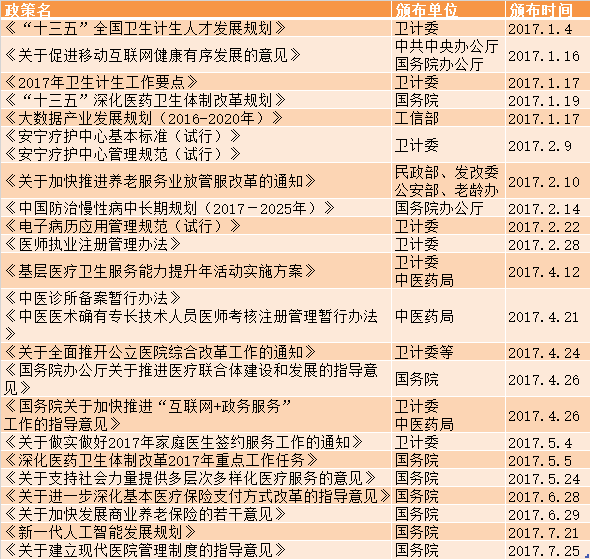
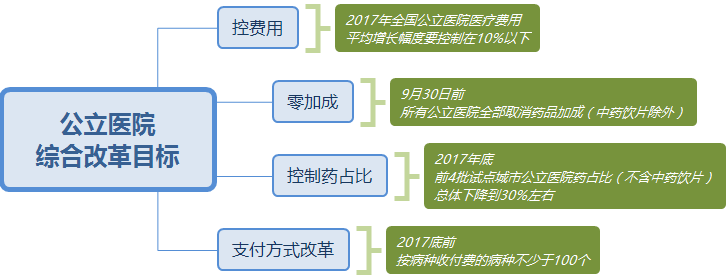
Let’s first examine the comprehensive reform of public hospitals. On April 24, the National Health and Family Planning Commission (NHFPC) and six other ministries jointly issued the “Notice on Comprehensively Promoting the Comprehensive Reform of Public Hospitals,” which requiresDeepen the coordinated reform of healthcare, health insurance, and pharmaceuticals to enhance the systematic, holistic, and synergistic nature of the reforms.
Regarding specific tasks, the Notice states that the average growth rate of medical expenses in public hospitals nationwide must be controlled to below 10% in 2017; comprehensive reform of urban public hospitals shall be rolled out across the board, requiring all prefecture-level cities to issue implementation plans for the comprehensive reform of urban public hospitals by July 31; and by September 30, the comprehensive reform of public hospitals shall be fully implemented.All public hospitals have completely eliminated drug markups.(Excluding Chinese herbal decoction pieces).
Other objectives include the following: by the end of 2017, the proportion of drug costs (excluding Chinese herbal decoction pieces) in total revenue at public hospitals in the first four batches of pilot cities should be reduced to approximately 30%; the cost of medical consumables per RMB 100 of medical income (excluding drug revenue) should be lowered to below RMB 20; payment and charging based on diagnosis-related groups should be implemented for no fewer than 100 disease types; the proportion of appointments and referrals among outpatient visits at public hospitals should be increased to over 20%; all public hospitals at secondary level and above within the region, as well as more than 80% of primary healthcare institutions, should be connected to the regional population health information platform; and 60% of primary healthcare institutions should establish telemedicine information systems with higher-level hospitals.
Following closely is the development of “medical consortia.” On April 26, the General Office of the State Council issued the Guiding Opinions on Promoting the Construction and Development of Medical Consortia, which serves as the foundational policy document for this initiative.
According to VCBeat, there are four main models for the development of medical consortia:
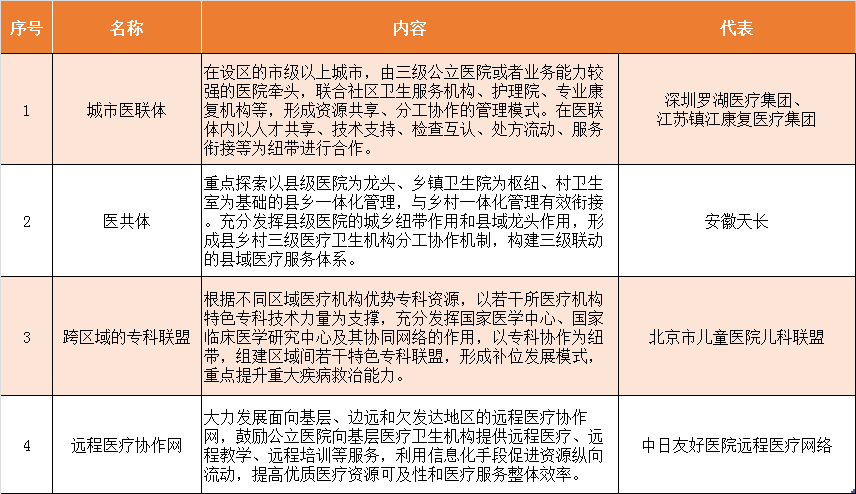
In fact, the development of “Medical Consortia” serves as a key lever in the comprehensive reform of public hospitals. This initiative requires multi-level coordination and vertical collaboration within the public hospital system, leverages the economic incentives of health insurance, and places significant emphasis on compensation and personnel performance evaluation, thereby constituting an integrated solution for the comprehensive reform of public hospitals.
Regarding objectives, the Opinions require that all tertiary public hospitals participate and play a leading role. In each prefecture-level city of provinces piloting comprehensive medical system reforms, as well as in cities piloting tiered diagnosis and treatment, at least one medical consortium with demonstrable effectiveness shall be established. By 2020, on the basis of summarizing pilot experiences, the development of medical consortia will be comprehensively advanced to form a relatively complete policy framework for such consortia. All secondary public hospitals and government-run primary healthcare institutions shall fully participate in medical consortia.
On May 24, the Department of Primary Health Care of the National Health and Family Planning Commission issued the “Notice on Effectively Implementing the Family Doctor Contracted Services in 2017,” requiring that, in 2017, family doctor contracted services be rolled out in more than 85% of prefecture-level cities within each province (autonomous region, or municipality directly under the Central Government), with a population coverage rate of contracted services exceeding 30%.
Encouraging Socially-Run Medical InstitutionsThis is another key focus in the healthcare sector. From the issuance of relevant opinions by the General Office of the State Council in June 2015 to mid-October this year, more than 20 comprehensive promotion policies and nearly 10 special policies have been introduced.
The “Opinions on Supporting Social Forces in Providing Multi-Level and Diversified Medical Services,” issued in May this year, further clarified the objectives. It requires that by 2020, the capacity of social forces to provide medical services be significantly enhanced; medical technology, service quality, and brand reputation be markedly improved; support systems such as professional talent, health insurance, and pharmaceutical technologies be further strengthened; and the overall environment for industry development be comprehensively optimized.Establish a large number of private healthcare institutions with strong service competitiveness, form several influential clusters of specialized health service industries, ensure that service supply basically meets domestic demand, and gradually develop a new pattern of multi-tiered and diversified medical services.
Actively support non-public sectors in penetrating specialized medical services and other niche areas, expand the effective supply of services, and cultivate specialized advantages. Accelerate the development of a cohort of competitive branded service institutions in specialties such as ophthalmology, orthopedics, stomatology, obstetrics and gynecology, pediatrics, oncology, psychiatry, and medical aesthetics, as well as in fields including rehabilitation, nursing, and health examinations. Encourage investors to establish branded specialized medical groups and operate large general hospitals with specialized strengths. Support non-public entities in establishing independent professional institutions for medical laboratory testing, pathological diagnosis, medical imaging, sterile supply, blood purification, and hospice care, providing relevant services to their respective regions.
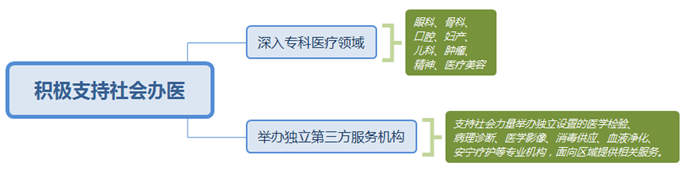
This series of supportive policies marks a further relaxation of restrictions on privately-run healthcare institutions. As private capital enters the fields of general practice, specialized care, and consumer healthcare, it will provide residents with more options for medical services.
Another point is the widely discussed “The Clinic Boom”. On May 3 this year, Premier Li Keqiang of the State Council presided over an executive meeting of the State Council, at which three major measures were proposed to support privately operated medical institutions. The first measure is to encourage non-governmental entities to establish general practice clinics and independently set up specialized institutions for medical laboratory testing, rehabilitation, and nursing care, and to promote cross-provincial and cross-municipal chain operations by capable privately operated traditional Chinese medicine (TCM) clinics, outpatient departments, and other facilities.
By August 8, the National Health and Family Planning Commission issued the “Notice on Deepening the ‘Streamline Administration, Delegate Power, Improve Regulation, and Upgrade Services’ Reform to Stimulate Investment Vitality in the Medical Sector,” which stated thatFurther streamline the approval procedures for medical institutions by merging the setup approval and practice registration into a single license for secondary-level and lower-tier medical institutions.Meanwhile, expanding into social investment sectors and promoting the development of new business models in the health services industry are all regarded as favorable factors driving the clinic boom.
A Surge in Clinics Hinges on Resolving the Talent Supply Issue. In March, the National Health and Family Planning Commission issued the "Administrative Measures for Physician Practice Registration," permitting practicing physicians to engage in multi-site practice and establish clinics, thereby ensuring an adequate talent supply for the anticipated surge in clinics.
Regarding traditional Chinese medicine (TCM) clinics, the National Administration of Traditional Chinese Medicine released two documents for public comment in April: the Interim Measures for the Filing and Registration of TCM Clinics and the Interim Measures for the Assessment, Registration, and Administration of Physicians with Demonstrated Expertise in TCM Techniques. These documents provide specific guidelines on transitioning the regulatory framework for TCM clinics from an approval-based system to a filing-based system.
The regulation explicitly states that entities establishing Traditional Chinese Medicine (TCM) clinics may commence practice after filing the clinic’s name, address, scope of diagnosis and treatment, and staffing details with the local county-level administrative department of TCM. The regulation is accompanied by talent development solutions; specifically, TCM practitioners without formal academic credentials may resolve their qualification issues through the “TCM apprenticeship and demonstrated expertise” pathway, allowing them to apply for registration upon passing assessments in internal herbal medicine and external therapeutic techniques.
It can be said that the logic of healthcare reform lies in addressing the issue of supply and demand. By comprehensively reforming public hospitals and encouraging private investment in healthcare, the structure of medical service supply is adjusted to provide society with more abundant and higher-quality medical services, gradually reducing residents’ reliance on the public healthcare system and improving the national healthcare system.
Health Insurance: Leveraging and Source-Based Cost Control
With total medical insurance expenditures accounting for more than half of total health spending, the medical insurance system, as the primary payer, must fully leverage its foundational role in healthcare reform and advance the “three-medical linkage” (coordinated reform of medical care, medical insurance, and pharmaceuticals). This has been the overarching theme of directional policies in the medical insurance sector in recent years.
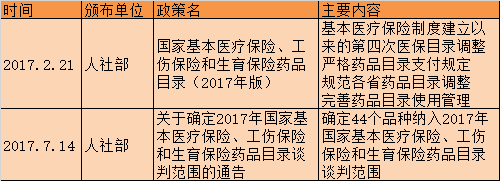
So far this year, significant changes have been made to the National Reimbursement Drug List and payment method reforms.On February 21 this year, the Ministry of Human Resources and Social Security released the new edition of the “National Reimbursement Drug List” (NRDL), marking the fourth adjustment to the drug list since the establishment of the basic medical insurance system and the first in eight years. The updated list includes a total of 2,535 Western medicines and traditional Chinese medicine (TCM) patent drugs, an increase of 339 compared with the 2009 edition, representing a growth rate of approximately 15.4%. Substantial progress has been made in the price negotiation mechanism for major diseases and innovative drugs, with candidate drugs for negotiation to follow; ethnic medicines and pediatric drugs are receiving prioritized support.
In early April, the Ministry of Human Resources and Social Security included an additional 44 drug varieties in the negotiation scope for the 2017 National Reimbursement Drug List (NRDL) covering basic medical insurance, work-related injury insurance, and maternity insurance. Ultimately, 36 varieties were successfully included, while 8 were excluded.
According to additional statistics,By the end of August, 20 provinces and autonomous regions across China had publicly released their adjusted provincial medical insurance drug lists or implemented the national version.For pharmaceutical companies, the inclusion of drugs in the National Reimbursement Drug List (NRDL) provides a certain level of channel security, which is beneficial to corporate performance. Notably, the Ministry of Human Resources and Social Security will establish a normalized and dynamic access mechanism for reimbursable drugs, ensuring organic integration across key stages such as catalog inclusion, payment standards, and usage management. This initiative aims to gradually achieve end-to-end management of reimbursable medications, aligning coverage with actual clinical practice and advancements in pharmaceutical technology, thereby further leveraging medical insurance to support innovation and promote industry development.
Beyond adjustments to the National Reimbursement Drug List, reforming healthcare payment methods is also a key focus. This year, various departments have successively issued four relevant policies to comprehensively deepen payment method reforms and implement intelligent monitoring of medical insurance.Based on global budgeting, transition to capitation and diagnosis-related group (DRG) payment.
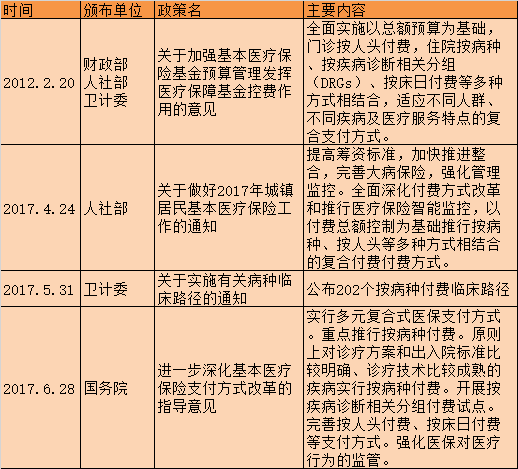
The most significant impact comes from the “Guiding Opinions on Further Deepening the Reform of Payment Methods for Basic Medical Insurance” issued by the State Council in June. According to these opinions,Since 2017, budget management of medical insurance funds has been further strengthened, and a diversified, composite medical insurance payment system dominated by diagnosis-related group (DRG) payments has been fully implemented.
Localities shall select a certain number of disease categories for implementation of case-based payment. The national government will select certain regions to pilot Diagnosis-Related Groups (DRGs) payment, and encourage localities to improve various other payment methods, such as capitation and per-diem payments. By 2020, reforms in healthcare insurance payment methods will cover all medical institutions and services. A diversified, composite healthcare insurance payment system, adapted to the characteristics of different diseases and services, will be widely implemented across China, with a significant reduction in the proportion of fee-for-service payments.
On October 9, Li Keqiang presided over the State Council executive meeting, heard reports on the progress of comprehensive reform of public hospitals and the development of medical consortia, and made arrangements for the next steps in the comprehensive reform of public hospitals. A key component of these arrangements is to uniformly define more than 100 disease categories, with a focus on advancing payment-by-disease-group reforms.
In the future, diagnosis-related group (DRG) payment may be integrated with reforms to hospital compensation systems and the elimination of drug-revenue dependence, leveraging payment mechanisms as a key driver to comprehensively deepen the effectiveness of comprehensive public hospital reforms.
In other respects, facilitating cross-regional settlement of medical expenses is a key priority. According to official data released by the National Health and Family Planning Commission, as of the end of September, 7,226 designated medical institutions across all basic medical insurance pooling regions in China had enabled direct settlement of inpatient medical expenses for cross-provincial care-seeking patients, and 88% of tertiary designated hospitals nationwide had been connected to the network.
Review and Outlook
A review of the pharmaceutical industry policies released so far this year shows that most are continuations or further advancements of previous policies.
In the pharmaceutical sector, from patent protection for new drug R&D, expansion of clinical trial institutions, and the Marketing Authorization Holder (MAH) system, to green channels for imported new drugs, as well as the promotion of generic drug consistency evaluation and the determination of reference listed drugs, the supply of pharmaceuticals is undergoing a process of refinement and gradual alignment with international standards;
In pharmaceutical distribution, the combination of “VAT reform,” the “two-invoice system,” and “distribution sector rectification” may reshape the industry landscape, driving it toward greater consolidation and scale.
In terms of medical insurance, leveraging payment as a tool, it has extensively participated in the comprehensive reform of public hospitals, emphasizing the "tri-partite coordination" among medical care, health insurance, and pharmaceuticals. Payment method reforms, such as diagnosis-related group (DRG) payments and capitation, have been steadily advanced, highlighting the significant role and influence of medical insurance in healthcare reform.
The healthcare industry is inherently policy-driven and structurally rigid. A series of reforms will fully leverage the guiding advantages of top-level design while mobilizing social resources to provide residents with a multi-tiered and well-structured supply of pharmaceutical and medical services. As a “year of significant policy initiatives,” this year will also serve as a critical milestone for industrial development.