

Wanpixiong Files IPO Prospectus: Scaling Pediatric Tuina to Address Children's Sub-Health Challenges
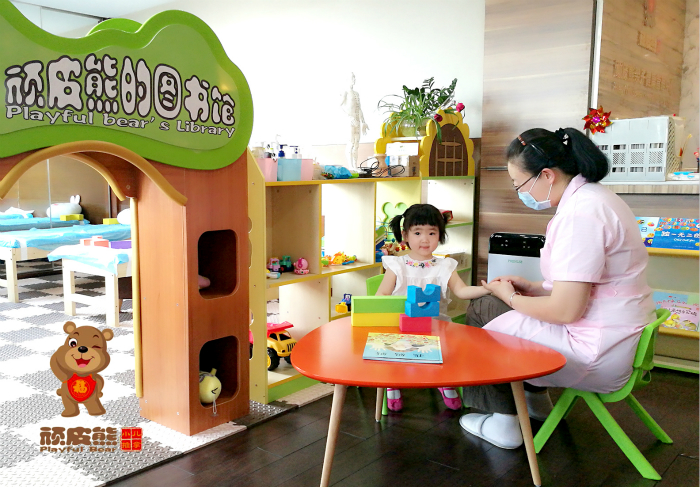
Relying solely on medications and injections when a child is ill can lead to significant side effects; pediatric tuina (massage) has emerged as a novel approach to health maintenance and conditioning. Currently, the market features various types of pediatric tuina centers, such as “Pediatric Tuina Studios,” “TCM Pediatric Tuina Clinics,” and “Pediatric Tuina Wellness Centers.”
Pediatric Tuina is a form of external therapy in Traditional Chinese Medicine, primarily aimed at addressing suboptimal health conditions in children to promote the development of visceral functions, enhance immunity, strengthen physical constitution, and prevent common diseases.
Naughty Bear stands out as a leading player. Established in 2016, it opened five centers in Beijing within just one year, with a sixth currently in the planning stages. It has earned the trust of parents in the Beijing area through word-of-mouth reputation and became the first in the industry to obtain ISO 9000 international quality management system certification.
“The practitioner’s techniques are professional, beginning with a consultation before proceeding with the massage. Our first experience was quite satisfactory, and we hope it will help our child improve their picky eating and loss of appetite,” said a parent whose child received Tuina services at Naughty Bear.
What Is the Current State of Pediatric Tuina Development in China? How Did Wanpixiong Achieve Rapid Growth? To Find Out, VCBeat (WeChat ID: vcbeat) Conducted an Exclusive Interview with Tan Zhixin, Founder of Wanpixiong.
Robust Technical Strength
Reporters have learned that the brand Naughty Bear is affiliated with the Beijing Yueyitang Institute of Traditional Chinese Medicine. The Institute possesses authoritative technologies for detecting and assessing sub-health conditions in children, and brings together a team of professional specialists, including senior pediatric tuina consultants and conditioning therapists. It is dedicated to providing TCM-based preventive healthcare services—such as health consultation, screening, conditioning, assessment, and management—exclusively for children aged 0 to 14. The Institute operates two research centers, one promotion center, and one teaching center.
Strictly speaking, pediatric massage centers are not currently classified as medical institutions. Their growing popularity stems from the fact that they offer natural and healthy methods for child healthcare and prevention. In the current social context of China, characterized by overmedicalization, antibiotic abuse, and difficulties and high costs associated with accessing medical care, these centers hold particular value and significance.
Moreover, pediatric tuina is hailed as the optimal method for child healthcare due to its safety, non-invasiveness, and absence of toxic side effects, aligning with contemporary health concepts and social trends.
In terms of specific services, we employ techniques and methods such as pediatric Tuina (Chinese therapeutic massage), auricular acupoint patching, Fuyang cupping, herbal application, and dietary therapy guidance to comprehensively and systematically regulate common sub-health conditions in children, thereby reducing their reliance on medication and injections while protecting them from the adverse effects of antibiotics.
Wanpixiong operates directly-owned stores in key areas of Beijing, including Chaoyang Joy City Center, Shuangjing Center, Yizhuang, and Taiyanggong. Each store serves an average of 40–50 customers per day. The massage centers operate on a membership basis, with the average transaction value ranging from approximately RMB 120 to 140 per session, depending on the number of sessions included in the membership package.
“Our members include many children of entertainment celebrities and doctors,” said Tan Zhixin, noting that the current development trajectory is quite promising.
“A child had long suffered from weak spleen and stomach digestion, frequently experiencing abdominal pain, internal heat symptoms, difficulty falling asleep, and irritability. After starting kindergarten, the child fell ill often. Upon a neighbor’s recommendation, the family visited Naughty Bear and was impressed by its warm atmosphere and dedicated play area for children. The pediatric Tui Na therapist was exceptionally patient and responsible, conducting a thorough assessment using the four diagnostic methods of Traditional Chinese Medicine (inspection, auscultation/olfaction, inquiry, and palpation). They promptly signed up for a membership package. ‘Many parents come through word-of-mouth referrals, which has reduced the need for children to undergo injections and take medications at hospitals, thereby minimizing crying and tantrums.’”
Entrepreneurial Opportunity
“Overall, pediatric tuina (massage) remains a blue-ocean market in China, characterized by a flourishing yet unsettled competitive landscape. Indeed, many unqualified practitioners have entered the field, leading to uneven quality among available services and products. ‘However, I believe this is a positive start; consumers will help the industry retain only the strongest brands,’ said Tan Zhixin.”
Before starting his own business, Tan Zhixin worked in finance and investment. “I spent my days staring at screens and dealing with data. Ten years ago, I could hardly have imagined that I would eventually enter the field of pediatric tuina.”
“Ever since I had a child, my perspective has completely changed. ‘In the past, I would ask myself what I could gain from doing something. Now, I take an extra step to consider what my child can gain from it.’” Tan Zhixin revealed the original motivation behind his entrepreneurial journey.
“He told reporters that on one occasion, his child had a very high fever. Because the child’s condition could change rapidly and required prompt treatment, yet many Western medicines have side effects, he was hesitant to administer large doses. ‘My wife and I discussed it and decided to consult a traditional Chinese medicine (TCM) practitioner. After receiving TCM physical therapy, the child gradually recovered.’”
"The lack of promotion for Traditional Chinese Medicine (TCM) had already become apparent at that time. 'Why can't we promote the knowledge passed down over thousands of years to more young people?' Thus, I made up my mind and established the Beijing Yueyitang TCM Research Institute. Our initial goal was not limited to pediatric tuina massage."
Gradually, Tan Zhixin noticed that many of his clients and friends who were parents showed particular interest in Yueyitang’s pediatric tuina (pediatric massage) services. “I remember one occasion when a mother called me at midnight to ask if pediatric tuina services were available the next day. At that time, the concept of pediatric tuina was virtually unknown in China. I realized that by focusing our efforts on this specific service, we could certainly provide better support to parents.”
“Given that my previous work primarily focused on investment and management, I have developed a keen market sensitivity. I realized that the children’s industry is not only a sunrise sector but also an excellent opportunity to align my career with raising my own child. Such opportunities are fleeting and must be seized.”
Reflecting on his entrepreneurial journey, Tan Zhixin said, “Often, the more you strive to find an opportunity or a strategic approach, the less likely you are to conceive of or encounter one. My foray into pediatric tuina massage was driven entirely by my child; it was this personal motivation that led me to focus on a promising niche overlooked by many.”
A Blue Ocean
Pediatric Tuina is a specialized field within Traditional Chinese Medicine (TCM). In 2013, it was officially included in the “National Basic Public Health Services Program,” marking the first time a TCM intervention was incorporated into this program and remaining one of only two TCM projects included in national public health services.
On October 14 of the same year, the State Council issued the “Several Opinions on Promoting the Development of the Health Service Industry,” in which pediatric tuina falls under the category of “health management and promotion” within the “health service industry.”
During the 2015 “Two Sessions” of China’s central government, NPC deputy Ms. Chen Ying submitted a proposal titled “Proposal on Promoting Pediatric Tuina as Soon as Possible to Reduce Overuse of Antibiotics,” which attracted widespread public attention. Comprehensive promotion of pediatric tuina is an effective approach to help alleviate difficulties in accessing pediatric medical care and curb antibiotic misuse.
In addition, benefiting from the “universal two-child” policy, data from the National Bureau of Statistics showed that the number of births in 2016 reached 17.86 million, a year-on-year increase of 7.9%, with a significant rise in the birth rate, presenting favorable opportunities for the maternal and infant health sector.
With increasing national attention and media coverage in recent years, pediatric tuina (pediatric massage) has gained growing recognition among parents. Many initially skeptical parents have become convinced of its efficacy after experiencing positive outcomes, indicating a highly promising market outlook.
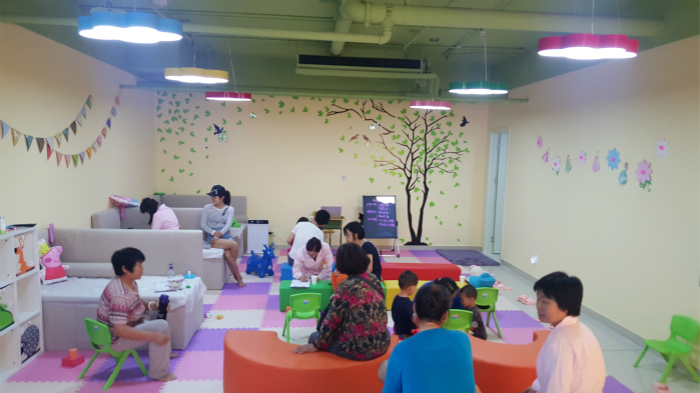
Wanpixiong has its own set of standards for both hardware and software.
“Wanpixiong has grown to what it is today by relying on word-of-mouth. Behind all our service processes lies a unified, standardized system established by our headquarters,” analyzed Tan Zhixin, highlighting Wanpixiong’s competitive advantages.
In terms of hardware, the layout of equipment and facilities is uniformly planned to create a comfortable environment for children. On the software side, the training and service systems are jointly developed in collaboration with renowned Traditional Chinese Medicine (TCM) masters, specifically tailored to the physical constitutions of Chinese children.
Regarding the positioning of Wanpi Xiong, Tan Zhixin shared his expectations: “What we aim to break through is not merely the refinement of our product system, but also the strengthening of industry-wide promotion within the social sphere. We want more Chinese families to recognize that pediatric tuina (pediatric massage) is not something to be considered only when a child’s health is compromised, but rather an essential daily lifestyle practice for enhancing children’s health.”
“Of course, entrepreneurship also has its challenging moments, requiring constant exploration. Tan Zhixin gave an example to the reporter: ‘How can we apply the currently popular online bargaining campaigns to our specific project? What kind of gifts should we offer? You must truly understand what customers need in order to effectively promote your product in the market.’”
Improving Suboptimal Health Status in Children
Pediatric tuina is highly suitable for addressing chronic sub-health conditions in children. When hospital treatments yield limited efficacy or involve significant discomfort, parents often prefer pediatric tuina for regulatory care. This approach has demonstrated notable effectiveness in managing sub-health issues such as spleen-stomach disharmony and constipation.
Tan Zhixin told reporters that some time ago, they encountered a child with adenoid hypertrophy obstructing two-thirds of the airway and grade III tonsillar hypertrophy, who snored loudly during sleep. “The hospital recommended surgery if it affected breathing during sleep. However, the parents felt the child was too young and were reluctant to proceed with surgery. After receiving more than 40 tuina (Chinese therapeutic massage) sessions at our clinic, the child no longer exhibited significant symptoms.”
What is the treatment process at Naughty Bear Parent-Child Health Management Center? Tan Zhixin explained that from the moment children enter the store, staff will allow them to familiarize themselves with the environment and play with toys. During this time, consultants will communicate with parents to understand the child's condition. Then, by observing the child's facial features and tongue coating, among other indicators, they will make an assessment and prescribe a conditioning plan.
Only after the treatment plan is finalized will the therapist begin performing pediatric tuina on the child’s meridians and acupoints. Depending on the child’s age and the specific therapeutic regimen, a session typically lasts 20 to 40 minutes.
In terms of technique, the practitioner emphasizes gentle, smooth, and steady movements to ensure the child experiences no pain or discomfort. Subsequently, based on the Traditional Chinese Medicine principle of "food and medicine sharing the same origin," the practitioner will provide parents with a tailored dietary plan, including recommended foods and items to avoid, along with scientific advice on daily routines and feeding practices, and schedule the next treatment session.
“These conditions are not classified as diseases, but poor appetite and infrequent bowel movements (every three to five days) can indeed affect a child’s growth and development. We have treated a child with chronic constipation who went up to 13 days without a bowel movement; after several months of intensive pediatric tuina (therapeutic massage), the child’s stool color and bowel regularity have returned to normal.”
Consultants and Personalized Health Plans
As for the distinctive features of Naughty Bear, Tan Zhixin stated that, from a child’s perspective, every effort is made to create a relaxed and enjoyable environment, whether through the interior design or the various picture books, toys, and animated cartoons offered in-store.
“First, we need to help the child feel comfortable coming here, so they can cooperate better with our massage therapists and be willing to listen to the lifestyle and dietary advice provided by our specialists.”
Secondly, Naughty Bear aims to provide services to a relatively stable clientele through a consistent team of pediatric massage therapists. For both children and their parents, building a relationship of mutual trust with the therapist is crucial. Therefore, Naughty Bear strives to maintain staff stability.
In pediatric tuina, constitution identification is the most critical step; accurately assessing a child’s constitution and prescribing an appropriate conditioning regimen constitutes more than half of the success. However, becoming a skilled practitioner requires the accumulation of extensive clinical experience over time.
Leveraging this advantage, Naughty Bear offers competitive salaries to recruit experienced consultants, assigning one to two per store. The consultants develop personalized wellness plans for children, which are then implemented by massage therapists. This approach effectively mitigates the shortage of top-tier talent while ensuring optimal therapeutic outcomes.
Naughty Bear requires every store manager to be an excellent consultant first. Naughty Bear has formed a tiered team that can provide professional and efficient services to more children.
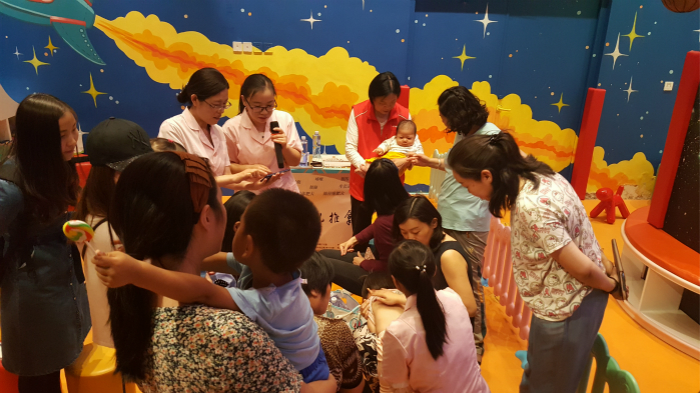
Naughty Bear has a professional team of massage therapists and consultants.
Tan Zhixin highlighted to reporters Wanpixiong’s recruitment and personnel selection mechanism: “We first evaluate candidates’ technical backgrounds and clinical experience, with strong technical proficiency serving as the initial screening criterion. Subsequently, we assess candidates’ personalities through communication, with compassion and patience toward children being key evaluation factors.”
Upon passing the initial assessment, candidates will enter a one-month probationary period featuring intensive training on effective communication with children. In addition to in-store training, management experts will conduct regular monthly sessions for store managers, and participants will also attend external training opportunities on an ad hoc basis, including workshops on pediatric massage techniques, courses in child psychology, and nutrition studies.
Profit Model
Wanpixiong’s current revenue model is primarily driven by massage therapy fees. Its major cost components are staff salaries and rent. Future growth avenues are expected to include brand licensing and franchising, parenting classes, sales of pediatric healthcare products and related items, and big data services.
Customer acquisition channels are primarily online, including commercial platforms such as Dianping and Baidu Nuomi, where we also conduct promotional and group-buying campaigns. Additionally, we engage with mothers’ online communities by offering tutorials on pediatric massage techniques to raise awareness of the Naughty Bear brand.
Offline, cross-industry partnerships serve as the primary customer acquisition channel. Wanpixiong collaborates with institutions such as maternal and child health hospitals, early education centers, and kindergartens through lectures and free clinic services. “We have established cooperative relationships with enterprises including New China Life Insurance, Huafu Women’s and Children’s Hospital, Leyou Maternal and Infant Care, New York International Early Education Center, and Aile International Early Education Center,” said Tan Zhixin.
Looking back on the past year, Tan Zhixin expressed gratitude for having a founding team that had integrated exceptionally well. The team comprises diverse talents, including operational experts from Vanke, masters of Traditional Chinese Medicine from the Chinese Academy of Medical Sciences, and members of the China Education Association.
“They have brought me many new, proven concepts.” It is precisely the professionals in these fields that have enabled Naughty Bear to achieve maturity, whether in professional massage therapy, the development of training and brand systems, or the refinement of its operational model.
Naughty Bear has secured funding and, after a year of consolidation, is now on the right track. “Our goal is not how quickly we can turn a profit, but rather to help children achieve better health,” he concluded, adding that the company hopes to collaborate with more leading enterprises in the medical and early childhood education sectors in the future.