

United Imaging Establishes AI Subsidiary with $420M Investment, Led by Renowned U.S. Expert Prof. Dinggang Shen
On October 12, VCBeat learned that the AI subsidiary established by United Imaging Healthcare with a capital injection of RMB 300 million will complete its business registration in the near future and officially commence operations. Meanwhile, United Imaging is welcoming another key figure—Professor Shen Dinggang, a Fellow of the American Institute for Medical and Biological Engineering (AIMBE), an internationally renowned academic authority in medical artificial intelligence, and a recipient of China’s National Thousand Talents Program. He will serve as one of the principal leaders of United Imaging’s AI subsidiary.
This is another event that has drawn industry attention since the company announced last month the completion of its RMB 3.333 billion Series A financing round. As a leading domestic manufacturer of large-scale medical devices, with products spanning multiple fields such as MR, DR, CT, and MI, and sold to various regions both in China and abroad, this move into artificial intelligence will contribute to helping Chinese-made devices achieve overtaking on the bend.
Scientists Embarking on Their Second Venture
United Imaging has not only invested substantial capital in establishing its subsidiary but has also made significant efforts in talent acquisition. Shen Dinggang, the head of the artificial intelligence subsidiary, has nearly 20 years of experience in medical image analysis and AI research. He has published 380 papers in international journals, which have been cited over 20,000 times, holds an H-index of 75, and owns multiple patents. His research focuses on precision diagnosis and treatment based on large-scale medical data for conditions such as autism, Alzheimer’s disease, brain tumors, lung cancer, and breast cancer. Notably, his work on “multimodal-based diagnosis of Alzheimer’s disease” ranks among the most accurate internationally.
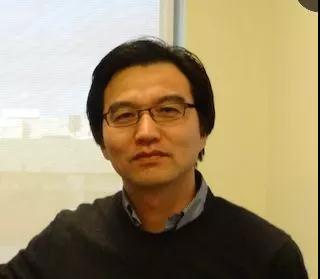
Shen Dinggang
Explaining his decision to join United Imaging, Shen Dinggang stated, “After nearly two decades of dedicated effort, I believe AI technology has reached a mature tipping point, enabling it to move out of the laboratory and into industrial application. I hope to personally participate in and witness every step of translating scientific achievements into market-ready products. In the process of productization and commercialization, I aim to maximize the demonstration of technological innovation’s value, bringing profound and beneficial changes to the healthcare industry and even society as a whole. In fact, academia and industry are complementary in the field of intelligent healthcare. I chose United Imaging as my platform because of its comprehensive portfolio of high-end medical imaging and radiotherapy products, and its strategic layout highly conducive to the development of medical AI. More importantly, over the past six years, I have witnessed United Imaging’s growth from scratch and from small beginnings to its current scale, a journey that has radiated an inspiring entrepreneurial spirit.”
Although this subsidiary is still in the process of registration, its core team has already taken shape. The team has recruited top-tier talent from around the world in the fields of artificial intelligence and medical big data, including scholars from leading universities in Europe and the United States, as well as industry leaders with extensive experience in AI-driven medical imaging.
Data + Real-World Application Scenarios Are Its Core Advantages
Shen Dinggang introduced,United Imaging’s core advantage lies in its “data + real-world application scenarios.” Leveraging its parent company’s comprehensive portfolio of high-end medical imaging and radiotherapy products, along with the United Imaging Smart Medical Imaging Cloud and imaging centers deployed across China, United Imaging can continuously acquire massive volumes of professional, high-quality data to “nurture” its artificial intelligence algorithms. Conversely, once these AI algorithms are fully trained, the aforementioned equipment, smart healthcare cloud platform, and imaging centers serve as natural deployment scenarios and distribution channels for the intelligent algorithms.Such a strategic layout, well-suited for the development of medical AI, is rare among companies not only in China but also worldwide.
R&D is conducted along both horizontal and vertical dimensions.
Regarding the new company’s R&D priorities, Shen Dinggang stated that United Imaging Healthcare would focus on addressing current pain points in the field of intelligent healthcare, striving to overcome bottlenecks in a batch of core, generic technologies related to big data and artificial intelligence, and developing a series of internationally pioneering innovative applications. Specifically, United Imaging’s R&D efforts will unfold across both horizontal and vertical dimensions.
The so-called horizontal level refers to universal core algorithms that are cross-modal, cross-organ, and cross-disease. The vertical level, on the other hand, involves combining and adjusting these general algorithms to build applications that directly address current pain points in healthcare.。
To use an analogy, general-purpose algorithms at the horizontal level are more like small bricks in a LEGO set; although they may not appear to have direct clinical significance, they serve as the fundamental building blocks for constructing various applications. Therefore, their performance must be refined to the highest possible standard.As for vertical applications, it is essential to gain a deep understanding of the pain points in the healthcare industry and assemble these “Lego-like modules” into killer apps that are truly accepted and appreciated by physicians.。
From a strategic perspective, on the one hand, United Imaging must have sufficient patience to build these horizontal, general-purpose modules and optimize their performance to the utmost. On the other hand, United Imaging should engage in deep collaboration with physicians to fully understand the pain points in the medical community, rather than making assumptions and developing niche applications.
In this way, United Imaging will develop fully intelligent high-end medical imaging and radiotherapy equipment, enabling intelligent image acquisition, intelligent diagnosis, intelligent workflows, intelligent services, intelligent environments, as well as remote radiotherapy, intelligent contouring, and intelligent planning. Ultimately, this will bring about a revolutionary upgrade in diagnostic accuracy, diagnostic efficiency, and the patient care experience.
Furthermore, leveraging the continuously expanding United Imaging Smart Healthcare Cloud Platform, United Imaging will achieve comprehensive acquisition of multi-source healthcare big data—including medical imaging, pathology images, genomics, and clinical data—establish a multi-source data algorithm repository, and provide precise solutions for personalized treatment.
Intelligent Positioning Assistance
Regarding the positioning of AI products, Shen Dinggang stated that artificial intelligence is merely a tool for physicians—a powerful one. For example, while pulse diagnosis was used in ancient medical practice, electrocardiograms are now standard; yet no one questions a physician’s competence simply because this tool is available. As a tool, AI can assist physicians in at least two aspects.
In routine medical scenarios, artificial intelligence can liberate physicians from repetitive and cumbersome tasks while providing timely alerts. In such cases, the “A” in AI stands for Assistant (Assistive Intelligence). When diagnosing complex and refractory diseases, AI may perform tasks beyond human physicians’ capabilities (such as multimodal deformable registration); in these instances, the “A” in AI becomes Augmented (Augmented Intelligence).
Whether it stands for Artificial, Assistant, or Augmented, AI is bound to become a powerful tool assisting physicians, and the renowned doctors of the future will be those who are adept at leveraging this technology.
During the implementation of AI-powered medical imaging products, some medical AI companies have integrated their systems into medical devices to gain entry into hospitals. Although United Imaging’s market share is far smaller than that of the “GPS” trio (GE Healthcare, Philips, and Siemens Healthineers), the trend of device manufacturers establishing their own artificial intelligence subsidiaries rather than partnering with medical AI startups is indeed worthy of attention and reflection.