

500,000-Yuan Prize Awarded: Decoding the Industrial Logic Behind the Tianchi Medical AI Competition
On October 11, the day before the Apsara Conference, at the Alibaba Cloud Hangzhou Base,A contestant from a Chinese university is delivering the final project presentation on stage with a serious expression. After six months of competition, the Tianchi Medical Competition will finally determine its winner today. 5The 0 million yuan prize pool will also see its final recipient determined.
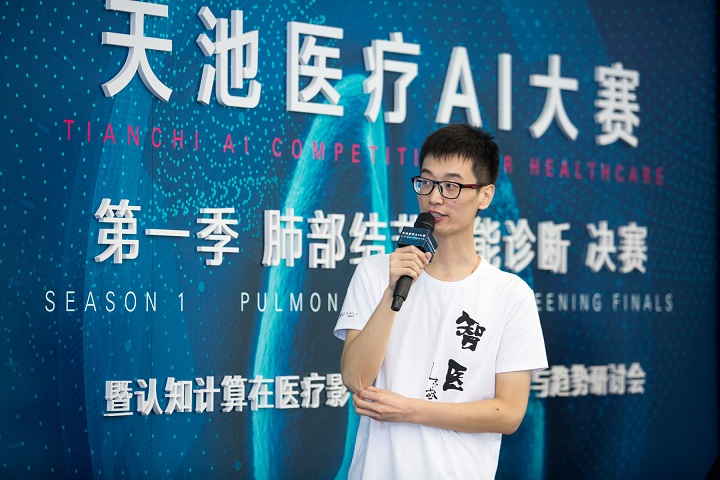
As the first medical AI competition in China, the Tianchi Competition achieved multiple industry firsts, including the largest number of participating teams worldwide (2,887) and the largest dataset (over 2,000 annotated CT scans).
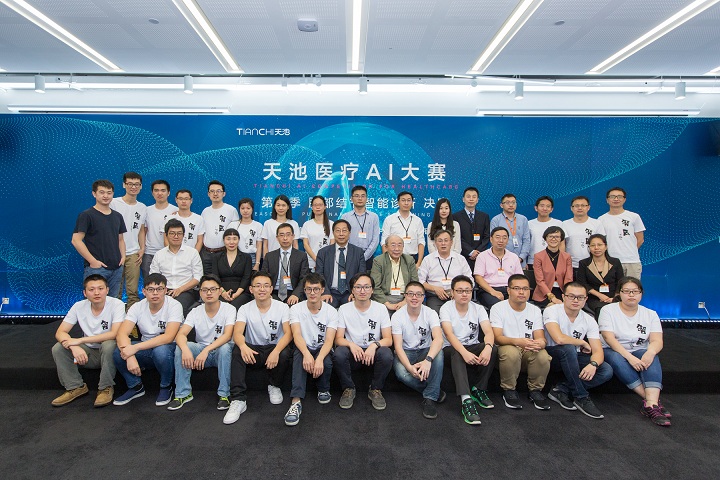
This competition attracted teams not only from renowned domestic and international universities such as Peking University, Zhejiang University, Shanghai Jiao Tong University, and Waseda University, but also from well-known Chinese enterprises, including Diannei Technology, Yiyuan Intelligence, Lianke Cloud Imaging, Palm Panorama, and Baina (Wuhan) Information.
What profound significance does this major competition hold, and what are the respective perspectives of the three organizing companies—Alibaba Cloud, Intel, and LinkDoc Technology? With these questions in mind, VCBeat conducted interviews and investigations with various stakeholders of the conference.
What is the significance of this competition?
“We call this the ‘kickoff.’ In a sporting competition, the kickoff is a crucial moment. It is highly significant to provide a globally leading, data-grade algorithm and computing platform for imaging diagnostics in China.” These were the opening remarks by Zhang Tianze, CEO of LinkDoc Technology, at the finals venue.
In his view, imaging data represents only a small subset of medical data. Currently, AI in medical imaging can be broadly categorized into three stages:
1. Detection of lesions measuring 5–10 mm (requires a large dataset of imaging cases annotated by physicians following unified standards and quality control)
2. Differentiation of benign and malignant lesions, as well as lesion typing and staging (requires substantial support from imaging cases with accurate pathological results and precise annotations)
3. Optimization of Treatment Plans and Prognostic Assessment for Oncology Patients (This requires not only a large volume of imaging data with pathological results and precise annotations, but also continuous updates of comprehensive longitudinal patient records, including treatment, surgery, medication, and follow-up data.)
Detecting pulmonary nodules using artificial intelligence is merely the stage of feature extraction from medical images. Determining whether the nodules are benign or malignant, their staging, and the appropriate treatment plans represent the next set of functionalities that AI needs to achieve.This requires more data to assist the system in making judgments, including patients' laboratory tests and examinations,Data from CT scans, endoscopy, and other modalities. By integrating imaging reports, pathology reports, perioperative medication regimens, and subsequent survival data according to each patient’s specific complications, artificial intelligence can generate personalized treatment plans, including therapeutic cycles and associated risks. Only in this way can AI truly achieve clinical application.
Zhang Tianze stated, “Undoubtedly, this represents a successful trial in achieving a secure and controllable big data trading model. The Tianchi Platform has built a cross-disciplinary collaborative bridge between owners of sensitive data, such as images and audio, and developers of deep learning technologies, providing technical and experiential references for evolving such collaborations into a new type of commercialized data trading model in the future.”
What cloud computing services does Alibaba Cloud offer?
According to Zhi Yu, Project Manager of the Alibaba Cloud Tianchi Technology Platform,Data, algorithms, and computing power are the three core elements of artificial intelligence. In this competition, the Alibaba Cloud platform effectively integrates these three components.
The platform features a three-tier architecture comprising the infrastructure layer, the Apsara distributed cloud operating system layer, and the cloud and big data layer. The cloud and big data layer is built on Alibaba Cloud’s self-developed cloud computing products (ECS, NAS, SLB, VPC) and big data products (ODPS, PAI). “Alibaba Cloud has essentially created a stage where competitors can fully showcase their talents in medical imaging algorithms, allowing data to soar in the cloud.”
The sensitivity of data in the healthcare industry poses a significant challenge, with security always being the top concern for hospitals. For this Tianchi Competition, the Alibaba Cloud team has specially developed a dataSafety"The Cage," through cleansing and confinement, can filter out sensitive data from imaging data and ensure that it is not leaked.
Zhi Yu continued, “Initially, Alibaba Cloud believed that 80% of teams would adopt 2D solutions, with only 20% opting for 3D. However, we found that 90%, or even 95%, of teams were using 3D solutions.”
Alibaba Cloud’s Apsara PAI leverages robust linear scalability to deliver specialized 3D solutions. Competing teams can rapidly process more than 32 volumetric images of size 128×128×128 or larger per iteration, thereby enhancing the accuracy and efficacy of nodule detection.
What kind of computing power does Intel provide?
Regarding computing power, Hu Xiao, a senior AI expert in Intel’s Cloud Computing Group, offered a vivid analogy: “If we compare a cloud platform to farmland, growing good crops requires not only fertile soil but also suitable farming tools. Therefore, Intel has equipped the Tianchi Cloud Platform—this ‘farmland’—with an Intel Xeon Phi high-performance computing cluster, while also providing specialized ‘farming tools’ in the form of the Tianchi-customized Caffe framework.”
First, regarding high-performance computing platforms, Hu Xiao stated: “The ‘computing power’ of a platform is not merely raw computational capability. AI models used for medical image analysis differ significantly from other general deep learning models. Although the model size itself is not particularly large, training often requires processing large-scale multidimensional image data in one go, which easily exceeds the video memory capacity of traditional GPU architectures.”Therefore, forTheseHealthcareFor AI applications,'Computing Power'Not OnlyFingerHighCalculationCanstrength, and alsoQiu YougaoStorageCanForce. Today,MedicalAIIndustry andOther multidimensional image data analyses with similar characteristicsRequirementsrelated toIndustry,Large MemoryArchitectureThe importance has increasingly become a consensus。”
The second-generation Intel® Xeon Phi™ processors are used as the deep learning computing engine in this competition, equipped with 192GB (up to 384GB) of ultra-large memory, precisely to meet the current demands of medical AI for large-scale 3D neural networks.
Regarding deep learning framework software, Hu Xiao explained that the public version of the Caffe framework operates at a higher level of abstraction. It can be likened to using a fully assembled “tractor” rather than individual parts requiring assembly; while this offers the advantage of high performance, it also results in limited flexibility.
Moreover, the official Caffe framework offers limited support for 3D neural network functionalities. In light of participants’ extensive customization requirements for medical algorithms—particularly their need for diverse 3D neural network operations—Intel contributed nearly 35,000 lines of code and released the Tianchi-customized version of Caffe. This version introduces 43 cutting-edge features, including various 3D neural network operations. As a new “tractor” specially customized by Intel for this competition, it significantly enhances the flexibility for contestants to cultivate innovation on the Tianchi platform.
What kind of data does LinkDoc Technology provide?
The foundation of any AI technology is high-quality, large-scale structured datasets, a condition that the healthcare sector notably lacks.As one of the organizers of this competition, LinkDoc Technology provided the world’s largest “research-grade chest CT dataset.”
The raw data for this competition encompassed the collection, de-identification, conversion, and standardization of imaging data. Prior to the event, LinkDoc Technology collaborated with experts from 16 renowned Grade-A tertiary hospitals across China and established a steering committee of dozens of top Chinese imaging specialists. This committee was led by Professor Zhang Guozhen from Huadong Hospital Affiliated to Fudan University, known as the “Divine Eye of the East,” and Professor Tang Lei from the Department of Radiology at Peking University Cancer Hospital, among others. They provided medical imaging support throughout subsequent stages, including data integration, de-identification, and annotation, thereby ensuring that contestants received the most premium and precise data available.
It is precisely through the collaboration of these 16 partner hospitals and a steering committee comprising dozens of China’s top imaging experts that more than 2,000 research-grade chest CT scan datasets, securely de-identified and precisely annotated, have been provided. According to Luo Ligang, CTO of LinkDoc Technology, the investment in curating these 2,000+ datasets amounted to at least RMB 1 million.
“The sheer volume of data is absolutely unprecedented in any medical AI competition worldwide. It is no exaggeration to say that this is the largest thin-slice lung CT dataset in the world,” said Luo Ligang, CTO of LinkDoc Technology.
During the data collection process, LinkDoc Technology developed a customized data acquisition system. Additionally, tailored automatic de-identification tools were specifically developed for different hospitals based on their imaging workstation vendors to remove sensitive information from CT scans, thereby ensuring that patients’ private information is not disclosed.
In the data annotation phase, to enable imaging specialists to annotate as quickly as possible, LinkDoc Technology has custom-developed several targeted data annotation software solutions that unify annotation information from different imaging workstations into a universal, open annotation format. To accelerate annotation speed and reduce training costs for annotators, LinkDoc Technology also provides comprehensive training services and video materials to help participating physicians get up to speed quickly.
During the data processing phase, each dataset provided by LinkDoc Technology was independently annotated by three imaging experts and subsequently cross-validated in the final processing stage. In cases of significant inter-rater discrepancies, the data underwent centralized re-annotation through five to six iterative rounds, ultimately yielding high-quality data suitable for use in the competition.
Wang Xiaozhe, Chief Architect at LinkDoc Technology, stated, “The current performance ceiling of deep learning models is equivalent to the highest level of human capability. Our data quality can only be ensured to approximate that of top-tier experts as closely as possible; however, since the data is manually annotated, some latent issues are inevitable. These issues will be addressed and improved through ongoing data standardization efforts and the Tianchi Competition.”
Why Are Domestic Teams Willing to Participate in the Competition?
A mentor from an academic team told VCBeat, “In fact, our annual research funding is quite sufficient, so participating in the competition is certainly not for the prize money. As an academic team, our primary goal is to hone students’ individual capabilities and gain exposure to the advanced operational environments and technologies currently available in artificial intelligence.”
“The computing power is provided by Intel, the platform by Alibaba Cloud, and the data by LinkDoc Technology, while our strength lies in clinical scenarios,” said the founder of a corporate competitor. “Our team has progressed from early-stage tumor detection and benign/malignant differentiation to supporting diagnostic outcomes, including factors such as the merits of treatment plans and risk prediction. Establishing collaboration through the Tianchi Competition has been of significant value to the synergy of our project.”
From the perspective of hospital judges, how is the implementation of AI viewed?
For companies to train AI, they need to collect raw data from hospitals and validate their algorithms. As one of the judges for the Tianchi Medical Competition, Sun Xiwen, Director of the Department of Radiology at Shanghai Pulmonary Hospital, told VCBeat: “We are the largest single-site hospital in China specializing in lung cancer treatment. Compared with other hospitals, we offer the most comprehensive range of treatments for various conditions, performing over 12,000 surgeries annually. This vast amount of medical data is highly coveted, like a prime cut of meat, and nearly every AI company seeks to collaborate with us.”
The most critical aspect of artificial intelligence is data structuring. Many hospitals possess vast amounts of data that remain unusable due to its unstructured nature. In response, Shanghai Pulmonary Hospital has collaborated with LinkDoc Technology on medical record structuring to ensure the usability of medical data at its source.
“Structuring clinical data is extremely challenging; it is difficult for companies focused solely on artificial intelligence to achieve this. Therefore, we are optimistic about enterprises like LinkDoc Technology, which possess both big data capabilities and expertise in artificial intelligence.”
Regarding the acceptance of artificial intelligence in hospitals, Sun Xiwen stated: “It depends on whose perspective you take. For ordinary hospital physicians, there is essentially resistance, as AI is perceived as a threat to their job security. In contrast, hospital management is more receptive, since AI can reduce medical errors, minimize missed and incorrect diagnoses, enhance the quality of healthcare services, and lower the incidence of doctor-patient disputes, effectively serving as an additional firewall.”
In harmonizing the relationship between artificial intelligence (AI) and physicians, Shanghai Pulmonary Hospital has adopted its own approach: “Currently, AI products are immature, much like a video game in open beta testing, riddled with numerous bugs that need to be resolved. Therefore, we can involve physicians in modifying and designing the ‘game’ (i.e., the AI systems). This sense of participation helps reduce their resistance. In the past, companies often framed AI as challenging physicians; now, the focus has shifted to assisting them, akin to the partnership between police officers and narcotics-detection dogs. This reflects a shift in role positioning.”
The Department of Radiology at Shanghai Pulmonary Hospital primarily employs two models for the application of AI in medical imaging. In the first model, AI processes all patient examination data overnight to screen for suspected cases, allowing physicians to simply verify the AI’s findings the following day. In the second model, physicians complete their diagnostic reports during the day, and AI reviews the data overnight to cross-check against the physicians’ reports for any discrepancies. In this second approach, AI acts as an supervisory arbiter, creating an adversarial relationship with the physicians. In contrast, the first approach positions AI more as an assistant, helping to alleviate the workload burden on physicians.
Currently, hospitals’ adoption of products from AI companies is primarily driven by two considerations: first, industry reputation, which involves assessing which other hospitals have used the company’s products and how peers evaluate them; second, trial performance, where hospitals provide several de-identified datasets for on-site demonstrations of the AI product, allowing conclusions to be drawn based on metrics such as misdiagnosis and missed diagnosis rates.
Regarding the current diagnostic and therapeutic capabilities of artificial intelligence, Sun Xiwen stated, “The concept of artificial intelligence has existed for a long time; back then, it was referred to as Computer-Aided Diagnosis (CAD). Major international companies such as Siemens, GE, and Philips integrated lung nodule detection CAD systems into their imaging workstations. However, the accuracy at that time was low, failing to reach even the level of resident physicians, let alone attending clinicians. Today, AI products have advanced to a level very close to that of clinical physicians. The AI system currently employed by the Department of Radiology at Shanghai Pulmonary Hospital achieves virtually no missed diagnoses in lung nodule detection.”
Reflections After the Competition
Overall, the significance of the Tianchi Competition for Alibaba Cloud, Intel, and LinkDoc Technology lies more in establishing and validating an industrial model for medical artificial intelligence. Given the current trajectory of AI development, with code becoming increasingly open-source, pure algorithms alone are no longer sufficient to serve as a core competitive advantage for future enterprises. For these three parties, which respectively dominate AI computing power and data, acquiring superior algorithms through this competition is by no means their fundamental objective.
First, we can envision the participating companies as beta testers for online games. For game developers, identifying suitable testers and compensating them for the time and labor invested in identifying bugs typically incurs costs. However, hosting a competition now offers an effortless way to achieve this.
Secondly, the “Trident” alliance formed by Alibaba Cloud, Intel, and LinkDoc Technology can be regarded as the strongest medical AI industry consortium in China at the current stage. Looking across other industries, a powerful consortium often controls both upstream and downstream segments of the industrial chain. Taking Android as an example, as the underlying operating system for smartphones, it holds the largest global market share among mobile phone systems. Consortium-based collaboration, platformization, and free access are the key factors behind Android’s widespread adoption. Once users within the consortium become dependent on its development ecosystem, the consortium leader is bound to capture substantial industrial value.
Is a 500,000 yuan prize pool substantial? It may seem so, but for the initiator, this investment is truly cost-effective.
Of course, we should not overlook the role played by healthcare institutions. As the true arbiters of the medical AI industry, the dominant position of healthcare institutions stems largely from their control over data. Both LinkDoc Technology and Alibaba Cloud are among the information technology service providers for domestic healthcare institutions, serving as participants in the handling (storage and structuring) of institutional data. By collaborating with these companies, AI teams can establish closer ties with the industry’s key decision-makers—the healthcare institutions—yielding direct benefits for both the translation of research outcomes into practical applications and their commercialization.