

23andMe Prioritizes Therapeutic Team Expansion and Global Growth Over IPO Following $250M Series E Funding
23andMe
Genomic Sequencing Service Provider

HongShan
Business Consulting, Enterprise Management Consulting Investment Institutions
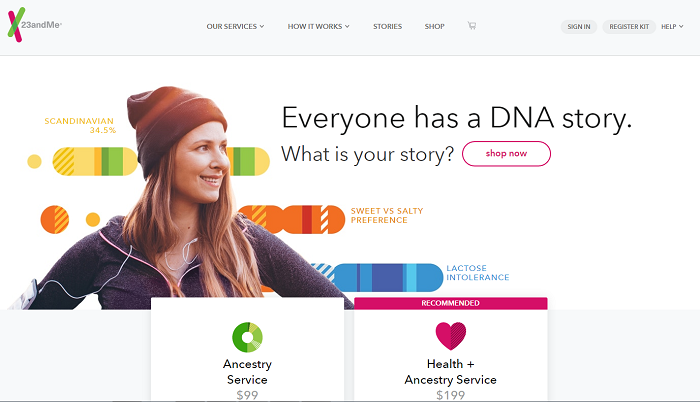
More than a month ago, the genetic testing company23andMe Announces Completion of $250 Million Series E Financing. As mentioned in the textAncestry, a competitor of 23andMe, secretly filed for an IPO in June, sparking speculation: 23andMeIs this round of financing in preparation for an initial public offering?
After more than a month of observation and verification, VCBeat has learned that 23andMe’s latest funding round will not be used for an initial public offering. Instead, the company plans to expand its Therapeutic Team and invest in upgrading its overall capabilities related to genetic sample data.
It is understood that the company’s therapeutic research team currently consists of Genentech veteran Richard Scheller and 40 employees, who are conducting investigations and research in oncology and diseases affecting the skin, immune system, liver, and heart.
23andMe is one of the fastest-growing healthcare companies in recent years, attracting significant attention from the medical, data, and pharmaceutical sectors. Unlike traditional healthcare providers and genetic testing firms, 23andMe is committed to becoming a data-driven service enterprise specializing in the mining, analysis, and interpretation of genetic information. It integrates itself into the translation of scientific research into commercial products, leveraging its services to collect data and using that data to enhance its services.
Due to the impact of FDA regulations on the genetic testing industry, 23andMe has been striving to adjust its strategy and leverage this opportunity to enhance its core competitiveness. By actively coordinating and collaborating with regulatory authorities, the company has gradually forged a unique, effective, and compliant business model, securing a competitive advantage in disease risk analysis and interpretation that places it ahead of other industry players.
23andMe is currently focused on building itself into an intelligent data enterprise specializing in big genomic data analytics. Its product offerings include a $99 ancestry test and a $199 package that includes disease risk analysis. The latter is sold exclusively in the United States.
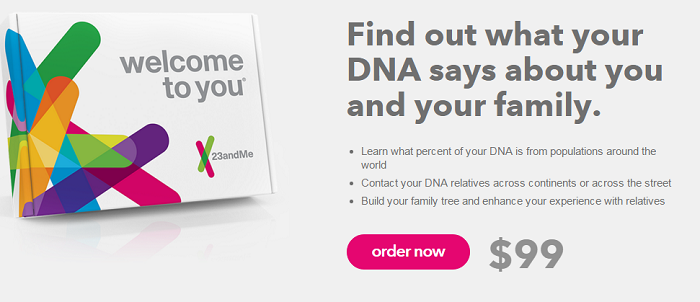
Due to the complex and diverse healthcare regulatory systems across different countries, 23andMe offers only its basic ancestry testing service for $99 in 55 other countries and regions, including the United Kingdom, Canada, Denmark, Finland, Ireland, Sweden, and the Netherlands.
It is estimated that 23andMe currently has approximately 2 million users worldwide, with about 80% of them consenting to the use of their de-identified genetic data. This has enabled 23andMe to build a biobank comprising over 1.6 million samples, making it the world’s largest database of genetic information and the core competitive advantage of the company.
Since 2013, 23andMe’s competitive strategy has primarily focused on market expansion. The company promoted its products through internet-based channels such as social media and online platforms, leveraging the influence of media to rapidly expand its distribution channels, which led to a surge in user growth. To date, 23andMe’s user base has quickly risen from 1.2 million in 2016 to 2 million.
Centering on the upgrade and expansion of its proprietary genetic database, 23andMe aims to increase its market sales share and thereby collect more diverse population genetic data. Leveraging the unique sample size of its database, the company further strengthens its capabilities in disease risk research, computational analysis, and treatment recommendations. This is 23andMe’s current strategy.
It is reported that 23andMe is actively establishing a disease treatment and analysis division, and further strengthening its data analytics services—including data mining, risk estimation, therapeutic recommendations, and drug development—through collaborations with various for-profit and non-profit institutions and researchers.
By strengthening these capabilities, 23andMe can not only further attract individual consumers but also establish connections with healthcare groups, insurance companies, and pharmaceutical firms. By providing data support services to these institutions, 23andMe can integrate into a range of industries including disease risk prediction, health management, cost control, and drug development, ultimately creating a positive feedback loop across the entire market.
Therefore, continuously enhancing genetic disease analysis capabilities, expanding market share, increasing data sample sizes, improving data mining and processing, and providing professional treatment recommendations constitute the core strategies for 23andMe’s product promotion and marketing at this stage.
Undoubtedly, the U.S. FDA’s conditional partial clearance of 23andMe’s core business facilitated a new round of financing. Since 2013, the FDA has prohibited 23andMe from providing U.S. consumers with more than 254 services related to disease risk estimation and treatment recommendations based on genetic information.
The FDA believes that test results and treatment recommendations provided directly to consumers by 23andMe, without the involvement of qualified healthcare professionals, may encourage individuals to undergo unnecessary surgeries. For instance, assessments of breast cancer risk carry a high likelihood of generating false-positive results. Consequently, regulators have determined that such tests pose significant medical risks and have classified them as Class III devices, subject to the highest level of regulatory control.
Under FDA regulations, genetic risk products must undergo rigorous clinical trials and can only be approved for market release after achieving a testing accuracy rate of 99% for specific diseases. To break free from regulatory constraints, 23andMe has actively participated in clinical trials and related research to provide an evidence-based foundation for its services.
23andMe primarily establishes collaborations with research institutions through the application programming interfaces (APIs) of its open data platform. Its initiatives include strengthening medical research capabilities by hiring more scientists and partnering with genetics research teams to conduct high-level studies. For instance, it has collaborated with the genetic analysis company Celmatix to investigate how certain genes affect women’s fertility. On another front, 23andMe continues to enhance its partnerships with pharmaceutical manufacturers, leveraging its genetic research to develop drug production and therapeutic solutions, thereby expanding into downstream industries.
By simultaneously collecting genetic information data through research projects and continuously enhancing its own research and analytical capabilities to obtain data and demonstrate the association between specific genetic variants and disease characteristics or health status, 23andMe has finally received conditional clearance from the FDA.
On April 6, 2017, the FDA sent a positive signal by approving genetic data service companies to directly provide and market General Health Risks reports to consumers. The approved tests cover 10 conditions with a genetic basis, including Parkinson’s disease, late-onset Alzheimer’s disease, celiac disease, alpha-1 antitrypsin deficiency, early-onset primary dystonia, factor XI deficiency, and Gaucher disease type 1.
When consumers assess their general or specific disease risks based on genetic information, 23andMe must include the statement “Consultation with qualified healthcare professionals is recommended” in the reports provided to them. Furthermore, before consumers receive their test results, 23andMe must advise them to seek opinions from healthcare professionals, genetic counselors, or equivalent specialists, so as to provide the most accurate analysis and judgment to inform their subsequent decision-making.
As a result, certain markets for 23andMe have been unlocked.
Having secured FDA approval first, the company became the earliest in its peer group to benefit from market deregulation. This has provided valuable experience for other industry players in further unlocking market demand and driving market upgrades.
Leveraging its capabilities in genetic disease research and data analysis, while managing relationships with regulatory authorities, 23andMe has established partnerships with healthcare providers and pharmaceutical companies. Ultimately, 23andMe has developed a business model centered on the “research–analysis–treatment” continuum, driven by massive-scale genetic data.
Through interviews with industry stakeholders, VCBeat has learned that 23andMe is currently focusing its efforts on market expansion.
We are currently focusing on team building within the research department and enhancing our data analytics capabilities, with the aim of expanding the range of hereditary risk testing services available.
Secondly, it is essential to strengthen relevant education for healthcare professionals, enabling 23andMe customers to receive greater interpretation and support for their test reports from physicians and medical counselors.
Additionally, leveraging its accumulated experience in market management, 23andMe has also made strategic arrangements for further expansion into overseas markets. Insiders revealed, “23andMe will expand across international markets, with Asia and Europe under consideration, and some investors are actively facilitating this process.”
Summary
23andMe’s development in recent years has been both constrained and facilitated by U.S. FDA regulations.
To gain a competitive edge and capture the hereditary risk testing market earlier than its rivals, 23andMe has concentrated substantial resources on evidence-based research, pioneering a business model that enables mutual reinforcement between commercial sales and research capabilities, thereby yielding a wealth of reliable research findings in the study of certain diseases.
Meanwhile, this experience has enhanced our capabilities in genetic data analysis and interpretation, strengthened collaborations with research institutions and pharmaceutical manufacturers, and secured a competitive advantage by establishing an integrated position across the upstream and downstream segments of the market.
References
https://www.technologyreview.com/s/601506/23andme-sells-data-for-drug-search/
https://www.buzzfeed.com/stephaniemlee/23andme-funding?utm_term=.bneoYNnOZ#.jq5o9G6a5
https://www.fda.gov/NewsEvents/Newsroom/PressAnnouncements/ucm551185.htm
https://techcrunch.com/2017/09/05/23andme-is-raising-about-200-million-led-by-sequoia/