

Alibaba Health's Comprehensive Medical Layout and Jack Ma's Vision for 'Smart Healthcare'

AliHealth
Medical and Health Services Network Service Provider
It is no longer news that Alibaba has heavily invested in the healthcare sector, establishing AliHealth, launching the “Future Hospital” feature on Alipay, and introducing the ET Medical Brain via Alibaba Cloud...
As a flagship healthcare platform under the Alibaba Group, AliHealth has attracted keen external attention since its inception, and its strategic layout in the medical sector has become a benchmark for interpreting the development of “Internet + Healthcare.”
At the group level, AliHealth is a key implementer of Mr. Ma’s “Double H” strategy (Happiness & Health). Outsiders often interpret Mr. Ma’s remark that “the next person to surpass me will certainly emerge from the health industry” as the underlying motive for Alibaba’s entry into the healthcare sector.
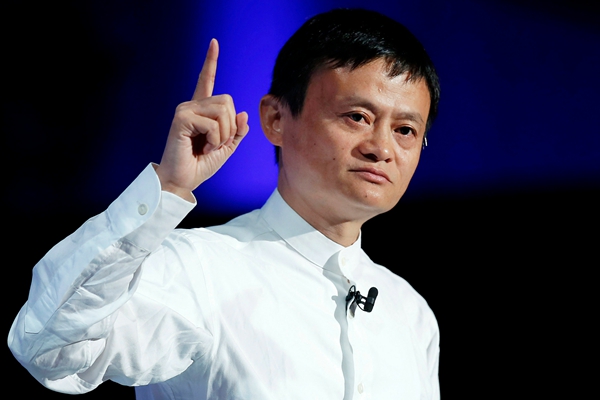
Jack Ma: The Next Person to Surpass Him Will Certainly Emerge from the Health Industry
Is it a strategic investor, an industry disruptor, or a catalyst for change? VCBeat (WeChat ID: vcbeat) has conducted a comprehensive review of AliHealth’s layout across the healthcare industry chain. By examining past and ongoing developments, we can gain insight into the industrial landscape of “smart healthcare” as envisioned by the tech giant Alibaba.
Smart Healthcare: Artificial Intelligence Takes Center Stage
At the recently held Apsara Conference, AliHealth hosted a dedicated session on “Smart Healthcare,” sharing with the public its plans to leverage internet and artificial intelligence technologies to empower healthcare services and build a smart health platform.
Reflecting on past development, AliHealth CEO Wang Lei summarized: “Leveraging big data to support healthcare and using the internet to transform health remains AliHealth’s unwavering original aspiration. In 2017, ‘Internet + Healthcare’ entered the 3.0 era, led by cutting-edge technologies such as big data, AI, and medical consortia. While the industry has been changing at a rapid pace, the ultimate purpose of technology remains to promote health. AliHealth has maintained and will continue to maintain a profound respect for the medical field, utilizing technology to make medical services simpler and more accessible, thereby providing inclusive and convenient health services to society.”
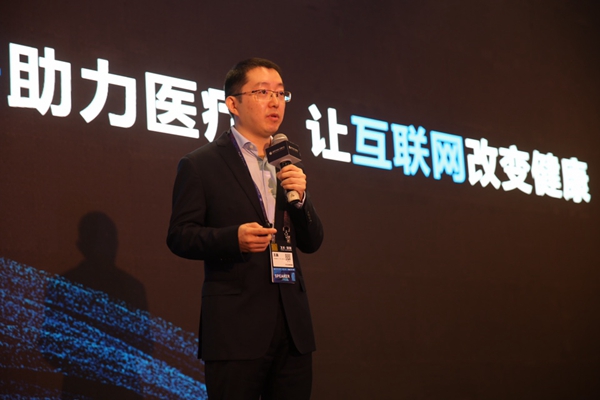
AliHealth CEO Wang Lei
For this veteran “Alibabaer,” who has been with Alibaba for over a decade and has led AliHealth for nearly three years, whether AliHealth is technology-driven or model-driven is of little importance. What truly matters is its ability to make a tangible impact on China’s healthcare industry during its development, much like how Alibaba’s e-commerce business profoundly influenced China’s internet and retail sectors.
The industry still recalls that in April 2014, the AliHealth board appointed Wu Yongming, one of Alibaba’s “Eighteen Arhats” and a partner of the group, as Chairman of the Board, while Wang Lei, then General Manager of the Taodiandian Business Unit, was appointed CEO of AliHealth. At that time, Alibaba Group had just joined forces with Yunfeng Capital to make a strategic investment in CITIC 21st Century, listed on the Hong Kong Stock Exchange, acquiring more than half of its shares and establishing AliHealth as its flagship platform.
As the first among the BAT giants to strategically position itself in the healthcare industry, Alibaba has pursued a substantial and solid footprint in this sector—whereas Tencent has primarily focused on investments, and Baidu only launched its “Medical Brain” last year.
Over the three years since its establishment, AliHealth has gradually adjusted its business model, ultimately forming stable business lines in pharmaceutical e-commerce, smart healthcare, product traceability, and health management.
Within AliHealth’s strategic planning, smart healthcare is undoubtedly the most critical business line. This segment connects hospitals at the upstream end, integrates a middle layer of medical artificial intelligence technologies and service providers, and reaches downstream to consumer-end users. By offering internet hospitals, medical AI solutions, and health management as its core products, it establishes a complete closed-loop ecosystem for smart healthcare services.
In line with Alibaba’s consistent strategy of building platforms and “infrastructure,” AliHealth aims to become a provider of informatization and intelligent solutions for hospitals, as well as a platform through which medical IT companies can deliver their services. Ultimately, it seeks to provide consumers with easily accessible smart healthcare services, enabling all segments and participants across the medical industry chain to achieve seamless integration and access high-quality services via the AliHealth platform.
Here, we cite several partnerships recently announced by AliHealth to substantiate the aforementioned analysis. At the Smart Healthcare session of the Apsara Conference, Alibaba, led by AliHealth, formally entered into a strategic cooperation agreement with Xinhua Hospital Affiliated to Shanghai Jiao Tong University School of Medicine (hereinafter referred to as “Shanghai Xinhua Hospital”).
Under the cooperation agreement, Alibaba and Xinhua Hospital will work together to build a hospital hybrid cloud platform and a Cloud Pediatric Medical Consortium platform, develop an intelligent physician training system and a medical research data platform, and implement mobile payment across the entire in-hospital patient journey, thereby creating a model “Smart Hospital.”
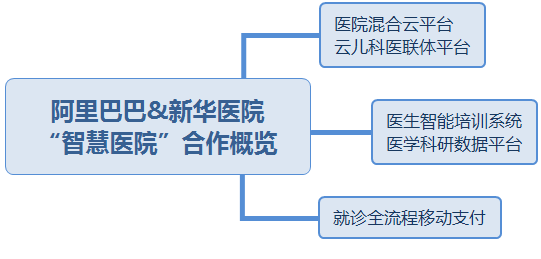
Overview of Smart Hospital Partnerships
Alibaba and Shanghai Xinhua Hospital Share Deep RootsAlibaba and Shanghai Xinhua Hospital have long-standing ties. As early as 2014, Xinhua Hospital officially launched its “Mobile Hospital” initiative, enabling residents to register for appointments and make payments via Alipay from home, then proceed directly to the consultation room upon arrival at the hospital. From basic appointment registration and payment to talent development, medical research, and the construction of medical consortia, the collaboration between Shanghai Xinhua Hospital and Alibaba has become increasingly deeply integrated into the core of the healthcare system.
In addition to spearheading the Group’s collaboration with Shanghai Xinhua Hospital, AliHealth has established a “Medical Artificial Intelligence Laboratory” in partnership with the First Affiliated Hospital of Zhejiang University School of Medicine, and set up an “Intelligent Medical Talent Training Base” with the Second Affiliated Hospital of Zhejiang University School of Medicine. Medical AI has become the central theme and keynote of AliHealth’s collaborations in the smart healthcare sector, signaling it as a key focus for the company’s next stage of development.
How Is Alibaba Strategizing in the Field of Medical AI?
In addition to AliHealth, other companies within the Alibaba ecosystem, such as Alibaba Cloud and iDST (Institute of Data Science and Technologies), have also joined the ranks of medical AI.
On March 29 this year, Alibaba Cloud released the “ET Medical Brain,” officially entering the medical AI sector. Positioned as a physician-assistance tool, the ET Medical Brain serves as an assistant to doctors in areas such as virtual patient assistance, medical imaging, precision medicine, drug efficacy mining, new drug development, and health management.
As the most important technology company within the Alibaba ecosystem, Alibaba Cloud began developing applications in big data and cloud computing around 2009, accumulating extensive experience in urban management, transportation, and the cultural and creative industries. With the rise of artificial intelligence (AI), Alibaba Cloud naturally expanded into this field. Since AI technologies rely on big data acquisition and processing capabilities, Alibaba Cloud’s prior experience proved highly advantageous.
If the application of ET Medical Brain in the healthcare sector is based on data and cloud services, then “Doctor You,” the medical AI launched by AliHealth, offers greater professional expertise and richer functionality.
This July, AliHealth officially released the medical AI system “Doctor You” at the Wanliyun Medical Imaging Center in Beijing. The system, an integrated platform for “smart healthcare,” features capabilities including clinical medical research and diagnosis, assisted medical detection, and physician training.
During the initial demonstration, Doctor You highlighted its image interpretation capabilities—a key focus of medical AI applications. Within 30 minutes, “Doctor You” operated at full capacity to perform intelligent detection and recognition on nearly 9,000 CT images from 30 patients. It flagged suspected nodules identified in the first-round screening as auxiliary diagnostic results for review by four physicians. The results showed that Doctor You achieved an accuracy rate of over 90% in identifying pulmonary nodules.
The “Doctor You” intelligent CT pulmonary nodule detection engine, jointly developed by AliHealth’s algorithm engine team and Alibaba iDST’s visual computing team, integrates medical knowledge with artificial intelligence technology to automatically identify and flag suspicious nodules, thereby enhancing physicians’ work efficiency and reducing rates of misdiagnosis and missed diagnosis.
It is also worth mentioning AliHealth’s partner in this collaboration: Wanli Cloud. A subsidiary of China Resources Wandong, Wanli Cloud primarily provides hospitals with imaging big data platform services, including cloud-based image storage, remote medical imaging, and third-party medical imaging centers. In March last year, AliHealth injected RMB 225 million into Wanli Cloud, acquiring a 25% equity stake. This partnership has laid the foundation for AliHealth’s business development in the field of medical imaging.
In addition to “image interpretation,” other applications of the Doctor You medical AI are also worth noting.
One is the clinical medical research and diagnostic platform. The Doctor You Research Data Platform can break down “information silos” between healthcare institutions, enhance their capabilities in big data storage, processing, and analysis, and help hospitals and physicians improve the quality and efficiency of clinical services and research activities.
Second is the Physician Competency Training System. This system mines clinical pathways from historical de-identified cases and automatically constructs “virtual patients.” Physician users can diagnose and treat these virtual patients in simulated scenarios, thereby acquiring medical knowledge, standardizing diagnostic and therapeutic procedures, and enhancing clinical reasoning, which contributes to the development of healthcare professionals.
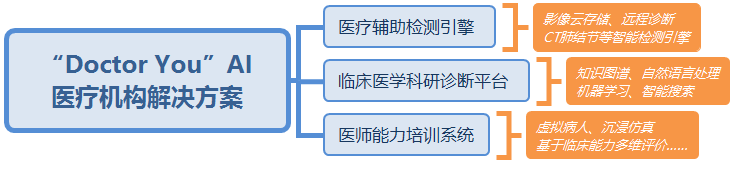
“Doctor You“AI Healthcare Institution Solutions
In summary, Alibaba and AliHealth’s strategic layout in medical artificial intelligence can be interpreted through the development trajectory of medical AI.
First is the “Infrastructure Layer,” which includes hospital information systems, big data, and cloud computing; companies such as Alibaba Cloud and Wanli Cloud have established their presence in this layer. Second is the “Technology Layer,” encompassing speech/semantic recognition, computer vision, human-computer interaction, and deep learning; iDST and AliHealth are active in this domain. Third is the “Application Layer,” covering medical imaging, virtual assistants, physician tools, and health management. Among these, AliHealth provides “Smart Healthcare” solutions to medical institutions, while Taobao Mobile and AlipayFor C-end usersReserve an entry point for health management services, with both parties serving as technology providers and platforms.
From Technology to Application,AliHeavy investment in the healthcare sector has mapped out the industrial landscape of “Smart Healthcare.”
AliHealth Smart Healthcare Milestones
The above provides a key review of Alibaba’s layout in the field of medical AI. In fact, as its flagship platform, AliHealth’s smart healthcare business line is more focused and deserves closer attention; a brief overview is provided here.
August 2017: AliHealth Launches Changzhou Blockchain Medical Consortium
On August 17, 2017, AliHealth announced a pilot project with Changzhou City to integrate medical consortia with blockchain technology. AliHealth has applied cutting-edge blockchain technology to the underlying technical architecture of Changzhou’s medical consortium system, achieving data interoperability among certain local medical institutions.
Changzhou Medical Consortium Blockchain Pilot: The First Blockchain Application Implemented in a Healthcare Scenario in ChinaLeveraging Alibaba Group’s proprietary technological expertise and integrating certain open-source frameworks, AliHealth has developed blockchain technology tailored for healthcare scenarios. The pilot was first implemented at Wujin Hospital and Zhenglu Town Community Health Center. Subsequently, under the leadership of the Tianning District Health and Family Planning Commission of Changzhou City, the pilot will be gradually expanded to cover all tertiary hospitals and primary care institutions within the Tianning District Medical Consortium.
July 2017: AliHealth Officially Launches the “Doctor You” AI System
On July 11, 2017, AliHealth, in collaboration with Wanli Cloud, jointly demonstrated a real-world scenario of human-machine collaborative remote diagnosis. “Doctor You,” the medical AI developed by AliHealth, integrates medical knowledge with artificial intelligence technology to automatically identify and flag suspicious nodules. This innovation enhances physicians’ workflow efficiency, reduces rates of misdiagnosis and missed diagnoses, and effectively alleviates their workload.
Over the past year, “Doctor You” has continuously performed deep learning analysis on medical imaging data for a wide range of diseases around the clock, leveraging big data technology. Currently, AliHealth’s CT pulmonary nodule detection engine has reached world-class standards in both performance and cloud service capabilities.
July 2017: AliHealth Partners with Yuhang District, Hangzhou to Build “Smart” Healthcare
On July 7, 2017, the Yuhang District Health and Family Planning Bureau of Hangzhou City signed a strategic cooperation framework agreement with AliHealth. The two parties will engage in in-depth collaboration in areas such as health management, health services, health technology, the health industry, and mobile payment for medical insurance. In the near future, primary care physicians in Yuhang District, including those at community health service centers and township health centers, will be able to systematically learn and master clinical skills comparable to those of specialists at Grade A Tertiary hospitals through the “Smart Healthcare Brain.” After their initial consultation at a physical hospital, residents will also be able to purchase medications online based on electronic prescriptions issued by their doctors, with professional logistics delivering the medicines directly to their doorsteps, thereby sparing them the hardship of travel.
May 2017: AliHealth to Invest RMB 330 Million in Two Medical Information Software Providers
On May 22, 2017, AliHealth issued an announcement stating that its subsidiary, Hongyun Jiukang, had invested in the medical information software provider Jiahemeikang (Beijing) Technology Co., Ltd. and its affiliate, Beijing Jiamei Online, with the total investment amounting to approximately RMB 330 million.
May 2017: Release of the 2017 Financial Report, Revealing Key HighlightsStrategic Layout in Artificial Intelligence and Health Management
On May 17, 2017, AliHealth released its fiscal year 2017 earnings announcement, disclosing that it had collaborated with multiple local governments, hospitals, research institutions, and other external partners to build an AI-powered healthcare platform and core intelligent analytics engine for “Future Hospitals.” The initiatives span areas including medical data research platforms, electronic health records (EHR), cloud-based remote imaging platforms, and intelligent disease diagnosis engines.
May 2017: The Zhejiang Provincial Health and Family Planning Commission entered into a strategic partnership with AliHealth to explore new models of “Internet + Healthcare” services.
On May 16, 2017, the Zhejiang Provincial Health and Family Planning Commission formally signed a strategic cooperation framework agreement with Alibaba (China) Co., Ltd. Under this strategic partnership, AliHealth will integrate its technological capabilities, internet pharmaceutical expertise, and resources to leverage big data technology in healthcare, enabling the public to truly benefit from convenient and affordable medical and livelihood services in the “Internet Plus” era. The collaboration also aims to research and apply the “Zhejiang Medical Brain” in Zhejiang Province, which represents Alibaba’s most advanced technology in the field of medical artificial intelligence (AI).
April 2017: AliHealth and Wuhan Central Hospital jointly established Hubei Province’s first provincial-level internet hospital
On April 27, 2017, the licensing ceremony for another provincial-level internet hospital in China—the “Hubei Provincial Internet Hospital”—was held at Wuhan Central Hospital. Jointly established by Wuhan Central Hospital and AliHealth, the facility will leverage AliHealth’s expertise in artificial intelligence and big data to provide technical services including a medical consortium data platform, an imaging cloud platform, and an intelligent clinical decision support system, thereby facilitating the hospital’s transformation into a smart hospital.
March 2016: AliHealth Invests in Wanliyun, Ushering in the Era of Remote Imaging Diagnosis and Treatment
On March 28, 2016, AliHealth issued an announcement stating that it would inject RMB 225 million in capital into Wanli Cloud, a subsidiary of China Resources Wandong, thereby acquiring a 25% equity stake in Wanli Cloud. Through this collaboration, Wanli Cloud will effectively combine AliHealth’s strengths in the internet healthcare sector with its own six decades of accumulation in China’s medical imaging industry. The partnership aims to expand third-party imaging center operations and provide B2B and B2C remote medical imaging diagnosis and related services. By establishing efficient and professional connections among patients, primary care hospitals, imaging centers, imaging specialists, and equipment manufacturers, the initiative seeks to deliver innovative imaging value and build a comprehensive medical imaging platform.
December 2015: AliHealth’s Rural Pilot for Its Online Hospital
On December 2, 2015, the online hospital jointly established by Wuhan Central Hospital and AliHealth was officially launched. Meanwhile, Wuhan Central Hospital set up a telemedicine department to provide services via the internet. On January 18, 2016, an endocrinologist from Wuhan Central Hospital successfully conducted a remote consultation via video link with villagers at Hongshi Fishery in Honghu City, Jingzhou, marking the first step in extending high-quality medical resources from major cities to remote rural areas.