

E-Hui Technology and Chairman Zhang Lizhong: Building Platforms, Selling Consumables – Our Approach to Implementing IoMT Use Cases
In the field of the Internet of Medical Things (IoMT), it seems difficult to find a clear answer at once as to how to evaluate the competitiveness of enterprises. At different positions in the industrial chain, such as the perception layer, network layer, and application layer, including RFID, positioning, terminals, and sensors, companies are emerging one after another. Among them, only a few top enterprises can truly span the upstream and downstream of the industrial chain, and YiHui Technology is one of them.
As a pioneer in the smart healthcare industry, YiHui Technology began exploring the application of the Internet of Things (IoT) in the medical sector in 2010 and took the lead in constructing a “four-network-integrated” IoT infrastructure platform in China (a project under the National Science and Technology Major Project).
Unlike other IoT companies that focus solely on product development or marketing, Yihui Technology is more focused on building an open medical IoT platform. Depending on the specific implementation scenarios, various medical IoT-related enterprises have the opportunity to join this platform. The resulting comprehensive IoT solutions offer greater potential and innovation compared to what a single company could achieve alone.
In a conversation with Mr. Zhang Lizhong, Chairman of Sinocare Yihui, VCBeat gained deep insights into the unique approach that Yihui Technology has adopted in the field of Medical Internet of Things (MIoT).
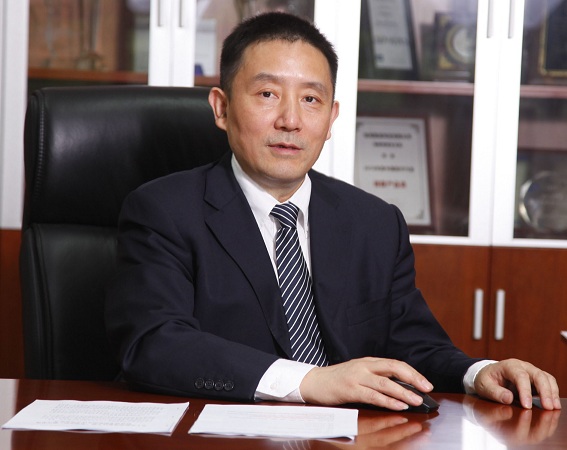
Zhang Lizhong
Chairman and General Manager of Ewell Technology Co., Ltd. He holds two master’s degrees, is a Senior Engineer, and served as a Visiting Scholar at the Stanford University Intelligent Systems Laboratory. He is the Dean of the Zhejiang Watson Smart Healthcare Research Institute and was selected as a Science and Technology Innovation and Entrepreneurship Talent under the National High-Level Talents Special Support Program. He holds numerous positions, including Vice Chairman of the Medical Quality Management and Supervision Committee on Health and Medical Big Data of the Chinese Health Information Association; Deputy Leader of the Mobile Internet of Things Group within the Standing Committee of the Health Information Standards Committee of the Chinese Health Information Association; Vice Chairman of the Traditional Chinese Medicine Informatics Branch of the China Association of Chinese Medicine; Vice President of the Digital Medical Technology Branch of the China Medical Equipment Association; Vice Chairman of the Council of China Health Magazine; Executive Director and Editorial Board Member of the Chinese Journal of Health Informatics and Management; and Vice President of the Zhejiang Health Service Promotion Association as well as Vice Chairman of its Health Management Professional Committee. He has presided over and participated in multiple scientific research projects, including the National Key Technologies R&D Program during the 11th and 12th Five-Year Plan periods, the National High-Tech Research and Development Program (863 Program), and the National Science and Technology Major Project (Project 03).
To Build the Internet of Things, First Establish an Intelligent Open Platform
Hospital information systems are diverse and complex, with large tertiary hospitals often managing 60 to 70 different systems. These systems, developed by various vendors, utilize disparate programming languages and databases. To achieve interoperability, interfaces must be established between these systems.
“The cost is extremely high. Imagine that interactions among 50 business systems require thousands of interfaces; once any single interface changes, all related business systems are impacted,” said Zhang Lizhong.
Against this backdrop, YiHui Technology partnered with IBM to develop an “Intelligent Open Platform” leveraging its underlying engine technology. By adopting SDK integration technology, the platform enables rapid connectivity with business systems, eliminates point-to-point connections, and employs a plug-and-play architecture to significantly reduce inter-system dependencies. This facilitates standardized information sharing and exchange across various application systems, thereby eliminating information silos within hospital IT infrastructure.
Zhang Lizhong stated, “The greatest benefit of introducing the intelligent open platform lies in liberating hospital suppliers. Products from any supplier can be integrated into this platform. For hospitals, higher system integration makes data management easier.”
Building on its intelligent open platform, Yihui Technology has launched an IoT infrastructure platform that integrates four networks into one.
The core of the platform consists of IoT Access Points (APs) and Access Controllers (ACs). The IoT APs, integrated with RFID reader functionality, enable dual-frequency, four-channel transmission and reception. These IoT APs can receive data returned from RFID tags as well as from Wi-Fi-enabled mobile terminals, thereby achieving fusion of front-end perception.
IoT ACs, in addition to connecting with IoT APs, can leverage integrated IoT middleware modules to enable the conversion, encapsulation, parsing, and integration of front-end sensing data with back-end application systems.
By integrating the converged communication gateway module, RFID signals are converted into TCP/IP signals for transmission. Through management via a unified convergence platform, unified and effective configuration and management of wireless network applications and RFID applications for IoT access points (APs) are achieved.
“Simply put, the IoT infrastructure platform addresses communication and data integration applications among wired networks, the Internet of Things, and internal/external networks in a streamlined manner.”
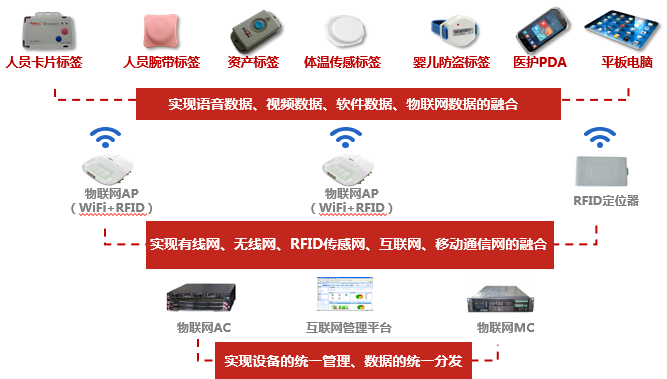 IoT Infrastructure Platform with Four-Network Integration
“For example, suppose a company has completed the deployment of an IoT-based temperature monitoring system in a hospital. However, subsequent data collection may also involve parameters such as humidity and illuminance, which is challenging for a single company to fully handle. Medway Technology’s IoT platform can accommodate the acquisition of all types of IoT data, including temperature, humidity, and illuminance, thereby enabling the sharing of IoT data. To achieve this integration capability, we have made substantial investments.”Zhang Lizhong said.
Yihui Technology's 6 Major IoT Application Scenarios
If the IoT infrastructure platform is regarded as the skeleton of the Medical Internet of Things (MIoT), then how to flesh it out with muscles, tendons, and vital substance becomes a critical question that YiHui Technology must address.
In response, Zhang Lizhong stated, “The application scenarios for the Medical Internet of Things (IoMT) are too complex for any single company to handle everything. Moreover, given the high degree of specialization in niche sectors, many companies are developing dedicated IoMT products, all of which can be utilized on Yihui Technology’s IoT infrastructure platform.”
Although the IoT infrastructure platform is open, it is not without barriers. The integration of all hardware and software products must be closely aligned with medical workflows and comply with its standards and specifications, which demands a high level of professional expertise from enterprises.
Personnel location management, infant anti-theft systems, IoT cold chain management, real-time patient temperature monitoring, infusion management, and smart bed detection are the primary application scenarios of Winning Health Technology Group’s IoT products in hospitals.
At the communication layer, YiHui Technology has partnered with H3C, a renowned domestic IT solutions provider. Leveraging H3C’s underlying network infrastructure, YiHui enables connectivity for sensors and applications across various healthcare scenarios. H3C’s IoT access points have been deeply integrated with YiHui Technology’s proprietary technologies.
At the application layer, based on its independent development, Yihui Technology collaborates with companies such as Lvyang Technology and Yingwang Technology in areas including intelligent infusion monitoring and smart beds.
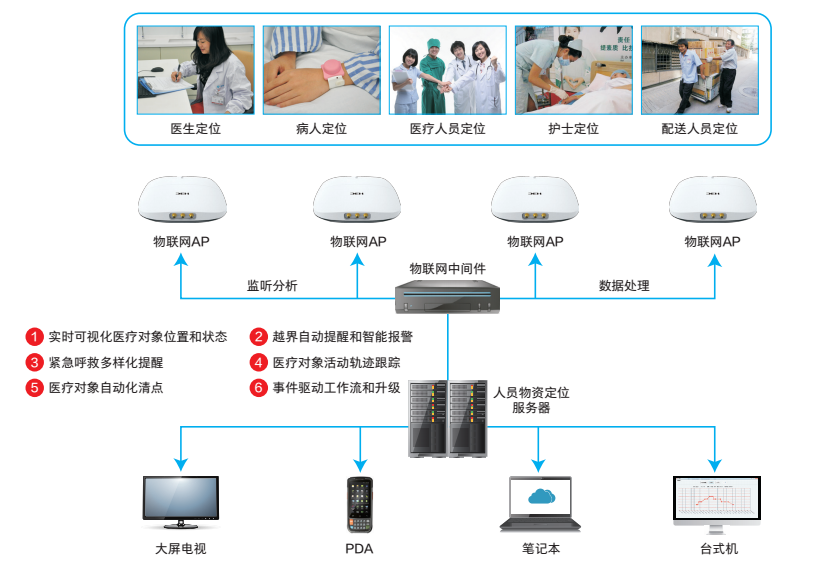
IoT-based personnel positioning and management system is a typical application of Wi-Fi and RFID technologies in the healthcare industry. By strengthening the monitoring of the location and movements of special patients, it can truly achieve "patient-centered management"center”.
Yihui Technology’s system enables refined and intelligent management of various hospital populations. With precise room-level and bed-level positioning services, customizable event mechanisms, and diverse alert methods, the system is better aligned with real-world hospital scenarios. The perceptual data generated by the Internet of Things (IoT) not only enriches medical information datasets but also brings significant convenience to the daily work of healthcare professionals.
Common personnel subject to positioning include: physicians, nurses, various patients, couriers, and other healthcare workers.
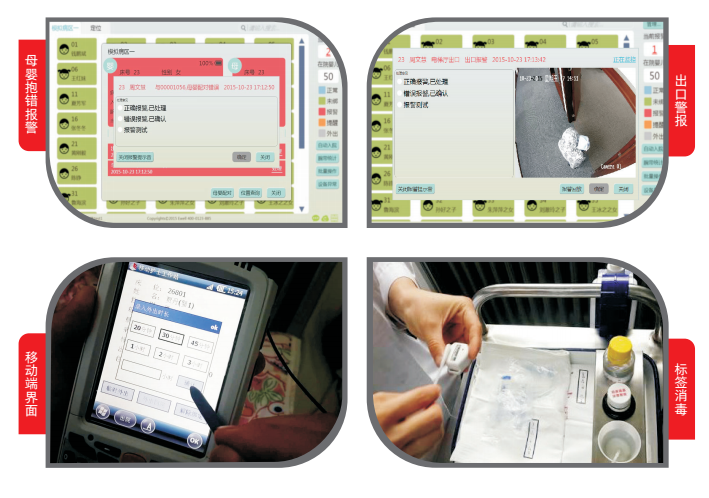
In hospitals with a high volume of newborns, the failure to implement effective identification measures often leads to incidents such as baby mix-ups and infant abduction, resulting in catastrophic consequences for both the hospital and the families involved.
The YiHui Infant Anti-Theft System achieves mother-infant pairing by equipping both infants and mothers with active long-range RFID tags. The mother’s tag contains the functionality for managing mother-infant identity matching. Once an infant tag is secured around the infant’s ankle, any unauthorized removal will automatically trigger an alarm. Meanwhile, the system can deploy IoT access points (APs) within the infant’s activity area to collect infant-related data. By installing exit monitors at the entrances and exits of the ward, the system ensures comprehensive, 24/7 monitoring of infants.
Hospitals monitor the storage environments for pharmaceuticals, blood, and other materials. Traditional solutions involve manually collecting temperature and humidity data from storage cabinets at scheduled intervals and manually recording and archiving historical data. This approach has several drawbacks: it fails to provide continuous monitoring of temperature and humidity in storage cabinets, and manual methods are less reliable and incur higher costs.
Yihui Technology’s IoT Cold Chain Management System leverages Internet of Things (IoT) technology, integrated with mobile apps and cloud platforms, to provide real-time, comprehensive monitoring of temperature and humidity in hospital pharmacies, drug warehouses, medical refrigerators, and cold storage facilities. This system enables the analysis, statistical processing, and traceability of environmental data for stored items such as pharmaceuticals, laboratory samples, reagents, and blood products. Furthermore, by utilizing GPRS and GPS communication technologies, the system achieves environmental monitoring and tracking/location capabilities for managed items throughout various stages, including intra-hospital and external transportation and distribution.
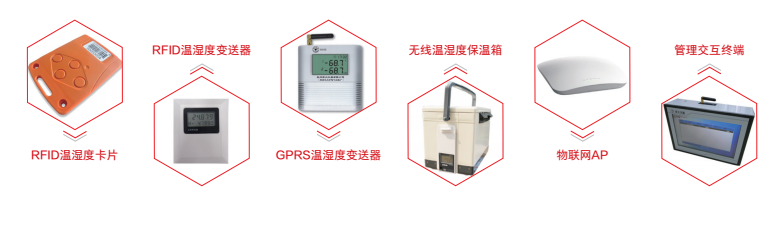
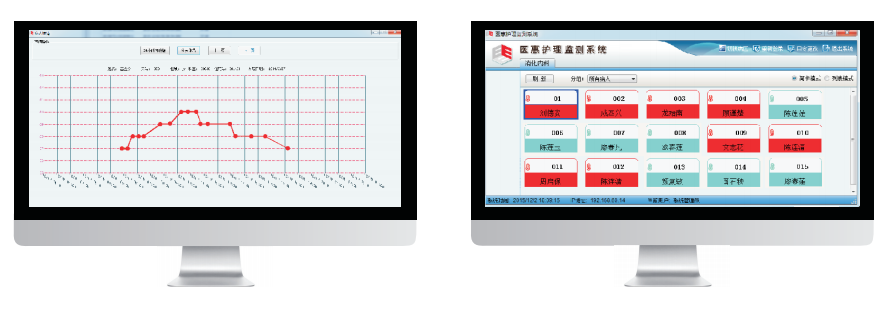
With the increasing number of critically ill, infectious, and febrile patients in hospitals, nursing staff are required to frequently measure vital signs such as body temperature and pulse. Traditional methods for measuring vital signs like body temperature and recording data are time-consuming, labor-intensive, and inefficient.
Yihui Technology’s IoT temperature tags leverage Internet of Things (IoT) technology to enable real-time, continuous, and automatic collection of patient body temperature, transforming traditional temperature measurement into comprehensive temperature monitoring, thereby providing hospitals with a streamlined and intelligent temperature monitoring solution.
1. Enables continuous data acquisition, transforming body temperature measurement into temperature monitoring to promptly detect turning points in the patient's condition.
2. 24-hour real-time display, providing a visual interface for body temperature information
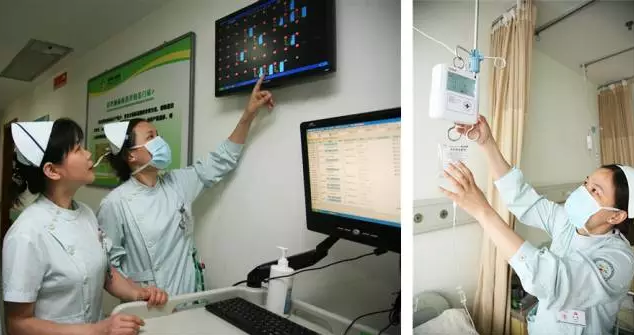
Due to issues such as a shortage of nursing staff and the heavy workload associated with nursing care, patients or their family members currently play a significant role in monitoring intravenous (IV) infusions in clinical settings, summoning nurses via call bells when assistance is needed, thereby sharing the responsibility of monitoring the infusion process with healthcare providers. Nevertheless, problems persist, including untimely replacement of IV fluids, imprecise control of infusion rates, and failure to promptly detect infusion-related malfunctions.
Yihui Technology leverages IoT gateway and sensor technologies to enable continuous monitoring of infusion status at each bedside within hospital wards, and utilizes central station displays for centralized visualization of monitoring data, progressively achieving intelligent, refined, closed-loop management of the entire intravenous infusion process.
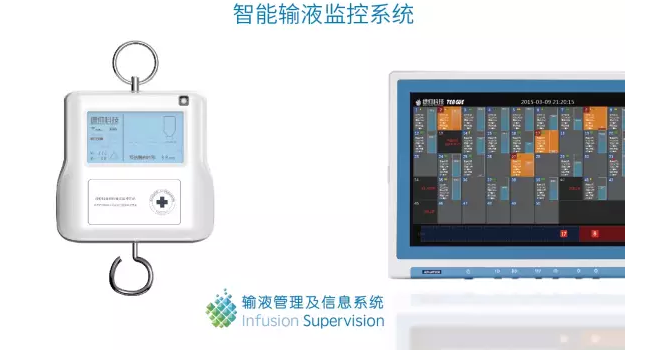
1. Establish an Internet of Things (IoT) network covering all hospital wards.
2. IoT-Enabled Smart Terminal for Infusion Monitoring
3. Management Station and Main Nurse Station Large Screens
4. Statistical Data Analysis: Collect data on key infusion process indicators (infusion start time, infusion end time, fluid volume, actual infused volume, drip rate, etc.), alarms, alarm handling information, and call events; clean and store key data according to predefined rules to provide data services for nursing performance assessment and quality control management.
Embedding wireless sensors into patient beds enables dynamic monitoring of heart rate, respiratory rate, and sleep patterns. Pressure sensors can determine whether the patient is in bed. An alarm alert is triggered if the patient remains out of bed for more than 15 minutes. This system provides real-time monitoring of patient activity to prevent accidents.
Yihui Smart Bed Monitoring System: A Vital Signs Monitoring Solution Based on uSleepCare Smart Bed SensorsLeveraging state-of-the-art Internet of Things (IoT) technology, this solution transcends traditional methods of vital signs acquisition. By utilizing sensors installed directly on hospital beds, it enables non-intrusive, real-time collection and analysis of key physiological and behavioral data—including heart rate, respiratory rate, bed exit events, and sudden anomalies—without relying on wearable devices such as wristbands. This system empowers caregiving staff in nursing homes to precisely identify and accurately predict potential risks for residents, thereby providing critical data to safeguard elderly health.
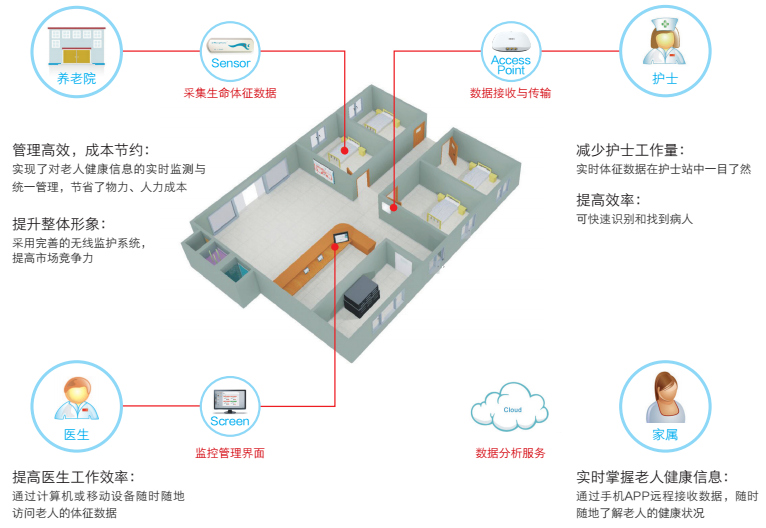
Service Extensions Centered Around Hospitals
The true significance of the Internet of Medical Things (IoMT) lies in delivering a seamless continuum of care that spans from hospital-based treatment to daily health management and rehabilitation at home, thereby addressing service needs across diverse scenarios.
According to Zhang Lizhong, Yihui Technology’s development strategy for the Medical Internet of Things (IoMT) is primarily structured around a four-step approach:
First, deeply integrate into hospitals to establish closed-loop management in healthcare. Given the numerous informatization processes in medical care, relying solely on manual administration and control presents significant challenges. By leveraging the Internet of Things (IoT), hospital workflows can be transformed into a closed-loop system.
Second, service extension, that is, extending to post-discharge services, such as chronic disease rehabilitation.
Third, the integration of medical and elderly care services, including medical care for the elderly.
Fourth, maternal and infant management, which involves providing full-course health management services for pregnant women and newborns.
Addressing the current technical limitations of the Internet of Things (IoT), Zhang Lizhong also candidly stated, “The fundamental goal of YiHui Technology is to establish a coherent service ecosystem. IoT within hospitals, particularly in the clinical sector, has not yet been truly integrated into the diagnosis and treatment process, and there are few products in the industry that have obtained certification from the China Food and Drug Administration (CFDA).”“Outside the hospital, IoT applications—including chronic disease management, elderly monitoring, and wearable devices—often serve merely as recording tools. Their value lies in providing physicians with more objective health information for patient assessment; however, from a legal standpoint, they are not currently suitable to serve as the basis for treatment or comprehensive diagnosis.”
Obviously, the Internet of Medical Things (IoMT) still needs to undergo a development process.
The Introduction of Consumables Opens Up New Possibilities
Currently, hundreds of hospitals across China have implemented Yihui Technology’s IoT platform and IoT application products, the majority of which are Grade A tertiary hospitals.
Yihui Technology’s products primarily enter hospitals through tender procurement processes. In addition, Yihui Technology integrates its IoT products into service offerings.
According to Zhang Lizhong, “Many companies focus on manufacturing medical devices and instruments, but YiHui Technology has already begun developing IoT-enabled consumables, such as temperature patches. These function as a type of medical device and are disposable. Patients can apply the patch to their body for continuous temperature monitoring over a week, after which it can be directly discarded.”
The introduction of IoT-enabled medical consumables has opened up significant growth potential for the company’s IoT market. Hospitals have shifted from making one-time purchases to engaging in long-term consumption driven by these consumables.“The major trend in the Internet of Things (IoT) is its integration into devices, components, accessories, and consumables used in people’s daily lives. As long as such integration is achieved, IoT companies can undergo significant transformations in their operational models.”
Yihui Technology’s Medical IoT, built on an open platform and spanning the upstream and downstream of the industry chain, is gradually forming an ecosystem of medical IoT services.