

HeLian Health and Foxconn Forge Strategic Alliance to Pioneer Hospital IoT Solutions
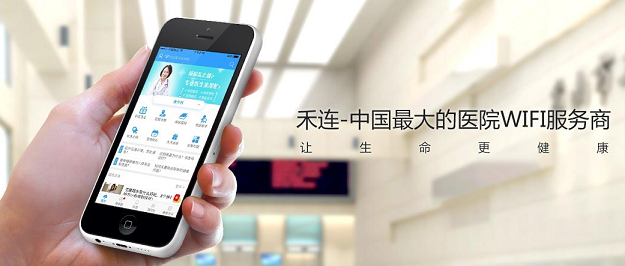
Helian Health, founded in 2014 and headquartered in Hangzhou—the most dynamic internet city—evolved from the Wireless Business Division of Lianlian Group. For years, it has focused on the internet healthcare industry, striving to build a comprehensive platform serving patients, doctors, and hospitals through Wi-Fi technology. The company has completed a Series B financing round amounting to hundreds of millions of yuan.
Helian Health leverages hospital Wi-Fi as its entry point,Signed contracts with over 1,700 hospitals across China (including more than 400 Grade A tertiary hospitals), coveringOver 900 million outpatient visits,AP coverage exceeds 100,000, surpassing the combined total of its industry competitors, and is currently the largest hospital Wi-Fi service provider in China.
Leveraging its absolute market share in the hospital Wi-Fi sector, Helian Health rapidly expanded into the hospital Internet of Things (IoT) space in early 2017 and entered into a strategic partnership with renowned equipment manufacturer Foxconn. The two parties will jointly establish a joint venture to collaborate closely on medical IoT application projects.
Both parties leverage IoT technologies such as Wi-Fi and LoRa to help hospitals integrate internal resources and services, reduce operational costs, improve service efficiency, and enhance revenue performance.
Assisting Hospitals in Achieving Personnel Management
Currently, Foxconn accounts for 70% of the global production of IoT products. Given the operational characteristics of Foxconn’s factories, enterprises predominantly adopt IoT-based management systems. Foxconn maintains exceptionally stringent standards in product quality control, waste reduction, and material preparation.
In addition, since Foxconn and BGI Group entered into a strategic partnership on March 1, 2017, certain instruments, equipment, and products from BGI Group have been contracted to Foxconn for mass production. As the Series A investor in Helian Health, BGI Group effectively served as the intermediary facilitating this collaboration.
Currently, Helian Health’s first batch of products has been launched and is undergoing pilot trials at multiple hospitals across China. Foxconn provides equipment, platform development, and technical application support for the hospital IoT projects. Helian Health is responsible for business development, contract signing, and the development and implementation of application services for these hospital IoT initiatives.
The entire process of building the Internet of Things (IoT) infrastructure in hospitals can be divided into the following three steps:
1. Deploy in-hospital Wi-Fi first as the foundation for IoT infrastructure
Hospital IoT leverages the in-hospital AP access points deployed by Helian Health to rapidly establish an IoT infrastructure using LoRa technology. As a low-power technology, LoRa offers a significantly longer service life compared to Bluetooth. While Bluetooth devices typically require replacement every 1–2 years, LoRa products can easily operate for up to five years.
2. Customize IoT solutions based on hospital requirements, building upon the Helian Health Wi-Fi infrastructure
To address hospitals' management needs for medical staff, medical equipment, and patients, customized services such as smart ID badges, seamless check-in, indoor navigation, intelligent parking, anti-wandering solutions, and consumables management are provided. Due to differences in system usage habits between mainland China and Taiwan, Helian Health independently developed a localized system with tailored visual interfaces to meet the specific requirements of hospitals.
3. IoT Trial Operation and Post-Implementation Maintenance
After the completion of the IoT project, issues identified during the trial operation phase were promptly addressed and adjusted, and maintenance personnel responded in a timely manner to reported problems in the subsequent stages.
Taking the Internet of Things (IoT) project at Tonglu First People’s Hospital in Zhejiang Province as an example, Helian Health assisted the hospital in implementing electronic geofencing and wireless monitoring during Phase I. This facilitated remote collaboration and management for medical staff, thereby improving their work efficiency. Key application scenarios include: enabling seamless, non-intrusive attendance tracking for staff through wearable devices such as smart badges and wristbands. Integrated with the “Xiaohe Medical Assistant” management system, this allows administrators to monitor real-time attendance, on-duty status, and ward-round routes.
Meanwhile, indoor air quality monitoring is conducted in hospitals to assist infection control personnel in preventing cross-infection and the spread of infectious diseases.
In Phase II, Helian Health will assist hospitals in achieving refined management, including visualized management of equipment assets, traceable management of consumables, and precision procurement of medical devices.
Balancing Cost and Practicality
Following the elimination of drug markups, increasing revenue and reducing costs have become the primary objectives for hospitals. As institutions that place a high premium on return on investment (ROI), hospitals are particularly concerned with the ROI of their products.
Taking pharmaceutical regulation as an example, suppose a hospital designates two staff members for oversight. If IoT devices can operate at a lower cost than these two individuals, the hospital has a rationale to procure such products. However, the most significant challenge with IoT currently is that the system implementation costs incurred by hospitals are substantially higher than personnel costs. The key lies in finding a balance between cost and practicality.
The greatest advantages of Helian Health in the Internet of Things (IoT) sector lie in two key areas: quality control and cost.
Due to Foxconn's high standards, every product from Helian Health must pass more than thirty tests before leaving the factory; any issue at any stage will result in rejection and rework.
In terms of cost, since the hospital’s underlying network has already been established by Helian Health, no further investment in networking is required, thereby significantly reducing the company’s total project cost.
In the view of Ye Anping, Vice President of Helian Health, the medical Internet of Things (IoT) is still in its early stages. The most pressing issue at present is how to help hospitals reduce costs. If an IoT product can both lower hospitals’ operational expenses and address information asymmetry, it will undoubtedly find a market.
Why start with personnel location management? Ye Anping stated, “A typical geriatric care hospital usually has hundreds of patients. Even with dozens of nurses on staff, it is impossible for them to accompany every patient at all times. Therefore, by implementing a personnel anti-wandering system, hospitals can significantly reduce the burden on nursing staff. Starting with personnel management, Helian Health will gradually expand into the management of hospital consumables and supplies.”