

After 14 Years of R&D, Hengyang Data Launches an Integrated AI-Powered Pathology Diagnostic System for Breast Cancer and Tuberculosis Screening
2016 is widely regarded as the inaugural year of artificial intelligence. If previously we were discussing the reforms and innovations brought to humanity by “Internet+,” then after 2016, we entered the era of “AI+.” In this “AI+” era, “AI+ Healthcare” has inadvertently become a “second battlefield” for tech giants such as Google, Microsoft, Apple, and Alibaba.
As AI technology gradually matures, the healthcare and autonomous vehicle industries are considered the earliest to achieve AI industrialization. Among these, AI-powered medical imaging technology is regarded as a paradigm for benefiting humanity and serving the general public. Consequently, an increasing number of companies are engaging in the screening and recognition of medical images from intelligent ultrasound, CT, MRI, and pathology.Shenzhen Hengyang Data Co., Ltd. (hereinafter referred to as “Hengyang Data”)is one of them.
Hengyang Data was founded in 2003, andIn early 2017, a machine learning laboratory was established, marking the company’s entry into the healthcare sector. Why did Hygon Data choose healthcare as its entry point for AI? VCBeat interviewed Feng Guojun, co-founder of Hygon Data.
What is the motivation for entering the healthcare sector?
Feng Guojun stated, “In fact, when artificial intelligence first began to gain traction last year, our company’s chairman, Chen Longsen, and several other founders were highly optimistic about this direction. They had been considering whether we could integrate our existing big data business with AI on the eve of its explosive growth.” After careful deliberation, they decided to incorporate machine learning (AI) concepts into their existing operations.
While the initial concept was in place, determining the implementation strategy and strategic direction proved challenging. In their search for a niche sector, they identified that among the various applications of artificial intelligence, image recognition, speech recognition, and facial recognition held the greatest potential for practical engineering deployment. Of these, image recognition undoubtedly offered the most promising prospects within the healthcare industry. Consequently, they focused their efforts on the healthcare sector, and the team conducted extensive market research to define their specific product offering.
“To implement machine learning, a prerequisite is the availability of large volumes of high-quality data for model training. Pathology slide data from medical institutions represents a viable option.“First, the volume of data is enormous. Second, pathological slides can be converted into high-quality data through various methods. Moreover, clinical outcomes from hospitals serve as the best benchmark for demonstrating the efficiency and accuracy of machine learning,” said Feng Guojun. Therefore, they chose to focus on pathological diagnosis, with the aim of serving pathologists.
To assess the feasibility of this idea, in early 2017, the team visited the pathology departments of multiple hospitals. Through discussions with pathology experts, they discovered a severe shortage of pathologists in China, with only slightly more than 10,000 registered pathologists nationwide. Pathologists face an enormous daily workload involving slide examination and diagnosis, while primary care hospitals are in urgent need of experienced pathologists to provide services for patients.
Based on this, Hengyang Data has decided to focus its efforts on the field of AI pathology, aiming to reduce physicians’ workload and improve their diagnostic efficiency.
In early 2017, the company decided to establish a machine learning laboratory, with several researchers possessing extensive R&D experience joining the team. The starting point of the R&D work,Hengyang Data chose to participate in the internationally renowned CAMELYON17 Challenge.This competition was organized by the Diagnostic Image Analysis Group and the Department of Pathology at the Radboud University Medical Center in the Netherlands, with the aim of evaluating existing and novel algorithms. These algorithms automatically detect and classify histological lymph node sections from whole-slide images to assess the extent of breast cancer metastasis. After more than a month of effort, Hengyang Data submitted its first entry for the competition.Among more than 700 competing teams worldwide, the Hengyang Data AI team ranked among the top and was invited to attend the ISBI 2017 conference in Melbourne, Australia.
Meanwhile, joint R&D projects between Hengyang Data and renowned domestic medical institutions are being carried out in parallel, yielding significant technological achievements.
What is the Hengyang AI Pathology Diagnosis System?
Hengyang AI Pathology Diagnosis System, is a device that integrates software and hardware, leveraging deep learning-based Convolutional Neural Network (CNN) algorithms and powerful GPU computing accelerators. It can rapidly analyze and extract lesion features from digital pathology slides, perform location annotation and quantitative counting, thereby assisting pathologists in efficiently conducting preliminary assessments and diagnoses of suspected conditions.
Leveraging AI technology, the Hengyang AI Pathology Diagnostic System enables top-tier pathologists to maximize their expertise by freeing them from simple, repetitive, and mechanically burdensome workloads. Simultaneously, it facilitates the rapid decentralization of high-quality medical resources, empowering primary-care physicians to swiftly enhance their diagnostic and treatment capabilities, thereby reducing misdiagnosis and missed diagnosis rates in pathology departments at grassroots hospitals.
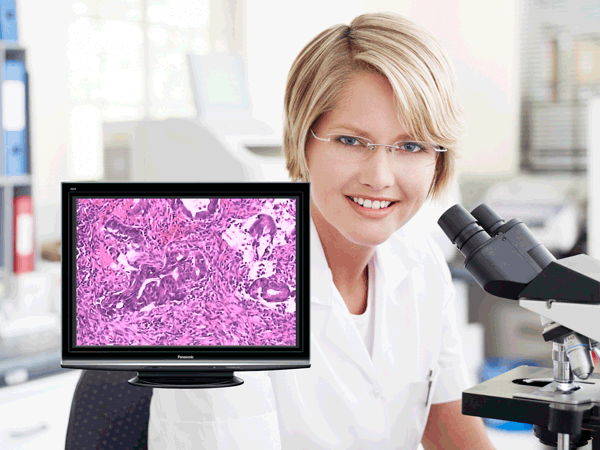
Currently, the Hengyang AI Pathology Diagnosis System primarily focuses on the identification and grading of lymph node metastasis in breast cancer. The diagnostic scope includes:
Determine the negative/positive status of samples based on the specific cellular morphology of digital slide samples of breast lymph nodes; annotate the morphological contours of lesions to assist pathologists in rapidly locating affected areas and reducing search time; quantify lesion dimensions, as well as counts of viruses, bacteria, and mitotic cancer cells, to achieve visualized statistical data analysis.
According to Feng Guojun,In addition to diagnosing lymph node metastasis in breast cancer, Hengyang Data is currently conducting R&D for multiple disease conditions, such as the identification and screening of acid-fast Mycobacterium tuberculosis.
Intelligent Recognition and Screening of Acid-Fast Mycobacteria
Tuberculosis is the second leading cause of death among infectious diseases, after HIV/AIDS, and poses a major threat to global public health.Currently, tuberculosis is listed as one of the major infectious diseases in China and is among the key diseases under priority control. China is one of the 22 high-burden countries for tuberculosis globally and one of the 27 countries with a severe burden of multidrug-resistant tuberculosis (MDR-TB). It is estimated that there are more than 4.5 million patients with active pulmonary tuberculosis nationwide, with over 1.5 million new cases of infectious pulmonary tuberculosis occurring annually. The number of patients with active pulmonary tuberculosis in China ranks second worldwide, surpassed only by India.
Currently, in terms of histopathology, screening for Mycobacterium tuberculosis using acid-fast staining is the most effective method in clinical practice. Acid-fast stain, also known as Ziehl-Neelsen stain, is a special staining technique pioneered by German bacteriologist Franz Ziehl (1859–1926) and pathologist Friedrich Neelsen (1854–1898) to visualize microorganisms with acid-fast properties.
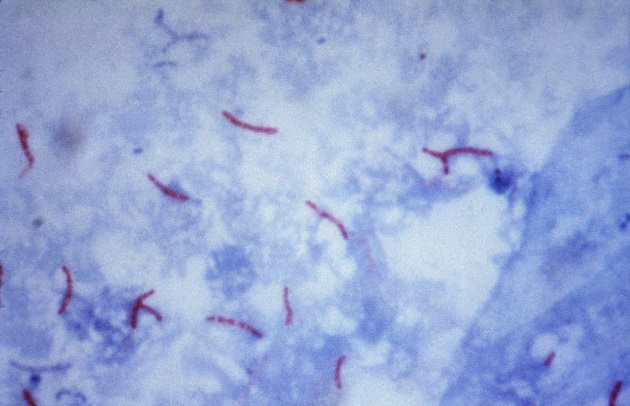
(Mycobacterium tuberculosis disease)
Pathologists confirm whether a patient is infected with tuberculosis by observing under a microscope for slender, rod-shaped bacteria that appear red and are approximately 4 μm in length. This task is labor-intensive, yields highly subjective results, relies heavily on experts’ knowledge and experience, and suffers from a high rate of missed detections. In light of these challenges, pathologists urgently need appropriate tools to alleviate their workload, giving rise to AI-based identification and screening systems specifically designed for Mycobacterium tuberculosis.
According to Feng Guojun, Hengyang Data employs supervised learning with artificial convolutional neural networks for intelligent diagnostic screening. The network features over 100,000 neuronal connections. The training dataset for the neural network comprised 578,191 Mycobacterium tuberculosis-positive samples and 2,510,307 negative samples (without Mycobacterium tuberculosis), totaling 3,088,498 samples used to train the convolutional neural network to identify mycobacteria.Currently, the diagnostic accuracy rate has exceeded 90%.
Taking the Road Less Traveled: AI-Assisted Diagnosis Can Also Integrate Hardware and Software
Unlike other companies engaged in AI-based imaging diagnostics, Hengyang Data’s pathology diagnostic system adopts an integrated hardware-software approach, constituting a tangible product. When asked why the company chose this integrated strategy, Feng Guojun stated:
“First, we aim to achieve product differentiation."If we only develop software, our differentiation is not obvious."
“Second, we aim to leverage the technological advantages accumulated over many years.“For a company, accumulating expertise in both software and hardware technologies, particularly hardware technology, actually requires a considerable period of research and development. In this regard, Hengyang Data possesses a relatively unique advantage: we have accumulated fourteen years of expertise in software and hardware technologies, which constitutes our competitive edge.”
“Moreover, based on our years of experience in the telecommunications industry, adopting an integrated hardware-software approach to reconstruct a product can create unique value in addressing customer pain points. If one merely develops a standalone software solution, it must be integrated with existing hardware on the market. Whether such existing hardware can be optimally combined with the software is a question worthy of consideration for all AI startups.”
What Are the Advantages of Hengyang Data in AI-Assisted Diagnosis?
So, compared with other AI startups in medical imaging diagnosis, what advantages does Hengyang Data have?
Feng Guojun stated,Hengyang Data’s greatest advantage lies in its years of technological reserves and resource accumulation.Over the past fourteen years, Hengyang Data has been dedicated to the collection, analysis, and application of internet-based big data. The company has accumulated extensive expertise in both hardware and software technologies and holds more than 100 patents. These technologies, refined over many years, provide strong support for Hengyang Data’s in-depth expansion into the healthcare sector. For instance, during the training phase of machine learning models, massive volumes of data must be processed; this is particularly true for whole-slide pathology images, which generate substantial data loads after being divided into smaller patches. When confronted with such vast amounts of pathological data, Hengyang Data’s existing experience helps address these emerging challenges effectively.
Another advantage is the team's collaborative capability.Feng Guojun stated that the core team at Hengyang Data has worked together for over a decade, developing a strong mutual understanding. “When launching a new business initiative, our team’s accumulated experience in technology, operations, and management gives us greater confidence in our ability to execute it successfully.”
In this conversation with Feng Guojun, the reporter clearly sensed their confidence and determination to make a mark in the healthcare sector. Drawing on past successes, VCBeat believes that Hengyang Data will undoubtedly achieve strong results in the healthcare industry in the future.