

Hybrid Model of Doctor Groups and Chain Clinics: United Regen and SoYoung Forge Strategic Alliance to Reshape China's Aesthetic Medicine Industry
MPCi
Venture Capital Institutions in High-Tech Startup Fields
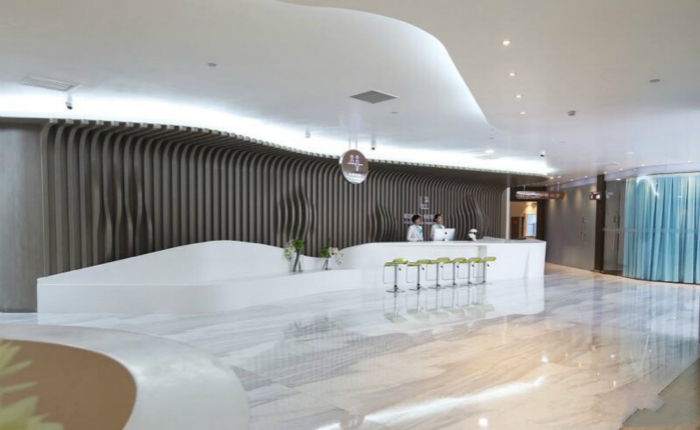
Beijing United Lige First Medical Aesthetic Hospital
On June 15 this year, United Beauty Group completed a B-round financing of RMB 200 million, marking its second round of funding since receiving Series A investment from Founder Hanyou Fund and China Equity Capital in early 2016.
Regarding the strategic layout following this round of financing, Li Bin, founder of United Beauty Grid, previously stated: “First, we will strengthen our existing business operations and accelerate the expansion of our medical aesthetics network across China, with a particular focus on the Chengdu-Chongqing region and the Pearl River Delta. Second, we will continue to invest in high-quality physicians, aiming to become China’s premier entrepreneurship platform for leading medical aesthetics doctors.”
Just three months later, United LiGe First Medical Aesthetic Hospital opened its doors. The “Medical Aesthetics Dream Team” physician group, led jointly by Professor Cao Yilin, an internationally renowned expert in tissue engineering and the pioneering scientist behind the world-famous “human-ear mouse,” and Professor Guo Shuzhong, the lead surgeon for the world’s second and China’s first face transplant, has collectively joined United LiGe First Medical Aesthetic Hospital. Other investors in this round include New Oxygen, a leading medical aesthetics app platform.
Both BCCG and So-Young were founded four years ago. BCCG entered the medical aesthetics industry as a physician incubation platform, while So-Young approached it through consumer plastic surgery diaries, reviews, and social e-commerce. Though their methods differed, their underlying principles aligned and complemented each other, laying the foundation for their subsequent collaboration. VCBeat (WeChat ID: vcbeat) conducted interviews and compiled an analysis regarding the background and significance of this partnership.
1. Return to the essence of healthcare and establish a physician group plus chain medical layout
The collaboration between So-Young and United LiGe initially stemmed from the onboarding of LiGe’s medical aesthetic institutions onto the So-Young platform. Particularly after the completion of Series B financing, United LiGe had accumulated investment and operational experience with nearly 40 physician-founded hospitals; So-Young boasted 20 million medical aesthetic users and an authoritative user review system; and the “Dream Team of Physicians” comprised China’s top plastic surgeons. The integration of these three elements gave rise to a new operational model for medical aesthetic institutions, breaking away from traditional paradigms. This model differs from conventional medical aesthetic institutions in customer acquisition, organizational structure, and management, making the collaboration a natural progression.
In the medical aesthetics industry, the United Beauty Group model is quite unconventional—it is neither a single-brand chain nor a multi-brand alliance. In Li Bin’s own words, United Beauty Group has grown in the cracks.
Before 2000, China’s medical aesthetics market was still in its nascent stage. The decade from 2000 to 2010 witnessed rapid growth in the medical aesthetics sector, characterized by the predominance of traditional marketing approaches. Physicians in public hospitals primarily focused on surgical procedures, and competition was relatively moderate.
However, societal attitudes and public perception toward medical aesthetics remained largely repressive, suppressive, and avoidant, while the industry was plagued by chaos, necessitating reform. After 2010, the market gradually became clearer, and medical aesthetics slowly gained acceptance.
Long before the establishment of United Beauty, while still serving as a co-founder of Yimeier, Li Bin had already conceived the idea of “returning to the essence of medicine.” The core value of the healthcare industry lies in physicians; if physicians and investors are at odds with each other, endeavors will not succeed.
“Many institutions have no choice but to spend heavily on advertising to acquire patients. However, doctors are not aligned with these institutions; if doctors fail to play a leading role and marketing or sales personnel take charge instead, the industry becomes distorted,” said Li Bin.
Reviewing the development path of United LiGe, from supporting doctors in starting their own clinics and establishing the United LiGe Doctor Group, to the Dream Team Doctor Group joining United LiGe's First Medical Aesthetic Hospital, and more recently collaborating with Peking University International Hospital to create an "integrated medical, educational, and research" platform—each step has been centered around doctors.
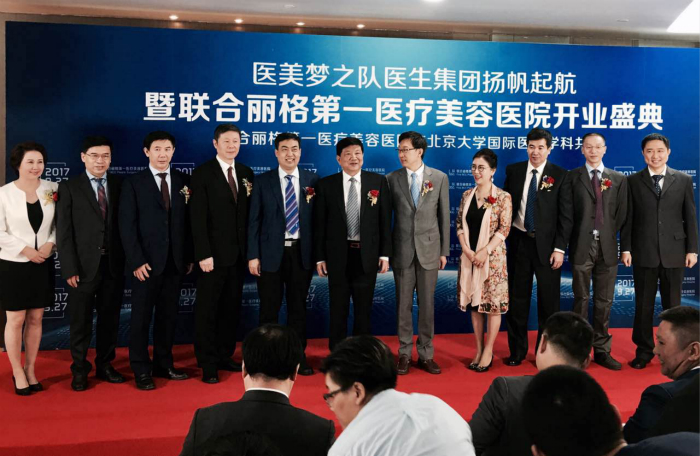
The Dream Team of Aesthetic Medicine Doctors Group Joins Union Plastic Surgery
Li Bin attributes the rapid growth of United Beauty & Plastic Surgery to its business model. “This model is well-suited for physicians with an entrepreneurial drive. Our investments focus primarily on talent; all our physicians are highly skilled. I firmly believe that with excellent doctors, patient acquisition will never be a concern. United Beauty & Plastic Surgery strictly prohibits referrals from beauty salons.”
Most physicians in the Union Beauty Doctor Group possess robust technical expertise and uphold strong medical ethics. Coupled with a personalized service model, this approach ensures a more comfortable and convenient experience for patients. In delivering high-quality, efficient care, the value of physicians is reflected in their professional knowledge and technical proficiency, rather than in the utilization of pharmaceuticals and medical consumables.
The drug-to-revenue ratio, laboratory and diagnostic test ratio, and consumables ratio within physician groups will all decrease significantly, thereby enhancing patient safety. By optimizing workflows, reducing waste, and improving efficiency, physician groups achieve cost savings in medical care. Therefore, in the long run, physician groups can improve doctor-patient relationships and help rebuild a healthy healthcare ecosystem.
Aggregating physician resources is one of the forward-looking strategic directions for Regent and So-Young. This approach makes it easier for consumers to find high-quality physicians and facilitates appropriate matching between doctors and patients. A platform that satisfies both physicians and consumers demonstrates its inherent value.
Regarding this collaboration, Jin Xing, founder of New Oxygen, stated, “New Oxygen is China’s leading internet platform for medical aesthetics, while United Liige is a hub for reputable plastic and cosmetic surgeons in China. By establishing an exclusive partnership with the top plastic surgeons in China from the ‘Dream Team’ physician group, we will jointly promote the standardized, high-quality development of the medical aesthetics industry.”
New Oxygen aims to bring together compliant institutions, licensed physicians, medical aesthetics consumers, and upstream manufacturers within the industry, thereby enabling efficient connectivity and rapid feedback across the upstream, midstream, and downstream segments of the medical aesthetics sector. This initiative seeks to eliminate information asymmetry and excessive profiteering, fostering an open environment characterized by price transparency and healthy competition.
2. Build a Strong Brand; Physicians Focus on Service Quality
Since its establishment, United LiGe has established a chain of 40 institutions across China through self-construction or mergers and acquisitions, demonstrating strengths in marketing, brand building, and operational services.
The Dream Team Doctors Group and United LiGe have come together based on shared values, with United LiGe consistently advocating for respect for physicians and a return to the core of medical practice.
“We practice what we preach. The fact that renowned physicians such as Zhao Xiaozhong and Zhou Zhanchao have partnered with Union Beauty to establish Xiaozhong Lige and Zhanchao Lige, respectively, serves as ample proof of this commitment. Moreover, the establishment of the Dream Team Physician Group, along with its resonant name, underscores the participating physicians’ aspiration to create a platform that fully reflects and realizes their professional value,” said Li Bin.
He believes that physician groups represent a mainstream trend for the future, enabling the formation of teams and brands, as well as serving as new investment entities. They facilitate academic exchange and generate synergistic effects, which defines the future direction of United LiGe.
Currently, at United Lige, a physician’s monthly revenue contribution ranges from RMB 1.5 million to RMB 2.5 million. From boutique clinics with two to three physicians to central hospitals with more than ten physicians, United Lige has established an industrial layout combining a physician group with a chain of medical facilities.
Currently, in mainland China, surgical and non-surgical cosmetic procedures each account for half of the total number of treatments. At Union Plastic Surgery Group, 40% are surgical procedures, 30% are non-surgical treatments, and 30% are laser-based therapies. In mature medical aesthetics markets such as the United States, non-surgical procedures account for more than 80%.
One trend is that the proportion of people in China undergoing minimally invasive cosmetic procedures will rise rapidly in the coming years. First, with technological advancements, procedures that previously required surgery can now be performed non-surgically.
Second, a comparison with the 2017 New Oxygen Medical Aesthetics White Paper reveals that in 2015, Chinese consumers primarily underwent plastic surgery for career-related reasons. The target demographic consisted of celebrities and internet influencers, who generally opted for surgical procedures offering more pronounced results. By 2017, the landscape in China had shifted, with an increasing number of ordinary individuals choosing minimally invasive cosmetic treatments to enhance their appearance.
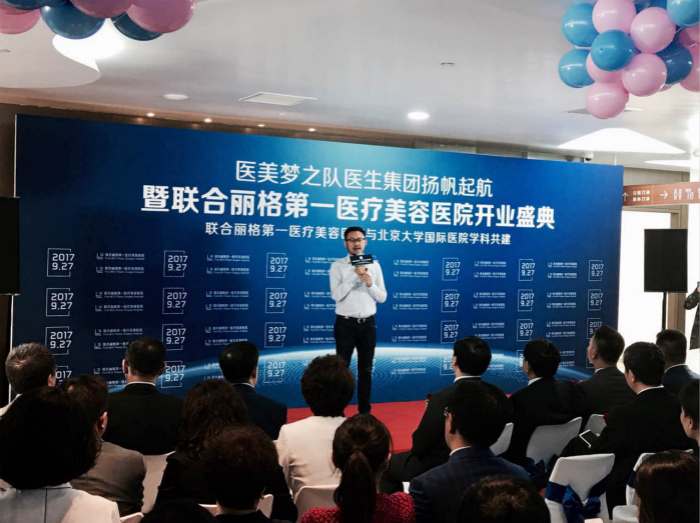
Speech by the Founder of New Oxygen at the Grand Opening Press Conference
In its early stages, New Oxygen primarily partnered with small clinics, typically physician-founded practices. These clinics had limited capability or little interest in acquiring customers through channel agents, as such a model necessitates inflating prices and returning over 50% of revenue to the agents. This approach often involves misleading consumers with inflated pricing, resulting in low customer satisfaction.
New Oxygen attracts small clinics founded by entrepreneurs among this group of doctors to join its platform. Prior to joining, their monthly revenue typically stood at around RMB 100,000; after joining, well-performing clinics can achieve monthly revenues exceeding RMB 2 million. This growth is driven by the online reputation they build, which attracts consumers not only from local areas but also from across China.
This year, SoYoung encourages institutions to “be the head of a chicken rather than the tail of a phoenix”—that is, to identify a niche segment, pursue specialization, and build their own brand.
Since 2016, the platform has attracted large medical aesthetics chains, such as United Lige, to join voluntarily, encouraging users to write diaries and build their own brands.
New Oxygen’s foray into clinic operations is not aimed at competing with offline clinics for business, but rather at finding ways to strengthen them. “This equity investment in Lige First Central Hospital is an experiment, not simply a profit-driven move,” said Jin Xing.
These renowned physicians left public hospitals to join United LiGe First Hospital, marking a milestone event.
In this new type of hospital, doctors are neither required to attend meetings and navigate interpersonal dynamics like civil servants in public hospitals, nor are they compelled to deceive patients or use counterfeit and substandard medications as seen in some private hospitals.
Leveraging the strong personal brands of physicians and emerging medical aesthetics apps like New Oxygen, medical aesthetics institutions can reduce marketing costs, leading to more rationalized pricing for consumers. The management of pharmaceuticals and medical devices will become more standardized, allowing doctors to focus solely on medical services and fulfill their professional responsibilities with legitimacy and dignity.
3. Reduce operational costs and enhance industry transparency
An offline institution that thrives and achieves sustained profitability must first maintain high user satisfaction and repeat purchase rates.
It is currently claimed that 80% of medical aesthetic institutions are unprofitable, or even operating at a loss. This is because these institutions have poorly managed their core business in the past, relying primarily on channel agents for customer acquisition, which resulted in high marketing costs, low customer satisfaction, and a transactional, one-off business model.
With agent commissions rising, users becoming increasingly savvy, and the number of agencies proliferating, these institutions are naturally facing difficult times.
Secondly, medical aesthetic institutions should strive to become leaders in at least one niche segment; it is better to be the head of a chicken than the tail of a phoenix. Jin Xing stated, “There is only one head, but the body has many parts. By combining various factors such as target demographics, pricing, categories, procedures, regions, design, services, branding, and business models, countless niche segments can emerge, allowing institutions to become pillar brands within each specific domain.”
For example, a hospital in Dalian listed on the New Oxygen platform specializes in creating the "Korean-style upturned nose" for internet celebrities. This nasal aesthetic is unacceptable to ordinary consumers because it looks unnatural and obviously surgically enhanced. However, internet celebrities are highly satisfied with the results, and the hospital has generated substantial business after gaining prominence within their circle.
Furthermore, some medical aesthetic institutions are built around the personal brands of renowned physicians or specialize in specific categories (such as rhinoplasty, dermatology, and double eyelid surgery), a model advocated by Union丽格.
Li Bin stated, “For instance, with our brand Mi Yang Li Ge, although we do perform some non-surgical procedures, laser treatments, and injections, our specialty is rhinoplasty. This is a model we strongly advocate, reflecting what we have learned from South Korea: physicians should leverage their expertise to focus on specialized offerings.”
To achieve profitability, healthcare institutions must: first, reduce marketing costs while increasing investment in medical services; second, prioritize patient service and reputation; and third, establish a clear market positioning.
Jin Xing stated, “New Oxygen can help institutions achieve the aforementioned three objectives. In terms of reducing marketing costs, the marketing cost for institutions listed on New Oxygen is generally 25%, with high-quality institutions able to bring it down to 10%—significantly lower than the 50%-70% charged by traditional agency channels.”
The rule design of the New Oxygen platform aims to ensure transparent, standardized, and supervised institutional operations, creating a safe consumption environment for consumers seeking aesthetic enhancements.
On the New Oxygen platform, regardless of whether an institution has received equity investment from New Oxygen, it can only gain broader consumer recognition and build a strong brand by delivering services that earn consumer approval and receiving positive reviews in plastic surgery diaries.
Jin Xing believes that the more such institutions there are, the better China’s medical aesthetics consumption environment will become. This will convert more potential consumers into actual customers, expanding the overall market size, thereby enabling institutions, manufacturers, consumers, and platforms to all benefit.