

Old Wine in a New Bottle: How 'Taiyi Shuo' Built a TCM Influencer IP
If you still think the primary audience for traditional Chinese medicine programs is middle-aged and elderly people, you’re out of touch!
To most people, Traditional Chinese Medicine (TCM) often appears traditional and mysterious. In the new media era marked by the explosion of short-form video content, “Taiyi Shuo” cleverly integrates entertainment elements into TCM knowledge, delivering health insights in a vivid and intuitive manner.
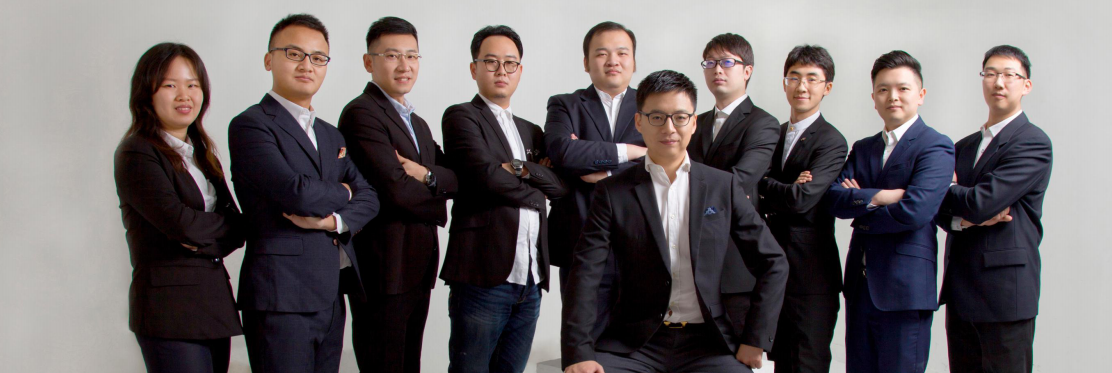
How to Popularize TCM Knowledge Among Young People by Making It Fun and Easy to Learn and Apply at Home: VCBeat Interviews Zhang Yan, Co-Founder of “Taiyi Shuo,” on Building a Viral TCM IP
From Personal Benefit to Broader Impact
Before launching “Taiyi Shuo,” Zhang Yan’s team took quite a few detours. After benefiting from traditional Chinese medicine (TCM) diagnosis and treatment, Zhang Yan and Wang Zhengyang, the founder and CEO, decided to enter the TCM market. They initially provided in-home TCM consultation services, but later discovered that although TCM is highly effective, it is a high-cost industry, and in-home services alone could not meet the demand.
As a beneficiary of TCM diagnosis and treatment, Zhang Yan believes that the efficacy of TCM should be made known to more people.
As a researcher in the field of Traditional Chinese Medicine (TCM), Zhang Yan believes that the general public commonly holds misconceptions about TCM, perceiving it as “obscure and difficult to understand, with slow and prolonged therapeutic effects.”
As a viewer of traditional Chinese medicine (TCM) programs, Zhang Yan believes that “the content presented in traditional TCM video programs is dull and overly mystical.”
As a pioneer in the traditional Chinese medicine (TCM) industry, Zhang Yan has observed that an increasing number of young people in suboptimal health states are paying closer attention to TCM-related information, just as he does.
Thus, the team has been considering how to popularize Traditional Chinese Medicine (TCM) knowledge among young people by making it engaging and fun, and enabling them to learn and apply it at home.
In 2016, when short-form videos exploded in popularity, Zhang Yan’s team decided to start with engaging, new-media short videos.
“It has become mainstream for young people to obtain information through online videos. However, traditional popularization programs on Traditional Chinese Medicine (TCM), such as Yangshengtang, primarily target housewives and middle-aged to elderly audiences. The content of these programs tends to be more traditional, and their pacing is not well-suited to today’s youth. Therefore, we sought to explore ways to disseminate practical, hands-on TCM knowledge through formats that are more readily accepted by younger generations.”
In May 2016, the team exploring entrepreneurial models in Traditional Chinese Medicine (TCM) began its transformation. On August 5 of that year, it officially launched “Taiyi Shuo,” a new-style, engaging TCM health self-media column dedicated to the dissemination of professionally generated content (PGC) in the field of TCM.
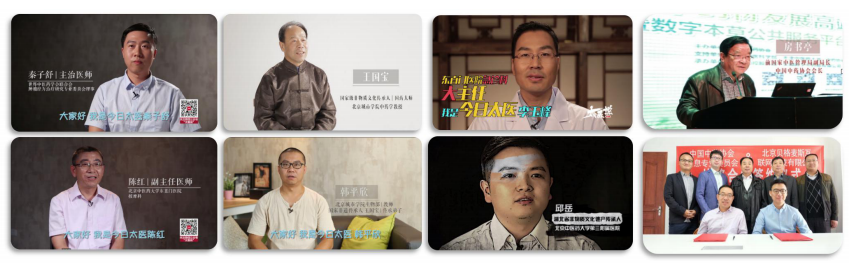
To this end, “Taiyi Shuo” has enlisted an expert advisory team of over 100 members to endorse the program. Renowned national-level veteran practitioners of traditional Chinese medicine (TCM) and attending physicians from Grade A tertiary TCM hospitals have appeared on screen to interpret medical insights featured in the show, offering recommendations on prevention, regimen adjustment, and treatment.
In Zhang Yan’s view, “Taiyi Shuo” conveys a message to young people: “Traditional Chinese Medicine (TCM) is not shrouded in mystery; a scientific understanding of it can help us avoid many unnecessary pitfalls. Nor is TCM unattainable—it can be learned and applied at home, as TCM culture is embedded in every aspect of daily life.”
Popularization of Traditional Chinese Medicine Terminology
Zhang Yan summarized the core advantages of “Taiyi Shuo” with four words: “concise, precise, extensive, and profound.”
“The Imperial Physician Says” employs a strategy of “popularizing TCM terminology” in its short videos, with carefully crafted scripts that ingeniously blend entertainment elements—such as time travel, animation, witty commentary, experiments, and street interviews—with Traditional Chinese Medicine (TCM) knowledge. With 12 episodes per season and weekly updates, “The Imperial Physician Says” is characterized by its freshness, uniqueness, and practicality, covering the field of TCM health.
In the second season, “The Imperial Physician Speaks” places greater emphasis on street interviews, providing thoughtful answers to common everyday symptoms through a format that combines street interviews, accessible expert analysis, and on-site preparation of medicinal dietary soups or simple exercises.
For instance, in the episode “Three Moves to Alleviate Shoulder and Neck Pain,” participants shared their personal experiences and perspectives on shoulder and neck pain. A traditional Chinese medicine (TCM) expert then provided a concise and accessible summary, followed by demonstrations of simple exercises with clear, step-by-step instructions, enabling viewers to learn and apply them immediately.
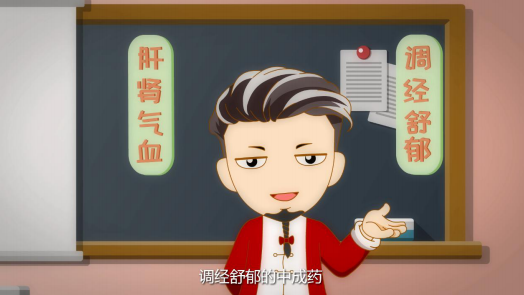
In the third season, “Taiyi Shuo” (Imperial Physician’s Talk) further implemented its strategy of making content fun, fashionable, and youth-oriented by introducing a new animated character, “Liao Ge.” Appearing as a witty commentator who delivers humorous critiques, Liao Ge uses a first-person perspective to playfully elucidate traditional Chinese medicine (TCM) healthcare concepts, enabling viewers to easily and enjoyably learn about TCM and health knowledge.
According to Zhang Yan, “Taiyi Says” will introduce additional segments in the future, including “Brother Liao Travels the World,” “Taiyi Kitchen,” “Taiyi Laboratory,” and “Renowned Doctors Are Here.” These segments aim to popularize knowledge about diseases and Traditional Chinese Medicine (TCM) treatments, thereby building a more comprehensive content matrix.
“The kitchen is a space for preparing gourmet meals, where we teach people how to make medicinal diets with therapeutic benefits. In the laboratory, we will focus on debunking myths about Traditional Chinese Medicine (TCM), such as whether silver needles can effectively detect toxins, and conduct comparative studies of different medicinal products,” introduced Zhang Yan. He hopes that these initiatives will help users gain a deeper understanding and greater trust in TCM, integrating it into every aspect of their daily lives.
Meanwhile, “Taiyi Shuo” will also establish the first MCN in the field of Traditional Chinese Medicine (TCM) content, ensuring continuous content output and sustained traffic operations.
Since engaging in new media marketing and communication for Traditional Chinese Medicine (TCM), Zhang Yan has gained new insights into the popularization of TCM in the new era. Traditionally, it was believed that the primary audience for TCM video programs consisted of middle-aged and elderly individuals. However, data feedback from “Taiyi Shuo” tells a different story.
Data shows that “Taiyi Shuo” precisely targets young people who are concerned about healthy living, with women aged 17–35 accounting for over 80% of its audience, and 50% of its users located in first-tier cities such as Beijing, Shanghai, Guangzhou, and Shenzhen.
The audience response data has validated Zhang Yan’s assessment. To date, the program “Taiyi Shuo” has amassed over 200 million views across all online platforms, with its most-watched single episode reaching 18 million views, while shares, comments, and likes consistently number in the tens of thousands.
As an engaging short-video series on traditional Chinese medicine in the new media era, “Taiyi Shuo” (Imperial Physician Speaks) has achieved omnichannel coverage to reach a broader audience. Currently, “Taiyi Shuo” is present across social media platforms such as Weibo, WeChat, and QQ; new media outlets including Miaopai, Meipai, and Toutiao; video portals, news apps, and dedicated video applications; as well as offline media channels such as high-speed rail stations and outdoor restaurant advertising.
Empowering Pharmaceutical Companies Through Advertising
“Taiyi Shuo” primarily generates advertising revenue by partnering with traditional Chinese medicine (TCM) pharmaceutical companies whose brand images are becoming outdated. “Currently, healthcare companies still rely on relatively traditional communication methods. As they depend on conventional media and offline advertising channels, their reach is shrinking, resulting in high costs but poor marketing effectiveness. We provide them with new media content marketing services to help build refreshed brand identities suited to the new era.”
Through customized video content, product placement within videos, and branding in opening and closing credits, health knowledge, brand philosophy, and product information are conveyed in a direct and vivid manner within a humorous and lighthearted atmosphere. This ingenious IP marketing strategy not only achieves excellent brand dissemination and a surge in followers but also rapidly translates positive online reputation into strong offline sales, delivering both reputational and financial benefits for enterprises.
For instance, the customized video “Dingkun Dan for Dysmenorrhea,” produced in collaboration with Guangyuyuan, was released on June 2. It propelled Guangyuyuan’s WeChat official account, which typically garnered only hundreds of views, to achieve 51,951 reads in a single instance, while the video’s total views across all online platforms exceeded 10 million.
In Zhang Yan’s view, the most crucial element in transforming traditional Chinese medicine into an influential internet-famous IP is “endowment.”
“Traditional Chinese Medicine (TCM) may be ancient, but we should not confine it to traditional stereotypes that deter people. Instead, we must imbue it with content, imagery, and character suited to the new era—reinterpreting age-old wisdom for modern times, aligning with contemporary needs, and leveraging TCM expertise to address today’s practical health challenges.”