

Lianxin Health Founder Ni Rong: 'Internet + AI' Technology to Become a Powerful Driver for Universal Health
To gain deeper insights into the implementation and outcomes of WeDoctor’s “Cloud-Based Solution for County-Level Medical Consortia” and its Traditional Chinese Medicine (TCM) + AI platform, this reporter conducted an exclusive interview with Ni Rong, founder of Lianxin Health and a comprehensive strategic partner of WeDoctor. The interview is summarized below:
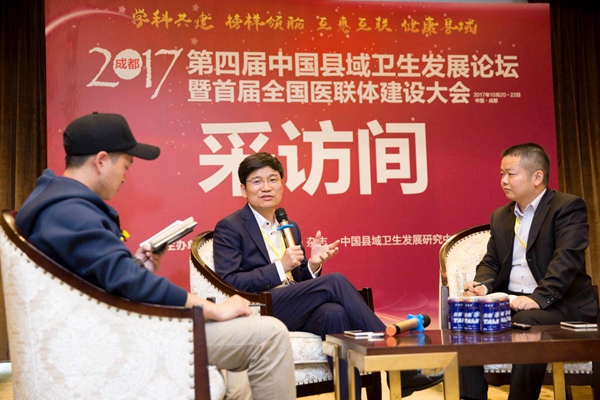
Exclusive Interview with Ni Rong, Founder of Lianxin Health and Comprehensive Strategic Partner of WeDoctor
Reporter: How does WeDoctor leverage “Internet + AI” to enhance healthcare and health capabilities at the county level?
Ni Rong: “When the counties are well-governed, the nation is at peace.” This principle applies equally to the healthcare and health system. County-level hospitals serve a population of 900 million across China and constitute the backbone of the national healthcare and health service system. Therefore, enhancing the medical service capacity of county-level hospitals is a critical step toward improving China’s healthcare and health service system and establishing a tiered diagnosis and treatment system.
WeDoctor’s “Cloud-Based Solution for County-Level Medical Consortia,” developed on the Ruiyi Cloud platform, is dedicated to enhancing the service capacity and construction efficiency of county-level medical consortia through “Internet + AI” technologies.
Specifically, this solution provides a comprehensive “software, hardware, and operations” framework to support the development of medical consortia at county-level hospitals. It enables these hospitals to connect upward with provincial and municipal medical resources, as well as WeDoctor’s nationwide network of 7,300 expert teams, and downward with township health centers, community health service centers, and village clinics. This transforms county-level hospitals into centers for expert diagnosis and treatment, collaborative care, county-wide clinical data, and diagnostic testing. The initiative establishes a county-level medical consortium anchored by online resources, led by city and county hospitals, coordinated through township health centers, and grounded in village clinics.
Leveraging internet connectivity and AI-assisted diagnostic systems, the Internet-based Medical Consortium integrates hospitals within county-level regions to foster close collaborative relationships, thereby ensuring the effective implementation of the consortium model. Meanwhile, WeDoctor will jointly establish four offline bases with county-level medical institutions—namely, a Remote Consultation Center, a Remote Data Center, Cloud Consultation Rooms, and a Service Operations Center—and deploy eight intelligent systems for practical application in these county-level healthcare facilities.
In March 2017, WeDoctor invested RMB 100 million to jointly establish the Zhejiang University Ruiyi Artificial Intelligence Research Center with Zhejiang University. The initiative aims to leverage AI technologies to provide scientific and intelligent in-depth services to medical consortia, ultimately facilitating a comprehensive enhancement of diagnostic and treatment capabilities, laboratory testing capacities, and medication management proficiency at county-level hospitals, thereby supporting the national goal of ensuring that 900 million people can receive treatment for serious illnesses without leaving their counties.
Reporter: In addition to the “Cloud-Based Solution for County-Level Medical Alliances” developed based on Ruiyi Cloud technology, what other practices has WeDoctor implemented in the “Internet + AI” sector?
Ni Rong: Previously, WeDoctor has conducted extensive exploration and trials. In addition to the “Cloud-Based Solution for County-Level Medical Alliances” developed based on Ruiyi Cloud technology, WeDoctor has also developed multiple other solutions leveraging the same Ruiyi Cloud platform.
Solution for Medical Consortiums Led by Tier-3 Grade-A Hospitals: Targeting leading Tier-3 Grade-A hospitals nationwide, WeDoctor has established a systematic internet-based medical consortium platform leveraging internet and artificial intelligence technologies. Currently collaborating with Shanghai Huashan Hospital and Guangdong Provincial Hospital of Traditional Chinese Medicine, the initiative effectively facilitates the rapid decentralization of high-quality medical resources to primary care settings, bringing the public closer to their long-awaited goal of accessing accessible, affordable, and high-quality healthcare services right at their doorstep.
Regional Health and Healthcare Information Platform Solution: Pilot programs have been implemented in Heilongjiang, Wenzhou, Jiaxing, and other regions, yielding phased achievements.
Cloud-Based Solution for Specialty Disease Alliance: WeDoctor has established the Tiantan Neurological Diseases Specialty Alliance for Beijing Tiantan Hospital, connecting 79 member institutions across 31 provinces and municipalities in China. By leveraging internet technologies, this initiative breaks away from the loose structure of traditional medical consortia, achieving interconnectivity of data, talent, knowledge, and services within the alliance. An additional 300 Grade A tertiary hospitals are expected to join the alliance in the future.
Meanwhile, WeDoctor has also conducted fruitful explorations into “Traditional Chinese Medicine (TCM) + AI” in collaboration with its strategic partners, developing intelligent TCM application platforms based on Ruiyi Cloud technology.
Many experts assert that artificial intelligence may well be the key driver of the Fourth Industrial Revolution. Historically, the ultimate beneficiaries of each technological revolution have been the general public. By enhancing efficiency and the overall capacity of healthcare and health services, “Internet + AI” technologies are poised to become a powerful catalyst for advancing population health.
Reporter: What specific products are available in the “Traditional Chinese Medicine + AI” sector? What achievements have been made to date?
Ni Rong: On October 14, at the 7th Annual Academic Conference of the Information Professional Committee of the World Federation of Chinese Medicine Societies and the Academic Exchange Conference on Smart Traditional Chinese Medicine Services for Human Health, the Xuanhutai Intelligent Syndrome Differentiation and Treatment Cloud Platform, the Lianxintang Traditional Chinese Medicine Health Service Platform, and the Zhejiang Jiaxing Traditional Chinese Medicine Cloud Platform were released.
What is the biggest challenge currently facing Traditional Chinese Medicine (TCM)? It lies in syndrome differentiation and treatment, as well as the inheritance of clinical experience. Resources from renowned veteran TCM practitioners are dwindling, while grassroots TCM physicians require more guidance and clinical learning tools. In the face of 960 million TCM diagnosis and treatment visits annually, modern tools are needed to provide robust support.
Xuanhu Tai is a Traditional Chinese Medicine (TCM) application platform developed based on big data and artificial intelligence technologies. Centered on the core principle of syndrome differentiation and treatment, it consolidates 1,441 syndrome patterns, 1,528 drug contraindications, thousands of prescriptions, and tens of thousands of knowledge entries into a cloud-based solution covering disease syndromes, therapeutic methods, body constitutions, prescriptions, and herbal compatibility. With this system, every primary care TCM practitioner has the support of a wise and learned renowned TCM expert behind them, integrating the experience of countless TCM masters from ancient times to the present. The system assists in prescription formulation and allows for clinical modifications based on individual patient conditions.
The platform has currently integrated more than 300 institutions, providing comprehensive coverage across all 11 prefecture-level cities in Zhejiang Province, with a cumulative total of nearly 1.6 million prescriptions. In the future, it will continue to expand its scope of application and gradually develop into the most widely used “Cloud-Based TCM Brain” nationwide, effectively enhancing the service capabilities of primary-care TCM providers. Additionally, Xuanhutai won the first prize in the National Primary Healthcare Informatics Innovation Competition. As the core “Syndrome Differentiation and Treatment” module of the health information platform for TCM diagnosis and treatment areas (TCM halls) in primary healthcare institutions across China, it is now deployed in TCM halls nationwide.
In addition, the Xuanhu Platform has been upgraded to version 3.0, incorporating syndrome differentiation and treatment for cardiovascular and cerebrovascular diseases. Based on constitution identification and analysis, the system automatically recommends prescriptions and similar medical cases. Primary-care TCM practitioners can independently select these recommendations and modify them according to clinical needs, thereby achieving specialized treatment for specific diseases. The achievements will be prominently showcased at the First International Intelligent Healthcare Conference on November 15. Academicians, experts, and industry practitioners in the fields of medicine and computer science from China, the United States, Russia, and other countries will engage in in-depth discussions on the deep integration of artificial intelligence and healthcare.