

Wei Ai Kang Community Healthcare Chain Files IPO Prospectus: Generating Nearly RMB 80 Million Revenue Without Relying on Traditional Medical Consultations, Aiming to Become 'Alibaba of Healthcare'
In his report to the 19th National Congress of the Communist Party of China, President Xi Jinping explicitly called for the comprehensive elimination of the practice of subsidizing healthcare with drug profits, while strengthening the grassroots medical and health service system and the workforce of general practitioners. In Zhengzhou, Henan Province, there is a company that has been diligently implementing these measures since 2014.
“In the design of our group’s overall business model, the projected revenue mix is approximately 1:2:3. Traditional medical diagnosis and treatment services will account for only about 15% of revenue, value-added or lightweight medical services will contribute 35%, and the remaining 50% will come from extensions of medical products, such as healthcare finance and insurance.”Gao Ping, General Manager of Wei'aikang Medical Group, told VCBeat.
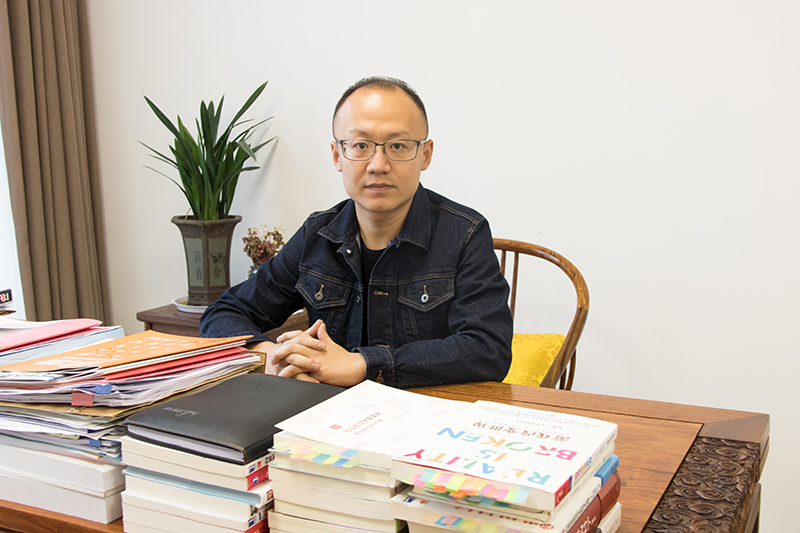
Gao Ping, General Manager of Wei'aikang Medical Group
“The purpose of designing such a model is to reduce reliance on revenue from medical diagnosis and treatment, thereby satisfying the government, delivering tangible benefits to the public, and ensuring the project’s profitability, practical feasibility, and sustainability.”
For a long time, primary healthcare has been perceived as being trapped in an awkward predicament characterized by the practice of subsidizing medical services with drug profits, poor environments, and inadequate infrastructure, which fails to retain patients or attract physicians. Consequently, it has become an industry that everyone views favorably yet no one dares to enter. So, how does Wei'aikang alleviate this predicament and break this vicious cycle?
Among the many healthcare entrepreneurs, Gao Ping stands out as a visionary. As early as 2014, he clearly defined his strategic positioning: prioritizing offline development before integrating online services. In the absence of established models for offline project operations, he built a comprehensive closed-loop system in the primary care and broader health sector. This system encompassed high-frequency interactive family doctor services, proactive resident health management, standardized community hospital operational management, and supply chain services within physician groups and medical consortia. These very components are now the most sought-after initiatives in primary healthcare.
At that time, the wave of internet healthcare startups was in full swing, with investors enthusiastically backing a mushrooming number of digital health projects, among which several outstanding players emerged. Yet, while the industry presented opportunities for overnight success, Wei’aikang remained committed to operating brick-and-mortar facilities, dedicating itself to standardized primary care, refined health management, and family doctor contract services.
So, what are the reasons behind Wei'aikang's firm commitment to offline operations? Gao Ping highlighted the following points:
1. The healthcare industry, relatively speaking, requires more face-to-face communication; internet-based healthcare can only address a small fraction of doctor-patient issues;
2. In terms of consumer trust, the healthcare industry requires deeper communication and engagement strategies;
3. The traditional internet healthcare model involves experts serving patients via the internet, with patients evaluating these services online; however, such online interactions lack widespread applicability in the medical industry.
4. The essence of the healthcare industry lies primarily in its diagnostic and treatment capabilities as well as service delivery, both of which require a solid offline foundation and sustained investment. Traditional internet-based healthcare fails to address various service-related issues during the diagnostic and treatment process, resulting in limited patient satisfaction and difficulties in implementing effective care services. By restructuring the offline medical service model and leveraging the internet as an efficient channel for interactive connectivity, Henan Wei'aikang Medical Group Co., Ltd. comprehensively addresses the incompleteness and inadequacies of offline medical services, offering patients an improved service experience. This approach represents a sustainable development trajectory for the future of healthcare.
“We aim to address the challenges facing healthcare through an O2O (Online-to-Offline) model. Therefore, Wei’aikang was positioned from its inception to first establish a strong offline presence within the broader healthcare landscape, and then gradually enhance its online infrastructure. This approach creates a system centered on physical entities, supported by core medical services, with the internet serving as a tool for communication and connectivity, thereby providing residents with comprehensive health and medical services,” added Gao Ping.
“Since our first campus began its trial operations in June of this year, the daily outpatient volume has been approximately 120 patients. While there is room for growth, exceeding 200 patient visits per day would compromise the service quality of a single-site campus and negatively impact patient experience. Therefore, the triage and referral role of our family doctors becomes particularly crucial at this stage; they strategically stagger patient referrals to the campus based on the urgency and severity of each patient’s condition.”
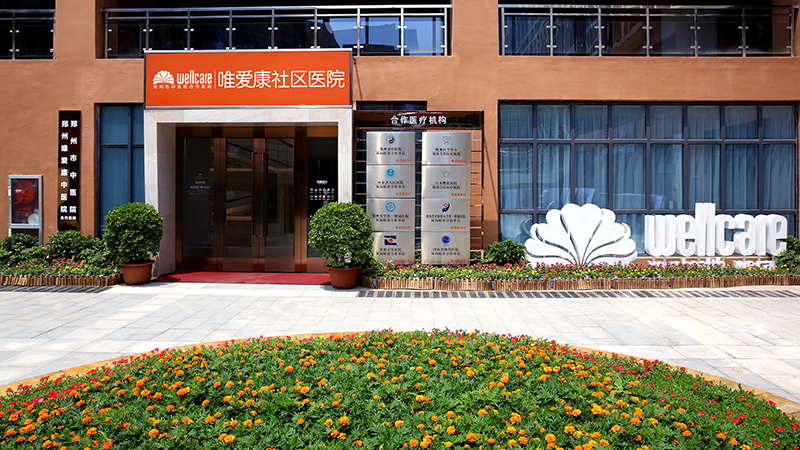
Wei’aikang positions its chain community hospital project as creating the “Home Inn” of the healthcare industry, namely by exporting its brand and standardized management system to replicate projects through models such as entrusted operation, third-party construction with self-operation, and investment and M&A.
The Sports Park Branch of Wei Ai Kang Community Hospital covers an area of approximately 3,000 square meters, with an estimated investment of around RMB 15 million for establishing such a community hospital in Zhengdong New Area. Designed in accordance with the “integrated medical and elderly care” standard, this branch features Traditional Chinese Medicine (TCM) as its specialty. Leveraging the high-quality medical resources of tertiary Grade-A hospitals such as Zhengzhou Hospital of Traditional Chinese Medicine, it offers departments including Internal Medicine, Pediatrics, Gynecology, Rehabilitation, Stomatology, and Geriatrics. The facility integrates services spanning disease prevention, medical treatment, healthcare, rehabilitation, elderly care, health education, and health consultation, thereby innovatively addressing the full-lifecycle health needs of 100,000 residents within a 5-kilometer radius—covering front-end health management, mid-end diagnosis and treatment, and back-end rehabilitation and elderly care.
Within the elderly care sector, the third floor of the Wei'aikang Sports Park Campus not only features a dining hall designed for the convenience of seniors living alone, patients, and their families, but also offers chess and card rooms as well as activity rooms for nearby residents to relax, unwind, and enjoy leisure activities. This creates new opportunities for older adults to maintain healthy lifestyles and enjoy their golden years.
In terms of online layout, Wei'aikang uses family doctor signing as an entry point.In Wei'aikang’s design, the enrollment of patients with family doctors not only provides community hospitals with a steady and controllable patient flow but also enables them to operate as independent revenue-generating units. Through family doctors, these hospitals can deliver front-end health management services and back-end rehabilitation and wellness care, thereby covering a broad spectrum of comprehensive health services.
Wei’aikang positions its family doctor contract services as the core customer acquisition system and a key component of proactive health management. Building on these contract services and centering on the healthcare needs of “five-member families,” Wei’aikang has developed a series of specialized family health protection products. These initiatives not only increase interaction frequency and enhance patients’ sense of benefit, but also accomplish innovative steps in proactive marketing, patient referral to medical facilities, and self-generated revenue.
Currently, Wei'aikang has signed up over 13,000 individuals for family doctor services in the communities surrounding its Sports Park campus. By providing long-term health management services and scientifically designed health management products, supported by stable community hospitals as physical entities, it has maximally met the public's needs for health management.
Furthermore, “The principle we follow in pricing our medical services is to ensure affordability within the scope of primary care, adhering to the fee standards of Tier-1 hospitals, with some prices even lower than theirs. Since our overall business model does not rely on generating substantial profits from hospital-based diagnosis and treatment, we remain committed to maintaining consumer-friendly prices to enhance user stickiness and foster trust in community hospitals,” Gao Ping told VCBeat.
Wei'aikang has also made significant efforts in introducing high-quality medical resources.In addition to its collaboration with the Zhengzhou Traditional Chinese Medicine Hospital at the Sports Park Campus, Wei'aikang Community Hospital has also signed agreements with experts from top-tier (Grade A tertiary) hospitals—including the First Affiliated Hospital of Zhengzhou University, Henan Provincial People’s Hospital, and the First Affiliated Hospital of Henan University of Chinese Medicine—to provide regular, on-site consultations. Meanwhile, it has established “green channels” for medical access with leading domestic and international healthcare institutions, directly serving community residents through telemedicine, case consultations, off-site referrals, and overseas medical care. In terms of technical support, the Mayo Clinic in the United States and Chang Gung Memorial Hospital in Taiwan provide Wei'aikang with technical exchanges, management enhancement, and service training, enabling local residents to enjoy high-quality, affordable medical resources right at their doorstep.
This year, Wei'aikang established the first company in Henan Province to list a physician group, organically integrating the consolidation and supply of medical resources to form Wei'aikang’s unique management system.
Gao Ping believes that merely contracting with experts is insufficient to provide comprehensive technical support for community hospitals, nor does it hold significant appeal for the experts themselves, making it difficult to establish stable and sustainable collaborative relationships. However, through systematic cooperation models, physician groups can not only engage in long-term partnerships with a larger number of high-caliber physicians but also “cultivate” renowned doctors within this system. This approach both attracts premium medical resources to serve their chain of community hospitals and provides physicians with more diversified platforms for professional practice.
So, if a doctor works on multiple practice platforms, how can they balance their working hours at Wei'aikang?
In response to reporters’ questions, Gao Ping explained:“During the initial phase of multi-site practice, physicians may indeed experiment with different platforms, but they are ultimately likely to remain with the platform that offers the most satisfactory collaboration. This so-called ‘satisfactory collaboration’ is precisely where the value of a physician group’s management system lies.”Wei'aikang Physician Group provides physicians with diverse career advancement pathways, innovative compensation structures, differentiated team collaboration models, and the establishment of specialized expert studios. At their core, these initiatives are designed to offer physicians better opportunities for professional development.
If physicians wish to start their own practices, Wei’aikang not only provides space within its community hospitals but also integrates physicians’ independent studios into the operational framework of its chain of community hospitals.
The management system of physician groups offers physicians the greatest degree of liberation, allowing them to focus solely on enhancing their clinical expertise while all other matters are addressed within this framework. During the course of collaboration, physicians gain personal achievements and brand value that far exceed material income.
Although healthcare is an industry with immense growth potential, it also presents relatively high barriers to competition, requiring profound industry expertise and accumulated experience. Those who establish a leading position in this sector first will gain brand advantages and a solid foundation for expansion.
In the future, Wei'aikang aims to become the Alibaba of the healthcare sector, onboarding numerous B-side enterprises and devising differentiated profit-sharing structures tailored to the characteristics of various industries.Open the Wei'aikang platform to high-quality enterprises capable of providing services, deliver superior value experiences to the public, and enable individuals to access comprehensive healthcare services across their entire lifecycle on this platform.
Reporter’s Notes: Staying True to the Original Aspiration, Forging Ahead
The seamless integration and collaboration across every division of Wei'aikang are made possible by the team's diligent efforts. It is understood that the three founders of Wei'aikang include: Zhang Yong, who serves as Chairman and is responsible for formulating group strategy. He was previously the head of a well-known large domestic chain enterprise and has conducted in-depth research into standardized chain operation systems. Fu Dagong serves as Vice Chairman and oversees capital operations. With over ten years of experience in government agencies, he is a professional investor who has invested in multiple listed companies and institutions, including Guangli Technology, Senyuan Electric, Shaolin Temple branded food products, and Dianliang Capital. Gao Ping serves as General Manager, responsible for top-level design and operational management. He was formerly the head of a renowned medical management company in Henan Province and possesses profound insights into healthcare reform and development.
To this day, Gao Ping still vividly recalls the competitive landscape when vying for the chain community hospital project in Zhengdong New Area, where Wei’aikang competed against several other well-known domestic companies. “What initially impressed the government was our clear demonstration that Wei’aikang could provide truly affordable and high-quality healthcare services to the general public. In our overall business model, we significantly reduced profits derived from diagnosis and treatment.” This approach aligns closely with the policy directives emphasized at the 19th National Congress of the Communist Party of China, which called for “zero markup on drugs,” reduced examination fees, and strengthened elderly care and rehabilitation services.
“Now that three years have passed, our Series A financing has been completed, securing tens of millions in funding, with nearly 100 million yuan invested. During this phase, we encountered a series of challenges related to capital, talent, and communication. In the face of these issues, the key lies in whether one can remain true to their original aspirations, choose the most appropriate course of action amidst difficulties, and pursue it with unwavering determination.” This is Gao Ping’s greatest insight from his entrepreneurial journey.