

Medical VR/AR in 2017: Only One Company Secured Funding, Yet Surgical Planning, Navigation, and Medical Education Show Strong Potential
Since its surge in popularity in 2016, VR/AR has been eclipsed this year by artificial intelligence and robotics. The VR industry has adopted a more sober approach, moving away from hype and focusing on deep integration into various sectors. In the medical field, VR/AR technology has gained industry acceptance and is being applied in areas such as rehabilitation training, stress relief, and surgical procedures.
October 2017,ABI Research has released a research report stating that the development of medical VR is jointly driven by various stakeholders, including healthcare professionals, hospitals, schools, and medical technology companies. ABI Research predicts that the market value of the medical VR industry will reach $8.9 million this year, and by 2022, this figure will reach $285 million.
“Unlike conventional medical care, VR-based healthcare does not require strict treatment protocols and has gained significant popularity in the consumer market. VR applications for smoking cessation, sleep management, stress relief, and improving memory in the elderly are being increasingly adopted by consumers,” said Khin Sandi Lynn, an industry research analyst at ABI.
The report also highlights four primary application areas for current medical and healthcare VR: therapy, training, surgery-related applications, and medical research. Therapy remains the most common medical application of VR, encompassing conditions such as insomnia and smoking cessation.
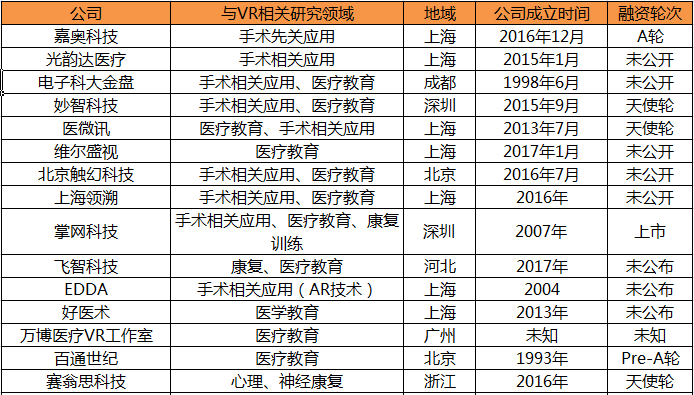
In China, the application of medical VR/AR in preoperative planning, surgical navigation, and medical education is gaining increasing momentum. VR is not dead; it is simply aligning itself with clinical needs.
VR+ Surgery-Related Applications
In China, VR technology is primarily applied in surgical contexts for preoperative planning and surgical navigation.
Many physicians rely on two-dimensional CT images for diagnosis, which only provide a planar view and prevent comprehensive examination of all anatomical structures, thereby increasing the difficulty of making accurate clinical assessments.
VR technology enables three-dimensional visualization of various body parts, allowing for the observation of minute details and internal structures. Certain products utilize a stylus to perform comprehensive six-degree-of-freedom analysis of anatomical regions, supporting functions such as zooming, panning, rotation, cross-sectional slicing, and coloring.
Taking Chuhuan Technology as an example, the Chuhuan VR Display System is a real-time interactive 3D imaging system. It reconstructs models by scanning human organs and tissues via CT or MRI, and can also import other standard human or artificial models for medical education. Unlike technologies such as Vive and Oculus, doctors do not need to repeatedly put on and take off VR headsets during diagnosis or surgery. By simply wearing lightweight 3D glasses and using our display screen, they can observe 3D images of surgical organs. This allows for comprehensive observation of the organs while remaining engaged with the real world, enabling real-time communication and interaction with patients.

As is well known, spinal and cranial surgeries are highly complex procedures. Taking pedicle screw fixation as an example, surgeons insert multiple screws into the vertebral pedicles to treat spinal disorders and deliver therapeutic agents. While this may sound straightforward, the actual procedure is extremely challenging because the spine houses the densest concentration of blood vessels and nerves in the human body; any deviation during screw placement can lead to severe complications. Consequently, there is a substantial demand for spinal surgery navigation systems.
The navigation system enables physicians to clearly ascertain the current procedural status and subsequent targeting, significantly reducing operational and localization errors. As illustrated in the figure below, VR navigation overlays can be visualized on the original images.
Shenzhen Zhangwang Technology is a representative player in this field. In October 2017, Zhangwang Technology and the Third Affiliated Hospital of Southern University of Science and Technology jointly established a VR Medical Joint Laboratory to co-develop industry-leading VR medical products.
Director Liu Cundong of the Department of Urology at the Third Affiliated Hospital of Southern Medical University stated, “Virtual reality technology enables physicians to visualize internal anatomical structures with transparency. Precision medicine is no longer solely reliant on experience and intuition, significantly reducing surgical risks. In the future, the integration of robotic devices and technologies may bring about disruptive transformations in clinical surgery.”
Director Liu Cundong’s perspective reflects a key trend in the future of technological healthcare: integrating VR technology with surgical robots to enable procedures that are not only minimally invasive but also highly precise. According to VCBeat, relevant companies are currently promoting such collaborations.
Additionally, this September, Jia’ao Technology, a medical VR company engaged in research within this field, announced that it had secured tens of millions of RMB in Series A financing, led by Volcanic Stone Capital and participated in by Sinovation Ventures.
As previously reported by VCBeat, EDDA Technology has also achieved surgical navigation using AR technology. EDDA’s proprietary AI+QMR Holographic Fully Quantitative Mixed Reality enables hands-on, immersive manipulation of personalized 3D anatomical models of human organs, tissues, and lesions from various angles via gesture and voice commands, aligning with actual clinical needs. More importantly, it allows for real-time interactive quantitative analysis of 3D volume, distance, angle, and vessel diameter, thereby facilitating comprehensive preoperative quantitative 3D precision assessment, virtual surgical simulation, and surgical risk evaluation.
FromFrom the perspective of current development, preoperative planning and surgical navigation are the most mature applications of VR/AR technology in healthcare, as well as the most promising for monetization.。
VR + Medical Education
The ultimate goal of medical education is clinical practice. However, traditional two-dimensional teaching materials lack interactivity and three-dimensionality, making it difficult to provide learners with substantial and efficient guidance. This is particularly true for high-value but low-availability resources such as cadaveric anatomy and surgical procedures, which are precisely where VR demonstrates its advantages.
Virtual reality systems can provide students with superior medical training that is unattainable in traditional classroom settings. Leveraging technologies such as 3D modeling, positioning and ranging, and five-dimensional coordinates (three-dimensional space plus parallel universes), VR offers significant advantages in simulating organ anatomy and virtual surgical procedures, far surpassing the capabilities of conventional teaching methods.
Specifically, there are three forms of VR application in medical education.
On May 30 last year, the world’s first VR live broadcast of a 3D laparoscopic surgery was conducted at Ruijin Hospital, Shanghai Jiao Tong University School of Medicine. Zheng Minhua, Director of the Gastrointestinal Surgery Department and the Shanghai Clinical Medical Center for Minimally Invasive Surgery, performed a radical right hemicolectomy for colon cancer on an 82-year-old female patient using 3D laparoscopy. The technology and equipment required for the VR live broadcast were not overly complex: six specialized panoramic cameras were mounted above the operating table to ensure 360-degree recording of the surgical site, transmitting the footage outside the operating room to allow medical trainees to observe every detail of the expert’s procedure in “close-up.”
The live stream attracted hundreds of trainees from across China, who gathered in a classroom outside the operating room to watch the medical demonstration. Among them were many participants experiencing VR devices for the first time; nevertheless, they were able to operate the equipment proficiently within just three to five minutes. By wearing VR headsets compatible with smartphones, the trainees could select the live streaming angle and view simply by turning their heads up, down, left, or right.
Haoyishu is a company specializing in medical education. Its “Haoyishu APP” hosts an extensive collection of practical surgical videos, enabling physicians to enhance their skills by observing procedures performed by peers. Haoyishu, founded in 2013, began exploring VR technology in 2016.
"In addition to VR instructional videos, we also offer traditional medical lecture courses. Users can purchase individual sessions for RMB 20–100 each, or subscribe to a VIP membership for RMB 5,800 per year, which grants access to all courses and includes participation in our 40 annual offline forums."
Taking Yiweixun as an example, the company has launched "Surgeek," a medical VR-based online surgical learning tool. In addition to capturing VR panoramic surgical videos, it incorporates 3D interactive simulations that enable users to practice surgical procedures through gamified experiences.
Surgical simulation is divided into teaching and assessment modes. In the teaching mode, users can perform virtual surgical procedures guided by voice-over instructions. After completing the learning phase, users can enter the assessment mode to review their mastery of the skills. The assessment employs a scoring system, where scores can be converted into points. These points can be used to unlock more advanced surgical procedures (the smallest unit of surgical types). Alternatively, if users have insufficient points, they can purchase access through payment.
In 2016, Yiweixun also secured tens of millions in financing from Yueyin Venture Capital.
EDDA Technology has also partnered with Tsinghua University to jointly establish the “Smart Reality Virtual Clinical Teaching Center.”
At this center, physicians can leverage dedicated facilities to directly visualize the anatomical details of patients’ real human structures in an augmented reality (AR) virtual space. Through gesture and voice commands, they can perform real-time 3D geometric analysis of organs and lesions, precisely measuring parameters such as location, volume, diameters, and distances of target structures. Additionally, the system supports virtual dissection, simulated surgical resection, surgical planning, and surgical risk assessment.
There are also applications of VR in acupuncture education. For instance, Baitong Century has launched an acupuncture VR teaching software—the Virtual Human Acupuncture Teaching Platform. This software comprises two main components: a holistic module and a localized module. The holistic module includes commonly tested acupoints, the 14 meridians (including the Conception Vessel and Governor Vessel), and comprehensive information on the composition of all meridians. The localized module divides the human body into five major regions: head and neck, thoracic cavity, arms, abdominal cavity, and knees and feet. It provides detailed descriptions of the functions of all acupoints within each region and allows users to perform simulated acupuncture procedures for hands-on practice.
VR+ Adjuvant Therapy
In this field, Switzerland’s MindMaze has performed exceptionally well. Post-stroke rehabilitation often requires a prolonged period, and in most cases, the outcomes are less than ideal. In May 2017, MindMaze announced that its MindMaze Pro VR therapy platform had received approval from the U.S. Food and Drug Administration (FDA) to enter the U.S. market, providing treatment solutions for stroke rehabilitation patients in the United States, primarily focused on neurological rehabilitation of the upper limbs.
The system comprises both hardware and software components. The hardware system primarily includes depth-sensing cameras capable of capturing motion and display screens. The software features interactive exercises customized based on principles of upper-limb rehabilitation and standardized neurological rehabilitation, enabling patients to rehabilitate impaired nerves through scientifically structured exercise protocols.
MindMotion Pro was launched in the European market as early as 2013, and has completed clinical trials involving 261 patients to date.
VR-Assisted Drug Rehabilitation
In early 2017, a “VR Drug Rehabilitation System” began to be piloted in drug rehabilitation centers in Zhejiang Province. The system primarily targets methamphetamine addiction and incorporates short films shot in real-life settings. Patients undergoing rehabilitation are required to receive six VR therapy sessions on a regular basis. Each session includes three short films: scenario reconstruction for craving assessment, aversion therapy, and reintegration therapy.
Clinical trial data from the system show that among more than 60 individuals with substance use disorders, 75% experienced a reduction in drug cravings after undergoing six sessions of virtual reality (VR) therapy over 15 days. In contrast, only 3% of the control group, who did not receive VR therapy during the same period, reported a decrease in drug cravings.
Beyond these applications, VR can also be utilized in psychological and psychiatric interventions, physical therapy and rehabilitation, dementia care, pain management, post-traumatic stress disorder (PTSD), concussion assessment, and midwifery nurse training, among others. However, as these applications are still in the early stages of research and remain far from commercialization, they will not be considered at this time.
VR+ Healthcare: Development Dilemmas
VR+Healthcare has numerous applications, yet only one financing deal in the medical VR sector was reported this year. In September 2017, Jia’ao Technology announced that it had secured tens of millions of RMB in Series A funding, led by Volcanic Stone Capital and participated by Sinoway Capital. Compared with artificial intelligence, the integration of VR into healthcare appears significantly underfunded. So, what are the bottlenecks hindering its development?
Although VR+ medical education has paying customers, the market size is limited. Moreover, as most video content consists of panoramic surgical footage and basic anatomical model demonstrations, prolonged viewing often leads to motion sickness, thereby constraining the number of paying users.
Furthermore, while VR-based surgical simulation training enables physicians to clearly visualize and manipulate human tissues such as blood vessels and organs, providing haptic feedback to trainees remains a significant challenge. Achieving consistency between simulated haptic feedback and real-world surgical tactile sensations is extremely difficult, requiring iterative communication and debugging between engineers and clinicians.
In addition to the immaturity of the products, another challenge lies in monetization. Launching a project or establishing a company differs from scientific research, as profitability is the primary objective; however, there are currently no particularly successful case studies demonstrating effective revenue generation. Promising areas emerging on the horizon include preoperative planning, surgical navigation, and medical education.
How to Achieve the Commercialization of Healthcare + VR?
Healthcare is a traditional and highly rigorous industry with a much lower tolerance for error compared to other sectors. Therefore, the first step for entrepreneurs seeking commercialization is to build a robust product, exercising particular caution with applications involving surgical procedures. During research and development, it is also beneficial to draw insights from other industries; for instance, examining how surgical robots address the challenge of force feedback.
During clinical application, companies should engage professionals to conduct summary evaluations in order to secure expert endorsement. If a startup encounters difficulties in fundraising, it may consider applying for research project grants to obtain financial support; however, this serves only as a stopgap measure. The most critical priority remains robust risk assessment.
Last but not least, it is crucial to identify payers. Only with a steady influx of capital can a company achieve long-term sustainability. In addition to hospitals, companies can also pursue partnerships with other enterprises. For instance, in the robotics sector, although surgical robots are minimally invasive, their navigation systems require integration with VR or AR technologies—an area that entrepreneurs should consider exploring.
Meanwhile, the government must also introduce corresponding policy support. Wen Junlei, a principal researcher at the Institute of Virtual Reality and Artificial Intelligence Industry, School of Economics and Management, Tsinghua University, pointed out that the state needs to roll out incentive policies to encourage joint product development by enterprises and hospitals, thereby accelerating the cultivation of the “VR + Healthcare” ecosystem. This approach would not only address issues related to hospital payment and tender-based procurement, fostering collaborative R&D and innovation between enterprises and hospitals, but also enable hospital research institutions to advance the development of “Healthcare + VR.”