

Xiamen Genecast Biotech Secures CFDA Innovation Approval for NGS Oncology Panel Within One Year of Operation
ObtainAt the time when the CFDA granted special approval for innovative medical devices, Xiamen Spacegen Co., Ltd. had been in formal operation for less than two years.
Xiamen Spacegen Co., Ltd. is a biotechnology enterprise based in Xiamen, dedicated to providing products and services for precision oncology diagnostics. The company’s “Library Preparation Kit for Gene Sequencing” was the first product in China to obtain a Class I medical device filing certificate. Additionally, five of its products have received CE-IVD certification from the European Union, and multiple products are currently undergoing application for Class III medical device registration with the National Medical Products Administration.
Starting in the second half of 2016, the China Food and Drug Administration (CFDA) began releasing positive signals to the next-generation sequencing (NGS) oncology clinical testing industry, immediately heightening anticipation across the sector. Despite the substantial market size, no company had yet obtained CFDA approval for its NGS-based oncology products.
Undoubtedly, whoever secures the pass first will gain a first-mover advantage.
Virtually all enterprises are scrambling to initiate or prepare for the regulatory submission of tumor diagnostic kit products. Yet this company, which had low visibility within the industry and was only established in 2016, became the fifth enterprise to obtain special approval.
To many, they seem like an unexpected obstacle that suddenly appears.
From Thermo Fisher Scientific to Spacegen
In 2012, after more than six years of experience in R&D, production, and marketing at Amoy Diagnostics, Chen Yan joined Thermo Fisher Scientific (Life Technologies) to engage in the clinical translation of NGS products. At that time, he was responsible for the clinical application market for first-generation sequencing, next-generation sequencing, real-time fluorescent PCR, and digital PCR products.
Oncology was the focus of his work at the time, and it also received significant attention from the U.S. headquarters.
During his years at AmoyDx, he accumulated extensive resources among molecular pathologists. Feedback from exchanges with these clinical experts highlighted two key points: 1. Multi-gene panel testing has emerged as a new clinical demand; 2. There is a need for simpler and faster methods. At this time, next-generation sequencing (NGS) was expanding into the oncology field.
He vaguely sensed that this technology could bring about a new transformation in clinical oncology testing: “The current fluorescent PCR technique takes too long for multi-gene testing, and cancer patients may not be able to afford the wait.”
Having previously worked in R&D, Chen Yan approached the field with this mindset. By chance, he conceived a new idea, which became Feishuo Bio’s core patented technology: Ring-Cap Loop-Mediated Isothermal Amplification (RingCap).
At that time, the application of NGS in the IVD industry was already quite widespread, and clinical regulation had reached a critical point. In the second half of 2015, Chen Yan began to entertain the idea of starting a business.
One-Person Company
On December 31, 2015, Chen Yan officially left Thermo Fisher Scientific; on January 1, 2016, Spacegen Biotechnology officially commenced operations.
In October 2015, during a discussion with an entrepreneur, angel investment in the project was agreed upon on the spot, and leases for both the factory building and office space were secured. By the time formal operations commenced in January, Chen Yan was the sole employee across the entire company. He personally handled all initial setup tasks, including installing telephone lines and broadband internet, as well as purchasing computers. It was not until February, when his wife joined the team, that the company acquired its first core member.
“My wife was in charge of the quality management system at AmoyDx for eight years. She is highly proficient in establishing and managing quality management systems, as well as handling regulatory submissions,” Chen Yan told VCBeat.
From Inception to Growth, Speed Is Paramount
Since its establishment, Spacegen has experienced rapid growth, living up to its name.
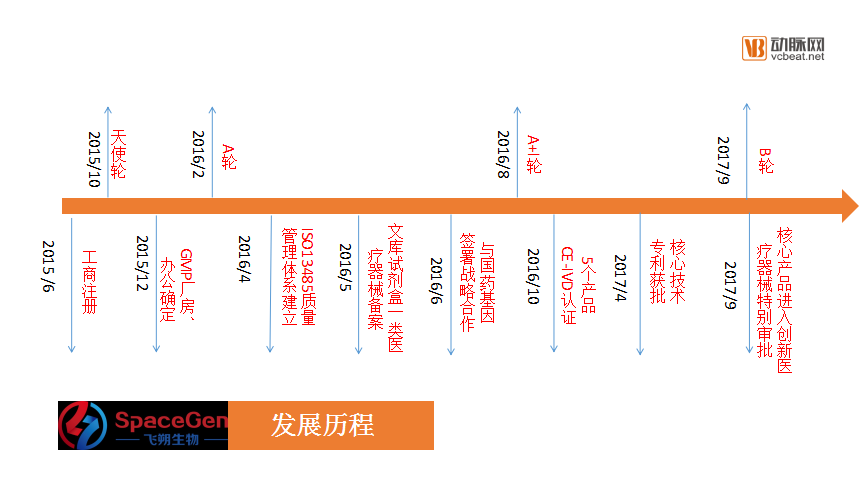
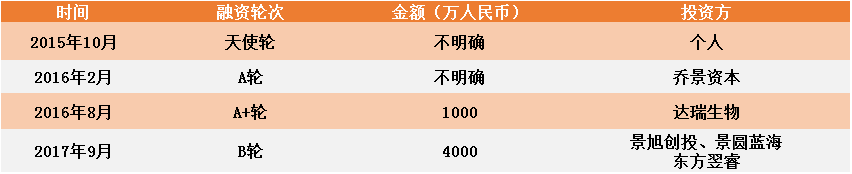
In February 2016, the company secured tens of millions of RMB in Series A financing from Qiaojing Capital; in April, it established its quality management system; and in May, it obtained the Class I medical device filing for its library preparation kits for gene sequencing, becoming the first company in China to do so. In October 2016, the company completed CE-IVD certification for five products with the European Union, granting them sales eligibility in EU member states.
The future market for clinical tumor testing could reach RMB 20 billion, representing a vast yet highly competitive landscape.
“This market can accommodate only about a dozen companies, yet there are currently hundreds of enterprises operating in it,” said Chen Yan.
When Xiamen Spacegen Co., Ltd. was founded, the gene testing sector had already experienced a financing boom. With numerous competitors already in the market, the company was not an early entrant. To stand out among hundreds of enterprises, speed was paramount.
Focus on R&D and Regulatory Filings to Seize the First-Mover Advantage
The current team size exceeds 50 people, with R&D team members accounting for one-third, while the sales team has fewer than 10 people.
Rather than engaging in large-scale hospital sample collection for third-party testing, Chen Yan prefers to focus his efforts on product registration and development at this stage.
First, the registration of current kit products has already entered a delicate stage. Whoever can obtain the CFDA approval first will gain the upper hand.
However, this advantage will not last long. After entering the market, Player One needs to quickly establish close relationships with hospitals within a short period. If Player One secures contracts with all hospitals in the market, it will become much more difficult for the second and third companies to compete.
The oncology market is sufficiently large that the second and third entrants can still capture a certain share from the first mover. However, companies entering the market later will inevitably face greater challenges, making first-mover advantage particularly critical.
Therefore, as a company that was not established early on, it would be better to focus more energy on product development and R&D rather than expanding the marketing team on a large scale at this stage, striving to become one of the first companies to enter the market.
“We are a manufacturer and supplier of test kits. Currently, we are dedicating more resources to product R&D, so at this stage, each sales representative is responsible for covering multiple hospitals, or even an entire province,” Chen Yan told the reporter. The company conducted no sales activities throughout 2016, focusing all its efforts on product research and development, manufacturing, performance validation, and regulatory certification applications. In his view, regulatory approvals and technological capabilities are the top priorities in the IVD industry.
To date, Spacegen Biotech has launched more than 30 kit products.
In September 2017, the company’s core product, a tumor diagnostic kit, entered the National Medical Device Special Approval Procedure. The company is the fifth enterprise to obtain special approval for its tumor diagnostic kit, whereas the first few companies that received approval had submitted their applications as early as 2015. It was not until early August this year that the China Food and Drug Administration (CFDA) clarified the guiding evaluation principles for the registration of next-generation sequencing (NGS)-based tumor companion diagnostic kits. Currently, all industry players are on an equal footing.
“Regarding registration and regulatory filings, our investor, Darui Biotech, has also provided us with substantial support,” said Chen Yan.
For upstream enterprises, qualifications and technology are paramount.
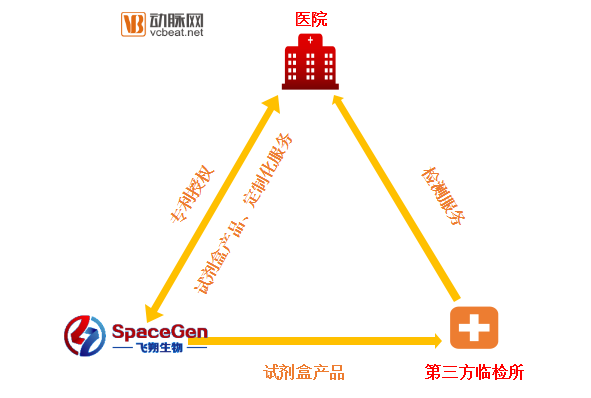
The company positions itself as an upstream manufacturer and supplier of reagents and consumables. Chen Yan believes that if the company were merely a third-party clinical laboratory, it would face high market saturation and intense competition. However, by operating as an upstream supplier, competition among downstream players can, to some extent, drive the company’s growth.
As upstream enterprises, two factors are critically important: first, product technology—specifically, whether it can maintain a competitive advantage within the industry and meet market demands; second, legal and regulatory compliance, including obtaining approval from regulatory authorities.
In April 2017, Xiamen Spacegen Co.,Ltd. obtained a core technology patent authorized by the China National Intellectual Property Administration. In product development, the company chose to collaborate with clinical experts to create products that better meet actual clinical needs.
VBInsight
In addition to providing standard therapeutic system products to the market, Xiamen Spacegen Co.,Ltd. also offers customized services to hospitals.
“Clinical experts may conduct new research on different types of cancer. To publish their findings in academic journals, they need supporting trial data. We can collaborate with them to transform their ideas into products,” introduced Chen Yan. With the company’s support, physicians can file patent applications based on these data and products. Spacegen can then leverage patent licensing to develop and commercialize new products.
“This way, we will have a pool of active think tanks, and products can be continuously rolled out,” said Chen Yan.
Collaboration with Sinopharm Gene: Foreshadowing Channel Competition
As the first tumor assay kit entered the special approval process, nearly all companies in the market began or prepared to submit applications for their own kit products. Following the approval of the first product, more companies are expected to receive approvals in succession. In other words, market competition will intensify rapidly for a period after the first product enters the market.
As time goes on, competition will become increasingly fierce. By then, market competition will no longer be solely about technology or distribution channels, but rather a contest of comprehensive strength. In addition to devoting substantial efforts to product development, Xiamen Spacegen Co., Ltd. has long established its strategic layout in channel competition.
In June 2016, Xiamen Spacegen Co., Ltd. entered into a strategic cooperation agreement with Sinopharm Gene. Sinopharm Group is the largest and most comprehensive pharmaceutical and healthcare industrial group in China, directly supervised by the State-owned Assets Supervision and Administration Commission of the State Council. The integrated logistics and distribution platform, along with its delivery network, is one of the key initiatives being vigorously promoted by Sinopharm Group, covering more than 30,000 hospitals.
Both parties will collaborate to accelerate the industrialization of Xiamen Spacegen’s series of tumor gene mutation detection products, and will also provide support for product distribution and delivery in the future.
In September 2017, the company secured Series B financing jointly invested by Jingxu Venture Capital, Jingyuan Lanhai, and Dongfang Yirui. Within less than two years, it has successively completed four rounds of financing.
Moving forward, the company will continue to focus on its products, aiming to secure regulatory approval and certification for three to five products annually. The approval process for oncology test kits is a top priority, as the company strives to be among the first enterprises to enter the market.
Meanwhile, the company will strive to translate more new technologies into clinical applications, keep pace with overseas markets, and develop products that better meet clinical needs.