

Liu Zhangsuo, President of the World's Largest Hospital: 'We Simply Have More Beds and Patients—Our Future Strategy Is Refined Management'
Since 2008, The First Affiliated Hospital of Zhengzhou University (hereinafter referred to as “Zhengda No. 1 Affiliated Hospital”) has undergone earth-shaking changes, with not only an increase in bed capacity but also a surge in its reputation. It has been labeled by many media outlets as “the largest hospital in the world,” with “outpatient volumes comparable to China’s Spring Festival travel rush,” “revenue of RMB 8.4 billion in 2015,” and “revenue exceeding RMB 9 billion in 2016,” instantly turning it into an internet-famous hospital.
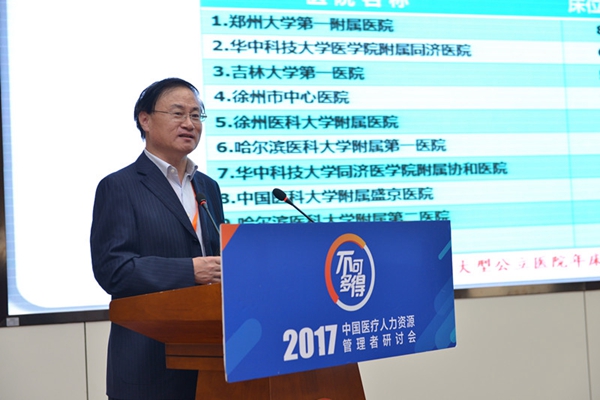
On October 20, at the China Healthcare Human Resources Managers Seminar hosted by DXY, VCBeat (WeChat ID: vcbeat) met Liu Zhangsuo, the newly appointed head of the world’s largest hospital, aiming to lift the veil on this medical giant.
This symposium attracted more than 400 participants, including mid- and senior-level hospital administrators and human resources professionals in the healthcare industry. The “China Healthcare HR Managers Symposium” touring forum, organized by DXY, has been successfully held for three consecutive years, with dozens of sessions to date. As the most professional conference in the field of healthcare human resource management in China, DXY invites senior and mid-level managers and practitioners from the healthcare sector to join forces in exploring talent development and workforce building in the healthcare industry, taking into account industry trends and the latest policies.
The First Affiliated Hospital of Zhengzhou University has a history of 89 years since its establishment. It is a Grade A tertiary hospital integrating medical care, teaching, scientific research, prevention, healthcare, and rehabilitation, with strong emergency treatment capabilities, advanced scientific research standards, and robust international exchange capacities.
The hospital has been successively honored with titles such as “National Civilized Unit,” National-Level “Baby-Friendly Hospital,” China’s “Top 100 Hospitals,” “Advanced Unit in Hospital Information Technology Construction,” “National Demonstration Base for County-Level Hospital Assistance,” “China PTC Outstanding Contribution Team Award,” “National Excellent Hospital for Quality Nursing Services,” and “National Advanced Unit in Hospital Culture Development.”
2008 marked a watershed moment for the First Affiliated Hospital of Zhengzhou University. According to Liu Zhangsuo, the hospital had fewer than 2,000 beds before 2008. Since then, it has undergone gradual development, and with the opening of its new campus in September 2016, the total number of beds reached 10,000, earning it the title of the largest hospital in the world.
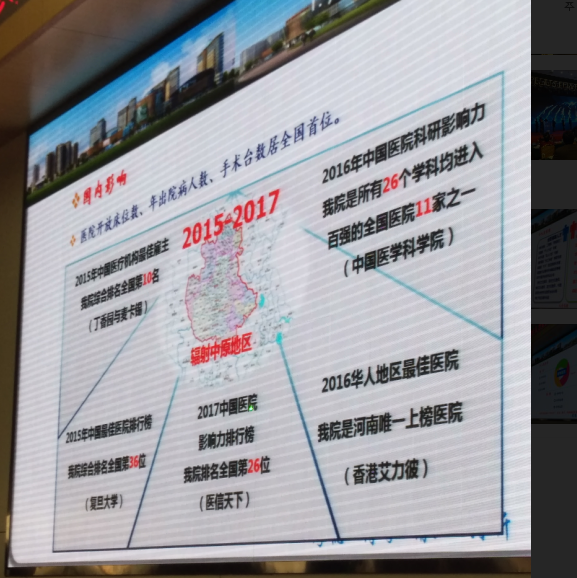
Currently, the hospital operates three campuses: Heyi, Zhengdong, and Huiji. It houses the Henan Provincial Stomatological Hospital, Henan Provincial Eye Hospital, Henan Provincial Gene Hospital, as well as The First Affiliated Hospital of Zhengzhou University’s Children’s Hospital, Cancer Hospital, Cardiovascular Disease Hospital, Cerebrovascular Disease Hospital, Reproductive Genetics Specialty Hospital, Otolaryngology Hospital, Transplant Hospital, Digestive Diseases Hospital, and Nephrology Hospital.12 specialized institutes, covering a total area of 682 mu, with 95 clinical and medical technology departments, 233 inpatient wards, over 6 million annual outpatient visits, more than 410,000 annual discharges, and over 250,000 annual surgeries.
Among them, the He Yi Campus covers an area of 237 mu, with a building area of 350,000 square meters, 139 wards, and 5,000 authorized beds. The Zhengdong Campus covers an area of 345 mu, with a building area of 780,000 square meters, 85 wards, and 3,000 authorized beds. The Huiji Campus covers an area of 100 mu, with a building area of 19,000 square meters, 9 wards, and 475 authorized beds.
The expansion of bed capacity has led to an increase in patient volume and hospital revenue. In recent years, annual revenue has grown by approximately RMB 1 billion each year, all achieved during the tenure of former president Kan Quancheng. It is foreseeable that the First Affiliated Hospital of Zhengzhou University will easily surpass RMB 10 billion in revenue in 2017.
In terms of outpatient volume, the First Affiliated Hospital of Zhengzhou University is expected to reach 6.5 million visits this year, an increase of nearly one million compared to 2016.
In terms of surgical volume, the hospital performed over 280,000 procedures this year, an increase of approximately 40,000 compared to 2016, surpassing hospitals in other regions. Meanwhile, in 2015, emergency and critical care cases accounted for 57% of the total at The First Affiliated Hospital of Zhengzhou University, with Level III and IV surgeries comprising more than 65%. Patients from outside Henan Province made up 11% of the total patient population. For example, esophageal cancer has a high prevalence among residents of Henan. Due to the large number of cases treated at The First Affiliated Hospital of Zhengzhou University, it has developed a specialized center of excellence in this field, attracting many patients with esophageal cancer from other provinces.
Judging by the numbers, the development of the First Affiliated Hospital of Zhengzhou University has indeed been highly successful. However, for Liu Zhangsuo, every data point reflects the arduous efforts of thousands of hospital staff members, who begin their rounds across the campus as early as 6 a.m. each day. This dedication is also why a modern hospital was established in the Zhengdong New Area within just three years.
“Although the number of patients is increasing and outpatient visits at our hospital are rising rapidly, our hospital has been labeled by the media as the largest hospital in the world with annual revenue amounting to billions of yuan, leading to widespread misunderstanding. In fact, we simply have a large patient volume,” said Liu Zhangsuo.
So why could such a hospital only emerge in Zhengzhou, Henan Province? He told reporters that the first reason is Henan’s large population, and the second is the scarcity of high-quality medical resources in the province, particularly the limited number of Grade III Class A hospitals. For example, Shanghai has 48 Grade III Class A hospitals, Wuhan has 36, while Zhengzhou has only 13. This figure includes four municipal traditional Chinese medicine (TCM) hospitals, the affiliated hospital of a TCM college, and the First Affiliated Hospital of the Academy of Traditional Chinese Medicine, among others. Therefore, five years ago, the Health Department of Henan Province launched a bed renewal plan.
In addition, the growth and expansion of The First Affiliated Hospital of Zhengzhou University have been inseparable from talent. Through a series of measures—including identifying, selecting, deploying, cultivating, and attracting talent—the hospital has made concerted efforts to foster professional development.
According to Liu Zhangsuo, in terms of talent acquisition, the First Affiliated Hospital of Zhengzhou University has recruited one full-time academician, 18 adjunct distinguished academicians, 44 overseas adjunct professors, 16 domestic adjunct professors, one full-time Principal Investigator (laboratory director), and four adjunct high-level clinical technical experts.
In terms of talent development, the hospital has more than 200 staff members serving in positions at or above the level of Standing Committee Member in academic organizations at the provincial level or higher. Among them, there are 2 Chairpersons and 1 Chairperson-Elect of professional branches of the Chinese Medical Association (CMA), 3 Vice-Chairpersons, and 14 Standing Committee Members. Additionally, there are 6 Chairpersons (including Presidents) and 28 Vice-Chairpersons (including Vice-Presidents and Deputy Directors-General) in other national academic societies, as well as 3 committee members in professional branches of international societies. Within the Henan Medical Association, there are 43 Chairpersons (including 3 Honorary Chairpersons) and 2 Chairs-Elect of various professional branches, along with 139 Vice-Chairpersons. In other provincial-level academic societies, there are 18 Chairpersons (Presidents, including 2 Honorary Chairpersons) and 2 Chairs-Elect, as well as 41 Vice-Chairpersons (including Vice-Presidents). More than 200 staff members serve in editorial board positions or higher for domestic and international journals.
Meanwhile, as a clinical base for training advanced medical and health professionals in Henan Province, the First Clinical College and the School of Stomatology are both located at the First Affiliated Hospital of Zhengzhou University. The hospital undertakes teaching responsibilities for undergraduate, master’s, and doctoral students, as well as international students, from the Departments of Clinical Medicine, Medical Laboratory Science, Preventive Medicine, Stomatology, and Medical Imaging at Zhengzhou University. Clinical Medicine and Nursing are first-level disciplines authorized to confer both doctoral and master’s degrees, covering all second-level disciplines. The hospital has 100 doctoral supervisors and 544 master’s supervisors, trains more than 500 master’s and doctoral candidates annually, enrolls over 200 international students each year, and accepts more than 2,000 visiting scholars and professionals from within and outside the province for advanced studies annually.
The hospital has a total of 10,858 employees, including 9,847 medical and health technical personnel. Among them, 517 hold senior professional titles (professor level), 677 hold associate senior professional titles, and 2,774 hold intermediate professional titles. There are 1,478 staff members with doctoral degrees and 2,387 with master’s degrees. The hospital is home to one academician of the Chinese Academy of Sciences/Engineering, 18 specially appointed academicians, two Changjiang Scholars, two recipients of the National Science Fund for Distinguished Young Scholars, two participants in the Hundred Talents Program, two Zhongyuan Scholars, 25 experts enjoying special government allowances from the State Council, 19 provincially managed outstanding experts, 37 provincial-level academic leaders, and 56 innovative talents.
The convergence of such a large pool of talent has not only elevated the scientific research and technical capabilities of the First Affiliated Hospital of Zhengzhou University, but also strengthened its disciplinary development. The hospital currently boasts 20 National Clinical Key Specialties, 27 Henan Provincial Key Disciplines, and 2 Key Incubation Disciplines. Clinical Medicine is recognized as a Dominant Discipline in Henan Province, while Esophageal Cancer Prevention and Treatment is designated as a Distinctive Discipline in the province.
In recent years, the hospital has consistently ranked first in the Henan Provincial health system in terms of the total number of research projects approved and awards received. It has undertaken more than 2,000 provincial and ministerial-level research projects, including the National Science and Technology Benefit Program, the National High-Tech Research and Development Program (“863” Program), and projects funded by the National Natural Science Foundation of China. The hospital has achieved over 200 scientific and technological accomplishments. Among these, it has won one Second Prize of the National Science and Technology Progress Award, one First Prize of the Chinese Medical Science and Technology Award, and three First Prizes of the Henan Provincial Science and Technology Progress Award. The hospital’s scientific and technological influence continues to grow, placing it among the leading institutions in China.
Liu Zhangsuo, who had recently assumed office, stated, “I feel quite apprehensive.”
Under the backdrop of the new round of healthcare reform, how can such a large hospital achieve sustainable development, enabling this medical giant to sail more steadily, swiftly, and farther?
With the tiered diagnosis and treatment system,Supply-side Reform,The implementation of policies such as the zero-markup on pharmaceuticals, coupled with an accelerating aging population andThe expansion of the connotation and extension of social service demands, along with the transformation of medical service models driven by technological advancements, will bring greater challenges to large hospitals.。
Although the reform process was arduous, Liu Zhangsuo adopted a “step-by-step implementation of policies” approach.
For instance, in advancing the tiered diagnosis and treatment system, he has focused on strengthening primary care—specifically county-level hospitals. To this end, The First Affiliated Hospital of Zhengzhou University has implemented paired assistance programs to support county hospitals. The objectives of this round of assistance are clearly defined: in accordance with the requirements of China’s new healthcare reform, the hospital provides comprehensive support to county-level hospitals across multiple dimensions, including management, technology, specialty development, and talent cultivation. This initiative aims to enhance the overall capabilities and clinical standards of county-level hospitals, thereby achieving the national goal of strengthening primary care within the tiered diagnosis and treatment framework.
Liu Zhangsuo believes that paired assistance differs from other forms of medical consortia and collaborative hospitals. The most critical aspect is how to effectively strengthen specialty development at county-level hospitals. Specialty development encompasses systems, functional division, facilities, equipment, talent, and disciplinary directions. The goal is to further strengthen already robust disciplines, gradually enhance weaker ones, and cultivate a cohort of skilled professionals.
Meanwhile, two tasks must be completed: first, to train a professional with a senior title within three years; second, to recruit a professional holding at least a bachelor’s degree. Ensure that every professional and technical staff member completes a rotational training program at the First Affiliated Hospital. Advance the informatization construction of the county hospital and expand the range of medical technologies offered as extensively as possible.
On October 18, 2017, at the 19th National Congress of the Communist Party of China, General Secretary Xi Jinping pointed out that “we should deepen the reform of the medical and health care system, comprehensively establish a basic medical and health care system with Chinese characteristics, a medical security system, and a high-quality and efficient medical and health care service system, improve the modern hospital management system, completely abolish the practice of subsidizing hospitals with drug profits, and strengthen the drug supply guarantee system.” The abolition of drug markups is the first step toward completely abolishing the practice of subsidizing hospitals with drug profits.
Regarding healthcare reform, Liu Zhangsuo candidly stated, “Initially, it had an impact on hospitals, but the influence is diminishing over time. In Henan Province, we have a unique situation: there are no special-needs medical services, and medical service fees have not yet been implemented.”
According to statistics, since the implementation of comprehensive reforms at the First Affiliated Hospital of Zhengzhou University, the financial burden on patients has been alleviated. The average outpatient visit cost and average medication cost have decreased by 4.97% and 3.47%, respectively. Meanwhile, the average per-capita cost and per-capita medication cost for discharged patients have dropped by 0.6% and 9.06%, respectively. Furthermore, through a range of robust measures—including improving medical services, implementing targeted poverty alleviation, building medical consortiums, providing counterpart assistance, training core grassroots physicians, establishing two-way referral systems, developing telemedicine, and forming a National Emergency Medical Rescue Team—the hospital has effectively translated healthcare reform into tangible outcomes. By prioritizing public welfare and staying closely connected to community needs, it has taken a leading position among medical institutions across the province in delivering benefits to the people.
Furthermore, the hospital has devoted considerable effort to enhancing medical services, with the aim of comprehensively improving the patient care experience. Flexible working hours have been implemented across all front-line service units. The hospital has successively established nine specialized centers: the Emergency and Critical Care Service Center, Admission Preparation Center, Patient Transport Service Center, Rural Patient Service Center, Multidisciplinary Consultation Center for Complex and Refractory Diseases, Inpatient Service Center, Day Treatment Center, Complaints Center, and Follow-up Center. Free shuttle buses have been launched among the three hospital campuses to provide meticulous and thoughtful services. These initiatives have significantly improved patients’ healthcare experiences, delivering tangible convenience and benefits to the public, and have earned widespread acclaim from the community.
“From 2008 to 2012, the hospital focused on scaling up, adhering to the principle of expanding size and strengthening capabilities; now, I hope that in the coming years, we will refine operations, enhance quality, comprehensively strengthen our capabilities, and achieve sustainable development.”
He believes that, first and foremost, building and managing a hospital successfully requires broad vision. For instance, to excel as a county magistrate, one must think from the perspective of the entire province; similarly, to serve effectively as a provincial governor, one should position oneself with the mindset of a State Council Premier.
Secondly, accurate positioning is essential. If the goal is to position it as a world-class hospital, it must engage in extensive exchanges with leading international experts, professors, and scholars. Limiting interactions to domestic circles will prevent it from ever becoming the top hospital in China or gaining international renown. Therefore, it is imperative to transcend these limitations and break out of existing networks to establish broader connections.
“Our positioning is to aim for the national team level, learning from Xiangya and other leading domestic hospitals such as West China Hospital.”
“We have a ‘troika’ of discipline development, medical services, and technological innovation. In terms of education, Zhengzhou University has been successfully included in the national list of ‘Double First-Class’ universities recently announced by the Ministry of Education, with clinical medicine designated as a ‘Double First-Class’ discipline.”
In terms of scientific research, the hospital has established a robust research infrastructure. As its research platforms continue to improve and mature, it now hosts 12 Academician Workstations, 3 Postdoctoral Research Stations, 1 National Engineering Laboratory, 1 National-Local Joint Engineering Laboratory, 39 National Clinical Drug Trial Institutions, 5 Provincial Key Laboratories, 5 Provincial Engineering Technology Centers, 12 Provincial Engineering Laboratories, 38 Departmental-Level Key Laboratories, and 21 internal research institutes affiliated with the university/hospital. Additionally, there are 70 science and technology innovation teams at the provincial, university, municipal, and hospital levels; 30 interdisciplinary doctoral innovation teams within the hospital; and 971 Young Scientists Innovation Fund projects.
In terms of management, we implement the “Three-Three-Three Management” model, which entails coordinated development across three campuses, with each campus pursuing differentiated and specialized growth under unified management. The old campus focuses on expanding its comprehensive departments, with over 200 inpatient wards across 95 clinical and medical specialties. The new campus and the Zhengdong Campus are positioned to become first-class medical centers, premier healthcare centers, and leading exchange hubs. Additionally, three academic units—the Department of Clinical Medicine, the Department of Medical Laboratory Science, and the School of Stomatology—are integrated with the First Affiliated Hospital of Zhengzhou University.
In terms of refined management, strict control was implemented in accordance with national requirements. By September, the rate had decreased from 39% to 33%, with the target of maintaining it below 30%. Disease categories were structured, and lessons were drawn from other innovative hospitals.
Additionally, leverage the unique characteristics of each discipline, develop areas of competitive advantage, and clarify disease-specific management across disciplines.
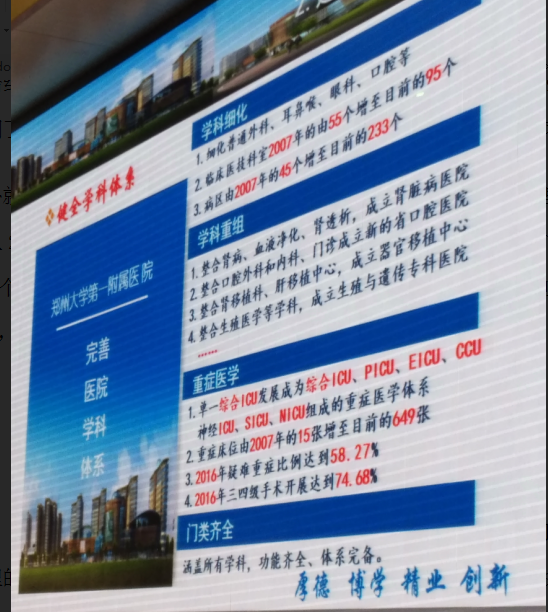
As shown in the chart, the number of clinical and medical technology departments has increased from 55 in 2007 to 95; the number of hospital wards has risen from 45 in 2007 to the current 233; the number of intensive care beds has grown from 15 in 2007 to 649; and the proportion of complex and difficult cases has reached 27%.
Liu Zhangsuo also shared his experience in defining the discipline’s positioning. He engaged a third-party agency and expressed his aspiration for the hospital to truly become “a genuine aircraft carrier in the hearts of the public and a recognized flagship in the healthcare industry.”
Finally, he primarily implemented it in three steps:
Step 1: Recognize differences, leverage strengths, build a brand, reach consensus, develop steadily, and demonstrate value.
Step 2: Department heads take the lead, with full staff participation; craft clear narratives, display them on bulletin boards, and disseminate via WeChat.
Step 3: Assign clear responsibilities, ensure prompt implementation, adhere to timelines, conduct thorough follow-ups, perform regular assessments, and deliver tangible results. Formulate disciplinary development plans before March each year, benchmark against top-tier hospitals nationwide to identify gaps in areas such as talent and technology. Conduct this process annually, ensuring that each plan is effectively implemented.
According to Liu Zhangsuo’s plan, it was only a matter of time before the First Affiliated Hospital of Zhengzhou University became a top-tier hospital in China by 2020.