

Huiying Medical Completes Hundreds of Millions RMB Series B Funding Round, Setting New Industry Record
HY Medical
Provider of Medical Imaging and Oncology Radiotherapy Platforms
VCBeat learned that on October 25, HY Medical, a leading medical artificial intelligence enterprise, completed its Series B financing round worth hundreds of millions of yuan, led by Data Capital. It is understood that this is the largest single financing round in the medical imaging AI industry.
Guo Na, Co-founder of HY Medical, stated that the proceeds from this financing round will primarily be allocated to two areas: first, to further refine algorithms and enhance customer experience, thereby delivering a superior user experience; second, to deepen clinical integration by not only expanding the application of artificial intelligence technologies to a broader range of diseases but also conducting more clinically relevant research on specific conditions. This approach aims to progressively penetrate the entire care continuum—from screening and diagnosis to treatment—ultimately establishing a comprehensive, closed-loop service model.
VCBeat’s database shows that in December 2015, HY Medical completed a RMB 5 million angel financing round, with Shuimu Yide as the investor.
In October 2016, HY Medical completed its Series A financing round, raising tens of millions of yuan, with BlueRun Ventures as the investor.
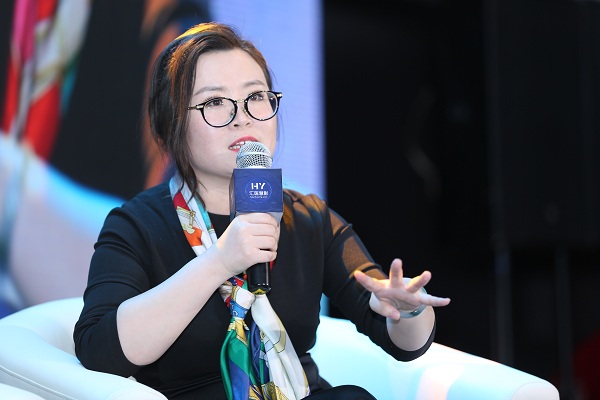
Guo Na, Co-founder of HY Medical
Screening, Diagnosis, and Treatment Form a Closed-Loop Service
Guo Na stated that HY Medical entered the field of “AI + medical imaging” at an early stage. The company’s products are designed not merely to meet screening needs; rather, its goal is to leverage artificial intelligence technology to create a closed-loop service encompassing screening, diagnosis, and treatment.
InScreening Sector, The screening products that have currently obtained Class II medical device certification are mature and are being used in hundreds of hospitals. Covered conditions include missed diagnosis prevention in chest CT, mammography detection, cerebral infarction, fractures, and MRI analysis for cerebral hemorrhage, among others.
InDiagnostic Field, HY Medical has been deeply engaged in radiomics for a long time.
The big data intelligent cloud platform incorporating radiomics quantitative analysis was released in May 2017. It integrates imaging data, clinical data, pathological data, genomic data, and follow-up data, extracting over 1,000 features from imaging data, followed by dimensionality reduction, and employing machine learning methods for data analysis and mining. This big data- and omics-based approach provides quantitative results that can assist clinicians in precise diagnosis, treatment efficacy evaluation, and prognosis prediction, and even holds promise for enabling radiologists to participate more actively in clinical diagnosis and treatment.
In fact, establishing such an intelligent analytics platform based on diverse types of medical big data is a systematic engineering endeavor. The first step is to break down the barriers between different categories of medical data by integrating and connecting imaging data with genomic, proteomic, immunological, and pathological data, followed by data cleaning, structuring, analysis, and mining.
The system currently covers common cancers such as lung cancer, breast cancer, colon cancer, rectal cancer, gastric cancer, cervical cancer, ovarian cancer, nasopharyngeal cancer, and prostate cancer. HY Medical’s AI system generates precise diagnostic reports based on artificial intelligence and data mining. The diagnostic products are currently applying for Class III medical device certification.
InTherapeutic Areas, Professor Xing Lei, Chief Advisory Scientist at HY Medical and Director of the Center for Medical Physics at Stanford University, has accumulated extensive experience in this area. He has conducted substantial research on predicting side effects of radiotherapy for liver and lung cancer in treatment planning, as well as on image analysis and reconstruction in treatment planning.
With the addition of Professor Xing Lei, his research and clinical expertise in the field of oncology diagnosis and treatment will be leveraged to accelerate the R&D and clinical application of AI in oncology. This includes advancing the development and upgrading of systems for radiotherapy and chemotherapy, missed-diagnosis prevention systems, and big-data imaging research platforms (including radiomics analysis platforms).
Guo Na stated that the company is currently collaborating with Grade A tertiary hospitals, including the Cancer Hospital of the Chinese Academy of Medical Sciences, Sun Yat-sen University Cancer Center, Tianjin Medical University Cancer Institute and Hospital, and Beijing Cancer Hospital, to conduct in-depth research on AI-powered radiomics products and AI-driven oncology therapeutics.
In terms of commercial implementation, as early as 2016, HY Medical began collaborating with hardware companies such as Qixi Medical and healthcare IT firms to jointly provide products and services to hospitals. Through this process, HY Medical achieved sustained profitability and gradually established its own marketing channels and team. With its products receiving certification from the China Food and Drug Administration (CFDA) and continuous deepening of R&D efforts, HY Medical has now started to directly provide medical AI products and services to hospitals.Serving over 700 hospitals。
Three Major Advantages of HY Medical
When asked about the reasons for receiving investment, Guo Na believes there are mainly three factors:
First, the company’s professionalism and team backgroundIn addition to Professor Xing Lei, the Chief Scientific Advisor, the company’s founder and CEO, Chai Xiangfei, is also an industry expert. He holds a Ph.D. in Medical Imaging from the University of Amsterdam in the Netherlands and completed his postdoctoral research at Stanford University in the United States. He has studied and worked at three world-leading medical imaging institutions: the Stanford Cancer Center, the Netherlands Cancer Institute, and the Department of Radiology at KU Leuven in Belgium. He is primarily responsible for driving the deep integration of AI and big data technologies with healthcare scenarios, as well as defining related products. With over ten years of interdisciplinary research and engineering experience in the fields of artificial intelligence for medical imaging, image processing, and data analysis, he possesses core expertise in medical image segmentation, recognition, analysis, and deep learning.
Its core R&D team comprises top talent from leading universities worldwide, including Harvard University, UCSD, the University of California, Berkeley, Stanford University, the University of Melbourne, Tsinghua University, and Peking University. Team members have previously worked at premier medical and research institutions, accumulating extensive practical experience in data processing, medical research, clinical diagnosis and treatment, and scientific research services. In Chai Xiangfei’s view, medical AI is a multidisciplinary field that requires the collaborative efforts of experts from various industries to achieve success.
This team stands at the forefront of the industry and must possess sustained R&D capabilities and innovative capacity. Since this sector will not remain confined to pulmonary nodule screening, it must advance further to bring about genuine transformation to the industry.
Second, HY Medical is a dual-innovation company that combines technological innovation with business model innovation.. Unlike research institutions, companies must possess not only top-tier R&D capabilities but also equally strong commercialization abilities. HY Medical is a medical AI company with a relatively balanced strength in technology, sales, and marketing. For instance, in terms of market presence, HY Medical recently secured the citywide medical AI imaging market in Ordos.
Third, HY Medical's Rapid Learning and Execution Capabilities. Although founder Chai Xiangfei does not have a medical background, he possesses keen insight and judgment into the essence of the medical AI industry. While emphasizing algorithms and data, he also places significant importance on clinical practice and physicians’ perspectives. By deeply integrating into medical scenarios and workflows, his team is able to make accurate judgments and effectively implement their strategic visions.
Perspectives from Capital
Ye Weigang, Managing Partner at Data Capital, stated that Data Capital is an investment firm focused on growth-stage companies, evaluating both the industry sector and the founding team.
From the perspective of the track,Currently, Datai Capital’s investment focus is on consumption upgrades and technological innovation. In the realm of consumption upgrades, Datai Capital primarily invests in education and healthcare. In the field of technological innovation, it prioritizes core technological breakthroughs over business model innovations, with artificial intelligence being the most promising innovative technology for the next decade. HY Medical sits precisely at the intersection of these two strategic tracks.
From a corporate perspective, HY Medical's development over the past few years has fully demonstrated its outstanding team strength and strong execution capabilities.The founding team, Chai Xiangfei and Guo Na, complement each other perfectly. Chai, a returnee from overseas, is a leading scientist in the field of artificial intelligence for medical imaging with a strong technical background. Guo, a graduate of Tsinghua University, has many years of experience in the international TMT industry and possesses keen business insight. In terms of execution, HY Medical has successfully introduced world-class algorithm technologies to China and achieved seamless localization, which is no easy feat.。
In the interview, Ye Weigang also stated that artificial intelligence is a promising industry,However, careful analysis reveals that some companies are still in the stage of hype and storytelling, with some even repackaging automation technologies as artificial intelligence. Moreover, there are few projects that can truly generate cash flow, leading investors to exercise considerable caution in their selection.。
Furthermore, based on an analysis of the global artificial intelligence industry, VCBeat believes that from a market application perspective, the sectors poised to achieve large-scale commercialization most rapidly within the next three to five years are healthcare and autonomous vehicles. In the healthcare sector, although algorithmic technologies still originate primarily from the United States, China has taken the lead in practical applications.
The Medical AI Industry Is Entering Its Prime Development Window
In the past month, several companies in the medical artificial intelligence (AI) sector have secured substantial Series B financing. Guo Na believes that the primary driver behind this trend is that AI technology represents a major direction for technological innovation over the next 5–10 years. In July, the government released the “New Generation Artificial Intelligence Development Plan,” and in September, it standardized the application process for medical AI products within the new medical device catalog. These frequent actions and policy implementations underscore the government’s high regard for AI as a national strategic priority. Capital support for many companies at this stage can accelerate the industrialization and practical deployment of AI, creating a win-win situation for all stakeholders.
Political economy posits that science and technology constitute a productive force, driving production development and social transformation. Over the next decade, artificial intelligence (AI) will also serve as a significant catalyst for entrepreneurship and economic transition in China. Although healthcare is a deliberate and rigorous “slow” industry with much ground still to cover, the advent of the AI era—propelled by joint efforts from the government, medical institutions, and capital—may well usher in a major ecological transformation of healthcare services in the near future.
Guo Na believes that the substantial Series B financing secured by AI medical imaging companies is primarily due to the industry’s recognition of the transformative impact of AI in healthcare. With feasibility validated and models matured, this technology can be extended to other disease categories, demonstrating sustained capacity for innovation and transformation. The influx of capital will accelerate this process.
Although there is a surge in financing news, Guo Na believes that the industry’s development has only just begun…