

Domestic Sequencing Instruments Expand: MGI Unveils Two New High-Throughput Sequencing Systems
On October 27, 2017, the 12th International Conference on Genomics (ICG-12), hosted by BGI Group, was held as scheduled at the China National GeneBank in Shenzhen. As in previous years, this premier industry event in genomics continued to attract significant attention from both within and outside the sector. MGI Tech made a grand debut with two new high-throughput sequencers, creating a major highlight at the conference.
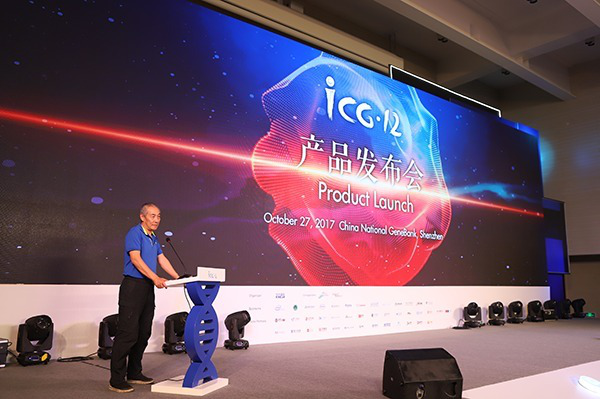
Address by Wang Jian, Chairman of BGI
The two high-throughput sequencing systems released this time are the MGISEQ-2000 and the MGISEQ-200. Jiang Hui, Vice President of MGI Tech, stated at the launch event, “The MGISEQ-2000 and MGISEQ-200 represent another perfect integration of intelligence and technology.”
MGISEQ-2000 is built upon the dual-chip independent operation platform of BGISEQ-500, with the addition of two different chip specifications to provide users with more diverse options. It can generate up to 600 Gb of output data per run, and under full load in PE100 read length mode, it takes less than 48 hours. Its annual throughput is equivalent to more than 1,000 human whole-genome datasets.
The MGISEQ-200 retains the convenience and flexibility of the BGISEQ-50. Operating at full capacity in PE100 read-length mode, it generates 60 Gb of output data in less than 48 hours, enabling rapid testing of an average of 24 tumor samples per day.
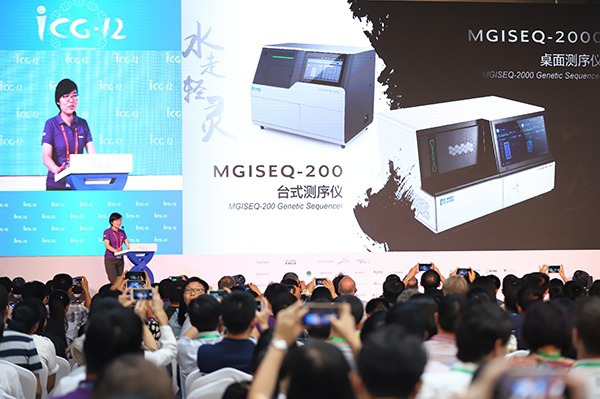
HuaDazhizao Vice President Jiang Hui Unveils New Product
Jiang Hui introduced that these two sequencing systems were developed under the leadership of Liu Jian, President of MGI Tech. They successfully combine low instrument acquisition costs with low operational expenses, and can be applied in fields including scientific research, clinical medicine, agriculture, public security and judicial services, and environmental engineering, thereby achieving comprehensive adoption of high-throughput sequencing systems in the medical and scientific research sectors.
Between 2014 and 2016, BGI Genomics launched its proprietary sequencers, the BGISEQ-1000, BGISEQ-500, and BGISEQ-50, with the BGISEQ-1000 and BGISEQ-500 having received approval from the China Food and Drug Administration (CFDA).
In addition to these five sequencers, several other companies are also making upstream moves. VCBeat took this opportunity to compile and organize the sequencers available on the market, which can be broadly divided into two categories.
Berry Genomics NextSeq CN500
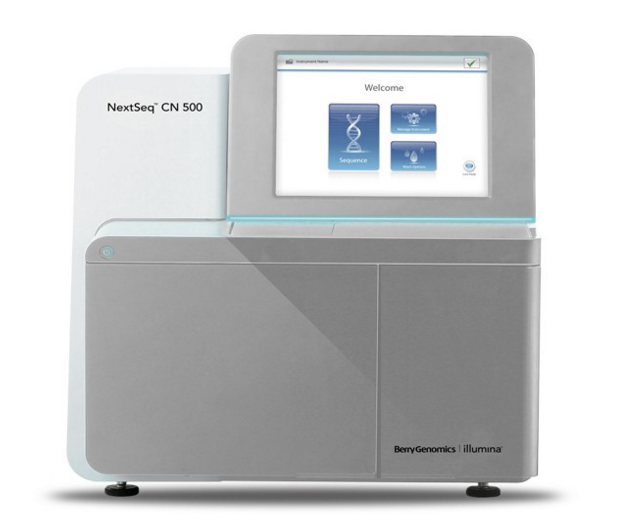
Berry Genomics NextSeq CN500
This sequencer, co-developed by Berry Genomics and Illumina, is a product designed and manufactured to meet the clinical needs in China, and it received approval from the China Food and Drug Administration (CFDA) in 2015. The NextSeq CN500 utilizes Illumina’s sequencing-by-synthesis technology, ensuring data accuracy while enabling the simultaneous processing of 96 NIPT clinical samples.
DA Gene DA Proton
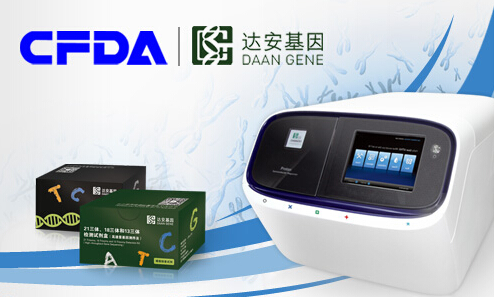
DA Gene DA Proton
DA Gene’s DA Proton is a domestically produced sequencer based on technology licensed from Life Technologies. It received CFDA approval in 2014. The DA Proton utilizes semiconductor chip technology and can provide human genome, human exome, or whole transcriptome data within hours. It is faster than other sequencing technologies and fully meets the requirements for non-invasive prenatal testing (NIPT) in terms of early detection, rapid turnaround, and low cost.
CapitalBio BioelectronSeq 4000
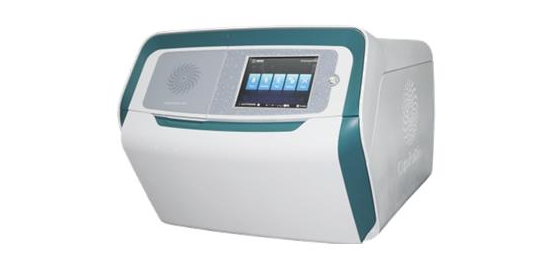
CapitalBio BioelectronSeq 4000
The BioelectronSeq 4000 is a new-generation high-throughput sequencer jointly developed and manufactured in China by CapitalBio Corporation and Thermo Fisher Scientific (USA). This sequencer also employs semiconductor chip-based sequencing technology, detecting pH signals generated during nucleotide polymerization via bioelectronic chips. It is used for human deoxyribonucleic acid (DNA) sequencing to identify genetic sequence variations.
This sequencing assay was approved by the CFDA in 2015 and is suitable for hospitals to independently conduct genetic testing.
Annoroad NextSeq 550AR
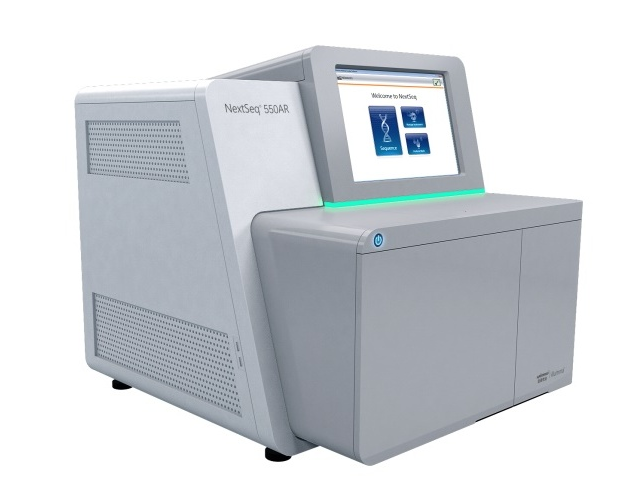
Annuoda NextSeq 550AR
The NextSeq 550AR is a desktop sequencer jointly developed by Annoroad and Illumina.
The NextSeq 550AR is independently researched, developed, manufactured, applied, and registered for approval in China by Annoroad Gene Technology. This instrument leverages Illumina’s latest dual-channel Sequencing by Synthesis (SBS) technology and its proprietary Reversible Terminator chemistry. It offers scalability for both clinical and academic applications, enabling the development and registration of kits for preimplantation genetic screening (PGS), liquid biopsy, FFPE sequencing, and genetic disease testing on this sequencing platform.
The product was approved by the CFDA in 2017.
Huayinkang HYK-PSTAR-IIA
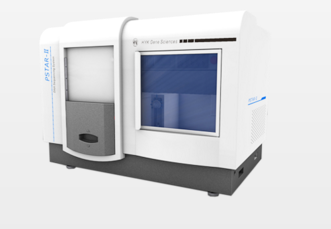
Huayinkang HYK-PSTAR-IIA
Huayinkang’s HYK-PSTAR-IIA became China’s first gene sequencer to pass the Special Approval Procedure for Innovative Medical Devices, obtaining its medical device registration certificate from the CFDA in December 2014.
The HYK-PSTAR-IIA sequencer employs optical detection technology, with independent intellectual property rights covering its core biochemical reactions and related reagents. According to Sheng Sitong, CEO of Huayinkang, unlike most research-oriented sequencers currently available, the HYK-PSTAR-IIA is specifically positioned for clinical applications, placing greater emphasis on sequencing turnaround time, accuracy, and clinical applicability.
CAS Purple Gold BIGIS
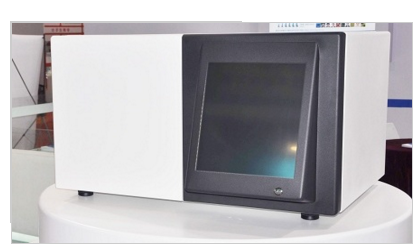
Zhongke Zixin BIGIS
BIGIS integrates a suite of electromechanical control, microfluidic, optical, and software control systems, enabling broad applications in pharmaceuticals and healthcare, animal and plant research, inspection and quarantine, and other genomics-related fields. The system was utilized to perform whole-genome sequencing and analysis of Glaciecola mesophila, a novel mesophilic marine bacterial species, with the findings published in Science China Life Sciences and recognized by peers both domestically and internationally. More than twenty national patents have been filed or are currently under application around this system, initially establishing a protective patent cluster.
Hanhai Gene GenoCare
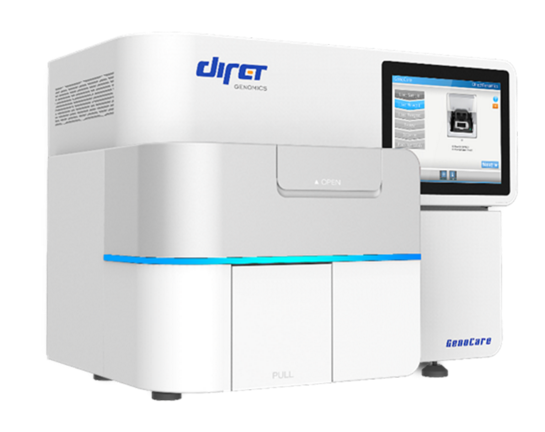
Hanhai Gene GenoCare
Unlike previous sequencers, GenoCare is a third-generation sequencing instrument. Due to the need for improved accuracy, the clinical application of third-generation sequencing has long been somewhat limited. The distinguishing feature of GenoCare is that it is currently the world’s only third-generation gene sequencer approved for clinical use.
According to the company, its technology has reached a world-leading level. Once the product is mass-produced and commercialized, the cost of whole-genome sequencing will plummet from the current $1,000 for second-generation sequencing to $100, and the sequencing turnaround time will be significantly reduced—from one week for second-generation sequencing to just one day.
Saina Biotech - In Development
Saina Bio is a technology company engaged in the research, development, and industrialization of gene sequencing platforms. The team leverages the world-leading gene sequencing technology platform from Peking University and is supported by a scientific advisory board comprising academicians.
Source: DXY and the official websites of the aforementioned companies