

Addressing Physician Skepticism and Data Overload in Healthcare Machine Learning: Insights from Health 2.0
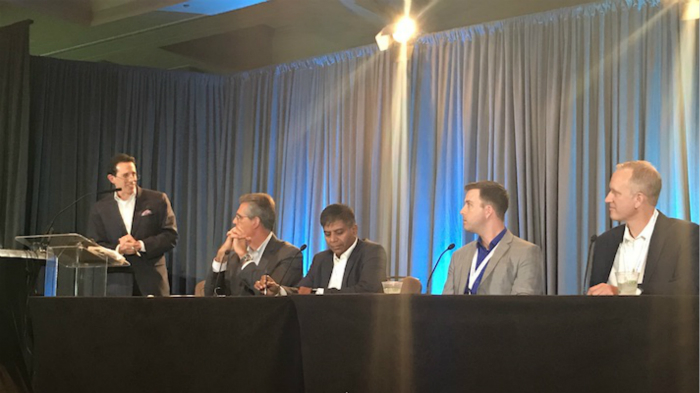
Recently, a vendor forum was held at the Health 2.0 Conference in Santa Clara, California, gathering innovation leaders from major and well-known healthcare systems across the United States to share their insights on topics such as innovation, big data, and patient engagement. VCBeat (WeChat ID: vcbeat) has compiled the key highlights from this forum.
Data Alone Is Not Enough
A major theme of the forum was that, despite the significant efforts currently devoted to data collection and the use of machine learning and natural language processing for analysis, translating these data into actionable outcomes remains a significant challenge for vendors.
Sameer Badlani, Chief Health Information Officer at Sutter Health, stated that for any new project, the critical question is what to do next after acquiring the information: “We must understand whether we have the capability to ensure that all managers and pharmacy benefit managers act as expected once we obtain the desired information.”
Without concrete plans to integrate data into medical workflows, machine learning algorithms will only leave frontline workers, including doctors and nurses, at a loss.
Venkat Mocherla is the Head of Business Development and Marketing at Qventus, a startup that provides predictive analytics to hospitals such as Sutter. He argues that the challenge facing big data is akin to the dilemma encountered by Google Maps when providing directions. Google Maps might offer abstract guidance such as, “Current traffic conforms to a standard distribution; there is a 37% probability that you should turn left,” which is of little practical use to users.
Venkat Mocherla stated, “The technology we currently possess is insufficient for predicting future scenarios; what we need isPrescribe in clear, simple language to persuade patients to change their behavior.. But this is no longer just machine learning; it is behavioral science, the science of decision-making.”
Machine Learning Is No More Beneficial Than Clinical Experience
John Lee, Chief Medical Information Officer at Edward Hospital, believes that while machine learning and artificial intelligence hold significant potential in theory, these technologies are not as useful in practice as people imagine.Machine learning ultimately became just another form of alert fatigue.
Alarm fatigue is a common issue in hospital systems: hospitals manage patient monitoring data by alerting physicians or nurses when patients' vital signs exceed a certain threshold.
The problem is that if there are too many alerts, healthcare providers will stop paying attention to them. This issue also extends to electronic health records.
Kevin Baldwin, Information Portfolio Manager at the University of California, Los Angeles, stated, “According to Epic’s consumer report released on June 27, the company accepted alerts in 50 out of every 100 orders. These alerts continuously prompt physicians to take action and repeatedly question whether they are certain about proceeding with a given treatment. However, the override rate for these alerts is as high as 90%.”
The result is that, nine times out of ten, these doctors will simply ignore these alerts.They trust their own experience and prior training, and these warnings fail to alter their behavior.。
Hospitals Need to Collect Information More Purposefully
The Chair of HealthIMPACT stated,Before collecting data, the most important thing is to clearly define your objectives.. The output of data is unpredictable, and the path taken cannot be retraced; therefore, the most critical question we must answer is why we need this data in the first place.
Another issue that has plagued the industry for years is interoperability. Steven Lane, Chief Clinical Information Officer at Sutter Health, believes that while interoperability has indeed been improving in recent years, there is still a long road ahead. At present, interoperability consists of various disparate networks and protocols, many of which remain underutilized.
He said, “Our interoperability is still stuck in the 20th century. Despite our tremendous efforts in this area, physicians are frequently awakened by phone calls in the middle of the night due to sudden changes in patients’ vital signs.”We are still reliant on manual labor.“If we can truly achieve interoperability, the flow of information within healthcare systems will become smoother, resulting in greater savings in both human and material resources.”
Three Criteria for Hospitals to Choose the Right Partners
An increasing number of healthcare systems are establishing their own innovation teams to generate new ideas and adopt emerging technologies. This seminar’s innovation track focuses on collaborative partnerships and how hospitals can select the right partners from a vast sea of potential vendors.
Innovation leaders in attendance held divergent views on many topics, but they agreed that hospitals can only select the best partners when they clearly recognize the problems they need to solve, rather than letting vendors make the decision.
Aaron Franklin, a project manager at Providence St. Joseph Health, stated: “Our innovation department adheres to a set of principles, one of which is to focus on the problems we need to address rather than on solutions. Therefore, we strive to share the issues we have identified with external partners, inviting them to develop solutions and propose value propositions.”
Suppliers should likewise understand this model. A large number of attending experts expressed frustration over the overwhelming influx of supplier proposals facing their companies.
Sanjay Shah, Head of Innovation Strategy at Dignity Health, believes that in the traditional sales process of the past, we adhered to the “get into the market first” approach, which in practice resulted in resource-intensive and inefficient outcomes.
By investing slightly more time and effort, we can secure a ticket to enter the market; however, we cannot continue operating under the same model. This “market entry ticket” approach should only be used to gain insights into the systemic market, scale environment, and partnerships.
Ashish Atreja, Chief Technology Officer at Mount Sinai and founder of NODE Health, stated that ifWhen hospitals collaborate with one another, the supplier selection process becomes significantly simpler.。
He stated, “What holds us back is the lack of evidence. It is difficult for us to choose among hundreds of apps, especially as more continue to emerge. Determining which ones should be extensively adopted within our healthcare systems poses significant challenges; neither healthcare systems nor vendors can make these selections alone. We truly need to collaborate and share all available evidence.”
Atria established NODE to facilitate evidence sharing among multiple vendors. Matthew Fenty, Director of Technology Innovation and Strategic Partnerships at St. Luke’s University Health Network, also believes that hospitals should enhance communication and recognize that this approach is a natural extension of problem-centered methodologies.
He stated that, as a supplier ecosystem, hospitals should be more open and collaborative, reducing insular thinking. If hospitals could share both successful and unsuccessful solutions, it would make decision-making easier for everyone.
Jennifer Wiler, Executive Director of the UCHealth Care Innovation Center, outlined three additional criteria for hospitals selecting partners:
1. Can the candidate company address the tangible issues faced by hospital systems?
2. Whether the candidate companies can execute the plan using their own technical solutions and whether they can become strong technical partners for us;
3. SelfWhether there are suitable clinical experts to lead the project, making it a major milestone in their career development and positioning them as the leader in this opportunity.
Finally, Franklin stated that reducing the size of participating teams can also facilitate decision-making. He said, “We have been implementing the ‘two-pizza team’ model, borrowed from Amazon. All decisions should be made by a team small enough to be fed with two pizzas. As a technical expert, I would not involve myself in legal decision-making; specialized issues should be addressed by specialists, and we should refrain from interfering in matters outside our expertise.”
How to Ensure Patient and Healthcare Provider Satisfaction?
Hospitals primarily interact with patients through patient portal systems, but the utilization rates of these systems have been less than satisfactory. According to Baldwin from the University of California, Los Angeles (UCLA), tracking data from patient portals shows that 90% of patients access them via web browsers, while only 10% do so through mobile devices. Therefore, there is significant room for improvement in the mobile experience.
Experts at the conference discussed how to enhance the value of patient portal systems to drive greater adoption, drawing comparisons with applications in the financial and retail sectors. Danny Sands, Chairman and Founder of the Center for Participatory Medicine, argued that a healthcare system oriented toward “disease care” is itself a barrier to achieving universality.
“We view patient portal systems as platforms for communicating with physicians when we are ill, but we do not need to interact on these platforms when we are healthy. So, how can we change this model? I have been closely observing patient portal systems for a long time and have found that they are not designed with recovered patients in mind, nor do we have adequate incentives to do so.”
If it is still challenging for patients to use the patient portal system at home, hospitals should at least encourage its adoption among inpatients, who are already in a patient mindset.
Baldwin stated, “We are collaborating with our electronic health record (EHR) vendor to explore ways to enhance inpatients’ engagement with the system. Through this platform, patients can access information about their care team, including registered nurses and attending physicians, as well as their treatment details. They can also place meal orders based on any dietary restrictions they may have. Furthermore, patients can use the system to communicate any psychological support needs. The patient information portal has significant potential for further expansion.”
The experts also highlighted the limitations of the traditional Press Ganey survey as a measure of patient satisfaction.
Lee from Edward Hospital stated, “We have been discussing those lagging indicators, and our issue with erroneous proxy metrics is also significant; these metrics represent patient satisfaction,”But what we truly want to know is patients’ attitudes toward the treatments they receive.. From a business perspective, whether patients feel connected to their hospital and whether they will return to that hospital are key factors; however, current patient engagement is often measured using incorrect metrics.”
Badlani concurs with this view, arguing that employee satisfaction faces similar challenges. He notes that traditional measurement methods often rely on offering minor incentives to encourage employee participation in surveys, after which the data is handed over to third parties. This process typically consumes substantial funds and time, often spanning up to six months.
As a result, by the end of each year, hospitals are responding to emotions that employees expressed nine months earlier. We are still far from achieving true real-time analysis. His recommendation is to learn from the airline industry.
Delta Airlines used to ask 10 questions when surveying customer service satisfaction, but now they only have one question: “If you were the supervisor of the call center, would you hire this employee?”
Badlani stated, “We only need one incisive question. As healthcare providers, we simply need to ask straightforward yes-or-no questions such as, ‘Would you hire this doctor?’ or ‘Would you have this hospital care for your father?’”
References:
http://www.mobihealthnews.com/content/how-hospital-innovators-are-tackling-patient-satisfaction-vendor-partnerships-and-data